


human rights
-
UN CYBERCRIME TREATY: ‘Civil society is fact-checking the arguments made by states’

 CIVICUS speaks with Ian Tennant about the importance of safeguarding human rights in the ongoing process to draft a United Nations (UN) Cybercrime Treaty.
Ian isthe Chair of theAlliance of NGOs on Crime Prevention and Criminal Justice, a broad network of civil society organisations (CSOs) advancing the crime prevention and criminal justice agenda through engagement with relevant UN programmes and processes. He’s the Head of the Vienna Multilateral Representation and Resilience Fund at theGlobal Initiative Against Transnational Organized Crime, a global CSO headquartered in Geneva, focused on research, analysis and engagement on all forms of organised crime and illicit markets. Both organisations participate as observers in negotiations for the UN Cybercrime Treaty.
Why is there need for a UN treaty dealing with cybercrime?
There is no consensus on the need for a UN treaty dealing with cybercrime. The consensus-based bodies dealing with cybercrime at the UN, primarily the UN Commission on Crime Prevention and Criminal Justice (CCPCJ), could not agree on whether there was a need for the treaty since the issue was first raised officially at the UN Crime Congress in 2010, and in 2019 it was taken to a vote at the UN General Assembly. The resolution starting the process towards a treaty was passed with minority support, due to a high number of abstentions. Nevertheless, the process is now progressing and member states on all sides of the debate are participating.
The polarisation of positions on the need for the treaty has translated into a polarisation of views of how broad the treaty should be – with those countries that were in favour of the treaty calling for a broad range of cyber-enabled crimes to be included, and those that were against the treaty calling for a narrowly focussed treaty on cyber-dependent crimes.
What should be done to ensure the treaty isn’t used by repressive regimes to crack down on dissent?
Balancing effective measures against cybercrime and human rights guarantees is the fundamental issue that needs to be resolved by this treaty negotiation process, and at the moment it is unclear how this will be accomplished. The most effective way to ensure the treaty is not used to crack down on dissent and other legitimate activities is to ensure a treaty focused on a clear set of cyber-dependent crimes with adequate and clear human rights safeguards present throughout the treaty.
In the absence of a digital rights treaty, this treaty has to provide those guarantees and safeguards. If a broad cooperation regime without adequate safeguards is established, there is a real risk that the treaty could be used by some states as a tool of oppression and suppression of activism, journalism and other civil society activities that are vital in any effective crime response and prevention strategy.
How much space is there for civil society to contribute to the negotiations process?
The negotiations for the treaty have been opened for CSOs to contribute to the process through an approach that does not allow states to veto individual CSOs. There is space for CSOs to bring in their contributions under each agenda item, and through intersessional meetings where they can present and lead discussions with member states. This process is in some ways a model that other UN negotiations could follow as a best practice.
CSOs, as well as the private sector, are bringing vital perspectives to the table on the potential impacts of proposals made in the treaty negotiations, on practical issues, on data protection and on human rights. Fundamentally, CSOs are providing fact-checking and evidence to back up or challenge the arguments made by member states as proposals are made and potential compromises are discussed.
What progress has been made so far, and what have been the main obstacles in the negotiations?
On paper, the Ad Hoc Committee has only two meetings left until the treaty is supposed to be adopted – one meeting will take place in August and the other in early 2024. The Committee has already held five meetings, during which the full range of issues and draft provisions to be included in the treaty have been discussed. The next stage will be for a draft treaty to be produced by the Chair, and then for that draft to be debated and negotiated in the next two meetings.
The main obstacle has been the existence of quite fundamental differences in visions for the treaty – from a broad treaty allowing for criminalisation of and cooperation on a diverse range of offences to a narrow treaty focussed on cyber-dependent crimes. Those different objectives mean that the Committee has so far lacked a common vision, which is what negotiations need to discover in the coming months.
What are the chances that the final version of the treaty will meet international human rights standards while fulfilling its purpose?
It is up to the negotiators from all sides, and how far they are willing to move in order to achieve agreement, whether the treaty will have a meaningful impact on cybercrime while also staying true to international human rights standards and the general human rights ethos of the UN. This is the optimal outcome, but given the current political atmosphere and challenges, it will be hard to achieve.
There is a chance the treaty could be adopted without adequate safeguards, and that consequently only a small number of countries ratify it, thereby diminishing its usefulness, but also directing the rights risks to only those countries who sign up. There is also a chance the treaty could have very high human rights standards, but again not many countries ratify it – limiting its usefulness for cooperation but neutering its human rights risks.
Get in touch with the Alliance of NGOs on Crime Prevention and Criminal Justice through itswebsite and follow@GI_TOC and@IanTennant9 on Twitter.
-
UN CYBERCRIME TREATY: ‘This is not about protecting states but about protecting people’
 CIVICUS speaks withStéphane Duguin aboutthe weaponisation of technology and progress being madetowards a United Nations (UN) Cybercrime Treaty.
Stéphaneis an expert onthe use of disruptive technologies such as cyberattacks, disinformation campaigns and online terrorism and theChief Executive Officer of the CyberPeace Institute,a civil society organisation (CSO) founded in 2019 to help humanitarian CSOs and vulnerable communitieslimit the harm of cyberattacks andpromote responsible behaviour in cyberspace. It conducts research and advocacy and provides legal and policy expertise in diplomatic negotiations, including theUN Ad Hoc Committee elaborating the Cybercrime Convention.
Why is there need for a new UN treaty dealing with cybercrime?
Several legal instruments dealing with cybercrime already exist, including the 2001 Council of Europe Budapest Convention on Cybercrime, the first international treaty aimed at addressing cybercrimes and harmonising legislations to enhance cooperation in the area of cybersecurity, ratified by 68 states around the world as of April 2023. This was followed by regional tools such as the 2014 African Union Convention on Cyber Security and Personal Data Protection, among others.
But the problem behind these instruments is that they aren’t enforced properly. The Budapest Convention has not even been ratified by most states, although it is open to all. And even when they’ve been signed and ratified, these instruments aren’t operationalised. This means that data is not accessible across borders, international cooperation is complicated to achieve and requests for extradition are not followed up on.
There is urgent need to reshape cross-border cooperation to prevent and counter crimes, especially from a practical point of view. States with more experience fighting cybercrimes could help less resourced ones by providing technical assistance and helping build capacity.
This is why the fact that the UN is currently negotiating a major global Cybercrime Convention is so important. In 2019, to coordinate the efforts of member states, CSOs, including CyberPeace Institute, academic institutions and other stakeholders, the UN General Assembly established the Ad Hoc Committee to elaborate a ‘Comprehensive International Convention on Countering the Use of Information and Communication Technologies for Criminal Purpose’ – a Cybercrime Convention in short. This will be the first international legally binding framework for cyberspace.
The aims of the new treaty are to reduce the likelihood of attacks, and when these happen, to limit the harm and ensure victims have access to justice and redress. This is not about protecting states but about protecting people.
What were the initial steps in negotiating the treaty?
The first step was to take stock of what already existed and, most importantly, what was missing in the existing instruments in order to understand what needed to be done. It was also important to measure the efficacy of existing tools and determine whether they weren’t working due to their design or because they weren’t being properly implemented. Measuring the human harm of cybercrime was also key to define a baseline for the problem we’re trying to address with the new treaty.
Another step, which interestingly has not been part of the discussion, would be an agreement among all state parties to stop engaging in cybercrimes themselves. It’s strange, to say the least, to be sitting at the table discussing definitions of cyber-enabled and cyber-dependent crimes with states that are conducting or facilitating cyberattacks. Spyware and targeted surveillance, for instance, are being mostly financed and deployed by states, which are also financing the private sector by buying these technologies with taxpayers’ money.
What are the main challenges?
The main challenge has been to define the scope of the new treaty, that is, the list of offences to be criminalised. Crimes committed with the use of information and communication technologies (ICTs) generally belong to two distinct categories: cyber-dependent crimes and cyber-enabled crimes. States generally agree that the treaty should include cyber-dependent crimes: offences that can only be committed using computers and ICTs, such as illegally accessing computers, performing denial-of-service attacks and creating and spreading malware. If these crimes weren’t part of the treaty, there wouldn’t be a treaty to speak of.
The inclusion of cyber-enabled crimes, however, is more controversial. These are offences that are carried out online but could be committed without ICTs, such as banking fraud and data theft. There’s no internationally agreed definition of cyber-enabled crimes. Some states consider offences related to online content, such as disinformation, incitement to extremism and terrorism, as cyber-enabled crimes. These are speech-based offences, the criminalisation of which can lead to the criminalisation of online speech or expression, with negative impacts on human rights and fundamental freedoms.
Many states that are likely to be future signatories to the treaty use this kind of language to strike down dissent. However, there is general support for the inclusion of limited exceptions on cyber-enabled crimes, such as online child sexual exploitation and abuse, and computer-related fraud.
There is no way we can reach a wide definition of cyber-enabled crimes unless it’s accompanied with very strict human rights safeguards. In the absence of safeguards, the treaty should encompass a limited scope of crimes. But there’s no agreement on a definition of safeguards and how to put them in place, particularly when it comes to personal data protection.
For victims as well as perpetrators, there’s absolutely no difference between cyber-enabled and cyber-dependent crimes. If you are a victim, you are a victim of both. A lot of criminal groups – and state actors – are using the same tools, infrastructure and processes to perform both types of attacks.
Even though there’s a need to include more cyber-enabled crimes, the way it’s being done is wrong, as there are no safeguards or clear definitions. Most states that are pushing for this have abundantly demonstrated that they don’t respect or protect human rights, and some – including China, Egypt, India, Iran, Russia and Syria – have even proposed to delete all references to international human rights obligations.
Another challenge is the lack of agreement on how international cooperation mechanisms should follow up to guarantee the practical implementation of the treaty. The ways in which states are going to cooperate and the types of activities they will perform together to combat these crimes remain unclear.
To prevent misuse of the treaty by repressive regimes we should focus both on the scope of criminalisation and the conditions for international cooperation. For instance, provisions on extradition should include the principle of dual criminality, which means an act should not be extraditable unless it constitutes a crime in both the countries making and receiving the request. This is crucial to prevent its use by authoritarian states to persecute dissent and commit other human rights violations.
What is civil society bringing to the negotiations?
The drafting of the treaty should be a collective effort aimed at preventing and decreasing the amount of cyberattacks. As independent bodies, CSOs are contributing to it by providing knowledge on the human rights impacts and potential threats and advocating for guarantees for fundamental rights.
For example, the CyberPeace Institute has been analysing disruptive cyberattacks against healthcare institutions amid COVID-19 for two years. We found at least 500 cyberattacks leading to the theft of data of more than 20 million patients. And this is just the tip of the iceberg.
The CyberPeace Institute also submits recommendations to the Committee based on a victim-centric approach, involving preventive measures, evidence-led accountability for perpetrators, access to justice and redress for victims and prevention of re-victimisation.
We also advocate for a human-rights-by-design approach, which would ensure full respect for human rights and fundamental freedoms through robust protections and safeguards. The language of the Convention should refer to specific human rights frameworks such as the Universal Declaration of Human Rights and the International Covenant on Civil and Political Rights. It is important that the fight against cybercrime should not pit national security against human rights.
This framing is especially significant because governments have long exploited anti-cybercrime measures to expand state control, broaden surveillance powers, restrict or criminalise freedoms of expression and assembly and target human rights defenders, journalists and political opposition in the name of national security or fighting terrorism.
In sum, the goal of civil society is to demonstrate the human impact of cybercrimes and make sure states take this into consideration when negotiating the framework and the regulations – which must be created to protect citizens. We bring in the voices of victims, the most vulnerable ones, whose daily cybersecurity is not properly protected by the current international framework. And, as far as the CyberPeace Institute is concerned, we advocate for the inclusion of a limited scope of cybercrimes with clear and narrow definitions to prevent the criminalisation of behaviours that constitute the exercise of fundamental freedoms and human rights.
At what point in the treaty process are we now?
A consolidated negotiating document was the basis for the second reading done in the fourth and fifth sessions held in January and April 2023. The next step is to release a zero draft in late June, which will be negotiated in the sixth session that will take place in New York between August and September 2023.
The process normally culminates with a consolidation by states, which is going to be difficult since there’s a lot of divergence and a tight deadline: the treaty should be taken to a vote at the 78th UN General Assembly session in September 2024.
There’s a bloc of states looking for a treaty with the widest possible scope, and another bloc leaning towards a convention with a very limited scope and strong safeguards. But even within this bloc there is still disagreement when it comes to data protection, the approach to security and the ethics of specific technologies such as artificial intelligence.
What are the chances that the final version of the treaty will meet international human rights standards while fulfilling its purpose?
Considering how the process has been going so far, I’m not very optimistic, especially on the issue of upholding human rights standards, because of the crucial lack of definition of human rights safeguards. We shouldn’t forget negotiations are happening in a context of tense geopolitical confrontation. The CyberPeace Institute has been tracing the attacks deployed since the start of Russia’s full-scale invasion of Ukraine. We’ve witnessed over 1,500 campaigns of attacks with close to 100 actors involved, many of them states, and impacts on more than 45 countries. This geopolitical reality further complicates the negotiations.
By looking at the text that’s on the table right now, it is falling short of its potential to improve the lives of victims in cyberspace. This is why the CyberPeace Institute remains committed to the drafting process – to inform and sensitise the discussions toward a more positive outcome.
Get in touch with the CyberPeace Institute through itswebsite or itsFacebook page, and follow@CyberpeaceInst and@DuguinStephane on Twitter.
-
UN Human Rights Council adopts resolution on equal participation in political and public affairs

CIVICUS welcomes the adoption by consensus of a resolution on equal participation in political and public affairs by the UN Human Rights Council.
-
UN Human Rights Council: Civic space in Eritrea
38th Session of UN Human Rights Council
Dialogue with UN Special Rapporteur on EritreaOn behalf of CIVICUS, Reporters without Borders, the Eritrean Movement for Democracy and Human Rights, the Eritrean Law society, Eritrea Focus, Network of Eritrean Women, Amnesty International, and the Horn of Africa Civil Society Forum, I would first like to express our deepfelt gratitude and appreciation to the Special Rapporteur for her unwavering support to Eritrean victims of human rights violations.
Today, her work is all the more important. The latest reports emerging from the country indicate that the human rights situation is not improving. Following the imprisonment and death in detention of respected Muslim elder Haji Musa in March 2018, Eritrean authorities have conducted mass arrests and disappearances of youth.
We are also concerned by the Special Rapporteur’s reports that individuals who dare to exercise their right to freedom of expression have been targeted with arrest and detention, while peaceful demonstrations in October 2017 following the arrest of Haji Musa were met with scores of arrests and night house raids without search or arrest warrants.
Since the publication of the UN Commission of Inquiry’s (COI) report, government officials have continued to torture, imprison, and arbitrarily detain people without notifying them of the reason for their arrest.
Mr President, since the publication of the CoI report, not a single individual has been held accountable for the human rights violations, including crimes against humanity, committed in Eritrea. Civil society remains forced to work outside the country and independent press is still not permitted to operate inside the country. Eritrea remains the largest jailer of journalists in sub-Saharan Africa.
The Eritrean government has repeatedly ignored the Special Rapporteur’s requests for access to conduct investigations.
Mr President, we urge the UN Human Rights Council to renew the Special Rapporteur’s mandate and maintain attention on some of the most egregious human rights violations in sub-Saharan Africa. The Human Rights Council has a responsibility to follow up on the CoI’s serious findings and ensure that accountability for crimes against humanity committed in Eritrea remains a priority.
-
UN Human Rights Council: New Special Rapporteur on Freedom of Peaceful Assembly and of Association
38th Session of the Human Rights Council
Interactive Dialogue with Special Rapporteur on freedom of peaceful assembly and of association and the Independent Expert on sexual orientation and gender identityCIVICUS welcomes this occasion to dialogue with the Special Rapporteur on freedom of peaceful assembly and of association and the Independent Expert on sexual orientation and gender identity.
We note with great appreciation the Special Rapporteur’s prioritisation of consultation and engagement with a range of civil society actors during the first months of his mandate.
Mr President, the report presented by the Special Rapporteur today exemplifies the endemic threat civil society across the world is facing. In both severity and frequency, the 1156 communications sent to governments by the mandate since 2011 expose the systematic campaigns to silence dissent as well as the resoluteness of civil society to continue protecting and promoting human rights.
CIVICUS’ research comports with the Special Rapporteur’s analysis that state and non- state actors are using a range of unwarranted and pernicious tactics with the explicit intent to stifle fundamental rights.
We remain deeply concerned that many governments in this chamber routinely pay lip service to the need to protect all human rights and at the same time actively persecute defenders and civil society leaders who work tirelessly to defend these very same rights. This hypocrisy and deceit has rarely, if ever, been so acute.
On this, the first day of the 38th Council Session, we call on all states to heed the Special Rapporteur’s recommendation to treat civil society an ally, rather than an adversary.
We further urge all States to pledge their support to the Special Rapporteur including by providing all necessary informational and financial resources to discharge the mandate and to work closely with civil society.
See latest updates from CIVICUS' work at the UN Human Rights Council here. Follow the latest events on Twitter #HRC38
-
UN Human Rights Council: Statement on widespread arbitrary detention
UN Human Rights Council
36th session
12 September 2017Statement at the UN Human Rights Council during interactive diialogue with the Working Group on Arbitrary Detention
CIVICUS welcomes the annual and mission reports of the Working Group on Arbitrary Detention. We applaud the Working Group for its unstinting dedication and invaluable work in exposing the wilful and unwarranted persecution of human rights defenders.As noted by the Working Group from its annual missions to both Azerbaijan and the United States, politically motivated detention of those who dare to speak out against the government or its policies afflicts both mature and emerging democracies across the world.
It is a matter of deep concern that despite constitutional protections, peaceful demonstrators engaged in legitimate activities continue to face judicial harassment in the US. At least 20 states that have proposed legislation making it harder to protest, creating harsher penalties for protesters who are arrested.
One recent example of the criminalisation of protests is the trial of protesters arrested during the mass demonstration on Inauguration Day in January 2017. Initially, approximately 230 people were arrested and charged with felony rioting. However, on 27th April 2017, additional charges were made against 212 defendants, including three of whom had not previously been charged.
In Azerbaijan, the authorities have failed to head repeated calls from the Work Group and a range of independent UN experts to end the use of judicial harassment to suppress independent dissent. On 3 March 2017, Journalist and blogger, Mehman Huseynov was sentenced to two years in prison on libel charges.
Weeks earlier on 17 February 2017, another Azeri journalist, Elchin Ismayilli, was arrested. Ismayilli is well-known for his articles detailing acts of corruption and human rights violations in Azerbaijan. The authorities haev since charged him with extortion and abuse of power in a position of influence.
We urge both Azerbaijan and the United States to immediately and unconditionally implement the recommendations made by the Working Group on Arbitrary Detention, including releasing all persons detained for exercising their legitimate rights and repeal all laws and policies which criminalise international and national enshrined rights to association, assembly and expression.
-
UN must condemn systematic violations of fundamental freedoms in Hong Kong
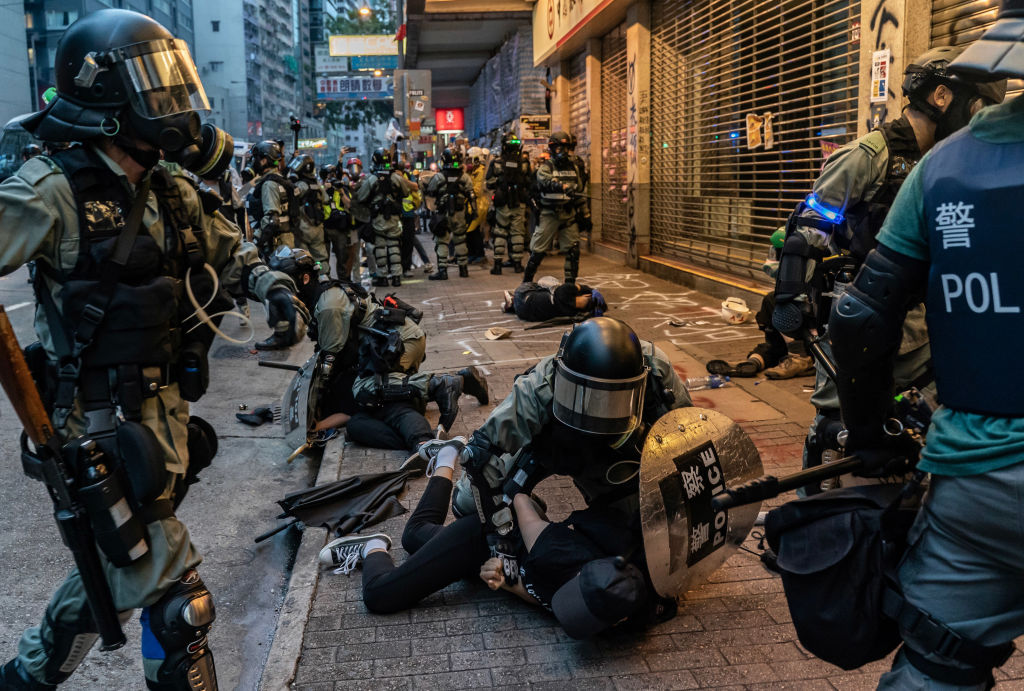
The UN’s highest official principally responsible for human rights, High Commissioner Michelle Bachelet, should publicly denounce the Hong Kong Government for its systematic violations of the rights to freedom of peaceful assembly and freedom of expression, and condemn the unnecessary and disproportionate use of force by police in Hong Kong.
The Hong Kong Police Force have systematically suppressed the right to peaceful assembly by using excessive force against individuals exercising their rights, including beating peaceful protesters and using tear gas, pepper spray, and rubber bullets. Police have increasingly denied permits for assemblies and marches and arbitrarily detained individuals for “unlawful assembly.”
The Hong Kong and Chinese Central governments have allowed police to operate with complete impunity. No police officer has faced legal action over excessive use of force or abuse of power in connection to the violent suppression of the protests since the demonstrations broke out. In contrast, police have arrested almost 4,500 individuals in connection to the protests since June 9. There has been credible evidence of torture and ill-treatment of protestors by police in detention.
On November 19, the Office of the High Commissioner released a press briefing which stated incorrectly that the Hong Kong “authorities have by and large respected the exercise of [the] right [to peaceful assembly].” The Office of the High Commissioner failed to condemn police violence. This amounts to a denial of the extensive documentation from credible sources of violations of human rights in Hong Kong and ignores concerns raised by other UN independent experts.
According to the mandate determined by the UN General Assembly, the High Commissioner has the responsibility to “promote and protect the effective enjoyment by all of all human rights,” and to “play an active role in removing the current obstacles and in meeting the challenges to the full realization of all human rights and in preventing the continuation of human rights violations throughout the world.”
This mandate asks that the High Commissioner use her position to raise serious concerns about human rights abuses everywhere in the world. By not doing so, the Office has harmed its credibility by ignoring police brutality and the suppression of the Hong Kong people’s largely peaceful exercise of their fundamental freedoms.
China’s Government in Beijing has increasingly signalled that it is ultimately in charge in Hong Kong. On November 16, People’s Liberation Army soldiers cleared up debris and bricks, without being invited by the Hong Kong Government to assist, as required by the Basic Law. On November 18, China’s Ambassador to the United Kingdom Liu Xiaoming said, “We [the Central Government] have enough resolution and power to end the unrest.” Holding the China-controlled Hong Kong Government accountable for its human rights abuses is a key test if the UN can resist interference in the UN human rights system by an increasingly powerful China.
Beginning in June, millions of people in Hong Kong have publicly demonstrated against an extradition bill to Mainland China that would have undermined the separate freedoms that are enshrined in law in Hong Kong. The police have repeatedly responded to these peaceful protests with excessive force, and the protests have since morphed into a movement denouncing police violence and demanding full democratic rights for the people of Hong Kong. Police inaction in the face of attacks on protesters, journalists and bystanders at the Yuen Long MTR Station on July 21 represented a clear failure to protect the rights to life and security of persons. Journalists trying to cover the protests have faced violence, intimidation, and threats from police, including an incident in which police shot an Indonesian journalist in the face with a rubber bullet while she covered the protests, permanently blinding her in one eye. Medics and social workers providing assistance to arrestees and injured individuals have also faced police obstruction.
The political situation in Hong Kong has deteriorated since October. Hong Kong Chief Executive Carrie Lam used colonial-era emergency powers to ban face-masks at assemblies (which was later ruled unconstitutional) and police have used live ammunition to shoot three young protesters. The death of 22-year-old student Chow Tsz-lok (周梓樂) on November 8 after being injured close to a police operation sparked the most recent outbreak of violence; the campuses of Chinese University of Hong Kong (CUHK) and Polytechnic University have been turned into battlefields. While certain protestors have used violence, including petrol bombs, bricks and arrows, the Hong Kong Police Force’s response has been severe and disproportionate. Hong Kong police must distinguish violent elements from peaceful protestors and restrict the use of force to the minimum extent necessary, in accordance with the UN Basic Principles on the Use of Force and Firearms by Law Enforcement Officials.
On June 28, four UN independent human rights experts appointed by the UN Human Rights Council sent a communication to the Chinese Government raising concern over allegations of excessive use of force by Hong Kong police on June 12 against “overwhelmingly peaceful” demonstrators. These same four experts then issued a public statement on September 12 stating, “We are seriously concerned by credible reports of repeated instances where the authorities failed to ensure a safe environment for individuals to engage in public protest free from violence or interference.” We are disappointed that this language does not appear in the Office of the High Commissioner’s November 19 press statement.
On August 13, the High Commissioner’s spokesperson said the Office has “credible evidence” of law enforcement officials using some anti-riot measures which are “prohibited by international norms and standards” and urged the Hong Kong authorities to “act with restraint.” The failure of Hong Kong authorities to heed this call from the High Commissioner’s office should have been raised in the latest press statement. Instead, the statement lacks a sense of proportion between the violent actions of small groups of protesters and the systematic use of unnecessary and disproportionate force by police against unarmed protesters.
The High Commissioner herself called on the Hong Kong Government to immediately carry out an “effective, prompt, independent and impartial investigation” into violence during a press conference on October 5. Hong Kong has no independent mechanism to investigate excessive use of force by authorities, as the Independent Police Complaints Council (IPCC)’s expert advisers themselves re-confirmed recently. The IPCC does not have investigatory powers such as subpoenaing documents and summoning witnesses. The Human Rights Committee, which monitors the implementation of the International Covenant on Civil and Political Rights, raised concern over the lack of independence of the IPCC to the Hong Kong Government in 2013.
The High Commissioner for Human Rights must call on Hong Kong authorities to take concrete steps to de-escalate tensions and reduce violence on both sides - police and protesters. As a minimum first step, Hong Kong authorities must establish an independent commission of inquiry into excessive use of police force, bringing to justice any law enforcement official responsible for unlawful use of force, as well as their superior officers. Any response to allegations of violent attacks on police must be handled through a fair judicial process. Those detained solely for exercising their rights to peaceful assembly and free expression should be unconditionally released and charges against them should be immediately dropped.
This statement is endorsed by:
Amnesty International
Article 19
Australia Tibet Council
Child Rights International Network (CRIN)
Chinese Human Rights Defenders (CHRD)
CIVICUS: World Alliance for Citizen Participation
Covenants Watch Taiwan
CSW (Christian Solidarity Worldwide)
Free Tibet
Geneva for Human Rights
International Campaign for Tibet
International Movement Against All Forms of Discrimination and Racism (IMADR)
International Service for Human Rights (ISHR)
International Tibet Network Secretariat
International Women's Rights Action Watch Asia Pacific
Safeguard Defenders
Students for a Free Tibet
Taiwan Association for Human Rights
Tibet Action Institute
Tibet Justice Center
World Organisation Against Torture (OMCT)
World Uyghur Congress -
UN RESOLUTION ON CLIMATE CHANGE: ‘The climate crisis is a human rights crisis’

 CIVICUS speaks with Hailey Campbell about the recent United Nations General Assembly (UNGA)resolution on the environment, which enables the International Court of Justice (ICJ) to issue an advisory opinion on states’ obligations to address climate change.
Hailey is a climate activist and co-executive director of Care About Climate, ajustice-driven climate education and empowerment civil society organisation (CSO) and network of international young climate leaders seeking to share climate solutions on the international stage.
What was the origin of the initiative to take climate matters to the ICJ?
The historic initiative was first introduced in 2019 by the Pacific Students Fighting Climate Change (PISFCC), a youth-led organisation established by students from eight Pacific Island countries. The PISFCC started by persuading the Pacific Island Forum, the region’s main political and economic organisation, to bring the issue of climate change and human rights to the ICJ. CSOs from the Pacific supported this campaign and built the Alliance for a Climate Justice Advisory Opinion (ACJAO) to include other non-state actors. In 2021, the state of Vanuatu, a small island state that is highly susceptible to climate catastrophes, initiated negotiations and the drafting of the resolution, which was later supported by over 130 countries and over 220 CSOs, and eventually adopted by consensus by the UNGA on 29 March 2023.
Do you view this resolution as a civil society victory?
This resolution is a monumental victory! This victory is the beginning of a wave of change in how we all think about the climate crisis and a reminder that climate change doesn’t respect geopolitical boundaries. Environmental CSOs, young leaders, island nations leading the call for the resolution, and PISFCC are reminding the world that before being an advocate, a fossil fuel executive, or a politician, we are all people. As humans, we all share this beautiful planet and sharing it requires caring about each other. If some leaders fail to recognise this, they should be held accountable.
The resolution calling for an ICJ advisory opinion is also a celebration of island innovation and perseverance. Islanders have relied on traditional knowledge and collaborative leadership to adapt to environmental impacts for thousands of years. Taking the world’s greatest challenge to the highest court highlights their strength and experience. As a young person living on an island in the Pacific, I am grateful to the leadership of other young islanders and allies who are paving the way for future generations to have a sustainable future.
How could the ICJ help address climate change?
The ICJ is the world’s highest court, which sets precedents via advisory opinions and rules on how states should cooperate globally. As such, it plays a prominent role in keeping peace among our nations.
The ICJ advisory opinion embodies the reality that we can’t solve the climate crisis by continuing the very practices that brought us to it. The scope of the resolution moves beyond the Paris Agreement, referencing the importance of having a safe climate as a vital human right for well-being. Through outlining potential legal consequences for nations causing significant harm to vulnerable communities and future generations, it could finally ensure greater accountability for the climate crisis. If nations are held more accountable and pushed to act, the door is opened to ensure fossil fuel emissions are fully eliminated and capacity-building for adaptation needs are fulfilled.
How have you personally engaged in advocating for this resolution and broader climate action?
I first learned about the PISFCC’s campaign in 2019, when I got involved with the climate movement following the COP25 climate change summit. As a sustainability student dedicated to working in the climate field, I was inspired by how a small group of students across island boundaries was strongly calling for an ICJ advisory opinion. I started following their journey and supporting their calls to action in various ways, from reposting social media content to bringing up relevant arguments in my conversations with leaders at subsequent COPs.
Inspired by their island leadership, I accepted an internship with the Local 2030 Islands Network, the world’s first global, island-led peer-to-peer network devoted to advancing the Sustainable Development Goals. I learned more about island sustainability and the impacts of climate change from island leaders and was amazed by their examples of innovative solutions and optimist spirit. Empowered to use my education to support islanders in making their voices heard, I chose to focus my master’s degree on developing a workplan for how islanders can work together with their communities to develop, track and implement sustainable solutions for climate change.
This journey of student activism helped me become a cross-sector environmental leader, work on climate adaption on islands, and lean into coalitions, like Care About Climate, as vulnerable groups to stand up for our right to a climate safe future. In fact, their inspiration led to my empowerment to work with young people to ensure the first-ever inclusion of young people as stakeholders in a UN climate conference decision at COP27.
What can international allies do to support this struggle?
All international allies must continue fighting! This historic resolution is only the first step. Before the ICJ can issue its opinion, written and oral arguments from states and select international organisations, such as the United Nations Environment Program, will be requested. It is important for community members to continue contacting their national representatives and international organisations selected to submit testimonies and call for support of the opinion. In fact, the PISFCC have just launched an amazing handbook to support policymakers, youth, and environmental CSOs in understanding their role that I highly recommend checking out. My favourite example from the handbook is about the importance of sharing your personal testimony as to why you believe in the need for an ICJ’s advisory opinion on climate rights and what impact it could have on your future with your national representatives. I hope everyone feels empowered to join me in the Alliance to stay up to date on ways to make an impact.
Get in touch with Care About Climate through itswebsite or itsFacebook page, and follow@careaboutclimate and@hailey_campbell on Twitter andInstagram.
-
UN TAX CONVENTION: ‘People power is the major weapon we bring to the fight against inequality’
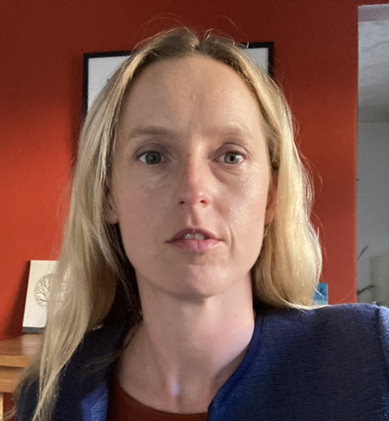 CIVICUS speaks about civil society’s work to tackle inequality from the ground up and discusses the prospects of a United Nations (UN) tax convention with Jenny Ricks, Global Convenor of Fight Inequality Alliance.
Fight Inequality Alliance is a growing global coalition bringing together a wide range of social movements, grassroots and community-based organisations, civil society organisations, trade unions, artists and individual activists organising and mobilising from the ground up to find and push for solutions for the structural causes of inequality in order to rebalance power and wealth in our societies.
Is there a global consensus that inequality is wrong and needs to be addressed?
In recent years there has been quite a consensus that inequality has reached new extremes and is damaging for everybody in society as well as for the environment. We are at a time when it’s not just people on the frontlines who are most affected by inequality saying it’s wrong and grotesque and it needs to change, but even organisations like the International Monetary Fund and the World Bank are saying it’s a problem. The Pope is saying it’s a problem. Governments have signed up to reducing inequality through one of the Sustainable Development Goals.
There is this broad consensus on the surface: it seems like everybody thinks concentration of power and wealth at the top of societies has gone too far and the gap is too extreme and affects people’s daily lives and livelihoods as a matter of life and death. And not only that: it also corrodes democracies. When oligarchs control the media, buy elections, crack down on human rights defenders and civic space and trash the environment, it affects everybody.
But underneath that superficial consensus, I think there’s still deep disagreement about what fighting inequality really means. We at the Fight Inequality Alliance are interested in dismantling the systems of oppression that drive inequality, including neoliberalism, patriarchy, racism and the legacy of colonialism. These are the deep structural roots of the inequalities that are the reason billions of people struggled to survive under a global pandemic while the richest people in the world continued to have a great time. So we have an agenda of transformation of the nature of our economies and our societies, and not just tinkering with the status quo, making minor tweaks to stop people rioting.
How can structural inequality be tackled?
When we started forming the Fight Inequality Alliance, we were clear that the problem was not a matter of lack of policy solutions. We know what the policy solutions are to fight inequality, such as the measures needed to tackle climate change, the redistributive tax policies needed or the policies required to ensure decent work.
The problem was that the overwhelming concentration of power and wealth at the top wasn’t matched by a countervailing force from below. The richest and most powerful are organised and well-funded. They are pursuing their interests and their greed aggressively and successfully. What we have is people power. But across civil society and beyond, groups were very fragmented, very siloed and focused on their individual agendas and absorbed by the issues their constituencies most need them to respond to. There was not enough connection across struggles.
0rganising around inequality is a good way for people to understand how their struggles are interconnected: underneath the day-to-day struggles there are common roots, and therefore there are also common solutions to be fought for. That’s where we saw our role lay, and also in shifting the narratives we have about inequality. We need to change what we envisage as being necessary and possible in our societies, and build power behind the alternative visions we are striving for. When we are limited by what popular narratives deem as natural or normal, such as the false idea that billionaires are hardworking geniuses so deserve unlimited wealth, it limits our energies and our organising capacities for structural change.
People at the grassroots know their problems and their solutions. Inequality isn’t an issue for economists and technocrats to solve: it is primarily a fight that needs to be fought by people. And the voices of people living at the sharp end of these inequalities needs to be heard. They are the real experts in this struggle. So people power is the biggest weapon that we bring to the fight. Governments and international institutions want to take these debates to the technical arenas of policy-making bodies and conference hall settings, wrapping them in technical language that intentionally makes them inaccessible to most people. Many issues that require structural changes, and certainly inequality, are seen as things to be measured, reported on and talked about in economic circles.
But inequality is a human tragedy, not a technical matter. It is about power. And solutions need to be owned by the people whose lives are most affected by it. We need to shift the balance of power, in our societies and in the global arena, not wrangle over the wording of a technical paper discussed behind closed doors, and that’s done by organising on a large scale. This people power is the major weapon we bring to the fight against inequality.
Why is taxation important in the struggle against inequality?
Fighting inequality requires us to redistribute power and wealth, and taxation is a major redistribution tool.
Over the last decade or two civil society has done a lot of work to try and challenge the fact that the richest people and the biggest corporations across the world are not paying their fair share of tax. The economic model is exploitative, unjust and unsustainable, based on resource extraction, primarily from the global south, abusive labour practices, underpaid workers and great environmental damage.
But everyone can relate to this issue nationally too – when it comes to national or local budgets, governments often increase indirect taxes such as value-added tax, which is the most regressive kind of tax because it applies to anything people buy, including essentials, instead of taxing rich people or multinationals more, and they have set up whole global industry and schemes to avoid and evade tax on a massive scale.
Redistribution is happening as we speak, but it is based on extracting from the poorest and distributing towards the wealthiest people in the world – billionaires, corporate shareholders and the like. That is what we are fighting to reverse, at a local level as well as globally.
How could a UN convention on taxation help?
The current level of wealth concentration is so grotesque that it requires solutions and action at all levels. We need to fight on the local front where people are struggling while we push for systemic change in places like the UN. The discussion of global tax rules feels quite distant from the day-to-day struggles that most people, within our alliance and beyond, are campaigning for. But decisions made about them have repercussions for those struggles.
Rules on taxation have so far been set by the Organisation for Economic Co-operation and Development (OECD), an intergovernmental organisation with 38 member states – a rich countries’ club. How can decisions over global taxation rules that affect everybody sit anywhere but the UN, which for all its faults and failings is the only multilateral body where every state has a seat at the table?
Even so, as we have seen with climate negotiations, there is a huge power struggle that needs to be fought at the UN. It will still be a titanic struggle to get the kind of global tax rules we want. But if global tax rules are made within the OECD, the majority of the world doesn’t even stand a chance. Asking rich countries to please behave better is not going to yield the kind of transformation we want.
So in November 2022 we saw a first positive step as the UN General Assembly adopted a resolution calling for more inclusive and effective international tax cooperation and urging member states to kick off negotiations on a global tax treaty. The resolution echoed a call made by the Group of 77 (G77), the largest bloc of developing countries in the UN, as well as the Africa Group, and gave the UN a mandate to monitor, evaluate and determine global tax rules and support the establishment of a global tax body.
A global tax convention would put global south states on an equal footing with global north states, so the proposal faced pushback. Global power dynamics were clearly at play. This was to be expected: this is bound to be a long-term process, and an open-ended one. There is no guarantee it will result in the strong global framework that we need. But it’s still a fight worth fighting, and the UN is the right arena for it, simply because there’s no other space to have these negotiations. Where else could the G77 or the Africa Group renegotiate global tax rules?
How are you campaigning in the light of the resolution?
We are not directly campaigning for the UN Tax Convention as much as we are trying to bring people into this agenda in a different way. We’ve been campaigning a lot on taxing the rich and abolishing billionaires, which is a more appealing way to present the issue and mobilise people around it. We can’t imagine hundreds of thousands of people taking to the street for the UN Tax Convention at this point. So instead we’ve been organising around the need to tax the rich, domestically and globally, both individuals and corporations.
This call has a lot of popular resonance because people find it easier to link it to their primary struggles, for jobs, healthcare spending, better public services or basic income, or against austerity measures, regressive tax rises or subsidy cuts. It’s become part of the campaigns of a lot more movements across the world through our organising over the last few years. This has been the way into the tax agenda for a lot of grassroots movements in the global south. It has potential to bring people’s attention to the broader tax justice agenda. You can’t start by holding a community meeting about the UN Tax Convention. You need to start from the daily inequalities people are facing.
Get in touch with Fight Inequality Alliance through itswebsite orFacebook page, and follow@jenny_ricks and@FightInequality on Twitter.
-
UN Universal Periodic Review submissions on civil society space in Côte d'Ivoire, the Democratic Republic of the Congo, Ethiopia, Nicaragua & Qatar
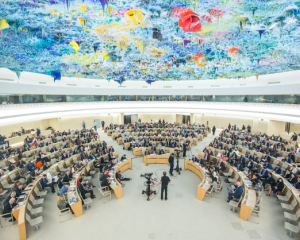
The United Nations Human Rights Council's Universal Periodic Review is a unique process which involves a review of the human rights records of all 193 UN Member States once every 4.5 years.
CIVICUS and its partners have submitted UN Universal Periodic Review (UPR) submissions on five countries in advance of the 47th UPR session in November 2024. The submissions examine the state of civil society in each country, including the promotion and protection of the rights to freedom of association, assembly and expression and the environment for human rights defenders. We further provide an assessment of the States’ domestic implementation of civic space recommendations received during the 3rd UPR cycle over 4 years ago and provide a number of targeted follow-up recommendations.
Côte d'Ivoire – The submission by CIVICUS, Coalition Ivorienne des Défenseurs des Droits Humains (CIDDH) and West African Human Rights Defenders Network (ROADDH) documents restrictions of civic space in Côte d'Ivoire. The submission highlights ongoing restrictions of human rights defenders’ (HRDs) rights to freedom of expression and peaceful assembly, including judicial persecution, intimidation and threats. The restrictive impact of legislation on fundamental freedoms are also documented.
The Democratic Republic of the Congo – The submission submitted by CIVICUS and Ligue des Droits de la Personne dans la Région des Grands Lacs (LDGL) highlights the targeting of civil society members with threats, attacks and judicial harassment as well as legislation which undermines fundamental freedoms. This submission also documents the alarming civic space violations committed under the state of siege in eastern DRC.
Ethiopia – In this submission made by CIVICUS, the East and Horn of Africa Human Rights Defenders Project (DefendDefenders) and the Ethiopian Human Rights Defenders Center (EHRDC) examines the situation of civic space in Ethiopia, in particular civic space-related violations committed under the state of emergency. In addition, the submission documents the use of arbitrary and pretrial detention as a means of intimidation of human rights defenders, journalists and media workers and restrictions to freedom of peaceful assembly.
Nicaragua –CIVICUS, Red Latinoamericana y del Caribe para la Democracia, Asociación Centroamericana para el Desarrollo y la Democracia and Fundación del Río, in this submission, examine the increasing deterioration in fundamental freedoms as well as the situation of human rights defenders and journalists. The submission also highlights the situation of political prisoners in Nicaragua as well as the impact of legislation that unduly restricts non-governmental organisations and civil society organisations to operate.
Qatar– This report by the Gulf Centre for Human Rights (GCHR), Access Now, Article 19 and CIVICUS highlights Qatar's implementation gaps with regard to the right to freedom of association, freedom of expression, freedom of peaceful assembly and issues relating to the right to a fair trial and due legal procedures, stressing the high levels of risks for activists, at home and abroad, and onerous conditions and repressive measures which limit the space for human rights advocacy by civil society. The submission emphasises convictions and sentencing of HRDs in absentia and in trials that do not meet minimum international standards and touches upon ongoing issues related to gender equality, migrants’ rights, and women’s rights.
The CIVICUS Monitor rates civic space in Nicaragua as Closed, while in the Democratic Republic of the Congo, Ethiopia and Qatar civic space is rated as Repressed. In Côte d'Ivoire is rated as Obstructed.
-
Under threat: five countries in which civic space is rapidly closing

By Danny Sriskandarajah
The closing of civic space is not just about people’s right to organize or protest in individual countries. This year’s Gobal Risks Report, published last week by the World Economic Forum ahead of its annual Davos meeting, looks in detail at the risks posed by threats to governments clamping down on fundamental civic freedoms. The report points out that, “a new era of restricted freedoms and increased governmental control could undermine social, political and economic stability and increase the risk of geopolitical and social conflict.”
Read on: Open Democracy
-
UNITED NATIONS: ‘From now on, states should adopt a human rights approach to environmental regulation’

CIVICUS speaks with Victoria Lichet, executive director of the Global Pact Coalition, about the resolution recently passed by the United Nations General Assembly (UNGA) recognising the right to a clean, healthy and sustainable environment as a human right.The Global Pact Coalition brings together civil society organisations (CSOs), activists, artists, lawyers and scientists advocating for the adoption of the Global Pact for the Environment, a draft international treaty to enshrine a new generation of fundamental rights and duties related to the protection of the environment, and particularly the right to a healthy environment.
What are the relevance and implications of the recent UNGA resolution on the right to live in a clean, healthy and sustainable environment?
The adoption of a resolutionon the right to a clean, healthy and sustainable environment by the UNGA, the legislative body of the UN, which includes all the UN member states, is a historic victory for environmental protection. The recognition of the right toa clean, healthy and sustainable environment as a universal human right makes environmental protection a core aspect of human rights protection. It is a major step towards a human rights-based approach in environmental litigation, as it integrates human rights norms into environmental matters.
In addition to recognising the right to a healthy environment as a right for all people, the resolution’s preamble clearly affirms the linkage between a healthy environment and human rights. The UNGA recognises that ‘environmental damage has negative implications, both direct and indirect, for the effective enjoyment of all human rights’.
While UNGA resolutions are not legally binding, this resolution is a strong political and symbolic message. It will play a role in shaping and strengthening new and stronger international environmental norms, laws, standards, and policies. As such, it will necessarily improve the overall effectiveness of environmental law and catalyse further environmental and climate action. This also proves that multilateralism still has a role to play in international environmental law.
What role did civil society play in the process leading to this resolution?
This resolution followed months of mobilisation by CSOs and Indigenous peoples’ organisations (IPOs), including the Global Pact Coalition. Under the inspiring leadership of the UN Special Rapporteur on Human Rights and the Environment, David R Boyd, and his predecessor, John Knox,the coalition of CSOs and IPOs was able to reach out to governmentsthrough emails and letters to better inform them about the importance of the right to a healthy environment. It also led social media campaigns to inform the public about the process.
The core group of countries that led this initiative, made up of Costa Rica, Maldives, Morocco, Slovenia and Switzerland, was really helpful and communicated important steps regarding the resolution. We are very grateful for their leadership.
Does the final text of the resolution fully reflect civil society contributions?
The final text of the resolution mostly reflects civil society expectations. Through negotiation, some states were able to remove a few paragraphs. For example, the first draft said that the right to a healthy environment was related to the right to life and the right to the highest attainable standard of physical and mental health. But the final draft also included additional paragraphs, for example to include ‘business enterprises and other relevant stakeholders’ in the call to adopt policies to enhance international cooperation to scale up efforts to ensure a healthy environment.
Overall, the main goal for civil society was to have the right to a clean, healthy and sustainable environment recognised as a human right for all, and this was obviously fully reflected in the final text. So it is in fact a historic victory for civil society.
What measures should states adopt to make the right recognised in the resolution effective?
Recognition should be combined with strong and ambitious national and regional public policies that implement mechanisms to strengthen environmental protections, the protection of people’s health and the enjoyment of their other human rights. From now on, states should adopt a human rights-based approach in environmental regulation as well as better renewable energy and circular economy policies.
As Special Rapporteur David Boyd said, the international recognition of the right to a healthy environment should encourage governments to review and strengthen their environmental laws and policies and enhance their implementation and enforcement.
What should civil society do next?
Civil society should now advocate for stronger and more ambitious instruments to protect the environment, our right to a healthy environment and other environmental rights. Now that the right to a healthy environment has been recognised at the international level, we should introduce additional progressive rights and duties that will take us even further in environmental protection.
The UNGA resolution could be the foundation for a more comprehensive international instrument on the right to a healthy environment and other environmental rights. We already have ambitious models that could be used in these future negotiations, including the Global Pact for the Environment and the draft covenant of the International Union for Conservation of Nature, the world’s largest global environmental network.
The path from ‘soft law’ to ‘hard law’ – in this case, from the non-binding UNGA resolution to a convention on the right to a healthy environment – is a very common one in international law. For example, the 1948 Universal Declaration of Human Rights, which is one part of the UNGA resolution on the International Bill of Human Rights, and therefore not legally binding, resulted in two treaties adopted in 1966: the International Covenant on Civil and Political Rights and the International Covenant on Economic, Social and Cultural Rights. It took 18 years to incorporate the Declaration into two legally binding texts.
We hope it will not take 18 years to achieve a convention on environmental rights, because that would bring us to 2040. We do not have that kind of time. The time has come to adopt such a convention, a ‘third pact’ recognising a third generation of human rights. After civil and political rights, and economic and social rights, it is time to enshrine our environmental rights.
As we face a triple planetary crisis, a binding international environmental text is critically important because millions of people are already dying from toxic environments, particularly from air pollution.
Get in touch withthe Global Pact Coalition through itswebsite or itsFacebook page, and follow@VictoriaLichet and@PactEnvironment on Twitter.
-
UNITED NATIONS: ‘Outstanding issues on the binding treaty on business and human rights are mainly political’
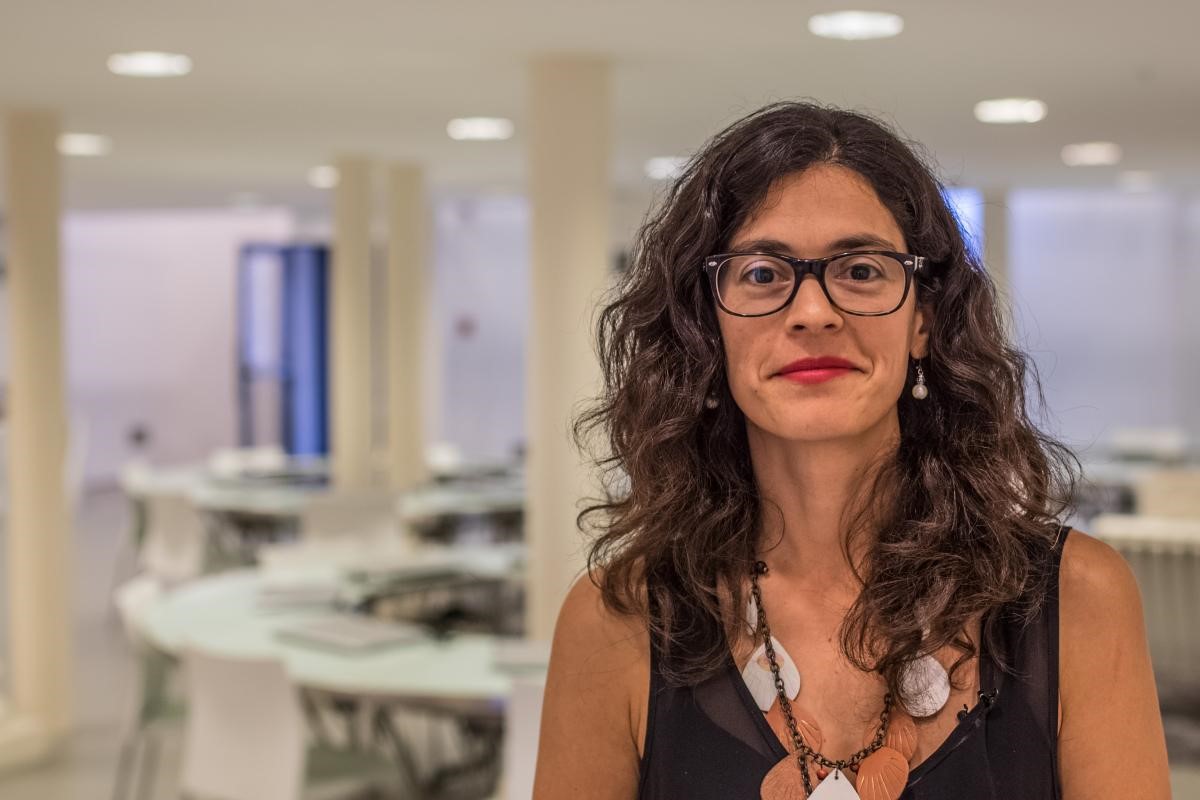 CIVICUS speaks with Fernanda Hopenhaym, chair of the United Nations (UN) Working Group on Business and Human Rights, about the process to develop a binding international treaty on business and human rights.
Why is a binding treaty on business and human rights so important?
The process to develop this treaty stems from the conviction that a legally binding instrument is needed to regulate the obligations of private companies and, above all, to facilitate access to justice for victims of their abuses. Its aim is to incorporate human rights protections in the context of business activity.
An international treaty would transcend the jurisdictional limitations of states. Transnational capital operates across borders. Huge numbers of companies in most sectors operate global supply chains. When abuses occur somewhere in these chains, it is very difficult for victims to access justice, as there are no justice mechanisms that transcend borders. Corporate operations are transnational but justice is not.
Of course, states must take measures at the domestic level, strengthen their regulations, improve their laws and develop public policy and action plans to ensure effective protection of human rights. And companies must also make commitments to improve their practices. The treaty under negotiation would be part of a package of measures that are complementary, not mutually exclusive.
The treaty process began in June 2014, when the UN Human Rights Council established an open-endedintergovernmental working group mandated to negotiate and agree on an international legally binding instrument to regulate the activities of transnational corporations and other business enterprises under international human rights law.
What role is the Working Group on Business and Human Rights playing?
TheWorking Group on Business and Human Rights is a UN special procedure, established by a 2011resolution of the Human Rights Council, with a mandate to promote, disseminate and implement theGuiding Principles on Business and Human Rights, exchange and promote good practices and lessons learned from the implementation of the Guiding Principles, and assess and make recommendations on these. Its mandate has been successively renewed in 2014, 2017 and 2020. It is composed of five independent experts, mostly academics, and has balanced geographical representation. I have been a member of the Working Group since 2021. The other four current members are from Australia, Nigeria, Poland and Thailand. Three of the five of us are women.
While it does not have any decision-making authority over the Treaty, the Working Group plays an important role. We participate in almost all negotiating sessions through roundtables and discussions and we provide technical opinions. We have commented on the draft articles and we encourage the proactive participation of states from different regions of the world.
One of the premises of the Guiding Principles is the development of measures that can be combined in order to address the problems that exist in relation to the protection of human rights in the context of business activity. A legally binding instrument is just one of those necessary measures.
The Working Group has been very clear in sending out a message favourable to the treaty negotiation process.
What progress has been made in negotiating the treaty?
In the previousinterview we had in 2018, the process had been going on for four years. At that time the fourth session of negotiations, based on the ‘zero draft’, was about to start in Geneva. And I was not yet part of the Working Group. Four more years have passed, and at the eighth session held in October 2022, the third draft, which emerged in advance of the 2021 negotiations, was discussed.
The pandemic affected the negotiation processes, partly because face-to-face contact was not possible for a long time. Representatives and delegates in Geneva, for example, were unable to meet in person for more than a year, so the possibilities for exchanges were severely limited. In turn, the pandemic affected the participation of civil society and other stakeholders in the discussions. Processes slowed down and therefore were extended.
Currently, the third draft is still being discussed, and Ecuador, which chairs the Intergovernmental Working Group, has apparently said that it will not bring yet another new draft to the table, but that changes, modifications and additions will continue to be made to this third draft. Eventually, all these adjustments will lead to a final draft.
The current draft has come a long way on issues such as acknowledging vulnerable groups, women, children and Indigenous peoples. Its scope, which was a very tough issue to negotiate, has also been clarified. In general, civil society’s position is to prioritise transnational corporations, while the current draft proposes that all companies should be under the umbrella of the treaty. The current draft reflects the position shared by our Working Group. A number of issues have been untangled, although there are still many things to be resolved.
What are the unresolved issues?
There are many discussions that are more political than technical. Some states and the private sector have said that the text is too prescriptive and rigid. Civil society has expressed that it wants more clarification and specificity on some issues such as the definition of the courts where cases covered by the treaty would be adjudicated and the consideration of the victims’ perspective, as the burden of proof remains a contentious issue. On this point the Working Group has been very clear: states have an obligation to facilitate access to justice and to remove barriers and obstacles for victims to access justice.
While the European Union (EU) and the USA participate in this process, they lack conviction on the direction of the text. The EU is very active, but I see divergent positions among its member states. Many countries, such as France, support it, but the EU as a whole maintains reservations.
One of the great triumphs of the early process was that China did not block it, but rather abstained. The same was true of India. This was partly because the treaty was supposed to be about transnational corporations. China has not approved of the extension of the treaty’s scope to all companies and has lately taken a more negative position.
African states have participated very little in the last two rounds of negotiations. We believe that South Africa, which was co-leader with Ecuador when the resolution that initiated the process was negotiated, is also unhappy with the expanded focus beyond transnational corporations. Ecuador has recently called for the formation of a ‘friends of theChair‘ group and Africa is the only region without participating members.
Latin America in comparison is participating quite proactively, although the region has experienced many political changes, including in Ecuador itself, which are likely to influence negotiating positions.
In sum, there are ongoing technical discussions on the draft articles, but most of the outstanding issues are mainly political discussions. For this reason, I think the process will take several more years.
Do you think that the final version of the treaty will meet civil society expectations?
My hope is that we will not be left with a treaty that sets out good intentions without establishing clear rules. As is the case in all negotiations of this nature, some of the issues civil society is calling for will probably be left pending. There is a lot to accommodate: the perspectives of states, the expectations of business and the private sector in general, and the demands of civil society and all rights holders.
I would expect a pretty good text, which in some ways reflects the character of the process, which has included a very strong civil society and social movements. From my perspective, the process has been sustained not only by the commitment of states to negotiate, but also by the impetus of civil society and dialogue among all involved.
My expectations are intermediate. With some caution as to the scope of the articles, I think the treaty will contain some elements that satisfy civil society, and particularly victims.
What work will need to be done once the treaty is adopted?
To begin with, I think there is a long way to go before this treaty is adopted. It may still take several more years. There is a long way to go in the negotiations and regarding the content of the text.
Once the treaty is adopted, ratification will have to be pushed through. Let us remember that international treaties only enter into force when a certain number of states ratify them, and only those states that ratify them are bound by them. This is where I see a huge challenge ahead. Hopefully, once we get to produce a good, comprehensive text, the process of ratification will not be so slow and cumbersome.
For this to happen, we will need a strong civil society to push states to ratify the treaty so it enters into force and becomes binding on the signatory parties. Again, I would expect this process to be long and arduous, as the issue of human rights protection in the context of business is a thorny one, given that there are many interests at stake. What lies ahead will be a big challenge for all involved.
Follow@fernanda_ho and@WGBizHRs on Twitter.
-
UNITED NATIONS: ‘The existing human rights system must be criticised, while still being defended’

CIVICUS speaks with Brian Schapira, Director of Institutional Relations at the Center for Latin America´s Opening and Development (Centro para la Apertura y el Desarrollo de América Latina, CADAL), a foundation based in Argentina that works to defend and promote human rights. With a focus on supporting those who suffer severe restrictions to their civil and political liberties, CADAL promotes international democratic solidarity in collaboration with activists and civil society organisations (CSOs) around the world.
-
UNITED NATIONS: ‘The power of anti-rights groups is growing; difficult times lie ahead’

CIVICUS speaks with Tamara Adrián, founder and director of DIVERLEX-Diversity and Equality Through Law, about the successful civil society campaign for the renewal of the mandate of the United Nations’ (UN) Independent Expert on sexual orientation and gender identity.
Tamara Adrián is a lawyer and university professor, and the first trans woman to be elected to a national parliament in Latin America.
DIVERLEX is a Venezuelan civil society organisation dedicated to research, training, advocacy and strategic litigation on issues of sexual diversity. Due to the complex humanitarian crisis affecting Venezuela, most of its leaders are currently based outside Venezuela, where they continue to work to improve the living conditions of LGBTQI+ people in exile.
Why is the mandate of the UN Independent Expert on sexual orientation and gender identity so important?
This is an extremely important figure. The weapon of choice of all bigots is to make certain groups and the violation of their rights invisible. This has been a constant in relation to women, Indigenous peoples, racial minorities and religious minorities. As long as the intolerant can say a problem does not exist, their power system remains active and nothing changes. In the universal human rights system, what bigots want to keep invisible is made visible through the work of independent experts and rapporteurs.
The first Independent Expert, Vitit Muntarbhorn, was in office for a couple of years and produced a report on violence based on sexual orientation or gender identity, which he shared with the office of the UN High Commissioner for Human Rights. He kicked off the process of shedding light on the injustices, inequities and violence against LGBTQI+ people globally.
The three reports submitted by the current Independent Expert, Víctor Madrigal-Borloz, pointed at many countries that are failing in their duty to protect all their citizens. The Office of the High Commissioner for Human Rights highlighted that states have a positive obligation to ensure equal rights to all people.
We understand there is still a long way to go and that reports – those by the Independent Expert, the High Commissioner and regional bodies such as the Organization of American States – are important to this process.
So important are they that this work triggered strong backlash from fundamentalist groups that reorganised in the form of ‘non-governmental organisations’. These sought to obtain consultative status with the UN Economic and Social Council in order to interfere in their processes.
How do these groups operate within the UN?
Anti-rights groups have been changing their strategy. Rather than identify as religious organisations, they have sought to present themselves as defenders of religious freedom and, above all, of the freedom of expression. They have promoted strategies of religious unity, bringing together Catholic fundamentalists and representatives of the Holy See with neo-evangelical fundamentalists and the most regressive Muslim groups.
They have also refined their arguments. First, they argue that the concept of sexual orientation and gender identity is a western concept and not a universal one, and therefore should not be protected by the UN. Second, they claim that no existing treaty or international instrument provides protection against discrimination on the basis of sexual orientation or gender identity. Third, they say that countries with traditional values should be able to maintain discriminatory laws or criminalise same-sex relationships or diverse gender identities.
These three claims were implicit in the arguments of the countries that opposed the renewal of the Independent Expert's mandate and proposed amendments, alongside a fourth: that no country should protect criminals, and the determination of what is a criminal act is subject to the criminal law of each country and is not subject to verification before the international human rights system.
Historically, this issue has been resolved on the basis of the recognition that everyone has a right to their own beliefs, but no one can impose their beliefs or deny others their rights on the basis of their faith. Fundamentalists want this situation reversed so that believers can discriminate against and deny rights to other people
Have anti-rights groups grown in power in recent years?
The power of anti-rights groups is growing, which is possibly linked to the regression that is taking place in the USA. Indeed, in the vote to renew the mandate we saw two groups of states putting up resistance: countries that have never made progress in recognising rights and where there is a lot of resistance to change, and countries that are moving backwards, such as the USA.
In the USA, links connecting white supremacism, neo-Pentecostal groups and the more radical segments of the Republican Party have been growing closer for at least a decade. Anti-rights groups have been taking up space in the courts, from the lowest levels to the Supreme Court, as well as in governorships and state legislatures, resulting in more and more anti-trans, anti-sex education and pro-religious freedom rulings, laws and policies. They have been outspoken in their plans to reverse abortion rights, reject the concept of gender and repeal sexual and reproductive education and contraceptive rights, and even women’s rights, equal marriage and protections against racial discrimination.
The USA has also played a key role in the international funding of the anti-rights movement and the development of neo-Pentecostal churches around the world, particularly in Africa and Latin America. It has also influenced the establishment of a phenomenon that has not been given enough attention: the movement of biology-fixated feminists, who deny the concept of gender with the same arguments used by the most conservative churches.
This unity of argumentation is highly suspicious, and all the more so when one looks at the funding streams coming from the USA feeding biology-focused feminist groups in places including Brazil, Central America, the Dominican Republic, Spain and the UK. The target of these groups is not LGBTQI+ people generally, but trans people specifically. By upholding the biological and natural character of differences they seek to destroy the whole structure of gender-based protections.
I honestly think this is a very well-thought-out plan. I understand that they have mimicked the strategy we initially adopted to give visibility to our struggles. However, they have the advantage of being in power. The number of states that have signed a ‘pro-life’ resolution at the UN and declared themselves ‘pro-life’ states shows that their aim is not just to oppose just LGBTQI+ rights but all rights based on the concept of gender.
How was the campaign for the renewal of the Independent Expert’s mandate organised?
The organisations that lobbied for the renewal of the mandate have worked together ever since the campaign for the appointment of the first Independent Expert. Every time, the process starts long before the appointment. In this case, we started working about three years ago: practically the year after the mandate was renewed we were already working to create the core group to work for a new renewal.
With Latin American organisations, a recurrent limitation is lack of knowledge of the English language, which restricts the ability of activists to internationalise their struggles. To overcome this problem, our core group is made up of both Spanish-speaking and English-speaking activists. This was very important because the coalition was mainly made up of Latin American groups.
It was a very difficult process, and while the vote eventually turned out to be favourable, over several months the outcomes of the sessions did not make us feel confident. We saw growing resistance from countries with fundamentalist positions that were increasingly embracing the idea of rolling back rights.
What are the next steps following the mandate’s renewal?
I believe we should not relax. Difficult times lie ahead. Many rights we thought had already been secured are likely to be reversed in the USA, including those linked to racial equality. It is no longer even a question of returning to a 20th century vision, but to a 16th or 17th century one.
This will have a strong impact at the global level, especially in countries with less developed institutions. Countries with stronger institutions will probably be better able to resist the onslaught to roll back sexual and reproductive rights.
As next steps, I would emphasise organising. In many places people tell me, ‘don’t worry, that would never happen here’, but I insist we cannot relax. We must focus on forming coalitions and organising stronger alliances to stop advances by neoconservative groups and challenge them to gain back the spaces of power they have occupied.
Get in touch with Tamara Adrián through herwebsite or herFacebook page, and follow@TamaraAdrian on Twitter.
-
UNITED STATES: ‘Every country should do their part to welcome people in need’
 CIVICUS speaks about new US immigration regulations withAaron Nodjomian-Escajeda, policy analyst on asylum and human trafficking at the U.S. Committee for Refugees and Immigrants (USCRI).
Founded in 1911, USCRI is a non-governmental, not-for-profit international organisation committed to working on behalf of refugees and immigrants and their transition to a dignified life.
What are Title 8 and Title 42 regulations?
Title 8 and Title 42 are sections of the US Code that includes all permanent federal laws. Simply put, Title 8 governs immigration law and Title 42 governs public health law.
Title 42 was never meant to be used as an immigration tool. It was applied in March 2020, at the onset of the COVID-19 pandemic, as a basis to provide public health services across the USA, but it also allowed border officials to rapidly expel asylum seekers and migrants to Mexico or their home countries without due process. As this was considered an ‘expulsion’ rather than a ‘deportation’, those subject to it were not given the right to seek asylum. Furthermore, no records were kept of an expulsion, which provided an incentive for people to attempt to enter the USA, via dangerous land routes, over and over.
Even though thousands of public health experts denounced the use of Title 42 as ineffective for stopping the spread of COVID-19, the Biden administration increased the use of this authority to turn people away more than 2.3 million times. The Title 42 public health order was finally lifted on 11 May 2023.
Title 8 contains the current laws and regulations pertaining to immigration and naturalisation, and outlines the processing of non-citizens at the border.
What is the new so-called ‘asylum ban’, and how is it being applied?
Now that the use of Title 42 has ended, the processing of migrants and asylum seekers has returned to Title 8 authority. Additionally, a new rule from the Department of Homeland Security (DHS) and Department of Justice is in effect. This rule, also referred to as an ‘asylum ban’, went into effect right after the Title 42 public health order was lifted, supposedly to address the expected surge in migration and further discourage irregular migration.
The end of the use of Title 42 to expel migrants and asylum seekers is a good thing, but the new asylum ban is not.
The asylum ban applies to anyone who presents at a port of entry at the US-Mexico border without a visa or pre-scheduled appointment, who enters without inspection between ports of entry, or who is apprehended in contiguous waters. The rule presumes all of them are ineligible for asylum unless they were granted prior permission to travel to the USA pursuant to a DHS-approved parole process, or were able to make an appointment to present themselves at the border using the smartphone app CBP (Customs and Border Protection) One, or have previously sought asylum and were denied in a country or countries through which they travelled. Unaccompanied children are exempt from this rule.
The presumption of asylum ineligibility will apply in expedited removal proceedings, as well as to asylum applications affirmatively filed with the Asylum Office or filed in immigration court proceedings as a defence against removal.
What are the lawful pathways of entry to the USA?
‘Lawful pathways’ include entering the USA through regular channels, such as tourist visas, humanitarian parole, or existing family reunification pipelines.
The Biden administration also points to recently created pathways, including the parole process for Cubans, Haitians, Nicaraguansand Venezuelans, new family reunification parole processes for Colombia, El Salvador, Guatemala and Honduras, the opening of regional processing centres in Colombia and Guatemala, expanded access to the CBP One app, and an increase of the number of appointments available at each port of entry for individuals from all countries from 750 to 1,000 daily.
People who enter the USA via an established pathway will not be subject to the asylum ban.
What are the reasons migrants and asylum seekers don’t to use lawful pathways of entry?
This parole framework for Cubans, Haitians, Nicaraguans and Venezuelans is only available for those who have a US-based sponsor, unexpired passports and the financial resources to travel to a US port of entry by commercial air travel. Many advocates see this as a type of means test, since many people fleeing harm do not have the luxury of a passport or resources to reach the USA via plane.
There are additional access and equity issues with the CBP One app. Many migrants do not have smartphones. And even if they have one, they may lack adequate wi-fi or a data plan. Asylum seekers can be exempted from the rule if they prove it was impossible for them to access or use the CBP One app due to a language barrier, illiteracy, significant technical failure or other persistent and serious obstacle. However, in most cases proving a language barrier or illiteracy is not enough, and asylum seekers must show that they have asked someone for assistance to use the app and were still not successful, which puts them at risk of exploitation.
What are the exceptional circumstances in which unlawful entry isn’t supposed to be penalised, and how is it implemented in practice?
People can rebut the presumption of asylum ineligibility if they demonstrate that, at the time of entry, they or a member of their family with whom they were traveling faced an acute medical emergency or an extreme and imminent threat to their life or safety, or were a victim of a severe form of trafficking.
If one family unit member establishes an exception or rebuts the presumption, the presumption will not apply to the entire family unit. All family members, including children, will be interviewed prior to determining whether the presumption of ineligibility applies.
In theory, people should not be turned back at the border. Even under the asylum ban, people should be able to present themselves at the border without a CBP One appointment or having been denied asylum in their country of origin. However, if they are unable to prove they can overcome the rebuttable presumption, they will only be eligible for the lesser protections of statutory withholding of removal and protection under the regulations implementing US obligations under Article 3 of the Convention Against Torture and Other Cruel, Inhuman or Degrading Treatment or Punishment. In practice, there have been reports that the Mexican Commission for Refugee Assistance and CBP officials have turned individuals away at the border even when they have cited fear of return.
Is the new regulation compliant with international standards on refugee protection?
Advocates believe that the asylum ban violates the principle of non-refoulment, which means that a person should not be returned to a country where they face serious threats to their life or freedom, cemented in international standards outlined by the 1951 Convention Relating to the Status of Refugees and its 1967 Protocol.
The rule is already facing challenges in court. The American Civil Liberties Union, the Center for Gender and Refugee Studies and the National Immigrant Justice Center have amended their complaint in the East Bay Covenant Sanctuary v. Biden lawsuit to include claims that the rule is unlawful. USCRI, along with the United Nations High Commissioner for Refugees and many other advocates, has denounced this rule and continues to call on the administration to rescind it immediately. It does nothing to protect the most vulnerable and creates additional inequities in an already difficult system.
What impact has the regulation change had so far?
USCRI was at the border the day after Title 42 ended to observe the immediate impact of the change. The administration and many others warned about a ‘surge’ of migrants rushing to border as soon as Title 42 ended. However, this was not the case; the situation at the border remained calm. There were reports that people were trying to enter the USA before the cruel new asylum policy took effect. In fact, border crossings have decreased more than 70 per cent since the implementation of the asylum ban on 11 May. The administration touts this as a result of its ‘comprehensive plan to manage the border’. However, to me, it shows that many people trying to reach safety are not able to access life-saving protection via the asylum system.
What obstacles does US civil society helping migrants and refugees face?
The greatest limiting factors are that people seeking asylum in the USA or in removal proceedings do not have access to federal benefits, including housing. Right now, there is a housing crisis and some civil society organisations have limited resources from emergency food and shelter funds, while many volunteers are offering shelter in churches or in their own homes.
Another major barrier is the difficulty in providing legal counsel to immigrants in asylum hearings in CBP custody. In alignment with the asylum ban, the administration increased the use of expedited asylum screenings and brought back the harmful practice of conducting ‘credible fear interviews’ in CBP facilities. The goal is to conduct these within as little as 24 hours, which does not give people time to prepare their asylum case or access legal help. USCRI led a letter that was signed by over 90 organisations and sent to the administration outlining concerns about this practice. A more recent letter, which USCRI supported, went to the administration outlining how those concerns have in fact materialised. We continue to advocate through letters and engagement sessions. However, the administration has decided to fully embrace enforcement and pushback policies.
What international support does US civil society working with migrants and refugees need?
Everyone in this field needs funding, but the USA is one of the most financially able countries in the world, hence support should not come from the international community. The administration should do a better job of funding civil society initiatives and allowing the American people to continue welcoming individuals in need, as they are ready and willing to do so.
As international factors such as armed conflict and climate disasters continue to push people from their homes, it is important that every country does their part to welcome them. One country cannot do it all but if everyone comes together, we can empower hope. World Refugee Day is a good rallying point for doing so.
Civic space in the USA is rated ‘narrowed’ by theCIVICUS Monitor.
Get in touch with USCRI through itswebsite orFacebook page and follow@USCRIdc on Twitter.
-
Upcoming UN review critical moment for Maldives to address civic freedom gaps
CIVICUS and the Asian Forum for Human Rights and Development (FORUM-ASIA) call on UN member states to urge the Government of the Maldives to protect civic freedoms as its human rights record is examined by the UN on 4 November 2020 as part of the 36th session of the Universal Periodic Review (UPR).
-
Urgent appeal for the release of Malak Al-Kashif

We, the undersigned human rights organisations, call on UN Special Rapporteurs, Members of the European Parliament, and representatives in national Parliaments of the European Union to urgently intervene and communicate with the Egyptian authorities to immediately release jailed activist Malak Al-Kashif, who was arrested for expressing her views on Facebook.
Background
On 6 March 2019, after expressing her opinions on her personal Facebook account about how the authorities addressed a train station accident in Egypt which killed dozens of citizens, 19-year-old Malak Al-Kashif was arrested in a dawn police raid of her mother’s home. Malak was disappeared; both her location and conditions of detention were undisclosed until she was brought before the State Security Prosecution on 7 March 2019.
Malak was interrogated under State Security case no. 1739 on trumped-up charges of joining a terrorist group under Article 12 of the Anti-Terrorism Act 2015, exposing her to severe penalties including the maximum imprisonment penalty. Malak was also charged with using her Facebook account to commit a crime punishable by law under Article 27 of the Electronic Crimes Prevention Act of 2018, which could result in an additional sentence of up to two years’ imprisonment and a fine of no less than LE100,000 (approximately $5,970 USD). On 7 March 2019, the Prosecution gave Malak 15 days of pretrial detention, which she spent in solitary confinement at Al-Haram police station in Giza. On 19 March, the Prosecution extended her pretrial detention for another 15 days, which she spent in solitary confinement in the El-Zeraa section of Tora Prison. Malak is a transgender woman undergoing the advanced stages of gender reassignment treatment and requires continuous physical and physiological treatment due to an accident she had last year, as documented in medical reports in her possession at the time of her arrest.
A repressive trend in Egypt
Malak was one of many persons recently arrested by the Egyptian authorities for expressing opinions on social and political issues in the country, including the train station accident and the proposed constitutional amendments. ECRF has documented 116 persons arrested from 27 February until 2 March 2019. Some were forcibly disappeared and others were sent to the prosecution on charges of “joining a terrorist group” and “publishing fake news.”This recent surge in arrests was enabled by an oppressive legislative framework deployed by the Egyptian authorities against individuals who express opinions on any national issue; this framework includes repressive laws that do not comply with the Egyptian Constitution and international human rights laws, such as the 2015 Anti-Terrorism Act and 2018 Cybercrime Law.
The Egyptian authorities have increasingly used pre-trial detention as a punishment for political prisoners, especially since 2013. Although pre-trial detention violates the legal principle of the presumption of innocence of the accused person, Article 143 of the Code of Criminal Procedure permits prolonged pre-trial detention that can go on for two years in some cases.
Transgender and imprisoned
As a transgender woman, Malak is outspoken about her identity and conditions, and has advocated for the rights of transgender people in Egypt using social media platforms. Consequently, Malak’s arrest for expressing her opinion on the train accident has enabled the Egyptian state to silence her on all issues for which she has advocated, including transgender rights.
In addition, Malak’s identity has made her a target of cruel and humiliating treatment by the Egyptian authorities. Malak’s gender is classified as “male” in official documentation, compounding the state’s discrimination against her as a transgender woman, and placing her in male detention facilities where she is vulnerable to further mistreatment on the basis of her gender.
Malak testified that she had been subjected to a forced anal examination and sexual harassment in one of the government hospitals, as documented by ECRF. Malak also informed her lawyer that she was prevented from going to the toilet for long periods of time, and was bullied in the police station because of her gender identity. The police station administration also refused to provide Malak with essential healthcare requirements for her diabetes.
Malak’s arrest and treatment violate human rights laws and standards
Egypt is a part of the International Covenant on Civil and Political Rights (ICCPR) and the UN
Convention against Torture and Other Cruel, Inhuman or Degrading Treatment or Punishment (UNCAT), which prohibit the treatment to which Malak has been subjected, as well as protect her right to express her views.Article 7 of ICCPR and articles 2 and 16 of the 1984 Convention against Torture prohibit torture and all other forms of cruel, inhuman or degrading treatment, with no restriction on these prohibitions. Article 19 of ICCPR also states that everyone has the right to freedom of opinion and expression, which includes the freedom to hold opinions without interference.
In addition, the High Commissioner for Human Rights has recommended the prohibition of coercive medical procedures imposed by some countries on transgender people, as well as guaranteeing their right to obtain identity papers reflecting their self-defined gender identity.
ECRF considers the treatment and examinations to which Malak has been subjected as a flagrant violation of privacy and human dignity, which fall within a pattern of discrimination and violence against sexual minority groups in Egypt, and qualify as a form of cruel and inhumane treatment amounting to torture.
This is not the first time that Egypt has violated international human rights laws and standards. In its 2002 report, the Committee against Torture recommended that Egypt take the necessary steps to end all forms of degrading treatment during physical examinations. In 2009, the UN Working Group on Arbitrary Detention stated that the forced anal examinations carried out by the Egyptian authorities had no medical value in determining whether a person had engaged in any homosexual practices, and that they violated international human rights law and contravened the prohibition on torture under the 1984 Convention against Torture.
Request for urgent intervention by UN Special Rapporteurs, Members of the European Parliament, and representatives in national Parliaments of the European Union
In consideration of the information above, we respectfully appeal to you to raise Malak’s case with the Egyptian authorities. We request immediate protection for Malak and other transgender individuals, by treating them accordingly to their gender identity and holding them in the corresponding detention facilities, without exposing them to sexual harassment and cruel, humiliating procedures that amount to physical and psychological abuse. The ultimate objective is Malak’s release, along with that of all other political detainees in Egypt imprisoned for expressing their opinions.
If you have any additional questions about Malak’s case, please do not hesitate to contact us.
Thank you for your consideration,
Sincerely,
• Arab Network for Knowledge about Human-rights
• Adil Soz
• Albanian Media Institute (AMI)
• Association Adala pour le droit à un procès équitable
• Association for Freedom of Thought and Expression (AFTE)
• Associazione Ricreativa Culturale Italiana
• Cairo Institute for Human Rights Studies
• Centre national de coopération au développement
• Circolo Cultura Omosessuale Mario Mieli
• CIVICUS
• Committee for Justice
• DIGNITY
• EGYPTIAN COMMISSION FOR RIGHTS AND FREEDOMS
• EuroMed Rights
• FIDH, in the framework of the Observatory for the Protection of Human Rights Defenders
• Free Media Movement (FMM) - Sri Lanka
• Freedom of Expression Institute (FXI)
• Gulf Center for Human Rights (GCHR)
• Ifex
• Independent Journalism Center (IJC) - Moldova
• Index on Censorship
• Initiative Franco-égyptienne pour les Droits et les Libertés
• Ligue des droits de l’Homme
• Media Institute of South Africa (MISA)
• Media Rights Agenda (MRA)
• Mediacenter Sarajevo
• Norwegian PEN
• Pakistan Press Foundation (PPF)
• PEN America
• SOLIDAR
• South East Asia Press Alliance (SEAPA)
• Syrian Center for Media and Freedom of Expression (SCM)
• World Organisation Against Torture (OMCT), in the framework of the Observatory for the Protection of Human Rights Defenders -
USA: ‘We should shift away from overreliance on policing and promote community-based solutions’

 CIVICUS speaks about police violence in the USA with Abdul Nasser Rad, Managing Director of Research and Data at Campaign Zero (CZ).
Launched in 2015, CZ is an activist-led and research-driven civil society organisation that works to end police violence and promote public safety beyond policing.
What factors affect the level of police brutality in the USA?
Police violence remains a threat in some parts of the country, and particularly to some communities. In 2022, US law enforcement officers killed 1,251 people. While this number is the highest to date since our data tracking began in 2013, it’s crucial to note that trends vary across regions. Some cities have witnessed an increase in such incidents, while others have seen improvements.
Several factors help explain variations in police violence and use of force across the USA. Racial segregation and socio-economic neighbourhood indicators, for instance, have been found to predict police violence, along with individual-level demographic factors such as the race of the officer involved.
A combination of historical disinvestment and a societal tendency to respond to social issues with enforcement and prison-related measures rather than restorative or human-centred solutions are leading drivers of the disproportionate impact police violence has on communities of colour. A book by Khalil Gibran Muhammad, The Condemnation of Blackness, provides a comprehensive analysis of the myth of Black criminality and the use of the carceral state in perpetuating the second-class treatment of Black people in the USA.
How are you working to end police violence?
Our approach is to work both on immediate harm reduction and long-term transformational change, aiming to reshape the way society approaches public safety.
CZ provides robust, accurate and up-to-date data on police violence in the USA, which is critical given the absence of such efforts by the federal government. We develop comprehensive datasets that help identify where harm is being caused and pilot solutions to remove the harm. We prioritise transparency and make all our work public. The campaigns we develop are meant to be accessible so other organisations and activists can take the lead in implementing similar initiatives.
We align with the transformational change perspective. We recognise that the current system is deeply flawed and requires radical rethinking. At the same time, we see the value in harm reduction as a necessary parallel strategy in the short term.
Our efforts are concentrated in two main areas. First, we engage in harm reduction initiatives through several campaigns. For example, ‘8 Can't Wait’ focuses on reducing police killings by advocating for the adoption of eight policies that restrict the use of force. Since the launch of the campaign in June 2020, over 340 cities have restricted the use of force and 19 states have changed their policies. Some changes include the banning of chokeholds, implementing a duty to intervene, requiring de-escalation and exhausting all alternatives before using deadly force.
A campaign aimed at reducing unnecessary police deployment, ‘Cancel ShotSpotter’, achieved the cancellation of contracts or the prevention of the expansion of contracts in several large metropolitan centres. ShotSpotter’s technology often mistakes loud noises for gunshots, leading to more police encounters with civilians, sometimes resulting in fatal outcomes. Another campaign, ‘End All No Knocks’, was launched after the tragic police killing of Breonna Taylor, and seeks the cessation of no-knock warrants. It has resulted in six states restricting their use.
While running these campaigns, we also actively work towards systemic change, consisting of the dismantling and transformation of the policing system. Beyond harm reduction, our goal is to fundamentally transform public safety strategies. We advocate for a shift away from overreliance on policing and instead promote holistic, community-based solutions that prioritise safety and wellbeing for everyone.
What challenges have you faced in doing your work?
A common challenge relates to data inconsistencies, lack of data transparency and ensuring the accuracy of our data platforms and analyses.
But one of the most severe challenges lies not in the data but in the ways it can promote harm rather than foster more thoughtful approaches. For example, when the crime rate increases, the system responds with enforcement and incarceration rather than human and restorative solutions. It’s devastating to see the same punitive strategies over and over again. Combating fear and punitive social responses deters us from our long-term work of dismantling oppressive systems, creating frustration and a sense of moving backward.
At its core, the problem is that society doesn’t treat or view every individual as a human being of equal value. If it did, it wouldn’t support punitive responses to people experiencing crises. It can be frustrating to work towards dismantling this system while simultaneously mitigating harm from the same system we’re trying to dismantle.
We confront challenges and failures daily, often facing more obstacles than successes. This is the nature of social justice and liberation work. So building resilience is critical. It’s vital to maintain faith and keep engaging in restorative practices. The commitment and joy in the work endure as long as hope is kept alive and a vibrant community surrounds you.
How do you collaborate with other local and international stakeholders?
Our work is with and for communities most impacted on by the US carceral system. Domestically, we collaborate with any stakeholder willing to advance solutions aligned with our values. Direct engagement with stakeholders of diverse ideologies is necessary for policy change. As noted by the intersectional feminist writer Audre Lorde, it is not our differences that divide us, but our inability to recognise, accept and celebrate those differences.
We are just beginning to build international relationships. Over the past year, we’ve engaged with the international community through sharing our research and expertise in building robust data systems and contributed to the United Nations High Commissioner for Human Rights’ efforts to develop best practices on fatality counts and in-custody deaths.
To achieve our mission, we need to keep building trust, and we do this by making our work as transparent, robust and easily accessible as possible. Partnerships will help us secure resources to sustain the work and gather the feedback we need to continuously improve.
Civic space in the USA is rated ‘narrowed’ by theCIVICUS Monitor.
Get in touch with Campaign Zero through itswebsite orFacebook page, and follow@CampaignZero on Twitter.
-
Uyghur Violations a Litmus Test for Global Governance and Rules-Based International Order

By Mandeep Tiwana, Head of Programs and United Nations Representative at CIVICUS
This week is a momentous one for the world’s premier human rights body. At stake is a resolution to decide whether the UN Human Rights Council in Geneva can hold a debate on a recently released UN report. The report concludes that rights violations by China’s government in its Xinjiang region ‘may constitute international crimes, in particular crimes against humanity’.Unsurprisingly, China’s government is doing everything in its power to scotch plans for a debate on the report’s contents. Its tactics include intimidating smaller states, spreading disinformation and politicising genuine human rights concerns – the very thing the Human Rights Council was set up to overcome.
The historic report, which affirms that the rights of Xinjiang’s Uyghur Muslim population are being violated through an industrial-level programme of mass incarceration, systemic torture and sexual violence, attracted huge controversy before it was released on 31 August 2022, minutes before the end of the term of the outgoing High Commissioner for Human Rights, Michelle Bachelet.
Read on Inter Press Service