


human rights
-
Report of Special Rapporteur on Eritrea shows a deepening human rights crisis

Statement at the 50th Session of the UN Human Rights Council
Interactive Dialogue with the UN Special Rapporteur on the Situation of Human Rights in Eritrea
Delivered by Helen Kidan, Eritrean Movement for Democracy and Human Rights
CIVICUS and the Eritrean Movement for Democracy and Human Rights welcome the work of the Special Rapporteur and his latest report.
Despite its re-election for a second term as a Member of the Human Rights Council, the situation of human rights in Eritrea remains of the utmost concern.
The civic space is closed, with no free and independent press, and at least 16 journalists have remained in detention without trial for about two decades. There is a culture of impunity for the perpetrators of human rights violations and abuses, including arbitrary and incommunicado detention; inhumane and degrading treatment of Eritreans through torture, forced labour and sexual violence; religious and ethnic minority oppression; denials of the rights of free expression and peaceful assembly, and escalating conscription of youth in the national army compounded by increasing militarisation of the country. The Special Rapporteur identified benchmarks for human rights progress in 2019 to address these concerns, but the government has so far refused to engage on their basis.
Eritrea’s continued lack of cooperation with Council mechanisms as well as other UN agencies undermine the implementation of their activities and programmes. We urge the UN Human Rights Council to renew the mandate of the Special Rapporteur through a resolution which reflects the gravity of the situation and enshrines the benchmarks for progress.
We further call on the government of Eritrea to fully cooperate and allow access to UN Human Rights Council mechanisms.
We thank you.
Civic space in Eritrea is rated as "Closed" by the CIVICUS Monitor.
-
Reprisals are calculated steps by states to prevent activists from exposing human rights violations
42nd Session of the UN Human Rights Council
Statement during interactive dialogue with the Assistant Secretary General on ReprisalsWe thank the Assistant Secretary General for presenting this essential report which shows that acts of reprisals are not aberrative, but rather are calculated steps taken to prevent human rights defenders from exposing human rights violations. The UN depends on information from the ground in order to fulfil its mandate of protecting human rights. Every act of reprisal, those detailed in this report and the countless others that go unreported, is a direct challenge to this.
But reprisals continue unabated, without accountability, and with a direct impact on the efficacy of the UN as a whole. We are particularly concerned to see council members listed in this report.
Saudi Arabia, Bahrain, Egypt and the Philippines, particularly, show patterns of reprisals. We remain deeply concerned by the arbitrary detention and treatment of Ms. Samar Badawi and Ms. Loujain Al-Hathloul following their engagement with CEDAW. In the Philippines, we are seriously concerned by the attacks and threats against CIVICUS member Karapatan. Last week, FIND, a Philippines group advocating for the right of families of disappeared, was smeared by a representative of the government online following a side event highlighting the situation – and this was by no means the first time that human rights defenders have been attacked within this building for engaging with the Council. We echo the report’s recommendation that states commit to addressing reprisals in practice through the universal periodic review mechanism. However, we note that a number of cases outlined in the report actually came as a direct result of engagement with the UPR process: the cases of Nguyen Thi Kim Thanh in Viet Nam; of staff members of the international non-governmental organization Chinese Human Rights Defenders; of the New Generation of Human Rights Defenders Coalition in Kazakhstan; and of Malaysian human rights defender Mr. Numan Afifi.
The report shows reprisals at every stage of engagement, including attempts by state representatives on the Economic and Social Council to block accreditation of NGOs working on human rights. This pre-emptive weakening of civil society engagement with the UN represents yet another deliberate curtailment of civic space.
We ask the Assistant Secretary General: what possibility does he foresee for real political costs and accountability for states that engage in reprisals, particularly those who are repeat perpetrators?
And how can the UN and its related bodies take action to protect human rights defenders on the ground?
-
Reprisals on UN premises must be addressed urgently
NGOs: Alarming trend of intimidation and reprisals on UN premises must be addressed urgently
Joint LetterOn August 23, 2019, 23 NGOs wrote to the United Nations Assistant Secretary-General for Human Rights (ASG), the President of the Human Rights Council (HRC), and the Special Rapporteur on the situation of human rights defenders, to raise concerns over an alarming pattern of intimidation and reprisals faced by members of civil society during sessions of the Human Rights Council and Treaty Bodies.
The letter calls on the ASG to raise this issue during his speech before the HRC on September 19, 2019, and urges the OHCHR to take measures to ensure that such acts of reprisals are not repeated in the future.
To: Mr Andrew Gilmour, Assistant Secretary-General for Human Rights; H.E. Mr Coly Seck, Permanent Representative of Senegal and President of the Human Rights Council; Mr Michel Forst, Special Rapporteur on the situation of human rights defenders
Mr Gilmour,
We, the undersigned organisations, write to raise deep concerns about a consistent pattern of intimidation and reprisals faced by members of civil society from around the world during sessions of the Human Rights Council (HRC) and the Treaty Bodies. We are particularly concerned by acts of intimidation perpetrated by representatives of and individuals affiliated with government parties.
During the 41st session of the HRC, staff of Permanent Missions and individuals wearing non-diplomatic badges, who were later verified as working with UN Member and Observer States, attended our side-events, and blatantly eavesdropped on our conversations, recorded our comments, took photos and videos of the audience, and made threatening gestures and remarks.
We are all the more concerned as this is not the first time that human rights defenders and other individuals engaging with the HRC have faced acts of harassment and intimidation. Rather, these tactics are part of a consistent and systematic pattern of behaviour that we have unfortunately come to anticipate and expect at every session of the HRC.
Furthermore, HRDs engaging with the Treaty Bodies also face intimidation and reprisals perpetrated by representatives of and individuals affiliated with government parties. There have been multiple instances of so-called “GONGOs” – governmental non-governmental organisations – registering for confidential and closed briefings with Treaty Bodies’ members. This allows them to know exactly who among civil society is present during these briefings. There has also been cases of briefings that have been filmed without the permission of NGOs.
What is more, governments’ support given to GONGOs means that they are often granted consultative status with the UN. On the contrary, independent NGOs continue to be denied the ECOSOC status, demonstrating that reprisals against HRDs also occur within the UN system. In addition, the proliferation of GONGOs both at the HRC and Treaty Bodies, allows them to influence the discourse about human rights in a particular state or region, thus minimising the real issues at stake.
The aforementioned acts of harassment and intimidation are concerning not only because they create an atmosphere of fear and self-censorship, but also because numerous human rights defenders who have travelled to Geneva to participate in HRC or Treaty Body sessions have faced reprisals upon their return to their countries as a direct result of this. As such, we take these acts of intimidation very seriously and submit that they may result in further acts of retaliation.
We note with appreciation that the current president of the HRC, his Excellency Mr Coly Seck, Permanent Representative of Senegal, addressed some of the issues raised in this letter during the final meeting of the 41st session of the HRC. He expressed his concern that “civil society organisations continue to face intimidation and reprisals” and pointed out that a number of cases had been reported to him, including of verbal harassment and unauthorised photographs taken during side-events. He emphasised that “any acts of intimidation against any individual or group that attempts to cooperate with the Human Rights Council is unacceptable”, and reminded Member and Observer States of their responsibility to ensure that civil society operate in a safe space.
In addition, in July 2019, Unrepresented Nations and Peoples Organisation, working in conjunction with the University of Oxford, Tibet Justice Centre and the Economic and Social Research Council launched the report “Compromised Space for Unrepresented Peoples at the United Nations”. Based on interviews and testimonies from 77 HRDs working on behalf of minorities, indigenous communities and other unrepresented peoples, it identifies a systematic attack on the UN human rights system by certain governments. This is characterised by “blocking tactics [...] including deferring ECOSOC status decisions, and intervening in plenary statements, to more overt instances of harassment, intimidation and outright violence, which constitute state reprisals”. Such challenges are compounded for HRDs from minority, indigenous and marginalised groups.
While we acknowledge that HRC presidents, the Office of the High Commissioner for Human Rights’ (OHCHR) reprisals team, the Treaty Bodies’ focal points for reprisals and yourself have all previously raised awareness on this issue, we strongly believe that there is a need to draw further attention to such acts of intimidation and harassment. We further note that to date, the OHCHR has not developed a systematic and practical response to the practices outlined in this letter.
It is our contention that failure to sanction reprisals on UN premises will only embolden such acts elsewhere. Therefore, we call on you to raise this grave pattern during the presentation of the UNSG annual report on reprisals during the 42nd session of the HRC. We also call on you to urge the OHCHR to take measures to ensure that such acts of intimidation do not happen in the future.
Yours sincerely,
1. Access Now
2. ALQST
3. Association for Victims of Torture in the UAE
4. Americans for Democracy and Human Rights in Bahrain
5. Bahrain Institute for Rights and Democracy
6. CIVICUS: World Alliance for Citizen Participation
7. CCPR Centre
8. Committee for Justice
9. European Saudi Organisation for Human Rights
10. Global Campaign for Equal Nationality Rights
11. MENA Rights Group
12. The Omani Centre for Human Rights
13. OMCT
14. Institute on Statelessness and Inclusion
15. International Campaign for Freedom in the UAE
16. International Centre for Justice and Human Rights
17. International Movement Against All Forms of Discrimination and Racism
18. Right Livelihood Foundation
19. Rights Realization Centre
20. Salam for Democracy and Human Rights
21. Statelessness Network Asia Pacific
22. Unrepresented Nations and Peoples Organization
23. World Uyghur Congress -
Reprisals perpetrated with impunity risk weakening our human rights mechanisms

Statement at 48th Session of the UN Human Rights Council
Item 5: Interactive Dialogue on the Secretary-General’s report on reprisals
Delivered byLisa Majumdar
Thank you, Madame President, and thank you Secretary-General for this important report. Civil society engagement is fundamentally necessary to ensure adequate reporting to these mechanisms and to promote human rights, in and outside the UN, and acts of reprisal threaten to weaken this engagement.
Acts of reprisals by members of this Council are particularly egregious. There are multiple allegations against China of intimidation and reprisals against human rights defenders and civil society organisations that cooperated, or were perceived as cooperating, with the UN, in particular through their arbitrary detention. This must be addressed by this Council.
A particularly disturbing trend highlighted in the report is that of legislation affecting the ability of civil society to engage with the UN, such as Nicaragua’s Law 140 on the Regulation of Foreign Agents, which means that organisations now risk their registration for receiving technical assistance or funding for service provision, research, reporting or advocacy. It is essential that a resolution by the Human Rights Council to address reprisals addresses this concerning pattern.
An act of reprisal perpetrated by Cambodia against prominent Cambodian human rights defender and monk, Venerable Luon Sovath, during a debate held in the Human Rights Council’s 45th Session serves to illustrate the lack of political will of Cambodia to engage meaningfully with the Council. We urge States to ensure that this is reflected in any action taken by the Council on Cambodia.
We further urge Member States to go beyond refraining from such acts of intimidation and reprisals, to addressing them. The time is overdue to impose a real political cost for the deliberate weakening of our collective human rights mechanisms.
We thank you.
-
Resolution on cooperation with the United Nations, its representatives and mechanisms adopted

UN Human Rights Council adopts resolution on cooperation with the United Nations, its representatives and mechanisms in the field of human rights
-
Response to the UN High Commissioner on Human Rights global update

42nd Session of the UN Human Rights Council
-General Debate on the oral update by the High CommissionerCIVICUS thanks the High Commissioner for your oral update, and especially the attention given to the risks faced by those exercising their rights to participation and freedom of peaceful assembly. As a movement dedicated to advancing the rights essential to civic space, CIVICUS is inspired to see people joining forces to publicly call for essential political reforms. However, across the world, from Cambodia to Kashmir to Sudan, we are witnessing states engage in tactics which discourage, undermine and punish such participation.
In Hong Kong, protests against what is seen as creeping control of China, saw hundreds of thousands take to the streets. They were met with indiscriminate violent attacks by the police and arbitrary arrest. Pro-democracy activists Joshua Wong and Agnes Chow have since been charged.
Papuan students and activists have been arbitrarily detained and charged for protesting. Protests in the Papuan region have been subjected to an internet shutdown and deployment of police and military personnel. Journalists face intimidation and harassment for reporting on the blackout while human rights lawyer Veronica Koman is being charged for speaking out against these violations.
In Zimbabwe, the government has banned public rallies in opposition to its handling of the country’s economic crisis. Worryingly, lawyers and doctors have been threatened for assisting protesters.
As your update highlighted, human rights gains are ones that empower vulnerable and discriminated communities. We are therefore deeply alarmed at the rise in xenophobic attacks and ongoing gender-based violence in South Africa and call on authorities to hold those responsible to account.
For those brave enough to speak out against oppression, there is much at stake. We remind states that every positive human rights change emanates from people coming together to demand their rights and to hold accountable those who seek to diminish them. Societies, and states, in which people can participate without fear or favour are those which progress.
We ask the High Commissioner: what role do you envisage for members of the council not only to protect and encourage those who wish to participate in decisions about their own futures, but to halt crackdowns on participation and freedom of peaceful assembly before such crackdowns spiral into wider human rights violations
-
Rights groups call for repeal of online defamation law in Myanmar

Joint statement by 61 Myanmar and international human rights organizations
Concerned by reports that the Myanmar authorities will retain the criminal defamation provision of Section 66(d) during a review of the Telecommunications Law, 61 national and international human rights organizations are urging the Myanmar authorities, and in particular the Ministry of Transport and Communication and the Parliament, to ensure it is repealed in the amended law.
Section 66(d) of the 2013 Telecommunications Law provides for up to three years in prison for “extorting, coercing, restraining wrongfully, defaming, disturbing, causing undue influence or threatening any person using a telecommunications network.” In the last two years, this law has opened the door to a wave of criminal prosecutions of individuals for peaceful communications on Facebook and has increasingly been used to stifle criticism of the authorities. According to the 2013 Telecommunications Research Group, which has been documenting prosecutions under Section 66(d), at least 71 people are known to have been charged for online defamation under the law.
The current review of the Telecommunications Law offers an important opportunity to repeal Section 66(d) and bring the 2013 Telecommunications Law fully in line with international human rights law and standards. Failure to do so would raise serious questions about the government’s commitment to freedom of expression. It would, worryingly, leave people in the country at risk of imprisonment simply for sharing opinions online. It would also undermine the government’s reform and responsible business agenda, by chilling or even silencing the ability of the public and the media to report on public sector mismanagement, harmful and illegal business practices, and corruption.
VAGUELY-WORDED, SECTION 66(D) HAS ALLOWED FOR AN ABUSIVE APPLICATION OF THE LAW
One of the most problematic aspects of Section 66(d) is its vagueness. Under international human rights law and standards, restrictions on the human right to freedom of expression are allowed for certain, narrowly defined purposes only, including to protect the rights and reputation of others. Restrictions should be clear, detailed and well-defined in law, limited to those specified purposes, and necessary and proportionate to achieve their aim.
Section 66(d) does not adequately define what actions would be considered “disturbing”, or “causing undue influence.” These terms are overly broad and subject to widely different interpretations. Previous military governments for example, deemed the views of people who promoted democracy and human rights to be “disturbing.”
This vagueness carries risks. Section 66(d) has been used to stifle criticism of both the civilian government and the military. For instance, individuals have been imprisoned for Facebook posts calling Myanmar’s President Htin Kyaw an “idiot” and “crazy” and for posts mocking the Myanmar Army. One criminal prosecution revolved around the posting of an image depicting the Army’s Commander-in-Chief with a women’s htamein (a sarong-like garment) on his head.
It is important to keep in mind that under international law, the purpose of laws covering defamation, libel, slander and insult is to protect the rights and reputations of people, not to prevent criticism of the government or of individual officials. According to UN Special Rapporteurs on the right to freedom of expression and the UN Human Rights Committee, public figures are necessarily subject to a greater degree of criticism than private citizens because of their institutional role, to ensure open debate about matters of public interest.
The high volume of cases brought under Section 66(d) has also been facilitated by the fact that it allows anyone to file a complaint, even individuals other than the person who has allegedly been defamed. As a result, in Myanmar people have filed complaints on behalf of State Counsellor Aung San Suu Kyi and President Htin Kyaw, as well as members of the military.
In the past year we have also seen a surge in the number of criminal prosecutions initiated by private Facebook users against each other for posts that they believe to be untrue, insulting, offensive, or otherwise objectionable. These include, for example, Facebook posts saying that someone was a cheat, warning people against using specific businesses, or complaining about land disputes.
DEFAMATION SHOULD NEVER BE CRIMINALISED – WHERE IT OCCURS THERE ARE OTHER WAYS TO ADDRESS IT
Although international human rights law and standards do not prohibit the use of defamation laws for purposes such as protecting the rights and reputations of people, international authorities including the UN Special Rapporteur on the right to freedom of expression and the UN Human Rights Committee have affirmed that defamation should never be a criminal offence. This is because imprisoning someone for defaming another person is disproportionate and can threaten the right to freedom of expression itself. The threat of imprisonment can prevent people from peacefully speaking out on sensitive issues and lead to self-censorship.
There are other ways to address defamation, including online defamation, which do not involve imprisonment, for example through making it a matter of civil rather than criminal law. In addition, those responsible could be made to issue an apology, a public rectification or clarification in order to restore the reputation that has been harmed.
Our organizations are deeply concerned that some members of the administration appear to view Section 66(d) as a solution to address advocacy of hatred. We recognize that Myanmar has a growing problem in this regard and welcome attempts to address this. However, Section 66(d) has done little to prevent such activity. Instead, it has enabled an environment of intolerance and conflict by allowing anyone who deems a Facebook post “offensive” to sue the author.
As the government has expressed its intention to adopt a separate law on hate speech, we would like to stress that any prohibition of advocacy of hatred must be formulated precisely and not unlawfully restrict freedom of expression. Beyond legislation, our organizations believe authorities at all levels should speak out against discriminatory rhetoric and ensure broader policy measures are undertaken to tackle the root causes of intolerance, including for instance by promoting intercultural dialogue and education on diversity and pluralism.
RECOMMENDATIONS
In light of the above, our organizations are urging the Myanmar authorities to:- Repeal Section 66(d) of the 2013 Telecommunications Law;
- Or at a very minimum, amend it to ensure that: defamation is no longer criminalized and that where recognizably criminal acts such as “extortion”, “coercion”, “wrongful restraint” and “threats” occur in the law they are clearly defined in line with international human rights law, so as to ensure it is not used to criminalise the peaceful expression of views.
As long as Section 66(d) remains, people in Myanmar – especially those who criticise officials and government policies online – will be at risk of being imprisoned for their peaceful exercise of the right to freedom of expression.
List of signatories:
- Alin Mee Ain
- Alternative ASEAN Network on Burma (Altsean-Burma)
- All Arakan Students' and Youths' Congress (AASYC)
- Amnesty International
- Arakan Rivers Network (ARN)
- Area Peace and Development Forward
- ASEAN Parliamentarians for Human Rights (APHR)
- Assistance Association for Political Prisoners – Burma (AAPP-B)
- Association of Human Rights Defenders and Promoters (HRDP)
- Association Suisse Birmanie (ASB)
- Burma Campaign UK (BCUK)
- Burma Human Rights Network (BHRN)
- Burma Link
- Burmese Rohingya Organisation UK
- Charity-Oriented Myanmar
- Cherry Images
- Christian Solidarity Worldwide (CSW)
- CIVICUS
- Civil Rights Defenders (CRD)
- Colors Rainbow
- Committee to Protect Journalists (CPJ)
- Equality Myanmar (EQMM)
- Farmer Rights and Development Organization
- Farmer Union, Magway
- Fortify Rights
- Free Burma Campaign (South Africa)
- Free Expression Myanmar (FEM)
- Future Light Center
- Gender Equality Network
- Green Network Sustainable Environment Group
- Human Rights Documentation-Burma (ND-Burma)
- Human Rights Educators Association (HREA)
- Human Rights Educators Network (HREN)
- Human Rights Foundation of Monland (HURFOM)
- Human Rights Watch (HRW)
- Info Birmanie (France)
- Institute for Asian Democracy
- International Campaign for the Rohingya
- International Commission of Jurists (ICJ)
- International Federation for Human Rights (FIDH)
- Karen Human Rights Group (KHRG)
- Korean House for International Solidarity
- Magway EITI Watch Group
- Mon Youth Educator Organization (MYEO)
- Mwetaung Area Development Group
- Myaing Youth Development Organization
- New Generation (Shan State)
- Nyein Chan Yar
- Norwegian Burma Committee
- Odhikar
- Peace and Justice Myanmar (PJM)
- Progressive Voice (PV)
- Promotion of Indigenous and Nature Together (POINT)
- Reporters Without Borders (RSF)
- Shwechinthae Social Service Group (Shwe Bo)
- Swedish Burma Committee
- The Seagull: Human Rights, Peace & Development
- United-ACT
- US Campaign for Burma
- Women and Peace Action Network (Shan State)
- Women Peace Network
-
Rights organisations call for release of activist Teresita Naul on her first anniversary in detention

- 15 March marks one year in detention for rights activist Teresita Naul
- Philippines Human Rights Commission says Teresita was wrongfully ‘red-tagged’
- Teresita’s daughter fears for her mother’s life in prison
-
Risk of refoulement of asylum seeker in cooperation with Algerian authorities would mark a dangerous turning point for human rights for Tunisia

The undersigned organizations express their deep concern at the risk of refoulement of an Algerian asylum seeker - Zakaria Hannache - present in Tunisia since August 2022. Tunisian authorities must under no circumstances repeat the dangerous precedent set by the kidnapping and refoulement of Algerian refugee Slimane Bouhafs on 25 August, 2021, about which no investigation has been opened to date in Tunisia.
-
ROHINGYA REFUGEES: ‘We want to go back home in peace’
 CIVICUS speaks about the situation in Rohingya refugee camps in Bangladesh and youth activism with Maung Sawyeddollah, founder and executive director of the Rohingya Students Network, a global network of Rohingya students and young people based in Cox’s Bazar, Bangladesh.
What is the Rohingya Students Network and what does it do?
The Rohingya Students Network is a global interconnected network of Rohingya students and young people. I founded it in December 2019 and it now has members in all 33 camps in Cox’s Bazar. We operate through WhatsApp and we arrange weekly meetings with all members to work towards our objective, which is to ensure the life, liberty and security of the Rohingya people.
We do two kinds of work. We work on community development by organising activities such as skills training and youth workshops. And we advocate for our people by talking to international media and working alongside the International Court of Justice (ICJ). As bringing justice to our people is very important for us, we help by collecting materials such as victims’ testimonies. We also oversee the overall situation of our people and collect data to share with our members.
We are bringing a case against Facebook because we believe Facebook used the genocide in Myanmar for business. We would normally send a letter to Facebook and ask them for help to fund Rohingya education camps. But they refuse to compensate for what they did, and so we had to take the legal way. Facebook is responsible for many human rights violations in Myanmar, so now we are legally pursuing the matter. We are getting help from Victim Advocates International, an organisation of lawyers.
What is the education situation in refugee camps?
The situation is bad. There are several schools in the camps but they all have a very dated system. One of them is the Rohingya Learning Centre. But all they do is give Rohingya students biscuits! Kids tell us, ‘We go to the Learning Centre to get biscuits, not to get education’.
There’s a lack of learning centres and qualified teachers inside the camps, even though we’ve been living here for five years. Teachers just teach basic things such as A is for apple, B is for ball. Our kids aren´t getting the quality education they deserve.
Have there been any changes in the situation of Rohingya people?
I would say there hasn’t been any change to our situation since 2017. It’s true there have been meetings about the Rohingya and many organisations and groups have issued statements regarding our situation. However, all these meetings and statements have brought no positive outcome. The solutions offered to end the conflict still equal zero.
There have been some minor improvements though. For instance, the USA has declared the Rohingya situation as genocide. The case has made some progress in the ICJ and the International Criminal Court. But still, solutions haven’t gone past an initial stage. Our crisis is a complicated one.
The long-term scenario is complex. We left our country, Myanmar, in 2017 and are still facing systematic violence there. We were a minority and had to leave because of the violence towards us. We are now living in Bangladesh but continue to fight in various arenas to get the justice our people deserve.
There are many factors we need to consider to get our rights back. We can say there’s a civil war happening in Myanmar. There are two parallel governments competing to rule the country: the military government and the National Unity Government.
In Rakhine State – where Rohingya people are from – there are powerful groups such as the Arkan Army, which are also a challenge because they prevent people from getting back to their homes. These are challenges we need to address. And who knows, maybe someday we can get back home.
What challenges do you face when doing your work?
The threats and dangers are constant. For every single activity we want to do, there is some kind of opposition. A big part of society is opposed to the kind of work we do. We are respected by the government of Bangladesh and allowed to do our work freely, although I think they are now changing their minds. I think our Going Home Campaign, which we launched a few weeks ago, will make our relationship a bit harder.
There is also the fact that we continue to demand our rights, and many people speak up online and advocate for our rights, but the audience that we really need to listen to us, those responsible for the persecution we suffer, and those we need to sort out our situation, are sitting in government chairs in Myanmar and won’t address our demands because they simply don’t want us.
What international help do Rohingya people need?
We need as much international help as we can get. We need the international community to pressure the government of Myanmar so that they accept all of our demands for basic needs and rights. We need them to accept Rohingya people in Myanmar.
What we expect from the world is to help us create the right conditions to put pressure on Myanmar’s power holders, the main stakeholders to solve this crisis. There are many ways they can help us. For instance, as the USA helped us by declaring our situation as genocide; other big powers should do the same. We need the world to speak out and stand together with us. We want to go back home in peace!
Civic space in Bangladesh is rated ‘repressed’ by theCIVICUS Monitor.
Follow@NetworkRsn and@M_Sawyed on Twitter. -
RUSSIA: 'Any tactic that protesters use will likely be banned and declared a crime'
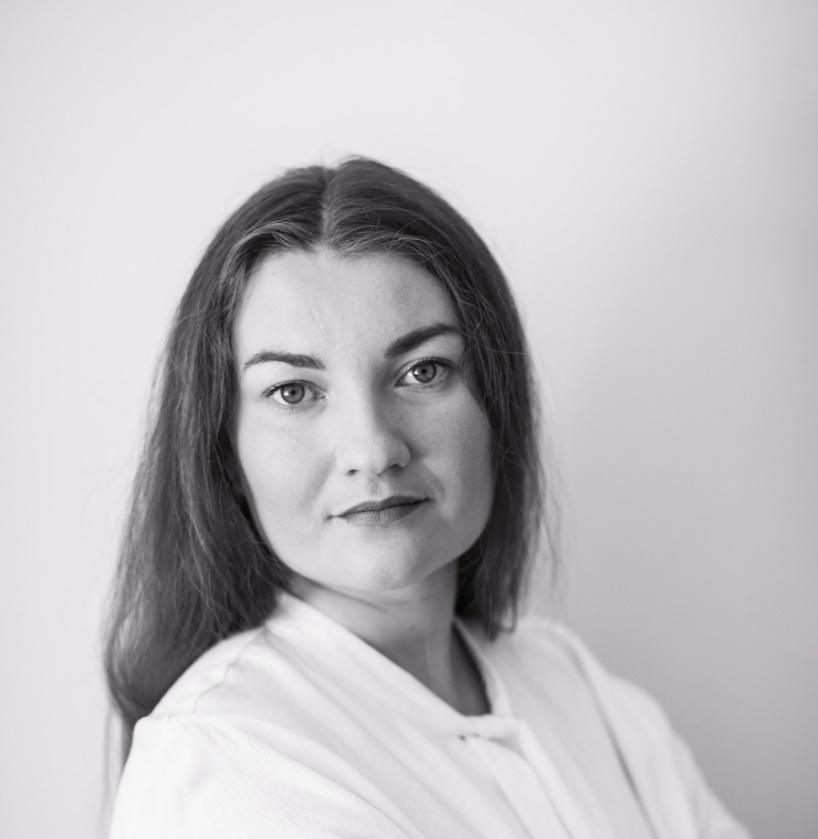 CIVICUS speaks about anti-war protests and the growing restrictions on civic space in Russia with Nelya Rakhimova, coordinator of the Coalition for Sustainable Development of Russia (CSDR).
CSDR is a coalition that advocates for and monitors the implementation of the Sustainable Development Goals (SDGs) in Russia. Established in 2020, it includes Russian civil society organisations (CSOs), research institutions, experts and activists. CSDR participates in international and domestic processes, creates awareness of SDGs among the public and mobilises for action on SDGs.
How big are the anti-war protests in Russia, and how has the government reacted to them?
Anti-war protests are currently happening in major cities throughout Russia. Protesters are just demanding peace, but the government’s reaction has been repressive. Of course, bigger changes are needed, but for now the focus of protesters is on ending the war. They typically go out to the streets with placards that read ‘no to war’ and are immediately arrested. Almost all cities are flooded with police monitoring the situation. Innocent people have been tortured simply because they have voiced concerns regarding the ‘military operation’, as the government calls it.
Those out there protesting are ordinary citizens, activists and members of CSOs.Although there are no statistics showing the number of people participating in protests and their composition, it seems that many protesters are young people.
This makes sense, because what makes it somewhat easier for young people to stand against the war and participate in protests is that most of them do not have family responsibilities and are therefore free to act independently. Other people may wish to participate in the protests but because they have families, they feel restricted.
Various platforms have been used to instil fear. People risk not only being arrested but also losing their jobs. But of course the same could be said about students, as there are already cases of students being expelled from universities because of their participation in the protests. Pressure comes not only from the government but also from universities and employers. These issues have been abundantly covered in a comprehensive report recently published by the Russian independent human rights media project OVD-Info.
Do you think repression is deterring people from protesting in larger numbers?
Indeed, although there have been protests all over the place, the number of people protesting is not that big. Many people who are against the so-called ‘military operation’ are scared to take part in protests because they have seen how police treat protesters. In addition, many people choose not to protest because they believe it won’t make a difference.
A look back at previous protests and in Russia and the government’s reaction to them makes it clear why many people are reluctant to participate in the anti-war movement. People are aware of the gruesome acts perpetrated in prisons and police stations. Civic freedoms are so restricted that people are not able to freely express themselves. Having your own views can get you into trouble. We have seen too many human rights violations over the past weeks and we are afraid the situation will only get worse due to the reduced international visibility of Russia’s internal situation.
CSOs are already starting to feel the pressure, as most people prefer to disassociate themselves from them and they are also trying to protect people who associate with them. At the beginning people were signing petitions against the war but now CSOs are removing people’s names because they don’t want to put them in danger’s way.
It is currently very difficult to leave Russia, so people are adopting safety measures to protect themselves while staying. But there are still brave people and organisations that are determined to keep advocating for peace and are not deterred by the ongoing human rights violations.
What is CSDR and what does it do?
CSDR is a civil society coalition working together so that the SDGs are achieved in Russia by 2030. We work with civil society experts on each SDG to push forward this agenda.
The coalition was established in 2020 because at the time the government of Russia was delivering its report on SDG implementation, and we decided we needed to have an alternative report that included the perspective of civil society. We produced a shadow report that was supported by 160 CSOs and 200 individual activists. It was quite successful and was recognised by the German Organisation for International Cooperation and the International Institute for Sustainable Development.
We then continued to work on advocacy for SDG implementation. Last year we hosted a conference in Moscow to which we invited representatives of the ministries of foreign affairs and economic development and the special representative of the president on the SDGs. We tried to stay in touch to deliver our messages on SGD-related issues. We had plans to continue this work but right now we have no idea how we will be able to do so.
What are the main challenges you currently face in your work?
The most challenging thing about organising in Russia is that the law is constantly being changed and restrictions are increasingly being tightened. Right now for instance we are talking to our donors, who are mainly German foundations, because it is not even clear how we are going to be able to receive funds to produce our publications and convene events.
Several new censorship laws have been put in place over the past couple of weeks, and most people have decided to comply with them. But it is not easy to organise in such an environment. Any tactic that protesters and independent CSOs use today will likely be banned by law over the following days and declared a crime.
As a coalition we face a similar situation. We’ve tried to release a statement regarding the current events and have had to review it over and over due to the changing laws. We are being very careful with our wording and social media posts because we do not want to put our members in danger.
Censorship has forced people to go back to traditional methods of expression, organising and protesting. Instead of using social media as a tool to mobilise, more people are now using printed material such as flyers and placards to voice their opinions. Those who continue to be active on social media often resort to the method of using a different name on each platform and deleting all conversations that could lead to them getting arrested. However, no method of mobilising makes people immune to arrest, as the growing numbers of people arrested attest to.
How much change do you think could come out of the protests?
I want to believe that the situation can and will change. And I think if there are massive protests the situation might really change. But it will take time for that to happen.
Unfortunately, there are large numbers of people who continue to support the Russian government. This is the result of the intensive internal propaganda the government has disseminated for years. People have been brainwashed and are convinced that what Russia is doing is for the good of both Russia and Ukraine. This is one of the reasons why it is difficult to have massive protests.
Russian society is deeply divided; families are split and even Ukrainian families in Russia are being torn apart. A part of the population understands what is currently happening, but many people don’t. And I don’t think this is something protests could change. Propaganda has deep roots in Russian society, and fear is doing the rest: among those who don’t believe the propaganda, many are too scared to voice their opinions.
How can the international community best help Russian CSOs and activists?
The international community can support Russian civil society by sharing accurate information about what is happening in the country. A majority of CSOs and activists from neighbouring countries as well as international CSOs are focused on trying to help Ukrainian people, both refugees and those left in Ukraine. This is completely understandable, but I think they shouldn’t forget the people in Russia who continue to advocate for peace and human rights. The least they can do is shine the spotlight on the situation in their national and international media outlets so people abroad are aware of what is going on and are able to offer their help.
Additionally, they should put pressure on the Russian government through various international instruments, including the SDGs. Civil society from around the world could collectively release statements that highlight the situation and note the changes they would like to see. Maintaining solidarity in these times is also very important because it helps people working on the ground.
Last but not least, CSOs and activists need financial assistance. Those wishing to help protesters by providing funding should get in touch with the organisations leading the anti-war movement and offer their help. And of course, if Russian activists decide to leave the country due to political pressure, they also need support from international colleagues, as no one should be left behind.
Civic space in Russiais rated ‘repressed’ by theCIVICUS Monitor. Russia is currently on theCIVICUS Monitor Watch List, which identifies countries in which a severe and abrupt deterioration in the quality of civic space is taking place.
Get in touch with CSDR through itswebsite. -
RUSSIA: ‘These protests are key to the preservation of Russian civil society’
 CIVICUS speaks about the ongoing anti-war protests in Russia and the repressive government response with OVD-Info’s spokesperson Maria Kuznetsova.
OVD-Info is an independent civil society organisation (CSO) that aims to promote and protect human rights – and specifically the freedom of peaceful assembly – in Russia. It monitors protests and their repression and assists detained protesters through legal aid, online consultations, and bringing them food and water while in detention.
How big are the ongoing anti-war protests in Russia?
The protests were massive in the first two weeks of the war – we recorded protest-related arrests in at least 159 cities. Of course, the biggest protests were those taking place in major developed cities, basically Moscow and St. Petersburg.
People came out against the war for moral reasons, because they could not look at the horror of what was happening in Ukraine and not react: mass bombings, killings of civilians, violence.
Protesters are mostly people under 40 years old – because they are the ones who, thanks to the internet, get an accurate picture of what is happening, in contrast to the narrative that is pushed by censored state TV. Their demands to end the war are simultaneously, of course, demands to overthrow Putin. Because one is impossible without the other.
My opinion is that due to the deteriorating economic situation, another – quite different – wave of protests may be expected soon. This may start among the poorer sections of the population who have lost income and jobs, and among doctors and patients, who are already experiencing the consequences of shortages of life-saving medicines due to sanctions.
Do you think repression has dissuaded people from protesting in bigger numbers?
At the height of the protests, on 5 March, more than 5,500 people were detained in one day. Since the beginning of the war, nearly 15,000 people have been detained at anti-war protests. The police are very harshly suppressing the protests – for example, on Sunday 20 March in Moscow, virtually all protesters were detained, and many of them were arrested for five to 30 days.
In addition, 39 criminal cases have already been opened due to statements and protests against the war; some of the defendants are already in jail. All of this scares away potential protesters. They understand that they can get a prison sentence even for participating in a peaceful rally, and it is obvious that fewer people are coming out now. However, protest continues under different forms: people sign open letters, write on social media, quit their jobs. We have even seen several high-profile dismissals of journalists and editors from federal media channels.
Those who still venture out to protest are being assisted by several human rights organisations, including OVD-Info. We send our lawyers to police stations where protesters are held. When there are not enough lawyers or we do not have a lawyer in a given city, we provide online consultations. We accompany the defendants to court. In addition, there is an extensive network of volunteers who also come to police stations to bring detainees water and food so that they do not go hungry all night after they are detained.
Do you think the protests will lead to meaningful change?
I don’t think there is a chance that these protests will influence the politics of the current regime, and as a human rights project, rather than a political one, OVD-Info is not in a position to assess the prospects for regime change. What we know for sure is that the only possible path to peace in Europe is having a free Russia that protects human rights. We do not know when our country will turn that way.
Still, these protests are key to the preservation and future development of Russian civil society. By taking part in them, those who oppose the war will gain invaluable self-organisation skills and acquire the moral right to play a prominent role when the time comes to build a new Russia.
How have media restrictions imposed by the government affected the protests, and civil society work more generally?
In my opinion, what we are witnessing in Russia is the establishment of military censorship. Even calling the events in Ukraine a war is prohibited – this is punishable by an administrative fine, and in case of repeated violations it becomes a criminal case, which can result in up to five years in prison. A new crime has been included in the Criminal Code: that of public disseminating knowingly false information about the Armed Forces of the Russian Federation. You can get up to 15 years in prison if you’re accused of doing that.
The websites of almost all independent organisations have been blocked in Russia since the beginning of the war. Due to anti-war remarks, its founders were forced to shut down Echo of Moscow, a radio station. The online media Znak.com also closed due to pressures. Independent TV channel Dozhd left Russia and temporarily interrupted its broadcasts, which were viewed by millions. Almost all independent media outlets were forced to leave Russia. In addition, the government blocked Twitter, Facebook, and Instagram, because they realised they were unable to effectively impose censorship on social media.
At the moment, military censorship makes it tough to continue any anti-war and independent civilian activity, because any statement or protest can result in a prison term. But people continue to protest regardless, and many celebrities are speaking out publicly. We have seen employees of propaganda channels getting fired, which suggests that people are so enraged by what is happening that they are willing to fight back despite the risks.
How have the sanctions affected your work?
I don’t have a clear answer just yet. It seems to me that so far sanctions have not affected our work so much, but the situation can always quickly deteriorate. In fact, OVD-Info has closed down all Russian donations, while international donations continue to be safe.
For the time being, it is the shutdown of many social media platforms that has made our work much more complex: it is increasingly difficult for us to convey information to people, educate them on legal issues and provide them with legal assistance. It will be especially difficult for us if Telegram is blocked in Russia, because it is now our primary platform for communicating with detainees.
How can the international community help independent CSOs and human rights activists in Russia?
I think the international community should be more careful with sanctions, which should be targeted. I think that the idea of collective responsibility is wrong – in Russia, it is a concept reminiscent of Stalin’s mass deportations of whole peoples, such as the Crimean Tatars, to pay for some individuals’ cooperation with the Third Reich.
From a pragmatic rather than an ethical point of view, it must be noted that many sanctions that have been imposed are having negative side effects – they are harming the most progressive part of society that opposes the war, preventing it from receiving information and obstructing the work of the last independent media. For example, Mailchimp – a USA-based platform and email marketing service that is used to create and distribute email marketing campaigns – has blocked all its clients from Russia.
It is also essential to understand that the Russians and Belarusians that are now leaving their countries and arriving in Turkey, Georgia, Armenia and other parts of Europe are mostly opposition activists and independent journalists who face jail time in their homeland. But because they are Russians and Belarusians, they are facing massive discrimination. However, these activists and journalists are not responsible for their government’s actions – they are in fact the only hope that their countries will change, so it is essential to help them instead of discriminating against them as if they were the aggressors’. It is necessary to understand that not all Russians and Belarusians support the war in Ukraine.
Civic space in Russiais rated ‘repressed’ by theCIVICUS Monitor. Russia is currently on theCIVICUS Monitor Watch List, which identifies countries in which a severe and abrupt deterioration in the quality of civic space is taking place.
Get in touch with OVD-Info through itswebsite or itsFacebook andInstagram pages, and follow@ovdinfo on Twitter. -
RUSSIA: ‘We hope that social media companies will avoid becoming a censorship tool’
 CIVICUS speaks about increasing civic space restrictions in Russia with Denis Shedov, a lawyer and analyst at OVD-Info, an independent human rights civil society organisation (CSO) that recently experienced the blockage of its website by the Russian authorities. Denis’ work focuses on the violation of the freedoms of peaceful assembly and expression and other forms of politically motivated persecution in Russia. As well as researching these topics, as a lawyer he defends detained protesters, appeals against bans on peaceful assemblies and challenges unlawful police action in Russia, while also bringing these situations to the attention of the European Court of Human Rights.
 -
Russia: Human Rights Council must respond to crackdown on civil society
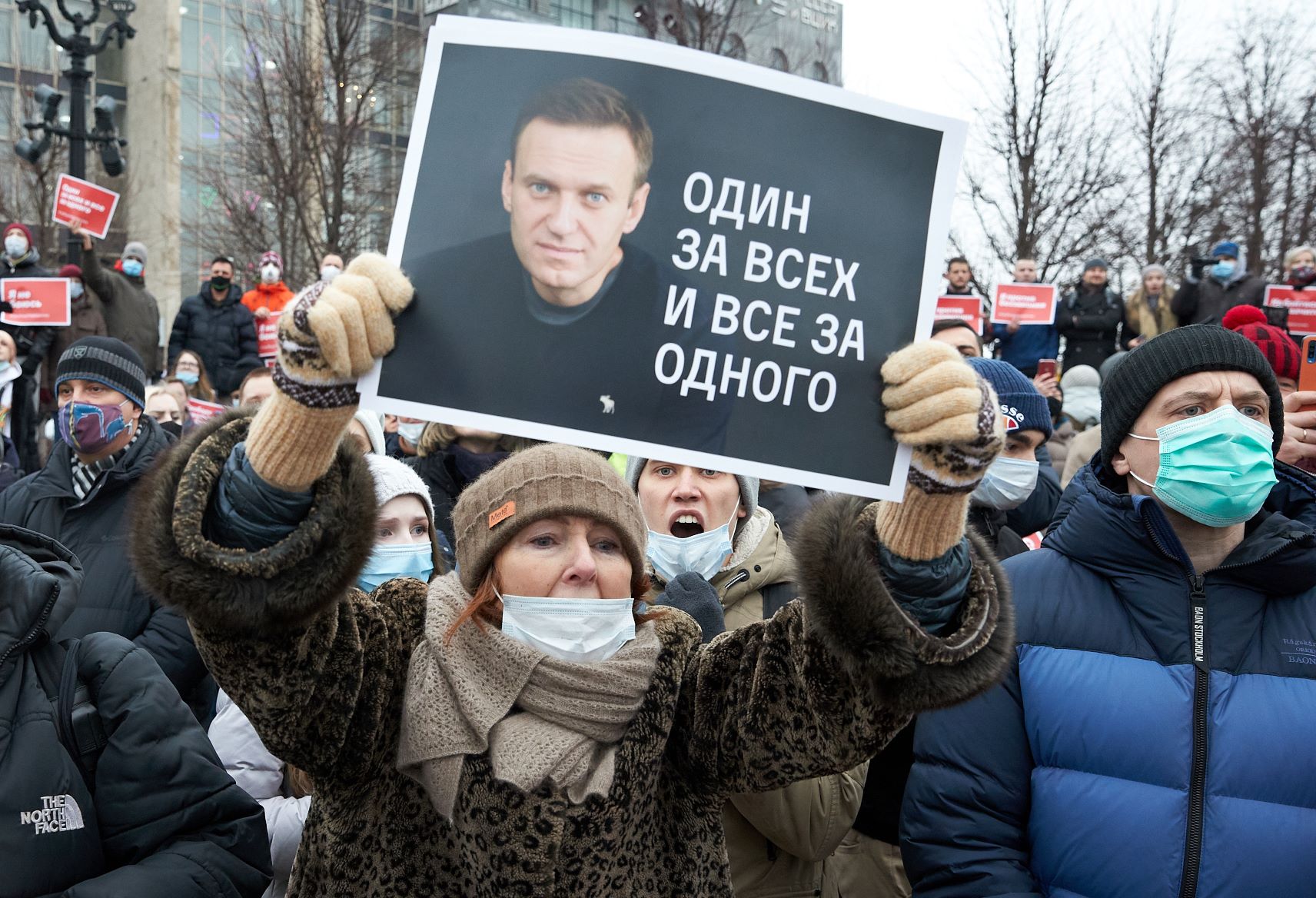
Joint statement ahead of the 46th Session of the Human Rights Council, condemning Russia (a new member of the body) for recent attacks against protestors (over 12,000 detained since late January).
-
SADC fiddles while the DRC burns
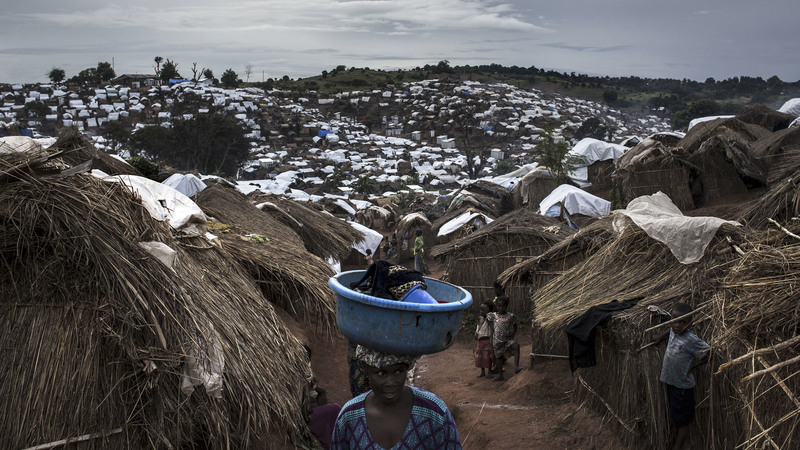
By Teldah Mawarire, Advocacy and Campaigns Officer and Ine van Severen, Civic Space Research Officer
When a home catches fire, neighbours dash out to fight the blaze. They are motivated not only by a concern for the occupants’ welfare but also for their own — if the fire is not contained, it could engulf their homes too.
Read on: Mail and Guardian
-
Saudi Arabia: Over 160 groups call for accountability following murder of journalist and widespread arrest of women’s rights defenders
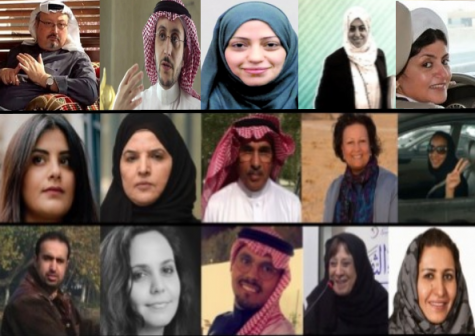
Saudi Arabia: Kingdom must be held to account for suppression of dissent, following murder of journalist and widespread arrest of women’s rights defenders
Recognising the fundamental right to express our views, free from repression, we the undersigned civil society organisations call on the international community, including the United Nations, multilateral and regional institutions as well as democratic governments committed to the freedom of expression, to take immediate steps to hold Saudi Arabia accountable for grave human rights violations. The murder of Saudi journalist Jamal Ahmad Khashoggi in the Saudi Consulate in Istanbul on 2 October is only one of many gross and systematic violations committed by the Saudi authorities inside and outside the country. As the International Day to End Impunity for Crimes against Journalists approaches on 2 November, we strongly echo calls for an independent investigation into Khashoggi’s murder, in order to hold those responsible to account.
This case, coupled with the rampant arrests of human rights defenders, including journalists, scholars and women’s rights activists; internal repression; the potential imposition of the death penalty on demonstrators; and the findings of the UN Group of Eminent Experts report which concluded that the Coalition, led by Saudi Arabia, have committed acts that may amount to international crimes in Yemen, all demonstrate Saudi Arabia’s record of gross and systematic human rights violations. Therefore, our organisations further urge the UN General Assembly to suspend Saudi Arabia from the UN Human Rights Council (HRC), in accordance with operative paragraph 8 of the General Assembly resolution 60/251.
Saudi Arabia has never had a reputation for tolerance and respect for human rights, but there were hopes that as Crown Prince Mohammed Bin Salman rolled out his economic plan (Vision 2030), and finally allowed women to drive, there would be a loosening of restrictions on women’s rights, and freedom of expression and assembly. However, prior to the driving ban being lifted in June, women human rights defenders received phone calls warning them to remain silent. The Saudi authorities then arrested dozens of women’s rights defenders (both female and male) who had been campaigning against the driving ban. The Saudi authorities’ crackdown against all forms of dissent has continued to this day.
Khashoggi criticised the arrests of human rights defenders and the reform plans of the Crown Prince, and was living in self-imposed exile in the US. On 2 October 2018, Khashoggi went to the Consulate in Istanbul with his fiancée to complete some paperwork, but never came out. Turkish officials soon claimed there was evidence that he was murdered in the Consulate, but Saudi officials did not admit he had been murdered until more than two weeks later.
It was not until two days later, on 20 October, that the Saudi public prosecution’s investigation released findings confirming that Khashoggi was deceased. Their reports suggested that he died after a “fist fight” in the Consulate, and that 18 Saudi nationals have been detained. King Salman also issued royal decrees terminating the jobs of high-level officials, including Saud Al-Qahtani, an advisor to the royal court, and Ahmed Assiri, deputy head of the General Intelligence Presidency. The public prosecution continues its investigation, but the body has not been found.
Given the contradictory reports from Saudi authorities, it is essential that an independent international investigation is undertaken.
On 18 October, the Committee to Protect Journalists (CPJ), Human Rights Watch, Amnesty International, and Reporters Without Borders (RSF) called on Turkey to request that UN Secretary-General Antonio Guterres establish a UN investigation into the extrajudicial execution of Khashoggi.
On 15 October 2018, David Kaye, the UN Special Rapporteur on freedom of expression, and Dr. Agnès Callamard, the UN Special Rapporteur on summary executions, called for “an independent investigation that could produce credible findings and provide the basis for clear punitive actions, including the possible expulsion of diplomatic personnel, removal from UN bodies (such as the Human Rights Council), travel bans, economic consequences, reparations and the possibility of trials in third states.”
We note that on 27 September, Saudi Arabia joined consensus at the UN HRC as it adopted a new resolution on the safety of journalists (A/HRC/Res/39/6). We note the calls in this resolution for “impartial, thorough, independent and effective investigations into all alleged violence, threats and attacks against journalists and media workers falling within their jurisdiction, to bring perpetrators, including those who command, conspire to commit, aid and abet or cover up such crimes to justice.” It also “[u]rges the immediate and unconditional release of journalists and media workers who have been arbitrarily arrested or arbitrarily detained.”
Khashoggi had contributed to the Washington Post and Al-Watan newspaper, and was editor-in-chief of the short-lived Al-Arab News Channel in 2015. He left Saudi Arabia in 2017 as arrests of journalists, writers, human rights defenders and activists began to escalate. In his last column published in the Washington Post, he criticised the sentencing of journalist Saleh Al-Shehi to five years in prison in February 2018. Al-Shehi is one of more than 15 journalists and bloggers who have been arrested in Saudi Arabia since September 2017, bringing the total of those in prison to 29, according to RSF, while up to 100 human rights defenders and possibly thousands of activists are also in detention according to the Gulf Centre for Human Rights (GCHR) and Saudi partners including ALQST. Many of those detained in the past year had publicly criticised reform plans related to Vision 2030, noting that women would not achieve economic equality merely by driving.
Another recent target of the crackdown on dissent is prominent economist Essam Al-Zamel, an entrepreneur known for his writing about the need for economic reform. On 1 October 2018, the Specialised Criminal Court (SCC) held a secret session during which the Public Prosecution charged Al-Zamel with violating the Anti Cyber Crime Law by “mobilising his followers on social media.” Al-Zamel criticised Vision 2030 on social media, where he had one million followers. Al-Zamel was arrested on 12 September 2017 at the same time as many other rights defenders and reformists.
The current unprecedented targeting of women human rights defenders started in January 2018 with the arrest of Noha Al-Balawi due to her online activism in support of social media campaigns for women’s rights such as (#Right2Drive) or against the male guardianship system (#IAmMyOwnGuardian). Even before that, on 10 November 2017, the SCC in Riyadh sentenced Naimah Al-Matrod to six years in jail for her online activism.
The wave of arrests continued after the March session of the HRC and the UN Committee on the Elimination of Discrimination against Women (CEDAW) published its recommendations on Saudi Arabia. Loujain Al-Hathloul, was abducted in the Emirates and brought to Saudi Arabia against her will on 15 May 2018; followed by the arrest of Dr. Eman Al-Nafjan, founder and author of the Saudiwoman's Weblog, who had previously protested the driving ban; and Aziza Al-Yousef, a prominent campaigner for women’s rights.
Four other women’s human rights defenders who were arrested in May 2018 include Dr. Aisha Al-Manae, Dr. Hessa Al-Sheikh and Dr. Madeha Al-Ajroush, who took part in the first women’s protest movement demanding the right to drive in 1990; and Walaa Al-Shubbar, a young activist well-known for her campaigning against the male guardianship system. They are all academics and professionals who supported women’s rights and provided assistance to survivors of gender-based violence. While they have since been released, all four women are believed to be still facing charges.
On 6 June 2018, journalist, editor, TV producer and woman human rights defender Nouf Abdulaziz was arrested after a raid on her home. Following her arrest, Mayya Al-Zahrani published a letter from Abdulaziz, and was then arrested herself on 9 June 2018, for publishing the letter.
On 27 June 2018, Hatoon Al-Fassi, a renowned scholar, and associate professor of women's history at King Saud University, was arrested. She has long been advocating for the right of women to participate in municipal elections and to drive, and was one of the first women to drive the day the ban was lifted on 24 June 2018.
Twice in June, UN special procedures called for the release of women’s rights defenders. On 27 June 2018, nine independent UN experts stated, “In stark contrast with this celebrated moment of liberation for Saudi women, women's human rights defenders have been arrested and detained on a wide scale across the country, which is truly worrying and perhaps a better indication of the Government's approach to women's human rights.” They emphasised that women human rights defenders “face compounded stigma, not only because of their work as human rights defenders, but also because of discrimination on gender grounds.”
Nevertheless, the arrests of women human rights defenders continued with Samar Badawi and Nassima Al-Sadah on 30 July 2018. They are being held in solitary confinement in a prison that is controlled by the Presidency of State Security, an apparatus established by order of King Salman on 20 July 2017. Badawi’s brother Raif Badawi is currently serving a 10-year prison sentence for his online advocacy, and her former husband Waleed Abu Al-Khair, is serving a 15-year sentence. Abu Al-Khair, Abdullah Al-Hamid, and Mohammad Fahad Al-Qahtani (the latter two are founding members of the Saudi Civil and Political Rights Association - ACPRA) were jointly awarded the Right Livelihood Award in September 2018. Yet all of them remain behind bars.
Relatives of other human rights defenders have also been arrested. Amal Al-Harbi, the wife of prominent activist Fowzan Al-Harbi, was arrested by State Security on 30 July 2018 while on the seaside with her children in Jeddah. Her husband is another jailed member of ACPRA. Alarmingly, in October 2018, travel bans were imposed against the families of several women’s rights defenders, such as Aziza Al-Yousef, Loujain Al-Hathloul and Eman Al-Nafjan.
In another alarming development, at a trial before the SCC on 6 August 2018, the Public Prosecutor called for the death penalty for Israa Al-Ghomgam who was arrested with her husband Mousa Al-Hashim on 6 December 2015 after they participated in peaceful protests in Al-Qatif. Al-Ghomgam was charged under Article 6 of the Cybercrime Act of 2007 in connection with social media activity, as well as other charges related to the protests. If sentenced to death, she would be the first woman facing the death penalty on charges related to her activism. The next hearing is scheduled for 28 October 2018.
The SCC, which was set up to try terrorism cases in 2008, has mostly been used to prosecute human rights defenders and critics of the government in order to keep a tight rein on civil society.
On 12 October 2018, UN experts again called for the release of all detained women human rights defenders in Saudi Arabia. They expressed particular concern about Al-Ghomgam’s trial before the SCC, saying, “Measures aimed at countering terrorism should never be used to suppress or curtail human rights work.” It is clear that the Saudi authorities have not acted on the concerns raised by the special procedures – this non-cooperation further brings their membership on the HRC into disrepute.
Many of the human rights defenders arrested this year have been held in incommunicado detention with no access to families or lawyers. Some of them have been labelled traitors and subjected to smear campaigns in the state media, escalating the possibility they will be sentenced to lengthy prison terms. Rather than guaranteeing a safe and enabling environment for human rights defenders at a time of planned economic reform, the Saudi authorities have chosen to escalate their repression against any dissenting voices.
Our organisations reiterate our calls to the international community to hold Saudi Arabia accountable and not allow impunity for human rights violations to prevail.
We call on the international community, and in particular the UN, to:
- Take action to ensure there is an international, impartial, prompt, thorough, independent and effective investigation into the murder of journalist Jamal Ahmad Khashoggi;
- Ensure Saudi Arabia be held accountable for the murder of Khashoggi and for its systematic violations of human rights;
- Call a Special Session of the Human Rights Council on the recent wave of arrests and attacks against journalists, human rights defenders and other dissenting voices in Saudi Arabia;
- Take action at the UN General Assembly to suspend Saudi Arabia’s membership of the Human Rights Council; and
- Urge the government of Saudi Arabia to implement the below recommendations.
We call on the authorities in Saudi Arabia to:
- Produce the body of Jamal Ahmad Khashoggi and invite independent international experts to oversee investigations into his murder; cooperate with all UN mechanisms; and ensure that those responsible for his death, including those who hold command responsibility, are brought to justice;
- Immediately quash the convictions of all human rights defenders, including women and men advocating for gender equality, and drop all charges against them;
- Immediately and unconditionally release all human rights defenders, writers, journalists and prisoners of conscience in Saudi Arabia whose detention is a result of their peaceful and legitimate work in the promotion and protection of human rights including women’s rights;
- Institute a moratorium on the death penalty; including as punishment for crimes related to the exercise of rights to freedom of opinion and expression, and peaceful assembly;
- Guarantee in all circumstances that all human rights defenders and journalists in Saudi Arabia are able to carry out their legitimate human rights activities and public interest reporting without fear of reprisal;
- Immediately implement the recommendations made by the UN Group of Eminent Experts on Yemen; and
- Ratify the International Covenant on Civil and Political Rights, and bring all national laws limiting the rights to freedom of expression, peaceful assembly and association into compliance with international human rights standards.
Signed,
Access Now
Action by Christians for the Abolition of Torture (ACAT) - France
Action by Christians for the Abolition of Torture (ACAT) - Germany
Al-Marsad - Syria
ALQST for Human Rights
ALTSEAN-Burma
Americans for Democracy & Human Rights in Bahrain (ADHRB)
Amman Center for Human Rights Studies (ACHRS) - Jordan
Amman Forum for Human Rights
Arabic Network for Human Rights Information (ANHRI)
Armanshahr/OPEN ASIA
ARTICLE 19
Asian Forum for Human Rights and Development (FORUM-ASIA)
Asian Human Rights Commission (AHRC)
Asociación Libre de Abogadas y Abogados (ALA)
Association for Freedom of Thought and Expression (AFTE)
Association for Human Rights in Ethiopia (AHRE)
Association malienne des droits de l’Homme (AMDH)
Association mauritanienne des droits de l’Homme (AMDH)
Association nigérienne pour la défense des droits de l’Homme (ANDDH)
Association of Tunisian Women for Research on Development
Association for Women's Rights in Development (AWID)
Awan Awareness and Capacity Development Organization
Bahrain Institute for Rights and Democracy (BIRD)
Bureau for Human Rights and the Rule of Law - Tajikistan
Cairo Institute for Human Rights Studies (CIHRS)
Cambodian League for the Promotion and Defense of Human Rights (LICADHO)
Canadian Center for International Justice
Caucasus Civil Initiatives Center (CCIC)
Center for Civil Liberties - Ukraine
Center for Prisoners’ Rights
Center for the Protection of Human Rights “Kylym Shamy” - Kazakhstan
Centre oecuménique des droits de l’Homme (CEDH) - Haïti
Centro de Políticas Públicas y Derechos Humanos (EQUIDAD) - Perú
Centro para la Acción Legal en Derechos Humanos (CALDH) - Guatemala
Citizen Center for Press Freedom
Citizens’ Watch - Russia
CIVICUS
Civil Society Institute (CSI) - Armenia
Code Pink
Columbia Law School Human Rights Clinic
Comité de acción jurídica (CAJ) - Argentina
Comisión Ecuménica de Derechos Humanos (CEDHU) - Ecuador
Comisión Nacional de los Derechos Humanos - Dominican Republic
Committee on the Administration of Justice (CAJ) -Northern Ireland
Committee to Protect Journalists
Committee for Respect of Liberties and Human Rights in Tunisia
Damascus Center for Human Rights in Syria
Danish PEN
DITSHWANELO - The Botswana Center for Human Rights
Dutch League for Human Rights (LvRM)
Election Monitoring and Democracy Studies Center - Azerbaijan
English PEN
European Centre for Democracy and Human Rights (ECDHR)
European Saudi Organisation for Human Rights (ESOHR)
FIDH within the framework of the Observatory for the protection of human rights defenders
Finnish League for Human Rights
Freedom Now
Front Line Defenders
Fundación regional de asesoría en derechos humanos (INREDH) - Ecuador
Foundation for Human Rights Initiative (FHRI) - Uganda
Groupe LOTUS (RDC)
Gulf Centre for Human Rights (GCHR)
Hellenic League for Human Rights (HLHR)
Human Rights Association (IHD) - Turkey
Human Rights Center (HRCIDC) - Georgia
Human Rights Center “Viasna” - Belarus
Human Rights Commission of Pakistan
Human Rights Concern (HRCE) - Eritrea
Human Rights in China
Human Rights Movement “Bir Duino Kyrgyzstan”
Human Rights Center Memorial
Human Rights Sentinel
IFEX
Index on Censorship
Initiative for Freedom of Expression (IFoX) - Turkey
Institut Alternatives et Initiatives citoyennes pour la Gouvernance démocratique (I-AICGD) - DR Congo
International Center for Supporting Rights and Freedoms (ICSRF) - Switzerland
Internationale Liga für Menscherechte
International Human Rights Organisation “Fiery Hearts Club” - Uzbekistan
International Legal Initiative (ILI) - Kazakhstan
International Media Support (IMS)
International Partnership for Human Rights (IPHR)
International Press Institute
International Service for Human Rights (ISHR)
Internet Law Reform and Dialogue (iLaw)
Iraqi Association for the Defense of Journalists' Rights
Iraqi Hope Association
Italian Federation for Human Rights (FIDH)
Justice for Iran
Karapatan - Philippines
Kazakhstan International Bureau for Human Rights and the Rule of Law
Khiam Rehabilitation Center for Victims of Torture
KontraS
Latvian Human Rights Committee
Lao Movement for Human Rights
Lawyers' Rights Watch Canada
League for the Defense of Human Rights in Iran (LDDHI)
Legal Clinic “Adilet” - Kyrgyzstan
Ligue algérienne de défense des droits de l’Homme (LADDH)
Ligue centrafricaine des droits de l’Homme
Ligue des droits de l’Homme (LDH) Belgium
Ligue des Electeurs (LE) - DRC
Ligue ivoirienne des droits de l’Homme (LIDHO)
Ligue sénégalaise des droits humains (LSDH)
Ligue tchadienne des droits de l’Homme (LTDH)
Maison des droits de l’Homme (MDHC) - Cameroon
Maharat Foundation
MARUAH - Singapore
Middle East and North Africa Media Monitoring Observatory
Monitoring Committee on Attacks on Lawyers, International Association of People's Lawyers (IAPL)
Movimento Nacional de Direitos Humanos (MNDH) - Brasil
Muslims for Progressive Values
Mwatana Organization for Human Rights
National Syndicate of Tunisian Journalists
No Peace Without Justice
Norwegian PEN
Odhikar
Open Azerbaijan Initiative
Organisation marocaine des droits humains (OMDH)
People’s Solidarity for Participatory Democracy (PSPD)
People’s Watch
PEN America
PEN Canada
PEN International
PEN Lebanon
PEN Québec
Promo-LEX - Moldova
Public Foundation - Human Rights Center “Kylym Shamy” - Kyrgyzstan
Rafto Foundation for Human Rights
RAW in WAR (Reach All Women in War)
Reporters Without Borders (RSF)
Right Livelihood Award Foundation
Robert F. Kennedy Human Rights
Sahrawi Media Observatory to document human rights violations
SALAM for Democracy and Human Rights (SALAM DHR)
Scholars at Risk (SAR)
Sham Center for Democratic Studies and Human Rights in Syria
Sisters’ Arab Forum for Human Rights (SAF) - Yemen
Solicitors International Human Rights Group
Syrian Center for Legal Studies and Research
Syrian Center for Media and Freedom of Expression (SCM)
Tanmiea - Iraq
Tunisian Association to Defend Academic Values
Tunisian Association to Defend Individual Rights
Tunisian Association of Democratic Women
Tunis Center for Press Freedom
Tunisian Forum for Economic and Social Rights
Tunisian League to Defend Human Rights
Tunisian Organization against Torture
Urgent Action Fund for Women’s Human Rights (UAF)
Urnammu
Vietnam Committee on Human Rights
Vigdis Freedom Foundation
Vigilance for Democracy and the Civic State
Women Human Rights Defenders International Coalition
Women’s Center for Culture & Art - United Kingdom
World Association of Newspapers and News Publishers (WAN-IFRA)
World Organisation Against Torture (OMCT) within the framework of the Observatory for the protection of human rights defenders
Yemen Center for Human Rights
Zimbabwe Human Rights Association (ZimRights)
17Shubat For Human Rights -
Saudi Arabia: States should adopt a resolution at UNHRC to address human rights violations

Your Excellency,
We remain highly concerned about the human rights situation in Saudi Arabia, in particular the recent mass executions of 37 men on 23 April, the continued arbitrary detention of human rights defenders including women human rights defenders and the ongoing impunity for serious human rights violations, including torture.
-
SDGs: ‘Gaps in data coverage are most likely to exclude the poorest people’
 CIVICUS speaks to Dr Claire Melamed, CEO of theGlobal Partnership for Sustainable Development Data, an open, independent, multi-stakeholder network aimed at harnessing the data revolution for sustainable development. Its network includes hundreds of data champions representing the full range of data producers and users from around the world, including governments, statistics agencies, companies, civil society groups, international organisations, academic institutions and foundations.
Why is data important?
Data can help governments improve policy-making and service delivery, including aligning budgets with needs. It can also help citizens and civil society groups to have a voice: to make better decisions and hold leaders accountable for their actions. Private companies use data to build capacity and drive entrepreneurship and innovation. In other words, data is a major potential driver of sustainable development. The problem is that very important decisions affecting development around the world are often based on incomplete, inaccessible, or simply inaccurate information.
If you’re missing in the data, then you’re missing in the decisions on budgets and policies that are made with that data. A government is not going to build a road or a school or a hospital for people that it doesn’t know are there, and it’s not going to solve a problem it can’t see.
Of course, not all governments want to solve those problems, and data is also an important tool for civil society advocates who want to highlight problems or put a spotlight on inequality. We’ve all been asked ‘show me the numbers’, and it’s really important that advocates can do that.
What is the Global Partnership for Sustainable Development Data and what work do you do?
The Global Partnership for Sustainable Development Data is a growing network of hundreds of partners from governments, multilateral institutions, civil society, the private sector, the United Nations (UN), and academia. What they have in common is a desire to use data to help achieve the Sustainable Development Goals (SDGs). We’re coming up to our fifth birthday in September 2020.
We help governments, civil society groups and others who want to use data to improve their work to find the best solutions to their problems, and then put them into practice. Data is not only about numbers and platforms, it’s also about people, relationships and institutions. So we put a lot of effort into working with governments, the UN and others over the long term, so that good innovations are adopted in a sustainable way that builds trust and respects people’s rights, while also solving practical problems and helping governments deliver.
One of the things we focus on is how data can better represent the lives of the people who are the least powerful. This is partly about making sure that everyone is represented in the data. Through the Inclusive Data Charter we bring together a wide range of actors to make specific plans and commitments to improve their data on the most marginalised people.
We also believe that people can represent themselves through data. We recently worked with a group of civil society organisations to publish a guide on citizen-generated data (CGD), which is about people collecting data that represents their own experiences and what they think is important, and then feeding that into government systems to influence decisions about budget and policies. It’s already being tested in Kenya, working with the National Statistical Office, and we would love to work with other groups to use it and make it better.
How available is the data required to monitor progress towards the SDGs?
The availability of data on the SDGs is highly variable. In general, issues such as health and education, which were included in the monitoring framework of the Millennium Development Goals, have better data coverage than new issues such as the environment or governance. However, even for those issues where there is some data, it is often out of date or has gaps in coverage. Gaps in coverage are most likely to exclude the poorest people.
A large number of the indicators relating to civic space and participation are still ‘tier 2’, meaning that the data is not yet regularly produced. This is the case with SDG 16.7 (‘ensure responsive, inclusive, participatory and representative decision making at all levels’), 16.10 (‘ensure public access to information and protect fundamental freedoms, in accordance with national legislation and international agreements’) and 17.17 (‘encourage and promote effective public, public-private and civil society partnerships, building on the experience and resourcing strategies of partnerships’). There has been progress in developing methodologies, but the next step is for countries to begin to collect the data regularly and use it to inform their policy-making.
We have been working with civil society groups to increase the use of CGD for the SDGs. The guide to CGD that I mentioned is being tested in Kenya is one example of a tool that will be useful in increasing civil society voice in SDG monitoring and delivery.
How would you assess state reporting on SDG commitments, given their universal and interdependent nature?
It is highly variable. No country is yet collecting all the data that is needed, and in some cases there are gaps that are limiting the ability of civil society to hold governments to account.
Over the past couple of years, we have provided support to a number of countries, including Costa Rica, Kenya, the Philippines and Sierra Leone, to define their priorities and make plans to improve their data in key areas. We’re already seeing improvements in how governments are using data for agriculture, environmental management, water and other areas.
We are working with the World Bank Group, the UN and the Sustainable Development Solutions Network on the ‘Data For Now’ initiative to scale up the use of real-time, dynamic, disaggregated data to achieve and monitor the SDGs. We aim to put tested methodologies to use to give governments and civil society groups the information they need to make the right decisions to achieve the SDGs. ‘Data For Now’ is working with governments to increase the timeliness of data in different sectors, including Bangladesh, Colombia, Ghana, Mongolia, Nepal, Paraguay, Rwanda and Senegal.
Are current pressures on multilateralism impacting on progress on SDG commitments?
Most definitely. The crisis of multilateralism is having a negative impact, in two ways. There are some goals, such as those on climate, which can only be achieved through multilateral action, which is particularly difficult in the current political climate. Additionally, if multilateralism is seen as less important, then the effect of peer pressure and the influence of global norms will be reduced, weakening government incentives to take actions on the SDGs.
Get in touch with the Global Partnership for Sustainable Development Data through theirwebsite, where you can also sign up to the newsletter‘Our World in Data’, orfollow@Data4SDGs and@clairemelamed on Twitter.
-
SENEGAL: ‘The situation is becoming more tense as we approach the 2024 elections’
 CIVICUS speaks about the deterioration of civic space in the run-up to next year’s elections in Senegal with Sadikh Niass, Secretary General of the African Meeting for the Defence of Human Rights (Rencontre Africaine pour la Défense des Droits de l’Homme,RADDHO), andIba Sarr, Director of Programmes at RADDHO.
RADDHO is a national civil society organisation (CSO) based in Dakar, Senegal. It works for the protection and promotion of human rights at the national, regional and international levels through research, analysis and advocacy aimed at providing early warning and preventing conflict.
What are the conditions for civil society in Senegal?
Senegalese civil society remains very active but faces a number of difficulties linked to the restriction of civic space. It is subjected to many verbal attacks by lobbies close to the government, which consider them to be opponents or promoters of ‘counter-values’ such as homosexuality. It is also confronted with restrictions on freedom of assembly. Civil society works in difficult conditions with few financial and material resources. Human rights organisations receive no financial support from the state.
The situation is becoming more tense as we approach the February 2024 elections. Since March 2021, the most radical opposition and the government have opted for confrontation. The government is trying to weaken the opposition by reducing it to a minimum. It is particularly targeting the most dynamic opposition group, the Yewi Askan Wi (‘Liberate the People’) coalition, whose main leader, Ousmane Sonko, is currently in detention.
All opposition demonstrations are systematically banned. Spontaneous demonstrations are violently repressed and result in arrests. The judiciary was instrumentalised to prevent the candidacy of the main opponent to the regime, Sonko, and the main leaders of his party have been arrested.
In recent years, we have also seen an upsurge in verbal, physical and legal threats against journalists, which is a real setback for the right to freedom of information.
What will be at stake in the 2024 presidential election?
With the discovery of oil and gas, Senegal is becoming an attractive destination for investors. Transparent management of these resources remains a challenge in a context marked by an upsurge in terrorist acts. Poverty-stricken populations see this discovery as a means of improving their standard of living. With the breakthrough of the opposition in the 2022 local and legislative elections, we sense that the electorate is increasingly expressing its desire for transparency, justice and improved socio-economic conditions.
On 3 July 2023, the incumbent president declared that he would not compete in the next elections. This declaration could offer a glimmer of hope for a free and transparent election. But the fact that the state is being tempted to prevent leading opposition figures from running poses a major risk of the country descending into turbulence.
Civil society remains alert and is working to ensure that the 2024 elections are inclusive, free and transparent. To this end, it has stepped up its efforts to promote dialogue among political players. CSOs are also working through several platforms to support the authorities in organising peaceful elections by monitoring the process before, during and after the poll.
What triggered the recent demonstrations? What are the protesters’ demands and how has the government responded?
The recent protests were triggered by Sonko’s sentencing to two years in prison on 1 June 2023. On that day, a court ruled on the so-called ‘Sweet Beauty’ case, in which a young woman working in a massage parlour accused Sonko of raping her and making death threats against her. Sonko was acquitted of the death threats, but the rape charges were reclassified as ‘corruption of youth’.
This conviction was compounded by Sonko’s arrest on 31 July 2023 and the dissolution of his political party, PASTEF – short for ‘Senegalese African patriots for work, ethics and fraternity’ in French.
Protesters are driven by the feeling that their leader is being persecuted and that the cases for which he has been convicted only serve to prevent him taking part in the forthcoming elections. Their main demand is the release of their leader and those illegally detained.
Faced with these demonstrations, the government has opted for repression. The authorities consider that they are facing acts of defiance towards the state and have called on the security forces to use force.
Repression has resulted in the deaths of more than 30 people and more than 600 injured since March 2021, when the repression first began. In addition to the loss of life and injuries, more than 700 people have been arrested and are languishing in Senegal’s prisons. We have also noted the arrest of journalists, as well as the interruption of television signals and the restriction of some internet services.
How is Senegalese civil society, including RADDHO, working to defend human rights?
RADDHO works at the national level to help victims of human rights violations and carries out awareness-raising, human rights education and capacity-building activities.
RADDHO collaborates with regional and international mechanisms, notably the African Commission on Human and Peoples’ Rights, the African Committee of Experts on the Rights and Welfare of the Child, the African Court on Human and Peoples’ Rights and the United Nations Human Rights Council. To this end, we carry out a number of activities to raise awareness of legal instruments for the protection and promotion of human rights. As an observer member of the African Commission on Human and Peoples’ Rights, we regularly participate in civil society forums during the Commission’s sessions. RADDHO also coordinates the CSO coalition for the follow-up and implementation of the recommendations of the United Nations Universal Periodic Review for Senegal.
What international support is Senegalese civil society receiving and what additional support would it need?
To fulfil their missions, Senegalese CSOs receive support from international institutions such as the European Union, the bilateral cooperation agencies of the USA and Sweden, USAID and SIDA, and organisations and foundations such as Oxfam NOVIB in the Netherlands, NED in the United States, NID in India and the Ford Foundation, among others. However, because Senegal has long been considered a stable country, support remains insufficient.
Given the growing restrictions on civic space of recent years and the political crisis, civil society needs support to better assist victims of human rights violations, to contribute to the emergence of a genuine human rights culture and to work towards widening civic space and strengthening the rule of law, democracy and good governance.
Civic space in Senegal is rated ‘obstructed’ by theCIVICUS Monitor.
Get in touch with RADDHOthrough itswebsite orFacebook page, and follow@Raddho_Africa on Twitter.
-
SERBIA: ‘People are concerned that a critical tool to hold political elites accountable is being taken away’
 CIVICUS speaks about the results of Serbia’s recent elections and subsequent protests with Raša Nedeljkov, Programme Director of the Centre for Research, Transparency and Accountability (CRTA).
Founded in 2002, CRTA is a Serbian civil society organisation that works to develop a democratic culture and promote civic activism through civic education campaigns, electoral observation and the development of public policy proposals.
What are civil society’s concerns about the recent Serbian elections?
The most critical concerns revolve around the municipal elections in Serbia’s capital, Belgrade. CRTA has concluded that the announced results didn’t reflect the freely expressed will of the city’s voters. Our findings revealed that electoral engineering, particularly through organised voter migration, crucially influenced the outcome of the closely contested race for the Belgrade City Assembly.
Organised voter migration is neither legal nor legitimate. Falsely registering residence for the purpose of voting in local elections outside one’s jurisdiction violates the law, undermines democratic representation and violates citizens’ right to local self-government.
Local elections were strategically staggered and held in only a third of the local jurisdictions to enable temporary voter migration and secure the victory of the ruling Serbian Progressive Party (SPP) in Belgrade, where the opposition Serbia Against Violence party had strong chances of winning. As a result, Belgrade is now on the verge of being governed by people largely elected by non-residents who won’t bear the consequences of the decisions they make.
The SPP also gained significant unfair advantage in the parliamentary elections thanks to intensified political pressure on voters, misuse of public resources and institutions, and control of the most influential media. The national election wasn’t nearly fair, but this was overshadowed by the massive manipulation used to prevent political change in Serbia’s largest city.
How has CRTA worked to document electoral manipulation?
On election day CRTA deployed almost 3,000 observers and analysts. And for the first time, a CRTA observer team suffered a physical attack. Its members were attacked with bats while sitting in their parked car in the police station courtyard in Odzaci, a town in Vojvodina province. They were there to report criminal activity related to carousel voting – where people go from place to place to cast multiple voters – at a polling station. This case poignantly illustrates the tense atmosphere the elections took place in.
Our observers had a very dynamic day in Belgrade, the epicentre of electoral irregularities. They took numerous photos and videos showing buses transporting voters to Belgrade from other towns and countries, including Bosnia and Herzegovina and Montenegro. They also identified several logistical centres used to coordinate the voter migration operation, which directed and transported people to polling stations across the city.
Voter migration was facilitated by manipulation of the voter register, which our team also extensively documented. Prior to the elections, we received information from various sources pointing to illegal actions by local governing bodies and the highest state authorities, all aimed at shaping election results in Belgrade in favour of the SPP. Further analysis, which we’re currently conducting, indicates that significant alterations to the voter register were made over the course of a year.
How have people reacted to election irregularities?
Tens of thousands took to the streets shortly after the results were announced. Protests were sparked by the issues we’ve denounced. Protesters are angry about electoral engineering involving illegal manipulation of the voter register and organised voter migration. They urge the state to protect the integrity of elections by prosecuting those involved in illegal manipulation.
Protesters are not necessarily supporters of opposition parties but rather citizens concerned that a critical tool to hold political elites accountable and drive change is being taken away from them. Their core demand is that fresh elections be held at all levels, contingent upon significant revisions to electoral conditions.
How has the government responded to protesters’ demands?
The government has responded with repression and defensive aggressiveness, denying all allegations, including those from international observers, and disregarding evidence of massive irregularities and criminal activities. The regime continues to assert that the elections were the cleanest ever.
The government is also violating protesters’ human rights. Over 30 people, primarily university students, have been arrested during the protests and faced pressure to confess to crimes they didn’t commit, such as receiving bribes from the opposition to engage in violent activities during protests.
Public officials have also accused CRTA of destabilising Serbia, and our staff members have been labelled as liars and subjected to hate speech by pro-regime media.
What should the international community do?
We urge the international community to look beyond immediate geopolitical considerations and consider the consequences that could follow if democracy in Serbia continues to erode. Further democratic backsliding would only bring it closer to the non-democratic part of the world.
Serbian civil society is actively proposing solutions for the challenges of a captured state and diminishing democratic standards, and our international allies should give more serious considerations to these recommendations. The international community must act soon to prevent Serbia becoming an outright dictatorship
What are civil society’s concerns about the recent Serbian elections?
The most critical concerns revolve around the municipal elections in Serbia’s capital, Belgrade. CRTA has concluded that the announced results didn’t reflect the freely expressed will of the city’s voters. Our findings revealed that electoral engineering, particularly through organised voter migration, crucially influenced the outcome of the closely contested race for the Belgrade City Assembly.
Organised voter migration is neither legal nor legitimate. Falsely registering residence for the purpose of voting in local elections outside one’s jurisdiction violates the law, undermines democratic representation and violates citizens’ right to local self-government.
Local elections were strategically staggered and held in only a third of the local jurisdictions to enable temporary voter migration and secure the victory of the ruling Serbian Progressive Party (SPP) in Belgrade, where the opposition Serbia Against Violence party had strong chances of winning. As a result, Belgrade is now on the verge of being governed by people largely elected by non-residents who won’t bear the consequences of the decisions they make.
The SPP also gained significant unfair advantage in the parliamentary elections thanks to intensified political pressure on voters, misuse of public resources and institutions, and control of the most influential media. The national election wasn’t nearly fair, but this was overshadowed by the massive manipulation used to prevent political change in Serbia’s largest city.
How has CRTA worked to document electoral manipulation?
On election day CRTA deployed almost 3,000 observers and analysts. And for the first time, a CRTA observer team suffered a physical attack. Its members were attacked with bats while sitting in their parked car in the police station courtyard in Odzaci, a town in Vojvodina province. They were there to report criminal activity related to carousel voting – where people go from place to place to cast multiple voters – at a polling station. This case poignantly illustrates the tense atmosphere the elections took place in.
Our observers had a very dynamic day in Belgrade, the epicentre of electoral irregularities. They took numerous photos and videos showing buses transporting voters to Belgrade from other towns and countries, including Bosnia and Herzegovina and Montenegro. They also identified several logistical centres used to coordinate the voter migration operation, which directed and transported people to polling stations across the city.
Voter migration was facilitated by manipulation of the voter register, which our team also extensively documented. Prior to the elections, we received information from various sources pointing to illegal actions by local governing bodies and the highest state authorities, all aimed at shaping election results in Belgrade in favour of the SPP. Further analysis, which we’re currently conducting, indicates that significant alterations to the voter register were made over the course of a year.
How have people reacted to election irregularities?
Tens of thousands took to the streets shortly after the results were announced. Protests were sparked by the issues we’ve denounced. Protesters are angry about electoral engineering involving illegal manipulation of the voter register and organised voter migration. They urge the state to protect the integrity of elections by prosecuting those involved in illegal manipulation.
Protesters are not necessarily supporters of opposition parties but rather citizens concerned that a critical tool to hold political elites accountable and drive change is being taken away from them. Their core demand is that fresh elections be held at all levels, contingent upon significant revisions to electoral conditions.
How has the government responded to protesters’ demands?
The government has responded with repression and defensive aggressiveness, denying all allegations, including those from international observers, and disregarding evidence of massive irregularities and criminal activities. The regime continues to assert that the elections were the cleanest ever.
The government is also violating protesters’ human rights. Over 30 people, primarily university students, have been arrested during the protests and faced pressure to confess to crimes they didn’t commit, such as receiving bribes from the opposition to engage in violent activities during protests.
Public officials have also accused CRTA of destabilising Serbia, and our staff members have been labelled as liars and subjected to hate speech by pro-regime media.
What should the international community do?
We urge the international community to look beyond immediate geopolitical considerations and consider the consequences that could follow if democracy in Serbia continues to erode. Further democratic backsliding would only bring it closer to the non-democratic part of the world.
Serbian civil society is actively proposing solutions for the challenges of a captured state and diminishing democratic standards, and our international allies should give more serious considerations to these recommendations. The international community must act soon to prevent Serbia becoming an outright dictatorship.
Civic space in Serbia is rated ‘obstructed’ by theCIVICUS Monitor.
Get in touch with CRTA through itswebsite orFacebook page, and follow@CRTArs and@rasaned onTwitter.