


human rights
-
To achieve the SDGs, civil society must be supported and protected

Statement at the 46th Session of the UN Human Rights Council
Thank you, Madame President.
CIVICUS welcomes the report on the intersessional meeting for dialogue and cooperation on human rights and the 2030 Agenda. We strongly concur with the report’s consensual conclusions that inclusive collaborative recovery strategies require effective involvement of civil society, and that access to information, transparent communication, solidarity, shared responsibility and mutual accountability are crucial.
While this was true before the COVID 19 Pandemic; it is now even more critical that these laudable aims are met. We welcome continued commitment of States to the realisation of Agenda 2030. However, none of the SDGs can be realized while civic space is restricted and human rights defenders are attacked.
The CIVICUS Monitor continues to track restrictions in civic space across the globe and shows that only 3% of the world’s population is able to effectively speak out, assemble and take action. How can civil society partner with government to implement sustainable development? How can communities engage and implement these goals at a local level when they are being stifled and their very existence threatened? Misuse of increasing anti-terrorism laws, health emergency laws and cyber-security laws continue to stifle the freedoms of expression, association, and peaceful assembly. For us to achieve the sustainable development goals in their entirety, civil society must be supported, promoted and protected. Communities must be empowered and those standing up for their rights must be protected.
-
Togo needs concrete actions to address the deterioration of civic space

Statement at the 50th Session of the UN Human Rights Council
Delivered by Nicola Paccamiccio
Thank you, Mr President.
Mr President, CIVICUS, Coalition Togolaise des Défenseurs des Droits Humains (CTDDH) and Réseau Ouest Africain des Défenseurs des Droits Humains (ROADDH/WAHRDN) welcome the government of Togo’s engagement with the UPR process. We welcome that Togo supported 20 of the 24 recommendations it received relating to civic space.
However, Togo failed to implement any of the civic space recommendations it received in the previous cycle. Our joint submission found that Togo has persistently failed to address unwarranted restrictions on civic space and particularly acute implementation gaps were found with regards to fundamental freedoms and the protection of human rights defenders.
Space for civil society has been deteriorating in Togo since mass anti-government protests in 2017-2018, including through the killing of protesters, the arrest and prosecution of human rights defenders, journalists and pro-democracy activists, the banning of civil society and opposition protests, the suspension of media outlets, disruption of access to the internet and social media and the adoption of restrictive legislation.
Authorities in Togo continue to adopt laws and regulations that restrict civic space and hamper the work of human rights defenders.
A law adopted by authorities in March 2020 in response to Togo’s first case of COVID-19, allowing the government to take measures by decrees, including on fundamental rights and freedoms and civic rights, remains in place.
In January 2022, the government issued a decree setting conditions for cooperation between non-governmental organisations and the government, which contains restrictive provisions allowing mayors and prefects to prohibit peaceful protests in their districts.
We call on the government of Togo to take concrete steps to repeal all laws and regulations restricting fundamental freedoms in Togo, including the new law on freedom of assembly, Cybersecurity law, and certain restrictive provisions in the Penal Code, and to adopt the draft law on the protection of human rights defenders, submitted by civil society in 2019 in line with the United Nations Declaration of 1998.
We thank you.
Civic sace in Togo is rated as "Repressed" by the CIVICUS Monitor
-
Tomar agua nos da vida; tomar conciencia nos dará agua

Contribución de membresía, por Adriana Inés Ávila Zárate, con el apoyo de todo el Movimiento Cívico Conciencia Ciudadana
-
Triggers for urgent action by the United Nations Human Rights Council

This report is a written output of a nine-month long applied research project in association with The Graduate Institute of International and Development Studies and CIVICUS: World Alliance for Citizen Participation. The United Nations Human Rights Council (UNHRC) is the foremost body when it comes to human rights. One of its mandates is to address human rights emergencies, which it does through special sessions and urgent debates. This ‘urgent action’ mechanism allows the Council to address emerging human rights crises rather than merely dealing with their aftermath. Yet, the UNHRC addresses human rights emergencies unevenly, giving some regions and situations much more attention than others. In order to understand why, this research seeks to identify “unofficial” triggers that lead to urgent action.
The identification of triggers influencing urgent action at the Council was pursued through the investigation of two cases, namely human rights violations in Myanmar and Ethiopia. Throughout this research, seven triggers were identified:
- Intra-council Procedures
- Issue Emergence
- Transnational Advocacy Networks
- Regional Blocs
- Geopolitics
- Regional and Parallel Human Rights Mechanisms
- Communication and Media
-
Tunisia: Adoption of UPR Outcome in the context of increased civic space restrictions

Statement at the 52nd Session of the UN Human Rights Council
Adoption of the Universal Periodic Review (UPR) report of Tunisia
Delivered by Nicola Paccamiccio
Thank you, Mr President.
CIVICUS and Arab NGO Network for Development welcome the government of Tunisia’s engagement with the UPR process.
Since its last review, Tunisia failed to implement any of the recommendations relating to civic space. We regret that Tunisia accepted just 13 of the 22 civic space recommendations it received during this cycle.
In the context of a deep political and economic crisis, President Saïed has issued a number of decrees to consolidate power and weaken the independence of the judiciary and the rule of law. Amidst this, space for civil society is increasingly being restricted in Tunisia, leading to a rating downgraded by the CIVICUS Monitor from obstructed to repressed, the second-worst category, in its annual report. Tunisia’s downgrade comes after its addition to the CIVICUS Monitor Watchlist in March 2022 following a rapid decline in civic space.
Since July 2021, authorities have investigated or prosecuted over 30 people for their criticism of the government, including activists, journalists, lawyers and members of Tunisia’s dissolved parliament. In addition, the government has issued or initiated decrees that restrict fundamental freedoms. In particular, Decree-law 2022-54, issued in 2022, that criminalises ‘fake news’ and rumours, poses a threat to independent journalism. We regret the government lack of commitment to accept recommendations to repeal the Decree.
Security forces have also raided the offices and confiscated the equipment of many private media outlets, shut down news outlets, evicted their staff and closed down the offices of Al Jazeera, under allegations of not having the proper broadcasting license.
Mr President, we call on the government of Tunisia to take concrete steps to address these concerns, including by withdrawing restrictive legislation that restricts freedom of expression and association.
We thank you.
Civic space in Tunisia is rated as "Repressed" by the CIVICUS Monitor.
-
TURKEY: ‘All critical voices are repressed under the pretext of combating disinformation’
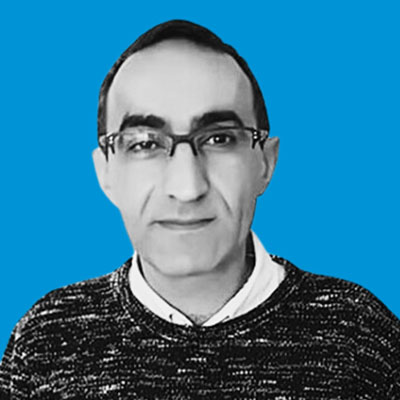
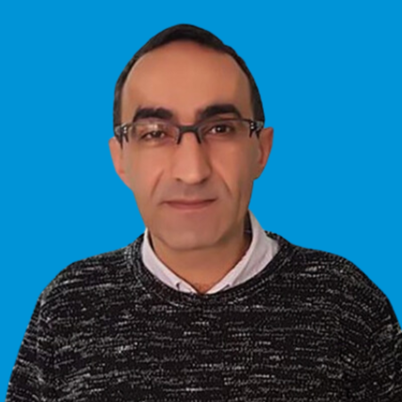 In the run-up to Turkey’s general election, CIVICUS speaks with Fatih Polat, editor-in-chief of Evrensel, about the state of press freedoms and the Turkish government’s attacks on critical media.
Founded in 1995, Evrensel is an independent daily newspaper. In August 2022, the Turkish Press Advertisement Agency permanentlybanned all public announcements and advertisements with Evrensel despite the Turkish Constitutional Court’s decision that advertisement bans on Evrensel and other newspapers violated freedom of expression and press freedom.
What are the conditions for the exercise of journalism in Turkey?
In Turkey state representatives routinely refuse to answer journalists’ questions. In any developed western democracy, this would be a serious matter and would be considered an obstruction of journalistic work. But in Turkey, this is no longer seen as a problem. For a very long time, the government has routinely imposed a variety of obstacles both on the critical Turkish press and on our foreign colleagues covering Turkey for international press organisations.
Ever since the Justice and Development Party (AKP) gained power 21 years ago, independent media have been in trouble. The government pressures critical media both financially and politically. It seeks to financially asphyxiate them by blocking the flow of official announcements and advertisements and imposing fines for alleged infractions concerning news, commentaries or television programmes. Political pressures range from lawsuits filed against individual journalists and newspaper managers to the detention, arrest and use of torture against journalists.
Critical television channels can also be subjected to temporary screen blackouts. Online media, which have developed significantly over the past 20 years, experience pressures ranging from court-ordered removal of content to lawsuits. Even cartoonists are subjected to punishment and arrest. Moreover, journalists are frequently exposed to police violence and detained while following the news on the streets.
On top of this, if the government is uncomfortable with the publication of a newspaper, a state official calls the agency that distributes advertisements and makes veiled threats to stop the flow of private advertisements. In contrast, newspapers and TV channels supporting the government receive serious financial aid from the state.
How has Evrensel been specifically targeted?
Evrensel is a 28-year-old, well-established newspaper that stays afloat thanks to readers’ contributions and advertisements placed by municipalities run by the opposition. On 22 August 2022, the Turkish Press Advertisement Agency, whose budget comes from tax money, banned Evrensel from receiving any public announcements and advertisements. This tactic is aimed at making a newspaper financially unviable. In response we filed a lawsuit, which is currently underway.
The new press law, which was recently introduced by the government under the pretext of ‘combating disinformation’, has led to a new period of repression of anyone who expresses a critical stance towards the regime. Lawsuits are filed against us for news and articles published in our print newspaper and on our website. Our website is frequently subjected to access-blocking orders.
Are journalists from certain groups particularly vulnerable?
The Kurdish media are under particularly strong attack. There is an ongoing conflict between the state and various Kurdish insurgent groups who demand either separation from Turkey or greater autonomy within Turkey. The government has increased pressure on Kurdish media, and on all Kurdish actors, after putting an end to negotiations. For example, Kurdish journalists have been arrested alongside legislators and politicians of the pro-minority People’s Democratic Party (HDP), including the HDP’s co-presidents Selahattin Demirtaş and Figen Yüksekdağ, and mayors have been replaced by trustees. In April and early May alone, 34 Kurdish journalists and press workers have been arrested.
How has the repression of press freedoms affected the popularity of the ruling regime?
Your question reminds me of another important element of repression. In Turkey, insulting the president is punishable with prison sentences of up to six years. I am among the many journalists who have been tried for insulting the president; I was acquitted in 2019. This has been applied not only against journalists but also against social media users.
But for a significant segment of AKP voters, media censorship or corruption allegations against the president are not that important. Only bad economic performance can result in the erosion of their support.
On 14 May Turkey will hold a critical general election, both for president and parliament. The unity of the opposition has brought hope for a change. Right now, the prospect of a time when we will be able to breathe a little more freely again seems within reach.
What kinds of domestic or international support do Turkish independent media and journalists currently receive, and what would help?
There are several domestic journalists’ organisations in Turkey. For example, I am a member of the Journalists’ Union of Turkey and the Journalists’ Association of Turkey, the largest press unions in the country. In the last 15 to 20 years, various international journalists’ organisations have also provided important support, standing in solidarity with the independent press and journalists from Turkey, spreading awareness and advocating for our rights. It is very valuable for us that they follow the many cases of repression of critical media and include them in their countries’ political agenda.
Civic space in Turkey is rated ‘repressed’ by theCIVICUS Monitor.
Get in touch with Evrensel through itswebsite or itsFacebook page, and follow@EvrenselDaily and@fpolat69 onTwitter.
-
TURKEY: ‘For the embattled LGBTQI+ movement, simply persisting in taking to the streets is an achievement’
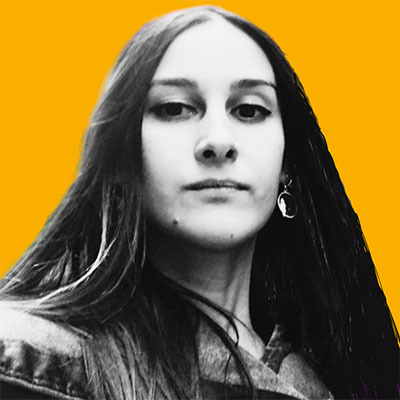
 CIVICUS speaks about 2023 Pride and the civil society response to the Turkish government’s anti-LGBTQI+ campaign with Damla Umut Uzun, international relations and fundraising officer atKaos Gay and Lesbian Cultural Research and Solidarity Association (Kaos GL).
Founded in 1994, Kaos GL is one of the oldest and largest LGBTQI+ organisations in Turkey, dedicated to creating visibility and understanding and promoting LGBTQI+ human rights.
How have Turkish authorities reacted to Prideevents?
Since 2015, Pride events have been increasingly banned by city governors. The first ban was introduced in Istanbul, which in 2014 had the largest Pride gathering, with at least 50,000 participants. But despite the growing number of bans, the number of Pride events across the country has also consistently increased.
This year in Istanbul, several Pride events were banned by district governor offices, resulting in detentions, police brutality and restrictions on journalists. A Pride movie event organised by the University Feminist Collective in Şişli was banned for ‘potentially causing societal resentment’ and ‘threatening social peace’. The screening of the film ‘Pride’, scheduled by the cinema collective, and a tea gathering event organised by the LambdaIstanbul LGBTQI+ Solidarity Association were banned in Kadıköy district. The police detained and later released at least eight people who came to watch the film, using physical violence. The LGBTQI+ group Queer Baykuş of Mimar Sinan Fine Arts University had their posters violently confiscated by the university’s security units before a planned press release. On 18 June, during the Trans Pride Parade in Beyoğlu district, the police handcuffed and detained 10 people, including a child, and released them later that day after taking police statements. Journalists were prevented from taking pictures during the intervention.
The Human Rights Foundation of Turkey compiled a detailed report of rights violations in the context of 2023 Pride events between 2 June and 10 July 2023. Various Pride celebrations, including parades, picnics and press statements, were banned by multiple governorships and disrupted due to targeted threats and societal reactions in Adana, Ankara, Antalya, Eskişehir, Izmir, Kocaeli and Muğla. A total of 241 people, including four minors and seven lawyers, were detained on the grounds of Article 2,911 of the law on gatherings and demonstrations. The main reasons cited by authorities were non-compliance with regulations, disruption of public order and violation of ban decisions. Although most detainees were typically released on the same day, they might face prosecution and lawsuits months later.
Police interventions during Pride events are a reflection of the government’s hostility towards LGBTQI+ people. They are waging a kind of war against us. The recurring violence is fuelled by a sense of impunity: the fact that law enforcement officials face no consequences for harming, insulting or harassing LGBTQI+ people further emboldens them.
Why is the Turkish government hostile towards LGBTQI+ people?
Oppression of the LGBTQI+ community in Turkey is not new: the government’s crackdown first intensified following the 2016 attempted coup. But the main reason behind the increasing hatred is the attempt of the ruling Justice and Development Party (AKP) to mobilise conservative segments of society. To mask the effects of its corrupt rule and economic mismanagement, the government is employing populist rhetoric and polarisation tactics, seeking to designate an enemy to blame.
Repression hasn’t been limited to LGBTQI+ people but rather targeted at any opposition or independent views. Dissenting voices, including those of Kurdish people, feminists and human rights defenders, are labelled as ‘terrorists’.
Among these groups, LGBTQI+ people are a particularly easy target due to societal conservatism and religious tendencies. Censorship and rights violations of LGBTQI+ people affect all aspects of life, including access to goods and services, education, healthcare and housing and media representation. In line with the global anti-gender trend, the government has employed a rhetoric focused on ‘protecting the sacred Turkish family structure against perversion’, using LGBTQI+ people and feminists as scapegoats.
What role did anti-LGBTQI+ rhetoric play in the2023 presidential elections?
Anti-LGBTQI+ rhetoric played a significant role in the election campaigns of the AKP government and President Recep Tayyip Erdoğan, aimed at mobilising conservative voters, including those on the left side of the political spectrum. Former Interior Minister Suleyman Soylu openly mobilised hate speech against LGBTQI+ people at public events. President Erdoğan used similar rhetoric, accusing the opposition of being ‘pro-LGBTQI+’.
Unfortunately, two radical Islamist parties, Hüdapar and New Welfare, have entered parliament, and their primary election promise was to close down LGBTQI+ organisations. They are now working actively towards this goal, and we anticipate that such rhetoric and efforts will intensify in the run-up to local elections in a few months.
How are LGBTQI+ organisations, including Kaos GL,responding to these attacks?
Despite facing oppressive conditions and lack of opportunities, the LGBTQI+ movement in Turkey remains resilient and strong. Alongside feminists, we are the only groups that continue to take to the streets and demonstrate for our rights, showing immense bravery in the face of police violence and detention. Simply persisting in organising demonstrations is an achievement in itself.
In addition to street activism, Turkish LGBTQI+ organisations are actively engaged in advocacy, the promotion of visibility and capacity building. We recognise that we won’t be able to change policies at the national level due to the AKP’s absolute majority, so we focus our efforts on grassroots societal transformation. We educate professionals who encounter LGBTQI+ people in their daily work, such as doctors, nurses, teachers, lawyers and social and municipal workers, to increase their understanding and capacity to work with LGBTQI+ people and respond to their needs in the respectful manner.
We document human rights violations and hate crimes, providing a factual basis for our advocacy campaigns. We also report on the situation of LGBTQI+ employees in the public and private sectors. Other organisations focus on reporting the challenges faced by LGBTQI+ students, people living with HIV, elderly people and refugees.
We also organise cultural events, including queer film festivals such as Pink Life Queer Fest and exhibitions and art programmes like the Ankara Queer Art Programme and the Women-to-Women storytelling contests, aimed at fostering expression and community engagement.
What obstacles do you encounter in your work, and what supportdo you need?
Since the attempted coup, the government has intensified its crackdown on civil society organisations (CSOs), subjecting them to frequent state audits to identify alleged mistakes, impose fines or even shut them down. Laws such as the Law on the Prevention of the Financing of the Proliferation of Weapons of Mass Destruction have made it increasingly difficult for CSOs to receive funds, further hindering their work.
Turkish LGBTQI+ organisations maintain close contact with European human rights organisations, Council of Europe representatives, the European Union (EU) delegation and United Nations mechanisms. We regularly update them about the developments and shrinking human rights space in Turkey, and in turn, they issue statements expressing deep concern about the government’s actions. However, these efforts have proven ineffective as the AKP government demonstrates a complete lack of regard and even fails to implement decisions of the European Court of Human Rights.
Turkish LGBTQI+ organisations have generally benefitted from EU funding, but this has started to decrease. It appears that the EU has somewhat given up on Turkey, since the government is making no effort to improve human rights standards. Additionally, the fact that Turkey is keeping millions of refugees out of Europe has limited the EU’s consistency in supporting human rights in Turkey.
As LGBTQI+ individuals living in Turkey, we are constantly pressured to hide our identities, pushed to the margins of society and silenced. But as LGBTQI+ organisations we continue to fight for our rights and freedoms. To advance our cause, we need more systematic financial resources, increased collaboration with international organisations, more vocal campaigns and international pressure on the Turkish government.
Civic space in Turkey is rated ‘repressed’ by theCIVICUS Monitor.
Get in touch with Kaos GL through itswebsite or itsFacebook page, and follow@KaosGL on Twitter.
-
TURKEY: ‘The government does not tolerate opinions different from its own’
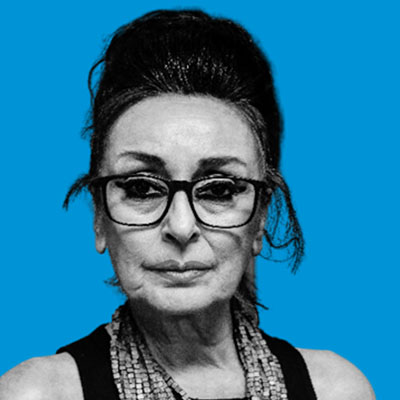
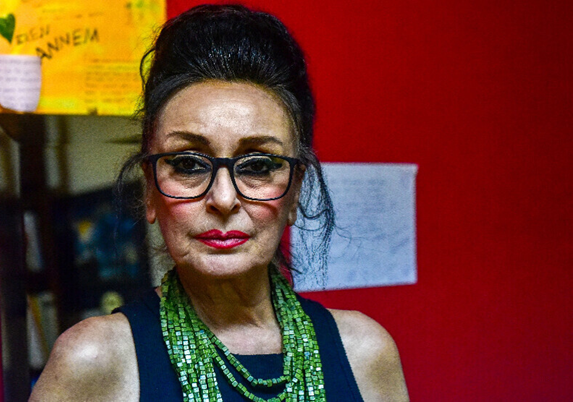 CIVICUS speaks with lawyer Eren Keskin, chair of the Human Rights Association (IHD), about the Turkish government’s attacks on critical media and the state of press freedoms in the context of Turkey’s current elections.
Founded in 1986, IHD is one of Turkey’s oldest and largest human rights civil society organisations. It documents human rights violations and campaigns for the protection of human rights and civic freedoms in Turkey.
What are the conditions for journalism in Turkey?
Problems in the area of freedom of expression have existed in Turkey since the foundation of the republic. From the very beginning there were issues that the republic’s official ideology of Turkish-Islamic synthesis prohibited speaking about. Issues such as the Kurdish conflict, the 1915 Armenian Genocide and, later on, Turkey’s military presence in Cyprus, have long been forbidden topics.
What’s changed under the present government of the Justice and Development Party (AKP) and the Nationalist Movement Party is that the opposition’s freedom of expression has been severely restricted across the board. As a result, obstacles have mounted for opposition journalists to express their views.
The government does not tolerate opinions different from its own. It recklessly issues arrest warrants for articles, speeches and social media messages if they express diverging opinions. The state of Turkey recognises freedom of expression in its domestic legislation and is bound to respect it as a state party to the European Convention on Human Rights, but it continues to violate its own laws and the international conventions and covenants it has signed.
What tactics does the government use against independent media and how have you been affected?
Because it does not tolerate any kind of diverging opinion, the government is extremely aggressive towards independent media and the free press, the majority of which are Kurdish media outlets.
Dissident journalists are commonly charged with making propaganda for an illegal organisation. Particularly with news reports on the Kurdish war, most lawsuits are filed on charges of making propaganda for the Kurdish political movement or Kurdish armed forces. Apart from this, a large number of cases are filed on charges of insulting the president, insulting the forces of the state and inciting the public to hatred and enmity.
Many journalists are under arrest or subject to international travel bans merely for expressing their thoughts in writing. There is almost no journalist who is not being subjected to judicial control.
I was once the volunteer editor-in-chief of the daily Özgür Gündem, one of the newspapers that has faced the most repression, and have stood trial in 143 cases just because my name appeared on the newspaper as volunteer editor-in-chief.
I’ve been sentenced to a total of 26 years and nine months in prison for alleged crimes such as membership of an illegal organisation, making propaganda for an illegal organisation and insulting the president, even for articles I did not write. These sentences are pending a decision of the Court of Cassation. As soon as they are final, I may go to prison. I have also been unable to travel abroad for six years now because of an international travel ban.
Has the intensification of repression affected the popularity of the president in any way?
Considering that the ruling regime is the main culprit for all the rights violations currently taking place in Turkey, and that power is concentrated in the hands of President Recep Tayyip Erdoğan, it must be admitted that the main perpetrator of rights violations is the president himself. The judiciary is completely dependent on the president. Judges and prosecutors render compliant decisions out of fear. Where judges and prosecutors are afraid, it is unthinkable for the judiciary to be independent.
The president’s attitude towards the press, especially the opposition press, and the language of hatred and violence he uses, does not detract from his popularity but is instead a major reason his followers support him. However, we think that a large part of society, hopefully a growing part, is also disturbed by his blatant violations of freedom of expression.
What do you make of the results of the 14 May general election?
The AKP had relative success in the presidential and parliamentary elections held on 14 May. The president did better than expected, considering the economic situation and the criticism he’s faced over the response to the earthquakes in February. His party has maintained control of parliament. But he didn’t win re-election outright: he received 49.5 per cent of the vote while his opposition challenger, Kemal Kılıçdaroğlu of the Republican People’s Party (CHP) received almost 45 per cent. Now there’s going to be a runoff on 28 May.
None of this should come as a surprise. Society has become extremely polarised, especially as a result of Erdoğan’s rhetoric of fear, hatred and violence. We also witnessed many practices that violated the constitution and electoral laws, such as government ministers becoming parliamentary candidates without resigning and therefore using state resources for campaigning. The ruling party monopolises a large part of the media and used it exclusively on its own behalf. The elections were therefore held under extremely unequal conditions.
It’s hard to predict what the outcome of the runoff will be. The election may end in favour of Erdoğan or Kılıçdaroğlu. Much will depend on the practices that develop during the election.
How will the situation of vulnerable minorities in Turkey be affected by the election results?
Erdoğan uses language that is completely against human rights and the AKP has retained its parliamentary majority by coalescing with an extremist party. The situation will become dangerous if Erdoğan wins once again, especially for women, LGBTQI+ people and Kurdish people.
Withdrawal from the Istanbul Convention – the Council of Europe Convention on Preventing and Combating Violence Against Women and Domestic Violence – has already affected the feminist movement a lot. Now Law No. 6,284 on violence against women is being questioned. This poses a great danger for women and LGBTQI+ people.
Similarly, if Erdoğan wins again, pro-security approaches to the Kurdish issue will continue to dominate, preventing progress towards peace.
As for Syrian asylum-seekers, the AKP presents itself as having provided a good environment for them, but it is not really the case. Asylum-seekers in Turkey do not qualify as refugees because of the state’s reservation to the 1951 Refugee Convention. They are subjected to racist attacks. They work as cheap labour in extremely difficult conditions. Women and girls live under permanent risk of violence. An AKP win will not give them a chance.
But it must be noted that the CHP’s proposal regarding refugees is not any more democratic or inclusive, and its discourse also has racist overtones. Therefore, first and foremost, the discriminatory, double-standard approach to the Refugee Convention should be questioned.
What kinds of domestic or international support do Turkish independent media and journalists currently receive, and what more would you need?
Journalists working in independent media in Turkey, and especially in Kurdistan, are clearly not receiving sufficient international support. The Republic of Turkey is a state party to many international conventions that guarantee freedoms of expression and the press. The state has committed to respecting them on paper, but it violates them in practice. All these conventions have monitoring mechanisms, but unfortunately, they are not being properly implemented for Turkey. In this sense, the European Union has left Turkey alone.
We believe that Turkey should be questioned more, especially by western media organisations and by Turkey’s co-signatory states of international rights conventions, to contribute to the lifting of repressive measures against the dissident press.
Civic space in Turkey is rated ‘repressed’ by theCIVICUS Monitor.
Get in touch with the Human Rights Association through itswebsite or itsFacebook page, and follow@ihd_genelmerkez on Twitter.
-
TURKS AND CAICOS ISLANDS: ‘Advancing LGBTQI+ rights requires advocacy, awareness-raising and a concerted effort to foster a culture of inclusion’
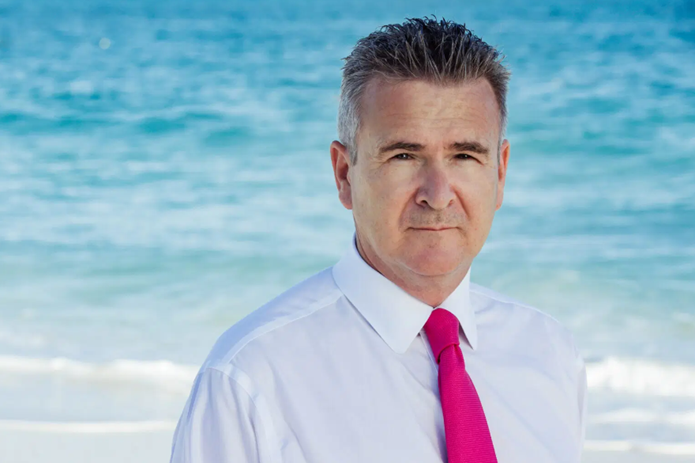
CIVICUS speaks with Tim Prudhoe, a lawyer with Stanbrook Prudhoe, about a legal challenge brought against discriminatory legislation against LGBTQI+ people and the struggle for equal rights of same-sex married partners in Turks and Caicos Islands (TCI).
Stanbrook Prudhoe is a law firm specialising in complex and cross-border cases in the Caribbean region.
What legal action are you involved in?
Since 2021 we have been representing Tim Haymon, a US citizen, and Richard Sankar, a Turks and Caicos Islander, in legal proceedings against the TCI government. The case is now up on appeal after findings of breaches of rights protected under the TCI constitution. The couple married in Florida in 2020, but Tim has been denied an exemption from the need to obtain a work permit, although that exemption is available to the spouse of a Turks and Caicos Islander. There is no definition of ‘spouse’ under the relevant immigration legislation and the definition used in the letter of refusal referenced the marriage legislation. The Marriage Ordinance treats same-sex marriages as void.
The refusal of the spousal exemption was by the Director of Immigration. Tim and Richard brought proceedings against him alleging breaches of the protected rights of equality before the Law, the right to family and private life and freedom from discrimination on the basis of sexual orientation.
The trial took place in November 2022 and the decision was delivered in March 2024. The TCI Supreme Court upheld two of our three claims, finding violations of the constitutional rights to private and family life and to protection against discrimination on the basis of sexual orientation. However, the court did not uphold the claim of equality before the law. That is the subject of an appeal that will be heard on 23 and 24 October.
The government has also appealed. Although it relied on no evidence during the trial, it now disputes any findings of constitutional breach. The government’s legal team remains headed by Ivan Hare KC of Blackstone Chambers in London, UK. Colours Caribbean, an LGBTQI+ rights organisation, successfully applied to join the appeal as an interested party.
Before the claims were first started, Tim and Richard offered to abandon their legal action if the government enacted civil partnership legislation giving same-sex couples the same rights and benefits as opposite-sex couples. Unfortunately, this offer was ignored. Our appeal document itself repeats that offer. When we first made that offer, we even provided the government with a copy of the Cayman Islands legislation recognising civil partnerships as a precedent they could work from. But, again, no response.
The Supreme Court’s decision was a significant step forward for LGBTQI+ rights in TCI. Former TCI Premier Michael Misick criticised it publicly, calling for Richard to have his Turks and Caicos Islander status revoked. If successful, the government’s appeal would be a major setback for equality. Either way, the outcome will have broader implications for LGBTQI+ rights across the Caribbean.
What’s the status of LGBTQI+ rights in TCI, and what difference have recent Privy Council rulings made?
The status of LGBTQI+ rights in TCI has a long way to go still. The government’s reliance on traditional moral standards and recent rulings on marriage issues by the UK Privy Council, the final court of appeal for TCI and other British Overseas Territories, are significant barriers to the advancement of LGBTQI+ rights.
Recent Privy Council rulings on same-sex marriage in Bermuda and the Cayman Islands have significantly influenced the discourse on LGBTQI+ rights in TCI. The combined appeal on the right to marry in the Ferguson case in Bermuda and the Bodden Bush case in the Cayman Islands is particularly noteworthy.
In Bermuda, same-sex couples had the right to marry for a period before the law was changed. Marriages already performed remained valid, but no new marriages could be celebrated – a situation that led to a case being taken to the European Court of Human Rights on the grounds that those left out were in practical effect facing discrimination. The Privy Council ruled that marriage was a unique legal institution and those jurisdictions could decide the scope of marriage without violating their constitutions.
This gave us an insight into the Privy Council’s position. However, we distinguished our case in TCI by focusing on recognition of equivalent legal rights rather than the establishment of a right to marry. The government argued we were trying to introduce the right to marry via the back door, because of the attempt to invoke the spousal exemption from immigration restrictions.
The Privy Council’s decision, which confirmed that jurisdictions can define marriage, wasn’t that surprising. TCI’s constitution, like Cayman’s, includes a preamble about TCI being a God-fearing nation. The government’s arguments in TCI appeal rely heavily on this. This is pretty odd, in light of the fact that it failed to present any actual evidence at trial.
Despite these challenges, the LGBTQI+ community and its advocates continue to press for equality and recognition, reflecting a wider struggle in many small jurisdictions.
What are the challenges for LGBTQI+ activism in TCI?
A major challenge is stigma, which is keenly felt in a place as small as TCI. Despite the presence of people who identify as LGBTQI+, there isn’t a well-developed community infrastructure such as gay pubs or clubs. There’s been a slight improvement in visibility following recent decisions, but it hasn’t yet become a significant movement. For example, there’s now anticipation for an upcoming gay pride event, a notable first for the TCI, albeit modest, as a boat trip during Gay Pride Week in June.
Living as an LGBTQI+ person in TCI often means necessarily leading a discreet life. While there are both locals and expatriates in same-sex relationships, such partnerships are not flaunted or embraced as a popular lifestyle choice. Rather, they tend to remain private, perhaps implicitly acknowledged by the community but not openly discussed.
There’s a complex interplay between legal processes and government responses. Despite government appeals against decisions concerning LGBTQI+ rights, such actions are influenced by political dynamics, particularly when elections are approaching. The electorate consists solely of Turks and Caicos Islanders and has strong opinions on issues such as same-sex marriage, which politicians must navigate with caution.
Constitutional protections theoretically guard against discrimination, but practical enforcement is uncertain. While legal recourse exists in principle, instances of intimidation and hostility, such as aggressive media commentary or social media harassment, deter people from pursuing anti-discrimination cases.
In essence, while there is a legal framework to combat discrimination, the challenges of social stigma, political sensitivities and intimidation hinder progress towards full LGBTQI+ equality in TCI.
What role has civil society played in the case?
We’ve worked with the Pride group that’s recently emerged. Although not gay myself, I was pleased to attend their meeting to have a chance to explain relevant parts of the legal challenge. I have been a friend of Richard for many years, and more recently Tim as well.
The only outside group involved was Colours Caribbean, whose involvement in the Cayman case I had been aware of for some time. When they heard of our legal victory, despite ongoing appeals from both sides, they approached us to join the proceedings. We don’t control their involvement, but the fact that we haven’t objected to it apparently influenced the court’s decision to give them a speaking role in the October appeal.
What are your expectations?
I expect that Tim and Richard will win their appeal on the failure by the judge to deal with the equality before the law claim. Whatever the outcome of the government’s appeal, I expect that the British government will have to exercise its power of override, as it did in the Cayman Islands context, to introduce civil partnership recognition legislation. In TCI, the Governor, a British-appointed official, has a constitutional power to legislate in the best interests of the jurisdiction. For example, previous governors have forced through legislation decriminalising same-sex sexual activity – a move still resisted in other parts of the Caribbean.
I think our success will primarily relate to the anti-discrimination aspect of the lower court judge’s decision. Right now, we are in a perplexing situation: the judge has agreed with our argument that Richard and Tim’s constitutionally protected rights are being violated but he stopped short of implementing the necessary remedial measures.
This creates a glaring inconsistency: existing violations are acknowledged but no remedy is provided. So if another same-sex couple were to seek spouse treatment, they would be denied the exemption, even though the Court has recognised this as a breach of constitutional rights. It is unlikely that the Court of Appeal will accept this situation. We argue that the judge made a fundamental mistake in finding breaches but not proposing remedies. Moreover, the judge’s criticism of our approach fails to recognise alternative ways of remedying the situation, such as amending immigration laws to include same-sex couples in the eligibility criteria for spousal exemptions.
The delay in the judge’s decision, despite mounting pressure, suggests a rushed outcome in the end. It appears that in his haste, the judge failed to thoroughly explore possible solutions to the violations identified. I therefore anticipate that the Court of Appeal will scrutinise the lower court’s handling of the case and consider remedies in line with constitutional obligations.
What are the next steps?
The trajectory of progress depends heavily on the outcome of the Court of Appeal hearing. It’s unlikely a decision will be made immediately after the hearing, given the complexity and scale of the case. As we have argued that the lower court judge erred in his decision, the matter could be escalated to the Privy Council for constitutional review.
However, in terms of broader progress and the continued advancement of LGBTQI+ rights, increased visibility and public awareness are paramount. The greater the exposure and discussion surrounding the case, particularly at the appellate level, the more likely it is that attitudes will evolve positively. Increased awareness fosters confidence within the LGBTQI+ community, encouraging people to live more openly and authentically.
Historically, many people who identify as LGBTQI+ have felt compelled to leave TCI and seek more accepting environments abroad, primarily in cities in the UK or the USA. This trend underscores the prevailing reluctance to accept LGBTQI+ identities in the local context. It will undoubtedly take time to overcome this suspicion and foster a culture of acceptance, but progress is evident and ongoing.
It is my hope as a legal practitioner that church groups engage in this discussion in a constructive and inclusive way, avoiding regressive interpretations of religious doctrine. Such interpretations, rooted in outdated beliefs, only serve to hinder progress. It’s worth noting that TCI, essentially a tourist destination, relies heavily on its reputation as a progressive and welcoming place. Failure to address LGBTQI+ rights risks tarnishing this image, with negative implications for tourism and therefore for economic prospects.
Advancing LGBTQI+ rights in the TCI requires ongoing advocacy, awareness-raising and a concerted effort to foster a culture of inclusion and acceptance within the local community and wider society.
Get in touch with Stanbrook Prudhoe through itswebsite and connect with Tim Prudhoe onLinkedin.
-
UAE: Guarantee an inclusive COP and release detained human rights defenders


With the start of COP28 in Dubai in a month, 346 civil society organisations call on the Emirati authorities, UN and State Parties to guarantee an inclusive COP and release jailed human rights defenders in the UAE. The letter stresses the imperative for the organisers to put ordinary citizens, including excluded communities, at the centre of the conference as more 70,000 people gather from 30 November to 12 December 2023 for COP28.
-
UAE: Release all prisoners of conscience now
Joint letter calling on the President of the United Arab Emirates (UAE), Sheikh Mohammed bin Zayed Al Nahyan, to intervene immediately in favour of the release of prisoners of conscience.
Your Highness,
We, the undersigned organisations, write to you to urge Your Highness to release prisoners of conscience in UAE prisons and to address this issue decisively.
We appeal to Your Highness as President of the United Arab Emirates to treat the issue of prisoners of conscience as a high priority and consider it an urgent humanitarian situation that requires your direct and immediate intervention.
Your Highness- the absence of such policies, rooted in human rights standards, is a stain on the country’s international reputation and runs counter to the Emirati government's image of the UAE as a country that believes in the values of tolerance and openness. It is the primary responsibility of Your Highness to uphold constitutional principles by putting an end to all human rights violations.
We call on Your Highness to assume full moral and legal obligations and to work for the respect of human rights. Therefore, we appeal to you not only to release all prisoners of conscience in UAE jails but also to ensure that such violations will not be repeated.
Pending their release, we hope that Your Highness will work to demonstrate your commitment to human rights and compliance with international standards for prisoners by granting prisoners of conscience their rights, such as medical care and regular family visits, and ending all forms of violations they are being exposed to.
With great respect and appreciation
Signatories
- ALQST for Human Rights
- Americans for Democracy & Human Rights in Bahrain
- CIVICUS
- Emirates Detainees Advocacy Centre
- Euro-Med Human Rights Monitor
- European Centre for Democracy and Human Rights
- FEMENA
- Geneva council for rights and liberties
- Gulf Centre for Human Rights
- HuMENA for Human Rights and Civic Engagement
- International Campaign for Justice and Human Rights
- International Centre for Justice and Human Rights
- MENA Rights group
- Skyline International for Human Rights
-
Uganda yet to address civic freedom gaps ahead of UN review

Human rights organisations CIVICUS, Foundation for Human Rights Initiative (FHRI), Justice Access Point (JAP) and African Institute for Investigative Journalism (AIIJ) call on UN member states to urge the Government of Uganda to protect civic freedoms as its human rights record is examined by the UN Human Rights Council on 27 January 2022 as part of the 40th session of the Universal Periodic Review (UPR).
-
UGANDA: ‘Closure of the UN office will result in the loss of a crucial player in the field of human rights’

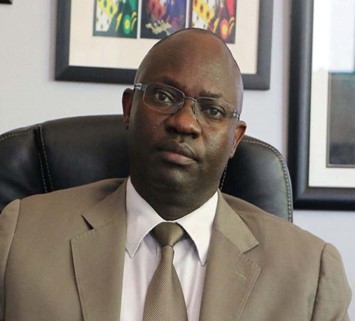 CIVICUS speaks about the human rights situation and the closure of the United Nations (UN) office of the High Commissioner for Human Rights in Uganda with Dr Livingstone Sewanyana, founder and Executive Director of the Foundation for Human Rights Initiative (FHRI) andUN independent expert on the promotion of a democratic and equitable international order.
Founded in 1991, FHRI is a human rights civil society organisation (CSO) working to advance democratic development and fundamental freedoms in Uganda.
What were the achievements of the UN human rights office in Uganda, and why is it closing?
The UN Office of the High Commissioner for Human Rights was established in Uganda during a period of conflict that particularly affected northern Uganda, with a head office in Kampala and regional offices based in north and northeastern Uganda. Its main objective was to promote reconciliation and peacebuilding, which was successfully achieved.
The UN office played a key role in creating awareness among communities about their rights and ways to defend them. It conducted extensive human rights monitoring to expose violations and contributed significantly to building the capacity of the Uganda Human Rights Commission (UHRC) – the national human rights institution – and various local CSOs through technical assistance and, at times, financial support for their programmes.
After the goal of rebuilding northern Uganda was achieved, the agreement was extended multiple times, with 2023 agreed as a potential cut-off. The Ugandan authorities cite the achievement of its goals as a reason not to prolong the UN office’s mandate. Civil society groups, however, think its closure will result in the loss of a crucial player in the field of human rights, given the critical role it played in terms of democratisation in Uganda, capacity development, technical assistance and human rights monitoring.
How do you assess the work of the UHRC?
The UHRC is entrusted with a broad mandate, encompassing both promotional and protective functions, along with a tribunal for handling human rights complaints. As the national human rights institution, it consistently submits annual reports to parliament.
While the UHRC’s promotional efforts are commendable, challenges arise in its protective role because this requires goodwill from the state. Insufficient resources and lack of political will, particularly on controversial issues, hinder its ability to function effectively.
The UHRC’s independence has always been questioned. Although the authorities may not interfere directly with its work, the lack of executive action on its recommendations undermines its potential and credibility. The UHRC needs more space to execute its mandate effectively.
How does FHRI defend and promote human rights?
For over 32 years, we’ve monitored, documented and reported human rights abuses. Our reports reach various stakeholders, including government, parliament, international bodies, the media and civil society. We also engage with young people through university programmes, fostering an understanding of rights and obligations. We actively assist victims of human rights violations through our legal aid programme, which handles over 1,000 cases every year, and provide mediation and administrative support services.
Our campaigns include a 30-year effort to abolish the death penalty. Although Uganda has retained it, the death penalty is now restricted to the most ‘serious crimes’, and opportunities for a prerogative of mercy have been established. If someone who’s been sentenced to death is not executed within three years, their sentence is automatically commuted to life imprisonment. We have consistently challenged the application of the death penalty in the Constitutional Court and the Supreme Court.
We also engage in legislative advocacy, analysing bills and voicing our position on their human rights implications, as seen in our response to the Anti-Homosexuality Act 2023, which unfortunately retained a provision for the death penalty. However, we succeeded in securing the removal of the mandatory death penalty provision by parliament.
We actively report to the UN Human Rights Council and the African Commission on Human and Peoples’ Rights. As a UN independent expert, I recently presented my sixth report to the Human Rights Council, sharing findings from my visit to the Republic of Georgia.
In sum, our work cuts across community, district, national and international divides. Taking a holistic approach, we conduct awareness raising, capacity development and advocacy campaigns and provide legal protection to victims of abuse through recourse to courts. We are affiliated with the World Coalition Against the Death Penalty and the International Federation of Human Rights Defenders.
What challenges do Ugandan human rights organisations face?
Civic space is getting more and more restricted and civil society is becoming more apprehensive. We have limited funding to carry out our work and regularly face legislative challenges, such as the restrictive Public Order and Management Act of 2013, which constrains assemblies and public meetings.
Civil society groups are confined to operating within the narrow framework of the law, and it’s difficult to expand the frontiers of your work. Recently, 54 CSOs have had to suspend their operations due to non-compliance with the NGO Act 2016.
To ensure the sustainability of our day-to-day operations we need expertise, and retaining experienced staff is difficult due to the potential lure of international organisations.
There’s a need to broaden civic space and ensure an enabling environment for everyone to exercise their rights. For this to happen, the state must implement recommendations from the Human Rights Council’s Universal Periodic Review process and UN treaty bodies.
What international support do you receive, and what support do you need?
CIVICUS has been instrumental in supporting our human rights monitoring and reporting work. We have submitted several joint reports to the UN Human Rights Council and UN Human Rights Committee.
We also require assistance in capacity development to promote better understanding of the human rights architecture. Most crucially, financial support is needed to empower human rights defenders to participate in forums and carry out their work effectively. In a society grappling with poverty and high unemployment, the demand for technical and financial assistance is high, and human rights organisations are often looked upon as potential providers.
Civic space in Uganda is rated ‘repressed’ by theCIVICUS Monitor.
Get in touch with FHRI through itswebsite orFacebook page, and follow@FHRI2 and@LSewanyana onTwitter.
-
UGANDA: ‘Shrinking civic space means affected communities are not able to make their voices count’

CIVICUS discusses the hopes and roles of civil society at the forthcoming COP28 climate summit with Ireen Twongirwe, a climate activist and CEO of Women for Green Economy Movement Uganda (WoGEM).WoGEM is a community-based civil society organisation (CSO) dedicated to advocating for and promoting women’s and girls’ participation in a greener economy. It brings together vulnerable women and girls and equips them with knowledge and capacities to engage in the search for sustainable community livelihoods and climate change mitigation and resilience efforts.
-
Uganda: Egregious measures threaten free and fair elections
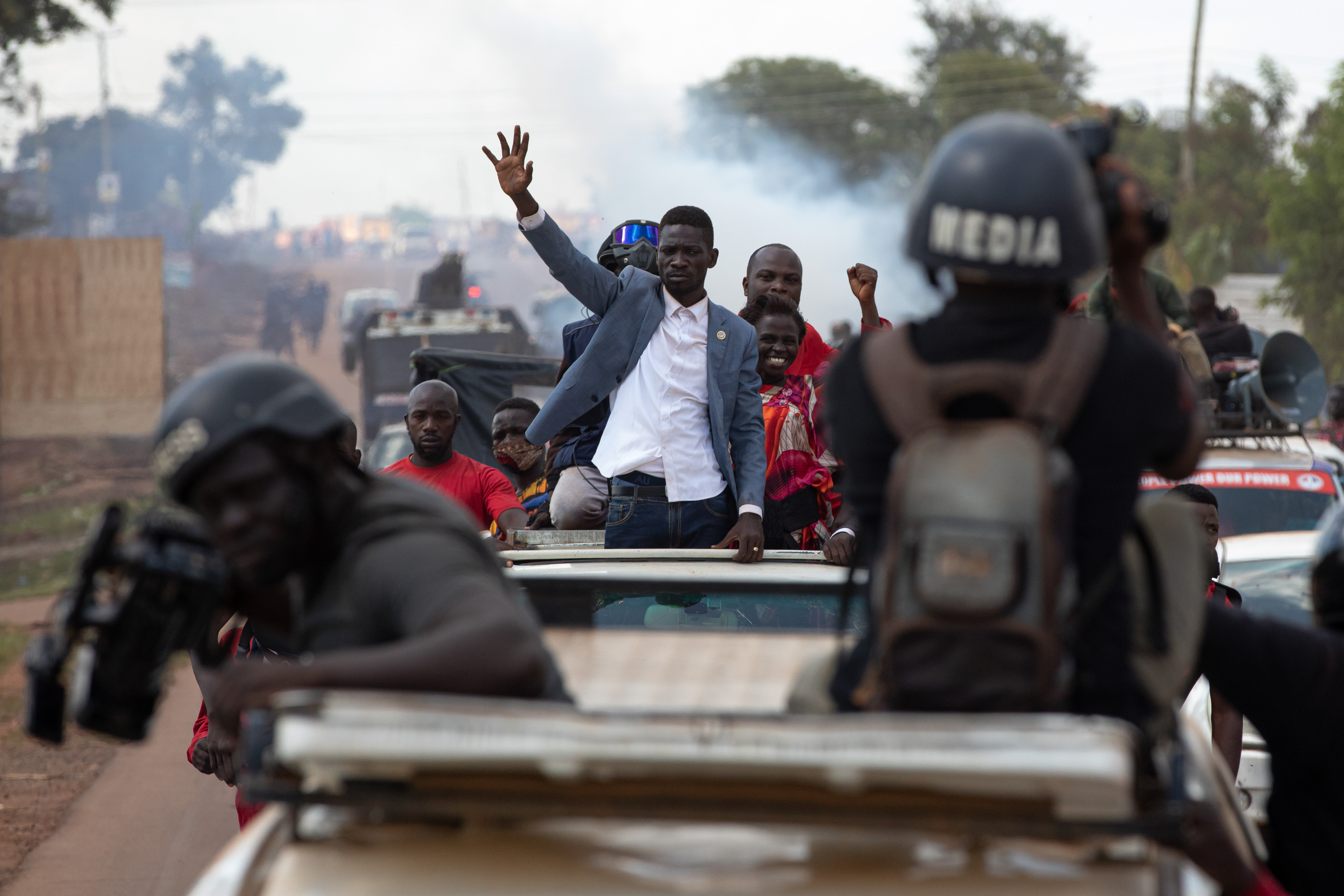
🇺🇬🗳️President @KagutaMuseveni has ruled #Uganda for 35 years. Ahead of tomorrow's elections (#UgandaDecides2021), the authorities have undertaken an unprecedented campaign to silence dissent.
— CIVICUS (@CIVICUSalliance) January 13, 2021
We urge the international community to speak out. Joint letter https://t.co/uTyq99TVyd pic.twitter.com/4DWBrcc9WrUrgent joint civil society letter on Ugandan Elections taking place on 14 January 2020
To the: African Commission and United Nations Special Procedures
ACHPR Special Rapporteur on Human Rights Defenders
ACHPR Special Rapporteur on Freedom of Expression
UN Special Rapporteur on Freedom of Expression
UN Special Rapporteur on Human Rights Defenders
UN Special Rapporteur on Extrajudicial, Summary or Arbitrary Executions
UN Working Group on Arbitrary Detentioncc: United Nations High Commissioner for Human Rights
Regional and International Heads of State and GovernmentRe: Egregious and widespread pre-electoral violence, intimidation and repressive measures threaten free and fair electoral process in Uganda
Uganda is set to hold Presidential and Parliamentary general elections on January 14th, 2021. The undersigned organisations are deeply concerned with the rapidly deteriorating human rights situation in the country and submit this urgent appeal to your respective mandates under the African Commission on Human and Peoples’ Rights and United Nations (UN) to urge the Government of Uganda to adhere to its constitutional, regional and international obligations, particularly during this critical electoral period.
Over the last few months, we have noted an escalation of violations that has created a climate of unprecedented fear and intimidation by State security and other regulators, seemingly intended to silence dissent, undermine political opposition participation 1, and deprive Ugandans of their enjoyment of fundamental rights; in particular, the right to freedom of expression, association, and peaceful assembly. Security forces have adopted the use of excessive and deadly force to quell public gatherings and intimidate the public, especially human rights defenders, journalists, opposition politicians and their supporters, and vulnerable groups such as women and youth.
Credible human rights organisations and media institutions have documented numerous cases of mass arrests and abductions of civilians, which are becoming more of a daily occurrence 2. In addition, COVID-19 related prevention measures have been exploited to unduly restrict civil and political rights and other fundamental freedoms. In the months leading to the election, authorities arrested opposition party leaders, journalists, and dispersed opposition campaign rallies with teargas for allegedly violating COVID-19 guidelines 3. On the other hand, authorities in a partisan manner, allowed certain rallies organised by the ruling National Resistance Movement (NRM) to continue unhindered 4.
Covering the political opposition has become an unacceptably dangerous job for journalists, who have been assaulted numerous times by security personnel. For example, on December 27 at least three journalists -- Daniel Lutaaya, Ashraf Kasirye, and Ali Mivuli-- were injured by projectiles fired by police 5. Kasirye remained hospitalized at the time of publication. In early December, police beat at least six journalists who were covering opposition candidate Robert Kyagulanyi in Lira 6 and fired a rubber bullet at another journalist in Jinja 7. In a December 27 statement 8, police said they would investigate attacks on journalists, a commitment that was deeply undermined on January 8, when the Inspector General of Police, Martin Okoth Ochola, told journalists that police were beating them for their own safety 9.
Regulators have sought to further restrict media access and coverage during the electoral period. In December, the Media Council of Uganda issued guidelines, requiring all foreign journalists in Uganda to reapply for accreditation; introducing a more stringent regime for accreditation of journalists seeking entry into Uganda; and barring all local journalists from covering political events without credentials 10. The Uganda Communications Commission in December wrote to Google, asking for the take-down of opposition aligned YouTube pages 11. On January 12 Reuters 12 and AFP 13 news agencies reported that the regulator ordered Internet Service Providers to block access to social media platforms. In a speech 14, Uganda’s President Yoweri Museveni claimed the shutdown of social media platforms was retaliatory to an earlier measure by Facebook, which took down government-linked accounts for allegedly manipulating public debate 15.
Human rights defenders and non-governmental organisations (NGOs) play an important role in promoting an enabling environment for the respect and protection of human rights. In relation to elections, they support institutional processes in areas such as voter education, independent election monitoring and helping to reduce election-related conflict. Despite this critical role, organisations such as the Uganda National NGO Forum and Uganda Women’s Network (UWONET) that were engaging in election-related activities such as polling have had their bank accounts arbitrarily frozen following allegations of money-laundering 16. Prominent human rights lawyer Nicholas Opiyo along with four others were arrested last month on similar money-laundering allegations 17. Another striking example is the suspension of the National Election Watch-Uganda (NEW-U), a loose coalition of largely formal NGOs engaged in election monitoring, by the National Bureau of NGOs, allegedly for non-registration 18.
In light of the numerous and widespread violations that have been observed, particularly over the past several weeks, there is a strong justification to be concerned over the fairness and integrity of the upcoming elections.
This appeal calls on the UN and African Commission special procedures to exercise their mandates to urge the government of Uganda to adopt all reasonable safeguards to enable Ugandans to participate in the election free of violence and intimidation, and to abandon all efforts to restrict the media from freely reporting on the electoral process. Ugandan security forces must refrain from the excessive use of force against civilians and refrain from arbitrary arrests and detention as a means to silence persons critical of the State. Anyone arrested must be afforded the full due process of the law, including a prompt, free and fair trial. Perpetrators of election related violations that have occurred in recent months must be held accountable and effective remedies afforded to the victims.
We further call on you to strongly urge the government of Uganda to embrace the fundamental right to political participation and to observe the cardinal principles of transparency, accountability, fairness and non-discrimination in collecting, processing, registering and reporting of the votes. In addition, the Ugandan government must allow independent organisations to freely and safely conduct election monitoring to help safeguard the general election process from electoral misconduct and instill public confidence in the integrity of the process.
Finally, we call on you to remind member States of the African Union and United Nations and other multinational organisations to uphold their treaty obligations and hold Uganda accountable to its own constitution, regional and international obligations, ensuring adherence to the principles of a free and just democratic society.
We thank you for your attention to these pressing issues that carry with them serious implications for the rule of law and respect for fundamental freedoms in Uganda, as well as the East African sub-region more generally, and stand ready to provide any further information.
Sincerely,
Access Now
African Centre for Democracy and Human Rights Studies (ACDHRS)
African Freedom of Expression Exchange (AFEX)
ARTICLE 19 - Eastern Africa
Association Nigérienne des Scouts de l'Environnement (ANSEN)
Association for Human Rights in Ethiopia (AHRE)
Center for Civil Liberties (Ukraine)
CIVICUS, the global civil society alliance
Commonwealth Human Rights Initiative (CHRI)
Eastern Africa Journalists Network (EAJNet)
Ethiopian Human Rights Defenders Center (EHRDC)
MARUAH, Singapore
Media Foundation for West Africa (MFWA)
Network of Estonian Non-profit Organizations
Network of Public Interest Lawyers, Uganda
Robert F. Kennedy Human Rights
ROSE (Réseau des Organisations de la Société Civile pour l'Observation et le Suivi des Élections en Guinée), Guinea
Odhikar, Bangladesh
Somali Journalists Syndicate (SJS)
Southern Africa Human Rights Defenders Network
Spaces for Change, Nigeria
Uganda National NGO Forum
Vijana Corps, Uganda
Womankind Worldwide
Zambia Council for Social Development (ZCSD)
1. The Independent, NUP accuses security of targeting their supporters during night operations, November 24, 2020, available at https://www.independent.co.ug/nup-accuses-security-of-targeting-their-supporters-during-night-operations/.
2. Id.See also NTV Youtube broadcaST, Mukono residents cry out, some now sleep in the bush in fear of arrest, January 6, 2021, available at https://www.youtube.com/results?search_query=mukono+residents+cry+out. Relatedly see Daily Monitor, Two NUP candidates, four supporters go missing in Mpigi District, available at https://www.monitor.co.ug/uganda/news/national/two-nup-candidates-four-supporters-go-missing-in-mpigi-district-3251388.
3. Human Rights Watch, Uganda: Authorities weaponize covid-19 for repression, November 20, 2020, available at https://www.hrw.org/news/2020/11/20/uganda-authorities-weaponize-covid-19-repression.
4. Id.
5. Committee to Protect Journalists, Police beat, detain journalists covering opposition candidates ahead of Uganda elections, January 7, 2021, available at https://cpj.org/2021/01/police-beat-detain-journalists-covering-opposition-candidates-ahead-of-uganda-elections/.
6. Human Rights Network for Journalists- Uganda, Journalists covering presidential candidate Kyagulanyi brutally attacked by security forces, December 12, 2020, available at https://www.hrnjuganda.org/journalists-covering-presidential-candidate-kyagulanyi-brutally-attacked-by-security-forces/.
7. Foreign Correspondents Association Uganda, Tweet, December 2, 2020, available at https://twitter.com/fcauganda/status/1334184041722093568?lang=en.
8. Uganda Police Force, Statement on violent fracas at Kyabakuza, December 27, 2020, available at https://www.upf.go.ug/statement-on-violent-fracas-at-kyabakuza/.
9. Daily Monitor, Police will beat you for own safety, ICP Ochola tells journalists, January 8, 2021, available at https://www.monitor.co.ug/uganda/news/national/police-will-beat-you-for-own-safety-igp-ochola-tells-journalists-3251102.
10. International Press Institute, Uganda orders journalists to seek fresh accreditation, December 11, 2020, https://ipi.media/uganda-orders-journalists-to-seek-fresh-accreditation/.
11. Accessnow, KeepItOn: Uganda must #KeepITOn during the upcoming general election, January 11, 2021, available at, https://www.accessnow.org/cms/assets/uploads/2021/01/KeepItOn-open-letter-uganda-general-election.pdf.
12. Reuters, Uganda orders all social media to be blocked -letter, January 12, 2021, available at https://www.reuters.com/article/us-uganda-election-social-media/uganda-orders-all-social-media-to-be-blocked-letter-idUSKBN29H1E7
13. Rfi, Uganda bans social media ahead of election, Bobi Wine says home raided, January 12 2021, available at https://www.rfi.fr/en/africa/20210112-uganda-bans-social-media-ahead-of-election-bobi-wine-says-home-raided-yoweri-museveni.
14. NTV Uganda, Facebook, January 12, 2021, available at https://web.facebook.com/169252986456497/videos/401297207829849.
15. DW, Uganda elections: Facebook shuts down government-linked accounts, January 11, 2021, available at https://www.dw.com/en/uganda-elections-facebook-shuts-down-government-linked-accounts/a-56195067.
16. Daily Monitor, Govt freezes accounts of 4 NGOs doing poll work, December 2, 2020, available at https://www.monitor.co.ug/uganda/special-reports/elections/govt-freezes-accounts-of-4-ngos-doing-poll-work-3216360.
17. The Guardian, Uganda charges leading lawyer for LGBT rights with money laundering, December 24, 2020, available at, https://www.theguardian.com/global-development/2020/dec/24/uganda-charges-leading-lawyer-for-lgbt-rights-with-money-laundering-nicholas-opiyo
18. URN, Government suspends operations of national Election Watch Uganda, October 29, 2020, available at https://ugandaradionetwork.net/story/government-suspends-operations-of-national-election-watch-uganda.
-
Uganda: Request to withdraw anti-homosexuality bill

Office of the President
Republic of Uganda
Apollo Kaggwa Road
Kampala, Uganda
Tel: 254881/6/343926
Email:Dear President Yoweri Kaguta Museveni,
Re: Request to withdraw anti-homosexuality bill on the basis that it is discriminatory, barbaric and unconstitutional
We, the undersigned civil society organisations write to express serious concerns over the recently passed Anti-Homosexuality Bill and call on you to reject the Bill as it violates the right of freedom of expression and association and the rights of Ugandans to be treated equally without any discrimination. The Bill is also at variance with Uganda’s Constitution and its obligations under the African Charter on Human and people’s Rights and the International Covenant on Civil and Political Rights. In its current form, the Bill will institutionalise discrimination and hatred against LGBTI+ communities.
You would recall, Sir, that a similar law - the 2014 Anti-Homosexuality Act was rejected by the Constitutional Court on procedural grounds after it was challenged by activists, civil society organisations and academics. After that, the Sexual Offences Bill which criminalised sexual relations of persons of the same gender was approved by Parliament on 4 May 2021, but was rejected by you on the basis that it covered provisions already catered for in the Penal Code.
The current Bill has more restrictive provisions. It violates the fundamental rights and privacy of those who identify with the LGBTI+ community and criminalises them for simply being who they are. It criminalises persons who identify as lesbian, gay, transgender, queer as well as other gender identities that are different from the binary categories of male and female. It further criminalises marriages between people of the same sex and proposes lengthy prison terms of between five and ten years for the promotion of homosexuality. These provisions will severely restrict the rights of freedom of expression and association especially by members of the LGBTI+ community and are at variance with the constitutional provisions that promote liberties for all Ugandans.
Imposing restrictions on the LBGTI+ community through Bills like these fosters a climate of hate, intimidation and violence against sexual minorities. As has been observed in the past when similar legislations have been proposed by law makers, there has been a corresponding increase in attacks and restrictions targeting members of the LGBTI+ community with some experiencing institutional and systemic barriers in accessing welfare facilities and others discriminated against by their communities on the basis of their sexual orientation.
The passing of the Anti-Homosexuality Bill has been preceded by restrictions, threats and the vilification of sexual minorities in Uganda. In August 2022 the civil society organisation Sexual Minorities Uganda (SMUG) was banned by the Ugandan National Bureau (the NGO Bureau for Non-Governmental Organisations) on the grounds that it was not registered.In 2012 the NGO Bureau rejected an application by SMUG to have it registered on the basis that the organisation was “undesirable and un-registrable.” Over the last several years scores people have been subjected to sexual violence and arbitrary arrests, with some charged with committing “unnatural offences,” whilst several organisations that advocate for the rights of LGBTI+ communities are scrutinised and investigated by the state.
We call on you to:
● Reject the Anti-Homosexuality Bill 2023
● Ensure senior government officials stop vilifying LGBTI+ communities
● Create an enabling environment for sexual minorities and organisations working to advocate for their rights.Signatories
- African LGBTI Network, South Africa
- ACHERI
- Coalition for Peace and Gender Champions in Africa, Kenya
- Ceva de Spus, Romania
- Coloured Voice Truth to LGBTQ
- Consultando soluciones/ Lime Fundacion
- CIVICUS
- Equality Rights Africa, Organization
- Iranti
- Lifeline Youth Empowerment Centre
- MenEngage Global Alliance, Nepal
- ORGANIZATION DU FONTAINE
- Rainbow Africa Initiative
- Rural Development Foundation
- Talanta Africa, Kenya
- SLAD
- SAIH - Norwegian Students and Academics International Assistance Fund
- Transgender Equality
- UHAI EASHRI
-
UK: ‘For women to be respected, police reform is necessary but not sufficient’

CIVICUS speaks with Anna Birley, co-founder of Reclaim These Streets, policy lead at the Co-operative Party and councillor in the London borough of Lambeth.
Reclaim These Streets was formed in March 2021 to speak up against street harassment of women and girls, educate boys and men to take responsibility for the problem of violence against women and girls, and challenge the misogyny embedded in the ways laws are written and enforced.
What prompted you to organise and how did Reclaim These Streets get started?
I live in south London, close to the place where Sarah Everard was last seen before going missing on 3 March 2021. Over the following week, posters appeared on every bus stop, lamppost, tree – her face was everywhere. We were in lockdown, activities were very limited, so when you went for a lunchtime walk with the one friend you were allowed to meet under lockdown regulations, you would see her face everywhere.
My friends and I realised we all felt scared. New details about Sarah’s disappearance were coming out every day and we put ourselves in her shoes, tried to imagine where she could have been, what she could have done, what could have happened to her. In our lunchtime walks, we found ourselves trying to retrace her steps. As we spoke with other local women, we realised we were all thinking twice about everything we did, changing our lives simply because we didn’t feel safe in public spaces.
For a couple of days, the police were door-knocking all over the area, not just trying to get information about Sarah but also giving women advice to stay safe. They were not telling men not to be predators – they were telling women not to go out after dark, not go out alone, to take extra precautions. That’s when our worry and our fear turned into anger.
On 10 March I texted my friends – we needed to do something together in solidarity, but also in defiance. We wanted to challenge the idea that we had to lock ourselves down, impose curfews on ourselves because male violence made it unsafe for us to be out there, because if we didn’t take enough precautions, we – not our aggressors – would be the ones to blame.
I set up a Zoom call in which we organised a Facebook event and looked up the regulations on COVID-19 and assemblies. We initially wanted to do a walk along the route Sarah had taken, but you need to get permission to march, but not for a stationary protest. We didn’t have time to request a permit, and we also didn’t like the idea of having to ask for permission for us as women to express our anger together, so we went for the stationary vigil. We chose Clapham Common because it is a huge open space allowing for social distancing, and also because it was one of the last places where Sarah had been seen alive. We did it at sunset so women could take back the park after dark.
We let both the police and the council know – I and another organiser are local councillors – because we wanted the event to be safe. We wanted to be sure that it wouldn’t be hijacked by anti-vaxxers or counter protests, and that women would be able to feel safe walking back home after the vigil.
The name, Reclaim These Streets, echoed that of the Reclaim the Night movement, which formed in Leeds in the late 1970s when the ‘Yorkshire Ripper’ was at large and the police told women the same things they were telling us now – to stay home for our own good and take extra precautions. We felt angry that we still had to fight the same battles over and over. Several decades had passed but the culture and the victim-blaming approach had not changed.
What obstacles did you face in organising and mobilising?
In March 2021, when we planned the vigil for Sarah, the UK was subjected to COVID-19-related public health regulations, and the police used these to try to prevent us mobilising. They said that we needed their permission, which wasn’t true. They threatened us, as organisers, with a £10,000 (approx. US$13,600) fine each, and with arrest under the Serious Crimes Act, on the basis that we would be inciting others to break the law. The Serious Crime Act is used against terrorists. Being charged under it would, among other things, prevent me holding public office again, effectively ending my career.
The police did nothing to facilitate our human right to protest. We tried to engage with them, because we wanted to know if they had intelligence that would help us keep women safe. We wanted to make sure that the policing would be sensitive to the need to build trust after a serving police officer was arrested for Sarah’s rape and murder, and to know that it would be proportional – for example, ensuring women wouldn’t be kettled or pushed into a close crowd when there were social distancing measures in place.
We started organising on a Wednesday, and by Thursday night, after receiving threatening emails and having a series of pointless meetings with police, we instructed lawyers and crowdfunded for a judicial review. The police insisted that there was a blanket ban on all gatherings; they couldn’t seem to differentiate between a birthday picnic and a protest. From what we could tell, they declared our vigil unlawful without conducting any risk assessment in which they considered our human rights under articles 10 and 11 of the UK’s Human Rights Act concerning freedoms of expression and peaceful assembly.
The judge agreed with us that a risk assessment be done and that it should take human rights into account, but the police said they had done it and the judge took them at face value. We met with police straight out of the judgment and proposed to do a staggered event over a longer period of time, and asked if we could make any changes to make the event more acceptable. But they wouldn’t budge, and while we were still at the meeting they issued a press release warning people it was unlawful to attend.
The vigil was supposed to be happening the next day, and nobody was able to confirm whether we would still be liable for a £10,000 fine if someone turned up even if we cancelled it. On top of this, at least 34 additional vigils had been organised all over the country. We felt responsible because we had told those wishing to replicate the event that the law allowed for ‘reasonable excuse’, and that this included our human right to protest. Now they could be subjected to significant fines and life-changing judicial processes for organising these events.
Despite the event being cancelled, women kept coming in throughout the day, bringing flowers, paying their respects. Even the Duchess of Cambridge came. Crowds grew in the evening, and right after sunset police moved in, pushing women together, manhandling some and pinning them to the ground.
We went back to court and now expect the judgment. We demanded to see the risk assessment that was supposedly conducted and insisted on the priority of human rights and the principle of proportionality. We hope our case sets a precedent and helps other people challenge arbitrary police decisions. For instance, there is a nurse in Manchester who was given a £10,000 fine for holding a solo protest – we hope this can help people like her too.
What do you think are the root causes of misogynistic policing?
Misogyny is not just a policing problem; it is a societal problem. Misogynists are the product of a society that sees women and girls as less. This manifests in countless structural inequalities: unequal pay, women doing more menial jobs, women being seen as home keepers and not being able to go back to the workplace, women being seen as objects and sexualised from a young age.
The institutions that are doing better at shaking these views are those that are more diverse, transparent and accountable, that welcome whistleblowing and reward those who call out bad behaviour. But the police force is simply not set up that way. It is not diverse enough so it has a distinct white male culture and so it is perhaps less open to and tolerant of difference. It is the kind of profession in which comradeship is important for staying safe – but this can also result in police officers protecting each other at the expense of women, victims or the public. It can promote a defensive attitude and an unwillingness to confront problems.
Take the case of Dr Konstancja Duff, who was strip searched and humiliated in a police station in 2013 – this was basically state-sanctioned sexual assault. The officers involved were assessed by a tribunal of their peers that found them to have behaved in an exemplary manner; some were even promoted. Dr Duff didn’t give up despite being gaslit by the police for eight years: she went to court and was able to access the CCTV and demonstrate the appalling treatment she had experienced. That’s the only reason she got an apology or any recognition at all.
What changes are needed in police culture and policing practices?
Because it turned out that it was a police officer who was responsible for Sarah’s death, and because so many revelations of police misconduct and impunity followed, the police ended up occupying a more central place in our work than we had anticipated. But our focus is on women’s safety rather than on police reform. We know that for women to be respected and treated as equals, police reform is necessary, but it is not sufficient. What we need is to change the culture that sends girls to take self-defence classes instead of teaching boys to respect women.
This partly requires changing the law, because it currently does not give enough importance to crimes that specifically affect women. For instance, if you drop litter or a cigarette butt, or you leave your car idling, you will be fined. But if you follow a girl in her school uniform walking home from school, pull your car up next to her, drive at the same speed as she’s walking and make sexually explicit comments at her, as long as you don’t solicit sex from her you are not breaking any laws – unless you idle your car for too long, that is. The law should take more seriously some supposedly ‘minor’ crimes, such as flashing, which is a predatory power move that can also be a stepping stone towards more serious behaviour.
Part of the work is about changing culture, which is very hard to do. We are doing some work in schools for boys and girls to have conversations about consent and respect, reach an understanding of what misogyny is and think about ways in which they can champion gender equality. We campaign for women’s safety, mostly on social media, on a regular basis, not just when the ‘perfect victim’ captures the headlines.
As part of that, we have reflected a lot about the fact that we mobilised about a white woman – because she has kidnapped and murdered in our neighbourhood, but still, we were not aware at the time of other women whose cases had been treated differently because they were Black. We made a conscious decision to use our platform and privilege to raise the voices of women who would otherwise not get the same support and attention from the media and public institutions.
What concerns do you have about the police, crime, sentencing and courts bill currently in the UK parliament?
Our experience is a cautionary tale about police powers. Police are being allowed to make judgement calls that they are ill-equipped to make. They shouldn’t be given as much power to interpret the law – it isn’t their role. They should have less power than they currently have, not more.
The police, crime, sentencing and courts bill goes in the wrong direction. It’s a draconian piece of legislation that will grant the police even more powers and will restrict the right to protest. It appears to be aimed at placating people who were annoyed at climate protests for slowing down traffic or at Black Lives Matter protesters for defacing statues. It prioritises the circulation of traffic and the integrity of statues over the human right to express dissent, which is very dangerous.
What’s your reaction to the resignation of Cressida Dick as Commissioner of the Metropolitan Police?
Our first reaction was of surprise – I don’t think even the Home Secretary knew she was resigning. But we were pleased she stepped down, because she had failed to tackle the culture problem of the Metropolitan Police. At the end of the day, leaders need to be held accountable for the organisations they run, and the buck stops there. When you are unwilling to even admit there’s a problem, let alone put together a plan to fix it, you become part of the problem.
Of course, this is a problem for many police forces across the UK, and other police leaders should also reflect on whether they are part of the solution or part of the problem.
But Cressida’s resignation shouldn’t allow the rest of the police force off the hook. Fixing an institutional problem requires more than one person to leave. I hope her successor is not only a feminist but also someone who comes in ready to admit that there is a problem, is willing to ask for help and develops a robust approach to tackle the various forms of bullying and discrimination – misogyny and sexism, racism and homophobia – that are pervasive and create a nasty working environment that prevents others from calling it out.
We also hope that this will pave the way for the Angiolini Inquiry – a review into the investigation and prosecution of rape in London – to widen its scope and look into institutional misogyny instead of writing the problem off as a ‘bad apples’ issue. The inquiry needs to be made statutory too – so that it is led by a judge rather than a politically appointed chair, so that the police are required to comply and cannot close ranks, so that victims are at the heart of the inquiry and get legal support to contribute, and so that the recommendations have to be taken on board.
It's been almost a year since Sarah went missing, and at the time everyone – politicians, police, the media – said ‘never again’. It was supposed to be watershed moment. And then nothing. I can barely point to a single tangible improvement that has happened since. Safety hasn’t improved; nor has police culture. We are disappointed in the last 12 months, but we expect institutions to do better over the next 12 months.
Civic space inthe UK is rated ‘narrowed’ by theCIVICUS Monitor.
Get in touch with Reclaim These Streets through itswebsite and follow@ReclaimTS on Twitter. -
UKRAINE: ‘If we share information, leaders won’t be able to turn blind eye to human rights violations’
 CIVICUS speaks with Yaropolk Brynykh of Truth Hounds about Ukrainian civil society’s response to the Russian invasion.
Truth Hounds is a civil society organisation (CSO) aimed at fighting against the impunity of perpetrators of international crimes and grave human rights violations through investigation, documentation, monitoring, advocacy and problem-solving assistance for vulnerable groups. Jointly with Brussels-based International Partnership for Human Rights, The Truth Hounds team has carried out over 50 fact-finding missions to document war crimes in eastern Ukraine and Crimea.
What are the main ways in which your organisation is responding to the Russian invasion?
I’m a board member of the Ukrainian human rights organisation Truth Hounds, which has focused on documenting war crimes and crimes against humanity in war contexts since 2014. We wouldn’t be able to tackle this mission without a highly qualified team of human rights professionals with experience in conflict areas – not only in the east of Ukraine and occupied Crimea but also in neighbouring countries, including in Nagorno Karabakh, a territory disputed by Armenia and Azerbaijan. Having prepared three extensive submissions to the International Criminal Court (ICC) in The Hague, we have developed thorough knowledge of international standards and best practices of evidence collection and systematisation of war crimes.
Thus, when Russia began its invasion of Ukraine on 24 February, I immediately joined a field team of investigators working day and night to document Russian war crimes in our country. Since then, our team members have collected evidence of indiscriminate shelling, targeted attacks against civilians, ecological crimes and other violations of customs of war. On the basis of that, our team has already prepared and published 13 reports revealing grave human rights violations and war crimes committed by the Russian military.
Most of our current efforts in response to the Russian invasion focus on monitoring human rights violations and war crimes committed by the Russian army, international advocacy, support for professional groups and humanitarian and legal aid to people in need.
Our team also supports the Ukrainian prosecutor’s office in chasing perpetrators of war crimes through documentation and monitoring of human rights violations. We also share reports and evidence as much as possible to provide international judicial bodies, including the ICC, with evidence that can one day be used to bring perpetrators to justice.
In the context of the war, we also understand the importance of information, so our team works to produce accurate and reliable information as quickly as possible and shares it with international media groups. We believe that if we share information about Ukraine, global leaders won’t be able to turn a blind eye to the human rights violations that Russia is perpetrating here. Our nation needs support from the whole world; hence, our current mission is to deliver facts from the field to the international community.
How is the conflict affecting Ukrainian civil society’s work?
Ukrainian civil society is in the same boat as the whole nation, and as everyone else, we are trying to keep working despite the difficult circumstances. Some civil society representatives, including well-known human rights defenders, have joined the army to fight and protect the country. Others have had to leave Ukraine, but they are doing their best to operate in exile within their limited possibilities.
While many CSOs moved to western Ukraine to try and resume their activities despite limited technical and financial opportunities, others decided to stay in the eastern and southern parts of the country, to cover humanitarian needs and help with the logistics of relocation of the civilian population. But their capacities are down to a minimum because they are not able to receive much support from international CSOs.
Only a tiny segment of civil society took on board information about a possible Russian invasion and was prepared enough. They have managed to continue working for the past weeks. But even this small group cannot be as effective as it used to be because of the need to hide in shelters during chaotic air and rocket attacks.
Overall, civil society is under tremendous mental pressure, which will have long-lasting effects. This will become yet another challenge for the country once the war is over. Civil society will suffer from post-traumatic syndrome.
What should the international community do to help?
Ukrainian civil society needs advocacy and communications support. Our partners must help us deliver our messages to our allies and governments worldwide. Needless to say, Ukraine cannot win this fight alone. But we share the same democratic values and we need your support.
All of us in contemporary Ukrainian civil society grew up believing in democratic values and we heard time and again that these were the most important principles for the western world. Now we are fighting for these values, we ask the international community to amplify our voices. If it doesn’t, it will be clear that western countries choose their business interests over democratic values. We don’t want to be let down.
Ukraine also needs the humanitarian assistance of international organisations. We understand how hard it is for organisations such as the World Health Organization and the Organization for Security and Co-operation in Europe to organise proper fieldwork. But there is one thing even harder: explaining to people from war-affected regions why these organisations disappear when they need them the most.
Since 2014, when Russia occupied Crimea and invaded Ukraine for the first time this century, Ukrainians have seen thousands of international organisations’ representatives spending their time here, mostly in expensive hotels and restaurants. We were told that were here to try and save Ukrainian lives. But now that Ukrainian lives are in fact under immediate threat, international organisations are not here anymore. For us, they are now invisible and silent.
Civic space in Ukraine is rated ‘obstructed’ by theCIVICUS Monitor.
Get in touch with Truth Hounds through itswebsite orFacebook page. -
UKRAINE: ‘International organisations are clearly not up to their historic responsibilities’
 CIVICUS speaks with Oleksandra Matviichuk, head of the board of the Center for Civil Liberties (CCL), about human rights violations in Ukraine amid the Russian invasion and civil society’s response.
Established in 2007, CCL is a Ukrainian civil society organisation (CSO) that promotes human rights and democratic values in Ukraine and Europe.
How has Ukrainian civil society organised in the wake of the Russian invasion?
Ukrainian civil society came together and issued the Kyiv Declaration, an appeal made by 100 civil society leaders that includes six points: to establish safe zones that protect civilians from air and ground attacks; to provide immediate defensive military aid, including lethal and non-lethal weapons; to implement crippling economic and financial sanctions to undermine Russia’s war machine; to provide immediate aid to local humanitarian organisations; to freeze the assets and revoke the visas of Putin’s cronies; and to provide the technology and support required to record war crimes.
There are a lot of CSOs in Ukraine, and therefore lots of initiatives happening. CCL has an initiative called Euromaidan SOS, which we launched a while back, in 2013, to provide legal help to activists detained during the Revolution of Dignity. This initiative involves hundreds of volunteers and focuses on legal and logistics support, humanitarian assistance and the documentation of war crimes to help bring perpetrators to justice.
We work alongside international organisations, foreign governments and the Ukrainian diaspora. We have a campaign dedicated to the establishment of humanitarian corridors and we work with partners in several countries to provide aid in occupied cities. Russians have deliberately isolated occupied cities, attacking people who try to evacuate and obstructing humanitarian assistance. We are working to help those people.
We also engage with partner human rights organisations in European countries, such as France and Germany, so that they put pressure on their national governments. Some countries have continued doing business as usual with Russia, even though they have repudiated the war. We need their governments to make the kind of political decisions that will save Ukrainian lives.
As well as producing information to disseminate abroad so that the world knows what is happening in Ukraine, we use Facebook, Twitter and YouTube to spread information among people within Ukraine. One of the ways Russian invaders try to isolate the local population is by cutting off communications. We work to bypass these obstacles and provide life-saving information regarding evacuation procedures, medical care and official decisions, among other things.
We have all adapted our work to the needs of the moment. I for instance am a human rights lawyer, so my field is the law, but I have somewhat shifted my priorities. I do not have military experience or expertise, but I have had to learn a number of things to be able to help. My work now not only involves research on war crimes for the quest for international justice, but also advocating and finding ways to pressure for the war to be stopped. So while I still conduct work in the field of law and gather evidence for future use, I also do other things, such as connecting with international organisations to try to get them to maintain their presence in Ukraine.
What are you asking the international community to do?
We work to force the international community to act in ways that are consistent with their words. Western politicians have expressed their support for Ukraine and its people, but their actions say otherwise. They have established economic sanctions against Russia, but there are still too many loopholes. A clear example is that of the SWIFT network, which has banned only a few Russian banks. Sberbank, one of the biggest banks, has not been excluded. We want all Russian and Belarusian banks expelled from the system, which would hopefully obstruct funding for the war and put enough pressure so that they will push for stopping it. Another urgent measure would be to put an embargo on Russian oil and gas, which are enabling the Russian government to fund its invasion of Ukraine.
We don’t want the international community to get comfortable with what is happening in Ukraine. They must stand in solidarity with us and help us fight this. Our number one priority is to be able to defend ourselves, but we are fighting not only for ourselves but also for the values of a free world. Russia started this war because it is afraid of NATO. Putin is afraid of freedom. We hope our example will also impact on other post-soviet states and we will get to decide what our region will be like.
We want the international community to provide tangible solutions. Now that the bulk of refugees have been got to safety, it is time to reach for a more ambitious goal. We need strategic measures that will stop war crimes and force the invasion itself to stop. In occupied territories, we have already seen people being beaten up, arrested and tortured. Detentions, kidnappings and torture are being used against the brave Ukrainians who go out with the Ukrainian flag and face Russian soldiers. It is only a matter of time before human rights defenders, journalists, religious leaders and civil society activists and organisations start to be deliberately targeted. We need to find ways to protect people.
What is your assessment of the international response to the Russian invasion so far?
We feel and appreciate the huge wave of solidarity across the globe, but it is not enough to address our situation. What we need is a serious response to the Kyiv Declaration.
Unfortunately, our advocacy asks have not been met. International organisations and our allies are focusing on providing humanitarian assistance to refugees outside Ukraine. This is very important because there are more than three million Ukrainian refugees now. But it is also the easiest thing to do in this horrible situation, when tens of millions remain in Ukraine, where war is still happening. The people who have stayed also need protection and humanitarian assistance, and they need it even more urgently.
This is why we urged the establishment of a no-fly zone and the supply of long-range distance weapons, defence systems and fighter planes. We have been asking for weeks but have not received anything yet. What we got instead from the international community has been drones, that’s all. But drones will not protect civilians from Russian attacks.
Our own allies sometimes offer us aid that is not useful. Instead of listening to our requests, people who have no idea what it is to be under this kind of attack insist on providing the help they think we need. For instance, I have received calls from international CSOs who wanted to send us vests and helmets, which hopefully would arrive in Kyiv within a few weeks. That sounded funny because right now we don’t know what will happen within the next few hours. I had to explain to them that if Russians came to occupy Kyiv and found us wearing their nice helmets, they would kill us all. Their helmets won’t protect us from the dangers we face.
I think the architecture of the international governance system is not working properly because it has a fundamental design defect. Russia is a permanent member of the United Nations Security Council. The mandate for this body is to maintain international peace and security, but we have seen the total opposite of that take place in Ukraine. And there is also a lack of understanding of their responsibilities by those who are in positions where they could help. When the war started, international organisations evacuated their staff from Kyiv and other places under attack. International organisations are clearly not up to their historic responsibilities.
I remain in Kyiv and have spent yet another horrible night in which residential buildings have been targeted by Russian missiles. I really don’t understand what the international community is waiting for. We need their urgent help. The people who died last night in Kyiv couldn’t wait.
Civic space in Ukraine is rated ‘obstructed’ by theCIVICUS Monitor.
Get in touch with the Center for Civil Liberties through itswebsite orFacebook page, and follow@ccl_ua on Twitter. -
UKRAINE: ‘The presence of international organisations is key to ensure safe humanitarian corridors’
 CIVICUS speaks with Sasha Romantsova, executive director of the Center for Civil Liberties (CCL), about Ukrainian civil society’s response to the Russian invasion.
Established in 2007, CCL is a Ukrainian civil society organisation (CSO) that promotes human rights and democratic values in Ukraine and Europe.
What are the main ways in which your organisation is responding to the Russian invasion?
In the face of the unprecedented situation in Ukraine, on the first day of the Russian invasion CCL renewed its Euromaidan SOS initiative. This was launched in 2013 to provide legal help to activists detained during the peaceful protests held in the context of the Maidan Revolution, or Revolution of Dignity, which erupted in response to the then-president’s sudden decision not to sign a political and free trade agreement with the European Union.
This initiative, which brings together hundreds of volunteers, is now working on various aspects of Russia’s human rights violations in Ukraine. More specifically, our volunteers are documenting war crimes and gathering information about prisoners and missing persons.
Other volunteers help spread the word about what is going on in Ukraine through our social media accounts on Facebook and Twitter. They share useful information 24 hours a day. They publish content in various languages on YouTube. There is a whole group of volunteers who provide translations and specialists who tirelessly work on video editing.
At the international level, we maintain communication channels through our diaspora, international human rights networks, partners and friends. We discuss with diplomats the urgent need for the protection of human rights in Ukraine. One significant issue we have discussed is the need for the presence of the missions of international organisations to ensure safe humanitarian corridors to evacuate civilians from war zones.
Additionally, to respond to requests from people in need, we have created a special chatbot for the Telegram app.
We are also constantly conducting advocacy actions and campaigns, such as #CloseTheSky, supporting President Volodymyr Zelenskyy’s international demand for a no-fly zone over Ukraine. We are now starting a new campaign regarding the need for safe humanitarian corridors – safe evacuation routes for those fleeing the war.
Alongside us, many other human rights organisations are involved in various areas of documenting Russia’s war crimes. Additionally, there are numerous public initiatives on all fronts, among them efforts to provide humanitarian cargo and logistics, evacuate civilians and organise art events and media campaigns, including some aimed to a Russian audience. These are very important because otherwise the truth about what is happening in Ukraine would never get reach the Russian population. We maintain a database of initiatives across the country.
How is the conflict affecting Ukrainian civil society’s work?
Most CSOs have been forced to suspend their activities on the ground, and some have had to leave Ukraine for the time being. Many CSO staff members and activists who have stayed have at the very least sent their families away. There are some cities – such as Kharkov in the northeast and Mariupol in the southeast – where it is impossible for any CSO to continue to work. In other cities, such as Berdyansk, Kherson and Melitopol, activists are being kidnapped for their work.
CCL continues to operate from Ukraine and our team members have not left the country. We are truly blessed to have a group of fantastic people who have run the Euromaidan initiative since Russia started this war.
What should the international community do to help?
Our demands to global leaders are to close the skies over Ukraine, provide weapons for our effective protection and fully enforce all the sanctions imposed on Russia, including the disconnection of all Russian banks from the SWIFT network and the cessation of oil and gas purchases from Russia.
Given that most international organisations, including the United Nations (UN), have evacuated their international staff from Ukraine due to serious threats to their lives, we urge them to send in international missions qualified to work in military conditions.
These missions’ duty should be to monitor the actions of both parties. The UN should establish an international tribunal to establish the facts of the Russian Federation’s military aggression, while the International Criminal Court should consider and promptly rule on war crimes and crimes against humanity in Ukraine. The International Committee of the Red Cross should be in charge of organising the exchange and removal of the dead from both sides.
We stress the urgent need for international presence and international monitoring of violations during the evacuation of the civilian population from destroyed cities, villages and settlements. We therefore urge international civil society to support the advancement of our demands to the governments of democratic countries and the leadership of international organisations.
Civic space in Ukraine is rated ‘obstructed’ by theCIVICUS Monitor.
Get in touch with the Center for Civil Liberties through itswebsite orFacebook page, and follow@ccl_ua on Twitter.