


human rights
-
Statement at the UN Human Rights Council: Attacks on civic space in Burundi

Interactive Dialogue with the UN Commission of Inquiry on on Burundi
Oral StatementWe remain extremely concerned by the grave human rights violations taking place in Burundi, which show no sign of abating.
In January, at least 60 people were arrested after publicly advocating that citizens reject the proposed constitutional amendment, which would extend President Pierre Nkurunziza’s term in office beyond 2020, when his current term will end. A May 2018 referendum will determine whether the amendment - which would allow Nkurunziza to serve another two seven-year terms after 2020 - will be adopted.
Last week on 9 March 2018, three human rights defenders from Parole et actions pour le réveil des consciences et de l'évolution des mentalités (PARCEM), one of the few remaining civil society organisations operating in Burundi, were sentenced to 10 years in prison. Judges at the court reportedly announced the verdict without representation from the defendants' lawyers.
On 13 February 2018, human rights defender Germain Rukuki, who has been detained since 13 July 2017, appeared before court. Three new charges of “assassination", "destruction of public and private buildings", and "participation in an insurrectionist movement" were added to his two initial charges of “breaching the internal security of the State” and “rebellion”. Another human rights defender Netsor Nibitanga is still being held by the National Intelligence Sercives and his whereabouts remain unknow.
In February alone exiled human rights organisation, Ligue Iteka, recorded 22 killings, 1 disappearance, 15 cases of torture and 145 arbitrary arrests. The rise in arrests and crackdown are believed to be related to the referendum. These reports corroborate UN envoy Michel Kafando’s recent conclusion that the political situation in Burundi remains deeply tenuous and that conditions are unfit for elections.
CIVICUS calls on the government of Burundi to immediately cease its attacks on human rights defenders and as a Member State of the Human Rights Council, to fully cooperate with the Commission of Inquiry and the Office of the High Commissioner for Human Rights.
-
Statement at UN Human Rights Council: Citizen rights in Eritrea
37th Session of the UN Human Rights Council
Interactive Dialogue with the Special Rapporteur on Eritrea
Oral Intervention by CIVICUS and DefendDefendersThe government of Eritrea was requested to strengthen its cooperation with the Office of the United Nations High Commissioner for Human Rights (OHCHR), to communicate pertinent information regarding detained journalists and opposition members, and to consider establishing an office in Eritrea. Has OHCHR seen any progress on any of these requests?
In November 2017, a rare protest broke out in Eritrea at the Al Dia Islamic School in Asmara after a member of the School’s board was arrested following a speech he made criticizing government interference in the private school’s affairs. In the footage that emerged from the scene, dozens of shots could be heard although it is unclear if there were any casualties. No transparent or credible investigation was conducted, and no information emerged about the crackdown, the number of casualties or number of arrests. Was OHCHR able to conduct an investigation into the circumstances of this protest?
The Commission of Inquiry on human rights in Eritrea (COIE) called on the Government of Eritrea to ensure accountability for past and persistent human rights violations, amounting to crimes against humanity. So far, civil society has not recorded any significant institutional or legal reforms required before the domestic legal system can hold perpetrators of international crimes to account in a fair and transparent manner.
We wish to underline our support for the mandate of the Special Rapporteur on Eritrea, and highlight its necessity until a time where the human rights record in Eritrea sees genuine improvements.
-
Statement at UN Human Rights Council: Citizen rights in South Korea

37th Session of the UN Human Rights Council
Statement on the adoption of South Korea´s Universal Periodic ReviewCIVICUS applauds the government of the Republic of Korea for its continued support and engagement in the Universal Periodic Revew (UPR) on human rights process. While recognising the new administration’s commitment to ensuring participation in political and public affairs, we remain concerned that such principles are not fully endorsed in its UPR adoption today.
We deeply regret the government’s decision not to accept a number of recommendations to promote and protect the rights essential to civic space. Specifically, the state’s refusal to accept recommendations to replace criminal defamation and libel laws with civil ones or amend the National Security Law to ensure that it is not used arbitrarily to harass and restrict the rights to freedom of expression, reflect a willful denial of the incongruity of these laws with international standards.
As explored in our UPR submission, the authorities have discriminatorily applied restrictive legislation, including the National Security Law to silence dissenting voices and critics of the government. The law’s overbroad provisions, which proscribe “Praising or propagating an anti-state organization,” or “Circulating false facts that threaten confusion of social order while a member of an anti–state organization” have frequently been used to stamp out online and offline expression perceived to be sympathetic to North Korea. Recently, on 5 January 2017, Lee Jin-young, owner of Labor Books, an online library, was arrested for violating the National Security Law after disseminating publications that purportedly support “anti-government organizations.”
We urge the government to consult with civil society in the implementation of the UPR recommendations to ensure that that the National Security Law is in line with the best practices and international standards in the area of freedom of expression.
-
Statement at UN Human Rights Council: Zambia not implementing recommendations on civic space
37th Session of the UN Human Rights Council
Joint Statement on the adoption of Zambia's Universal Periodic ReviewThe Zambia Council for Social Development (ZCSD) and CIVICUS welcome the government of Zambia's engagement with the Universal Periodic Review on human rights process. We also welcome the government's presentation of the Access to Information Bill to Parliament, recognising that it has yet to be enacted.
However, in our joint Universal Periodic Review submission, we documented that since its last review, Zambia has not implemented 3 of the 4 recommendations relating to civic space. The existing legal frameworks that impedes and restricts civic space, including the Public Order Act and the Non-Governmental Organisations Act remain in place and have not been amended or repealed since Zambia’s last UPR examination.
The NGO Act unduly restricts the participation of civil society through punitive sanctions for non-compliance and excessive discretion of the State to dictate the activities of CSOs. Similarly, we are concerned with the continued use of the Public Order Act to unwarrantedly limit the exercise of the right to freedom of peaceful assembly.
Civic space came under serious threat during the State of Emergency declared by the government in July 2017. Six activists are currently before the courts after being arrested in September 2017 following a peaceful protest held outside of parliament demanding accountability for government expenditure.
Several journalists have also been arraigned before the courts to answer charges related to publication of official secrets, defamation and being in possession of seditious materials. After the 2016 general elections three private Broadcasting stations had their licences suspended due to perceived support for the opposition.
CIVICUS and ZCSD call on the Government of Zambia to take proactive measures to address these concerns and implement recommendations to create and maintain, in law and in practice, an enabling environment for civil society.
-
Statement on alarming trends of reprisals and killings -- 38 UN member states implicated
Human Rights Council 39th session
Joint statement: ISHR & CIVICUSInteractive Dialogue with Assistant Secretary-General on the Secretary-General's report on cooperation with the United Nations, it's representatives and Mechanisms in the field of human rights
Human rights defenders must be able to access and communicate with the UN freely and safely so it can do its crucial work of monitor countries’ compliance with human rights obligations and protect victims from abuse.
Cases of reprisal are direct barriers to this, and to effective and meaningful civil society participation with the UN. Yet the SG’s reprisals report points to ‘alarming trends’ of reprisals, including killing, torture, arbitrary arrests and detention, travel bans, surveillance, criminalisation, freezing of assets, and stigmatization.
This years’ report including an increased number of cases – 45. Including follow up, 38 countries are implicated. This is to say that, In this year alone, 20% of States who by joining the UN—“reaffirmed their faith in fundamental human rights, and dignity and worth of the human person”—attacked or intimidated persons or organisations knocking on the UN’ doors seeking change and a better world.
The report again documents cases by Council members and candidates, including Bahrain, Burundi, Cameroon, China, Cuba, Democratic Republic of the Congo, Egypt, Hungary, India, Iraq, Japan, Kyrgyzstan, Mexico, Pakistan, Philippines, Rwanda, Saudi Arabia, United Arab Emirates, Venezuela. We urge GA members to consider this before voting in Council elections.
Missing from this year’s report are Chinese defenders WANG Qiaoling and LI Wenzu, the wives of two detained lawyers who have been intimidated and harassed; CAO Shunli, who was detained in September 2013 prior to boarding a flight for Geneva, where she was going to participate in China-related U.N. training sessions, and who died in detention after authorities denied her adequate medical care; and Dolkun Isa, a Uyghur activist, who was denied entry into the meeting of the UN Permanent Forum on Indigenous Issues in New York in April 2018.
We welcome the Report’s recommendation that the UN do more to ensure the experiences of LGBTI persons facing reprisals for their advocacy are documented, disaggregated, and properly analyzed, seeking to minimize additional risk.
In practice, the Council’s discussion of cases in the Report and follow-up to those cases has not been systematic. What we see now is defenders dissuaded from engaging because the cost is too high. What we need is for States to turn away from repression and attacks, because the cost to them is too high.
We welcome the statement made today by Germany on Egyptian defender Ebrahim Metwally and we urge more States to stand up for the critical voices of human rights defenders and seize the opportunity to take up cases in the report during future interactive dialogues.
The SG concludes in his report that the UN is seeing evidence of self-censorship with regard to engagement, including people too afraid to speak to the UN, both in the field and at headquarters in New York and Geneva. What more can be done by the UN and others to effectively and proactively address this situation to minimize risk to those engaging and ensure that the UN can effectively fulfill its mandate?
-
Statement on Burundi at the UN Human Rights Council

35th session UN Human Rights Council
Oral Statement – Interactive Dialogue with the Commission of Inquiry on Burundi
15 June 2017CIVICUS remains deeply concerned by the gross human rights violations committed with impunity by the government since the Commission’s previous Council briefing on 13 March 2017.
The systematic oppression of Burundian’s fundamental rights persists throughout the country, characterised by arbitrary arrests, abductions, detentions and extra-judicial killings. The government continues to targets members of the political opposition, representatives of civil society and other individuals on specious grounds of supporting those who organised a failed coup in May 2015 and of association with armed groups.
Hundreds of people remain unaccounted for, including human rights activist Marie Claudette Kwizera who disappeared on 10 December 2015. Her whereabouts remain unknown.
Mr. President, these atrocities are carried out in an environment where freedom of expression, association and assembly are gravely stifled.
The country’s main human rights organisations have been suspended for an extended period of time and four prominent human rights lawyers have been disbarred. Independent media outlets remain closed, while most journalists are in exile and only public assemblies organised by supporters of the ruling party are allowed.
The vast majority of these atrocities are committed by the security forces, the intelligence service and the armed wing of the ruling CNDD-FDD party, who receive paramilitary training and target citizens with hate speech and threats.
To prevent the monitoring and documentation of human rights violations and encourage impunity by the perpetrators of human rights violations, Burundi has ceased cooperating with OHCHR, withdrew from the International Criminal Court and refused to collaborate with Commission of Inquiry.
Efforts to find lasting peace through the inter-Burundi dialogue are hampered by the absence of some of the main opposition parties and exclusion of civil society voices by the government.
We call on the government of Burundi to support the work of the Commission of Inquiry and take the necessary steps end violence and human rights violations in the country.
-
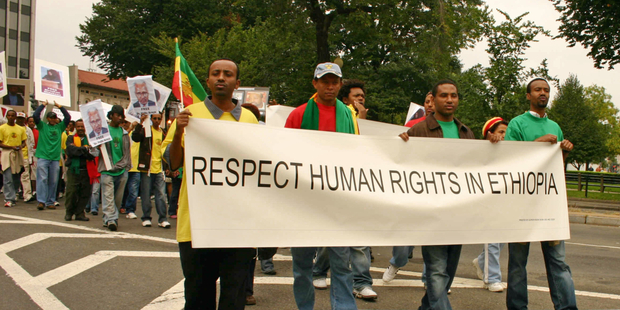
Statement on Ethiopia’s noncompliance with UN human rights evaluation
35th session UN Human Rights Council
General Debate – Ethiopia’s noncompliance with UN Special Rapporteurs
16 June 2017CIVICUS welcomes the Communication report of Special Procedures, which sheds light on the breadth of work undertaken by this unique mechanism of the Human Rights Council.
We refer in this context to the ‘Communications’ report by the Special Rapporteur on the freedom of peaceful assembly and association. We note that there has been an average 50% response rate from governments on alerts and other communications. However, Ethiopia has shown a total no-response to the numerous stand alone or joint alerts they received during the period of reporting. We reiterate our grave concerns voiced also by other independent experts of the United Nations in relation to the violent crackdown on peaceful protests, which reportedly led to the death of over 800 people since November 2015 in Ethiopia. We remain extremely alarmed by numerous reports that those arrested had faced torture and ill-treatment in military detention centers.
We also reiterate our worry regarding the Proclamation on Anti-Terrorism and Charities and Societies Law adopted in August 2009. The extremely broad and ambiguous provisions of the laws continue to be used to silence independent voices and civil society groups.
Finally, we urge the government of Ethiopia to head the calls to end the state of emergency declared on 9 October 2016. The state of emergency decree provides for a wide range of repressive measures, undermining the rights to freedom of expression, association and assembly, including banning communications with governments and CSOs that may undermine ‘national sovereignty, constitutional order and security’.
We call on the Government as a member of the Council to fully cooperate with the mandates of Special Procedures of the Human Rights Council.
-
Statement on freedom of assembly and association, and the right to education
35th session of the Human Rights Council
Dialogue with Special Rapporteur on freedom of assembly and of association and the Special Rapporteur on the right to educationCIVICUS welcomes the reports of the Special Rapporteur on freedom of assembly and of association and the Special Rapporteur on the right to education. We again commend the former Special Rapporteur, Maina Kiai, for his steadfast support for civil society across the world. We also welcome the new Special Rapporteur, Annalisa Ciampi, and remain committed to supporting the mandate to undertake its essential work.
The Special Rapporteur’s report on mapping the achievements of civil society articulates an unassailable case for why civil society should be seen as an ally, rather than an adversary. As expressed by the mandate holder, civil society has played a crucial in shepherding and realizing scores progressive values and rights. The report provides a wealth of examples of these achievements, including through pursuing accountability, supporting participation and empowerment, driving innovation and fostering sustainable development. We urge all states to explicitly acknowledge the integral role that civil society plays in ensuring that states can actualize their domestic and international human rights commitments.
We further reiterate the recommendations raised by the Special Rapporteur in his report on the United States. National and public security concerns must not be misused to suppress freedom of assembly. The continued use of excessive force by police departments across the United States against peaceful protesters requires a concerted and proactive federal response. We also regret that immigrant workers face the specter of official harassment and deportation for attempting to exercise their right to freedom of association, including joining labor unions.
In the United Kingdom, we remain equally concerned by recent reports that Prime Minister Theresa May is willing to forfeit human rights in the pursuit of countering terrorism. Such a wholesale forfeit of human rights undermines the United Kingdom’s international obligations as well as efforts to address the roots causes of terrorism.
We urge all States to pledge their support to the Special Rapporteur including by providing all necessary informational and financial resources to discharge the mandate and to work closely with civil society.
-
Statement on human rights abuses in South Sudan
UN Human Rights Council - 26th Special Session
Special Session on South SudanCIVICUS welcomes this Special Session following the findings and recommendations recently put forward by the Expert Commission on Human Rights in South Sudan. We agree with the assessment that South Sudan is on the verge of an unprecedented spate of violence which has strong ethnic connotations.
-
Statement on human rights recommendations for Poland

36th Session of the UN Human Rights Council
CIVICUS welcomes Poland’s commitment to engage with the UPR process and its acceptance of recommendations related to the freedoms of expression, peaceful assembly and association, in its recent response to the Report of the Working Group.
As outlined in our joint submission to this review, CIVICUS and the Committee for the Defense of Democracy (KOD) remain seriously concerned by the government’s control over state institutions and the media through weakened rule of law and undermined respect for fundamental freedoms.
With particular reference to media freedom, we welcome the Government of Poland’s commitment to ensure that national legislation is made consistent with European Union Law. We remain concerned however at the Government’s assertion that laws enacted in 2015 “do not restrict media freedom and pluralism”. CIVICUS and KOD believe there is still an urgent need to revisit changes made to the Broadcasting Act in January 2016, to prevent the kind of political interference which saw the dismissal of dozens of journalists from the public broadcaster.
We also welcome Poland’s acceptance of the recommendation to guarantee the freedom of assembly, but urge the Government to reconsider its rejection of the recommendation to “Repeal the restrictive amendments on the Law on Assemblies”. These amendments are inconsistent with Poland’s international obligations, because they give undue priority to public authorities, and seriously undermine the protest rights of all Polish citizens, including those that oppose the government.
Finally, we welcome the Government of Poland’s acceptance of recommendations related to the freedom of association. We however urge the Government to ensure that these guarantees are applied equally to all, including groups promoting the rights of LGBTI people. We also urge the Government to ensure that Poland’s new counter-terrorism legislation is not used as a pretext for the erosion of the rights of minority groups, particularly those promoting the rights of Muslims.
-
Statement on human rights violations in Eritrea

35th session UN Human Rights Council
14 June 2017
Statement during the interactive dialogue on the report of the Special Rapporteur on situation of human rights in EritreaCIVICUS welcomes the report of the Special Rapporteur on Eritrea and applauds her unwavering efforts to ampifly the voices of civil society and victims of human rights violations in Eritrea and in the diaspora.
Mr. President, the Special Rapporteur’s report to the Council is unequivocal that Eritreans continue to be subjected to grave and systematic violations of fundamental freedoms, some of which amount to crimes against humanity. Worryingly the Special Rapporteur has concluded that the human rights situation in Eritrea “has not significantly improved.”
We remain deeply concerned that the Government has failed to take adequate measures to address the human rights situation in Eritrea as documented by the Commission of Inquiry.
During the reporting period, the Special Rapporteur received information that the government’s military and national service programmes remain arbitrary, protracted and involuntary, which is tantamount to enslavement.
The Government has further failed to release countless arbitrarily detained prisoners for exercising their fundamental rights and refuses to provide sufficient information about the status of several prominent activists and individuals who have been forcibly disappeared.
As a result of these and other deprivations of human rights, thousands of Eritreans, including scores of unaccompanied children, are forced to traverse perilous situations to secure refuge abroad every year.
We support the Special Rapporteur’s decision to devote greater time and resources to address impunity, including by engaging a diversity of actors including victims, survivors, family members, human rights defenders and lawyers to help facilitate access to justice and accountability for human rights violations.
We urge the Government of Eritrea to take proactive measures to implement the specific and time-bound benchmarks developed by the Special Rapporteur to assess substantive change in the country.
We respectfully request members and observer states of the Council to co-sponsor a resolution renewing the mandate of the UN Special Rapporteur on Eritrea and provide the mandate holder with all necessary support.
-
Statement: Civil society rights violations on a global scale

35th session UN Human Rights Council
General Debate
20 June 2017In Egypt CIVICUS expresses its serious concern over the issuance of Law 70 of 2017 which further restricts space for human rights monitoring, advocacy and reporting. It introduces hefty fines and prison terms for civil society groups who publish a study or report without prior approval by the government, thus shutting out completely the independent voice and action of human rights organizations.
We urge the Egyptian authorities to repeal this Law, end the ongoing criminal investigation into the work of human rights defenders and create a safe and enabling environment for civil society free from reprisals.
CIVICUS condemns in the strongest terms the recent killings of five peaceful protesters on 23 May in Bahrainand asks for an independent, impartial investigation. We further deplore the escalation in government reprisals against Bahraini civil society, including those living in exile for their cooperation with the United Nations and this Human Rights Council. We urge the Bahraini government to release all political prisoners and human rights defenders from their degrading, torturous detention, including prominent defender Nabeel Rajab.
In Cameroon, the government has imposed gross restriction on the rights to free speech and assembly. Beginning on 17 January 2017, the Government blocked all access to the internet in the sections of the North and Southwest regions in a blatant attempt to suppress widespread protests against government policies marginalizing the English-speaking population. While the recent precipitous decline in respect for ongoing human rights violations has garnered some international attention, CIVICUS asks the Council for more robust scrutiny to prevent further human rights violations and restore fundamental freedoms of expression and assembly.
Finally, CIVICUS continues to urge the government of Ethiopia to allow access to an international, independent, impartial and transparent investigation into the deaths resulting from excessive use of force by the security forces and other violations of human rights in the context of last year’s protests.
-
Statement: Investigation needed into human rights violations in the Democratic Republic of the Congo

35th session UN Human Rights Council
Statement on situation of human rights in the Democratic Republic of the Congo
20 June 2017CIVICUS shares the concern of the High Commissioner over the widespread human rights violations committed in the Kasai Central and Kasai Oriental provinces of the DRC since August 2016.
Extrajudicial executions of civilians and other atrocities have been systematically carried out forcing over 30.000 people to flee to neighbouring countries and leaving approximately 1.27 million others internally displaced.
We are concerned by the threats and increased violence targeting journalists including those who covered the massacres in the Kasai region. We express alarm over the closure of private media outlets deemed critical of the government.
Mr. Vice President, peaceful protests held recently were violently repressed and security forces carried out widespread arrests of people suspected of organising or participating in such protests.
We are also concerned about the arbitrary arrest and detention of human rights defenders for exposing failures of the national economy, the provision of social services and democratic reform.
Sadly, some of these human rights defenders are being held in undisclosed locations without access to family members and lawyers. Others have been tortured while in detention.
We urge the Council to launch an independent international investigation into the atrocities committed in the Kasai region and for all perpetrators to be held accountable for their actions.
-
Statement: The same rights that people have offline must also be protected online
41st Session of the UN Human Rights Council
Interactive Dialogue with the Special Rapporteur on the rights to peaceful assembly and association
Joint statement by ICNL, Article 19, CIVICUS, ECNL, and World Movement for DemocracyActivists, peaceful protesters, and civil society have harnessed the power of the Internet and digital technologies, to share information, and to build and mobilise communities at unprecedented scale and speed.
Whilst this Council has repeatedly affirmed the maxim that “the same rights that people have offline must also be protected online,” online civic space is under intense, and increasing pressure, worldwide.
We therefore share the Special Rapporteur’s concern that many States, including members of this Council, misuse emerging technologies to surveil civil society groups and peaceful protesters, harass human rights defenders online, deliberately obstruct access to online information, and abuse vague legislation restricting online expression to target dissenting voices.
In Sudan, we condemn the recent Internet shutdowns by the TMC, in an attempt to conceal the brutality of the unlawful and wholly disproportionate crackdown by the military against protesters, including the use of lethal force and disturbing accounts of sexual violence. This Council must hold Sudan to account, including by establishing a fact-finding mission.
In Russia, merely posting about a protest online can attract reprisals. Just this month, prominent opposition activist Leonid Volkov - who webcast a protest in September 2018 - was arbitrarily detained for his alleged role in “organising” a protest and “inciting disorder”.
In Turkey, the presence of secure communication apps on individuals’ devices has been used as the basis of bogus terrorism charges against journalists, and civil society.
In Liberia this month, targeted shutdowns saw access to social media, email services and news agencies cut off in response to protests against state corruption.
These and all other efforts to frustrate the exercise of assembly and association rights online, and choke off civic space, demand the urgent attention of this Council. Our organisations encourage the Special Rapporteur to continue his work on this important area.
Mr President,
We agree that as “gatekeepers” to online spaces, the private sector plays a vital role in safeguarding civic space online. The Ruggie Principles on business and human rights provide a clear framework to ensure human rights standards guide their policies and practices.
-
States should defend environmental human rights defenders
Joint Letter at the 40th session of the UN Human Rights Council
Our organisations are calling on all UN Member States to demonstrate their support to environmental human rights defenders.
March 12, 2019
To: UN Member StatesWe all want to breathe clean air, drink safe water, and to be able to provide sustenance and a healthy, dignified life for our families. Human survival and well-being rests on a biodiverse and healthy environment and a safe climate. Environmental human rights defenders help us to achieve that - they defend the planet and their communities from the impact of harmful resource extraction or pollution by unscrupulous companies or governments. Their work is essential to attaining the sustainable development goals and ensuring that no-one is left behind.
We need your support to defend environmental human rights defenders.
At its current 40th session, the Human Rights Council is discussing a draft resolution on environmental human rights defenders. This is a timely and important initiative as UN agencies, human rights organisations and the media have documented unprecedented killings and attacks against people defending land and the environment.
It is important for the Council to adopt a resolution that reflects the gravity and the reality of the situation defenders face every day. We therefore call on members of the UN Human Rights Council to ensure that the resolution adopted by the Council clearly:
- Outlines the root causes of the threats against environmental human rights defenders, including development and commercial activities with adverse social and environmental impacts, or those imposed on communities without meaningful consultation and respect for their rights;
- Recognises that environmental human rights defenders confront multiple adverse interests when challenging State and corporate activities, and highlights the collusion between different actors which hinders the work of defenders and aggravates their vulnerable position;
- Clearly names the industries and activities most dangerous to defenders, such as the mining industry, natural resource exploitation, agribusiness and large-scale development projects;
- Acknowledges the wide number of States that have recognised the right to a healthy environment in their internal legal order;
- Recognises that the lack of effective access to information, access to participation and access to justice causes environmental conflicts and leads to violence against defenders
- Calls for the development of protection mechanisms for environmental human rights defenders in line with best practice identified by the Special Rapporteur;
- Articulates the specific risks women and indigenous human rights defenders face and the need for an intersectional approach in assessing and designing protection measures for defenders;
- Calls on States to ensure that all communities are meaningfully consulted and can participate genuinely in matters that affect their rights and, in particular the use, management and conservation of their land and natural resources;
- Calls on States to guarantee the right to free, prior and informed consent for indigenous peoples;
- Calls on States to adopt legislation that creates due diligence obligations for companies registered in their jurisdictions and those of their subsidiaries;
- Articulates the responsibility of businesses to respect the rights of human rights defenders and highlights measures companies should take to contribute to addressing their insecurity;
- Adequately articulates the responsibility of investors and the obligations of development finance institutions to respect human rights in the context of their investments and to develop and implement effective policies to prevent and address threats; and
- Stresses that an open civic space, including respect for the rights to freedoms of expression, peaceful assembly and association and movement, as well as the right to participate in the conduct of government and public affairs, is vital to the protection of both a healthy and sustainable environment and environmental human rights defenders.
The draft being negotiated in Geneva contains some of these essential elements, which must be defended, but also offers significant potential for strengthening.
As negotiations enter the final stretch, we urge you to actively support the development of a resolution which clearly recognises the vital contribution of environmental human rights defenders to sustainable development and the effective enjoyment of human rights and formulates concrete asks of the States, development finance institutions and companies with the power of safeguarding that contribution.
- International Service for Human Rights (ISHR)
- Amnesty International
- Asian Forum for Human Rights and Development (Forum Asia)
- CIVICUS
- DefendDefenders (East and Horn of Africa Human Rights Defenders Project)
- Earth Justice
- Front Line Defenders
- Global Witness
- JASS (Just Associates)
- IM-Defensoras
- Christian Development Alternative (CDA)
- Nigerian Women Agro Allied Farmers Association
- Social Justice Connection
- Franciscans International
- Unidad de Protección a Defensoras y Defensores de Derechos Humanos - Guatemala (UDEFEGUA)
- Geneva for Human Rights
- Robert F. Kennedy Human Rights
- Réseau Ouest africain des Défenseurs des Droits Humains/West African Human Rights Defenders' Network
- Coordination des associations et des particuliers pour la liberté de conscience
- La'o Hamutuk
- Karapatan Philippines
- Human Rights House Foundation
- HETAVED SKILLS ACADEMY AND NETWORKS
- International Commission of Jurists
- Conectas Direitos Humanos
- World Movement for Democracy
- Association for Human Rights in Ethiopia (AHRE)
- Center for Civil Liberties
- Urgent Action Fund for Women's Human Rights
- Human Rights Concern - Eritrea (HRCE)
- International Women's Development Agency (IWDA)
- Humanitaire Plus (Togo)
- Coalition Burkinabé des Défenseurs des Droits Humains
- AMARA
- Gender and Development for Cambodia (GADC)
- Odhikar
- Freedom House
- Red Internacional Unión Latinoamericana de Mujeres - Red ULAM
- Freedom House
- Rivers without Boundaries Mongolia
- Asian Legal Resource Centre
- OYU TOLGOI WATCH
- Ligue Burundaise des droits de l’homme Iteka
- International Centre for Ethnic Studies (ICES)
- AVIPA association des victimes parents et amis du 28 septembre 2009 Guinée
- Porgera Red Wara (River) Women's Association Incorporated (PRWWA INC.)
- KRuHA - people's coalition for the right to water
- Asia Pacific Network of Environment Defenders (APNED)
- EMPOWER INDIA
- EarthRights International
- Dawei Probono Lawyer Network (DPLN)
- Africa Network for Enivironment and Economic Justice(ANEEJ)
- Partnership for Justice, Nigeria
- Association for Progressive Communications (APC)
- Huridocs
- Steps Without Borders NGO
- Humanists International
- Coalition Togolaise des Défenseurs des Droits Humains (CTDDH)
- Labour,Health and Human Rights Development Centre
- Institute for Multi-Resource Development (IMdev)
- Not1More
- Patrons of Khuvsgul lake movement
- Liberia Coalition of Human Rights DefendersHuman Concern, Inc
- Brot für die Welt
- ARTICLE 19
- Peace Brigades International
- Metro Center Journalists Rights & Advocacy
- World Uyghur Congress
- 350.org
- International Movement Against All Forms of Discrimination and Racism (IMADR)
- Latinamerikagrupperna
- World Organisation Against Torture (OMCT)
- Center for International Environmental Law (CIEL)
- SUDIA
- Synergia - 36/5000 Initiatives for Human Rights
- Philippine Misereor Partnership Inc.
- Alyansa Tigil Mina (ATM)
- Center for Women's Global Leadership
- Transformative and Integrative Build Out For All
- Institute for Strategic & Development Studies
- Reseau de Femmes du mMlieu Rural Haitien
- East Timor and Indonesia Action Network (ETAN)
- FIFCJ
- Women's International League for Peace and Freedom (WILPF)
- Association for Women's Rights in Development (AWID)
- Zo Indigenous Forum
- MADRE
- FOKUS Forum for women and development
- Bougainville Women's Federation
- Human Rights Council-Ethiopia
- Environment Defenders Advocacy
- Porgera Women's Rights Watch
- Independent Human Rights Analyst and Strategy Advisor
- Buliisa Initiative for Rural Development Organisation (BIRUDO)
- Community Resource Centre Foundation
- MANUSHYA FOUNDATION
- Equitable Cambodia
- Friends with Environment in Development
- Corporate Human Rights Benchmark (CHRB)
- Association For Promotion Sustainable development
- WoMin Afrcan Alliance
- Both ENDS
- Child Rights Connect
- CONSEIL REGIONAL DES ORGANISATIONS NON GOUVERNEMENTALES DE DEVELOPPEMENT
- Enda Lead Afrique Francophone
- Human Rights Law Centre
- Business & Human Rights Resource Centre
- World Voices Uganda
- Africa Center for Policy Facilitation
- Estonian Forest Aid
- Community Transformation Foundation Network (COTFONE)
- Collectif Camerounais des Organisations des Droits de l'Homme et de la Démocratie (COCODHD)
- Global Initiative for Economic, Social and Cultural Rights
- North-East Affected Area Development Society (NEADS)
- Sangsan Anakot Yawachon Development Project
- Forum Syd Sweden
- COALITION AGAINST LAND GRABBING (CALG) - PHILIPPINES
- UNLAD-BLFFA
- Asian NGO Coalition for Agrarian Reform and Rural Development (ANGOC)
- BankTrack
- CORE Coalition
- The Gaia Foundation
- Labour Behind the Label
- Bataris Formation Center
- Salva la Selva
- Observatoire d'etudes et d'appui a la responsabilite sociale et environnementale ( OEARSE )
- REd de Género y Medio Ambiente
- London Mining Network
- Abibiman Foundation
- Ecodesarollo
- The Kesho Trus
- Organisation mondiale contre la torture
- PAPUA NEW GUINEA MINING WATCH GROUP ASSOCIATION INC
- 11.11.11 - Koepel van de Vlaamse Noord-Zuidbeweging
- Center for Global Nonkilling
- Centro salvadoreño de Tecnología Apropiada
- Coalition Ivoirienne des Défenseurs des Droits Humains (CIDDH)
- Friends of the Earth NI
- Forest Peoples Programme
- Environmental Investigation Agency
- Fundación para el Desarrollo de Políticas Sustentables (FUNDEPS)
- Bank Information Center
- Africa development Interchange Network
- Voluntariados Intag
- Mangrove Action Project
- IUCN NL
- Community Self Reliance Centre (CSRC)
- Amazon Watch
- HRM @Bir Duino-Kyrgyzstan@
- Task Force Detainees of the Philippines
- Asociación ambiental e cultural Petón do Lobo
- Asociación galega Cova Crea
- Amigos e Amigas dos Bosques "O Ouriol do Anllóns"
- Réseau Camerounais des Organisations des Droits de l'Homme (RECODH)
- CNCD-11.11.11
- Cairo Institute for Human Rights Studies
- Rainforest Foundation Norway
- Women Working Worldwide
- Greenpeace
- AMDH- Maroc
- In Difesa Di , per i diritti umani e chi li difende
- Center for Environmental Concerns-Philippines
- Buliisa Initiative for Rural Development Organisation (BIRUDO) - Uganda
-
Stop Restrictions on Freedom of Assembly and Association in Iran
President of the Islamic Republic of Iran
Address: Pasteur St., Pasteur Sq., Tehran
Phone number: +98(21)64451
To His Excellency, President Hassan Rouhani
Re: Stop Restrictions on Freedom of Assembly and Association in Iran
Your excellency,
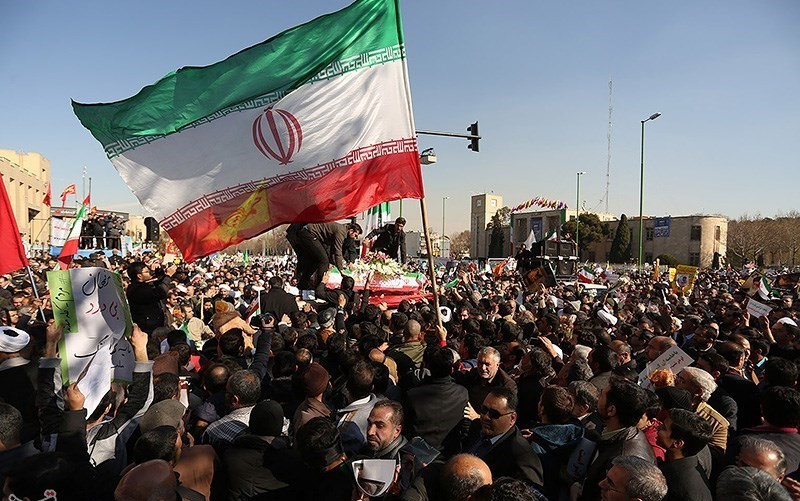
With recent reports surfacing of the arbitrary detention and enforced disappearances of civil society actors in Iran, international civil society notes with concern the violent closing of civic space in the country. We write to urge you, Your Excellency, to immediately and unconditionally release all detained civil society actors and uphold the rights to freedom of assembly and association as per international conventions and the Iranian constitution.
Iranian civic space is shrinking at an unprecedented pace – even for Iranian standards – as authorities in Iran increasingly suppress independent civic action heavily and unlawfully. In the past year, Iran has seen the unparalleled rise of peaceful social protests and civic dissent despite a violent, authoritarian regime. The last two years have seen an alarming number of arrests and detention of civil society activists across a broad spectrum of environmental issues, human rights defenders, teachers’ and labor unionists, students and women’s rights. To this end CIVICUS, a global alliance of civil society around the world, and Volunteer Activists Institute, a NGO focusing on democracy, human rights, and peace building in the MENA region and specifically Iran, have launched a global campaign to hold the Iranian government accountable for its stark violations of the rights to freedom of association and peaceful assembly in the country.
Despite Iran being signatory to the International Convention on Civil and Political Rights, and provisions in the Constitution protecting freedom of assembly and association (article 26 and 27 of the Iranian constitution), activists are frequently detained and harassed for their human rights work. Some prominent figures of Iranian civil society, like Nasrin Sotoudeh who faces 38 years in prison and 148 lashes, have received lengthy prison sentences for providing legal assistance to human rights defenders, whereas others are awaiting trial on false charges of espionage and “corruption on earth” – punishable by death sentence if convicted. The state of human rights defenders in prison is also alarming. In July 2019, human rights experts from the United Nations expressed concern at the state’s failure to provide care to detainees, including human rights defender Arash Sadeghi.[1] One environmental expert and activist, Dr. Kavous Seyed Emami, a Professor at Imam Sadeq University and Director of Persian Wildlife Heritage Foundation, died in prison on 8 February 2018, two weeks after detention in Evin prison. The circumstances of his death remain unclear. Other activists currently detained include Nasrin Sotoudeh, Narges Mohammadi, Farhad Meysami, Esmail Bekhshi, Sepide Gholian, and many more.
We are also extremely concerned with new appointments within the highest ranks of the military (Iranian Revolutionary Guard Corps), who have enforced restrictions on civic space by establishing a new office (Baqiattallah) to organize social forces and government-affiliated civil society organizations, to marginalize the independent civil society. These new appointments signal that Iran is adopting a maximum strategy to forcefully strike against any instances of civic disobedience. As sanctions and economic hardships are pushing Iranians to the limit, and resulting in peaceful protests, the government of Iran is closing down on civic acts of dissent, and we are extremely concerned about the coming months ahead of the upcoming parliamentary elections in 2020.
As a result, we the undersigned call for the government of Iran to ensure greater protections of the rights to freedom of association and peaceful assembly. Specifically, we call for:
- The government to extend an invitation to the Special Rapporteur on the Situation of Human Rights Defenders, and the Special Rapporteur on Freedom of Peaceful Assembly and Associations to investigate the human rights situation in Iran.
- For all human rights defenders, including but not limited to Nasrin Sotoudeh, Narges Mohammadi, Farhad Meysami, Esmail Bekhshi, Sepide Gholian, to be immediately and unconditionally released, with all charges against them dropped.
- To ensure gender sensitive protections for all which Iranian women human rights defenders are uniquely targeted in Iran, and work with the Special Rapporteur on Violence against Women, its Causes and Consequences to ensure that all forms of violence against Iranian WHRDs are reported as violence against women.
- To align practice of the implementation of the rights to Freedom of Assembly and Association as highlighted in the constitution to international best practice.
Sincerely, the undersigned:
- Volunteer Activists Institute
- CIVICUS Global Alliance for Citizen Participation
- Women’s March Global
- Center for Human Rights in Iran
- Citizens Friend
- West African Human Rights Defenders Network
- Women Against Violence
- The Needy Today
- Association de la Jeunesse pour la Promotion des Droits de l'Homme
- CASAD Bénin
- Initiative for Peace and Innovation - IPI
- Youth initiative for change and development
- Future Leaders Network Gambia Chapter
- AGIR POUR LA SECURITE ET LA SOUVERAINETE ALIMENTAIRE
- YOUNG AFRICAN FIGHTERS ORGANISATION YAFO
- Anti-Corruption International, Uganda Chapter
- Discourage Youths From Poverty
- Women Empowerment Group
- Organisation des Jeunes pour la Promotion et le Développement
- PACOPA
- WORLDLITE
- SOPEVUDECO ASBL
- FHRRDA
- Cameroon
- Fraternity Foundation for Human Rights
- Gutu United Residents and Ratepayers Association
- Palestinian Center For Communication and Development Strategies
- Tim Africa Aid Ghana
- Shanduko Yeupenyu Child Care
- APLFT
- Advance Centre for Peace and Credibility International
- Elizka Relief Foundation
- TOfAD
- Association pour les victimes du monde
- Network of Estonian Non-Profit Organizations
- VIFEDE
- Bangladesh Institute of Human Rights
- Save Our Continent, Save Nigeria.
- Friends of Emergence Initiatives
- Fundacion CELTA
- MPS GABON
- I2BA
- One Future Collective
- RECOSREC
- Achievers Innovative Advocates International Foundation
- GULF LINK VENTURE
- Centre for Intercultural Understanding
- Ugonma Foundation
- Center for Youth Civic Leadership and Environmental Studies - CYCLES
- FUNDACION CIUDADANOS
- Centre for Social Concern and Development
- Curtis business
- Bina Foundation for people with special needs
- GreenLight Initiative
- Community Wellness International
- Civic Initiatives Kyrgyzstan
- Jeunesse-Assistance
- Bella Foundation for Child and Maternal Care
- Fondation Kalipa pour le Développement
- SADF ONG
- ASSOCIATION OF UGANDA SCHOOL LEAVING YOUTH -AUSLEY
- FINESTE
- Sierra Leone School Green Clubs
- Centre for Sustainable Development and Education in Africa
-
Strengthen the work of UN Special Procedures that can protect human rights
42nd Session of the UN Human Rights Council
Joint Statement: 20 NGOs express support for the Coordination Committee’s process to strengthen the work of the Special ProceduresWe deliver this statement on behalf of 20 NGOs.
We note the concerns in the Declaration of the Special Procedures’ mandate holders at the Annual Meeting 2019 and share their concern about the global retrenchment against the values and obligations embedded in international human rights law and the challenges they spell out with regard to non-cooperation.
We also express appreciation for the process set in place by the Special Procedures Coordination Committee to discuss ways in which the work can be strengthened including by seeking input from a wide range of stakeholders. This process presents the most appropriate way to ensure the effectiveness of the Special Procedures in protecting and promoting human rights, and to discuss ways to strengthen cooperation and address situations where there may be concerns regarding the actions of individual mandate holders.
We hope that this process will also provide an opportunity to discuss issues of chronic underfunding, non-cooperation of States with the Special Procedures, acts of reprisal and intimidation against human rights defenders and ad hominem attacks against mandate holders and how to make non-cooperation including selective cooperation by states more costly.
Amnesty International
Asian Forum for Human Rights and Development (FORUM-ASIA)
Association for Women’s Rights in Development
Cairo Institute for Human Rights Studies
Center for Reproductive Rights
Child Rights Connect
CIVICUS: World Alliance for Citizen Participation
Colombian Commission of Jurists
Defence for Children International
Geneva for Human Rights
ILGA World
International Bar Association’s Human Rights Institute
International Commission of Jurists
International Movement against All Forms of Discrimination and Racism (IMADR)
International Service of Human Rights
Peace Brigades International
Sexual Rights Initiative (SRI)
Swedish Association for Sexuality Education
Women’s International League for Peace and Freedom (WILPF)
World Organisation Against Torture (OMCT) -
Strict legal restrictions on foreign funding hit India’s NGOs
CIVICUS interviews Mathew Jacob on the restrictions on freedom of association and attacks on civil society in India including laws on foreign funding. Jacob is the National Coordinator of Human Rights Defenders Alert – India (HRDA). HRDA is a national platform of human rights defenders for human rights defenders. Mathew is also a PhD scholar at the Tata Institute of Social Sciences, Mumbai.
-
SUDAN: ‘The only way out of this mess is through civilian rule’
 CIVICUS speaks about thewar in Sudan and its repercussions for women and civil society with Reem Abbas, a Sudanese feminist activist, writer and fellow at the Tahrir Institute for Middle East Policy (TIMEP).
Founded in 2013, TIMEP is a civil society organisation that works to centre advocates and experts from and in the Middle East and North Africa in policy discourse to foster more fair and democratic societies.
What’s the current humanitarian situation in Sudan?
Active conflict persists in around 60 per cent of Sudan’s territory. The continuous fighting entails targeting of civilians and mass displacement. In some states, much of the civilian infrastructure, including hospitals, markets, schools and universities, has been damaged. In Khartoum and West Darfur states, about 70 per cent of hospitals have been damaged or partially destroyed.
Civilians and civil society activists are unsafe. The situation greatly restricts people’s freedom of movement, their ability to sustain a livelihood and their capacity to express their opinions freely. There are pockets of relative security in Eastern and Northern Sudan, but even in areas deemed secure displacement persists and schools remain closed because internally displaced people are living in them and other public buildings.
Many livelihoods have totally collapsed, leaving people increasingly dependent on aid. We are already witnessing cases of famine, particularly affecting children, resulting in deaths.
How has the conflict impacted on women and girls?
Women have always been targeted in conflicts in Sudan. Political violence, rife in Sudan given its volatile political history, has also often taken aim at women. There’s rarely any accountability for sexual and gender-based violence. The Rapid Support Forces (RSF) – the militias that are fighting against the army – are abducting women and selling them as sexual slaves in markets or holding them captive for extended periods. Families are left in distress, unsure of the whereabouts of their daughters, and are sometimes embezzled for money.
This is a war on women. Part of it stems from structural factors that place women in subordinate positions, but there’s also a punitive element directed at women for their pivotal role in the 2019 revolution that overthrew dictator Omar al-Bashir. During the revolution, women were out there, highly visible on the frontlines, and now it feels like they’re being punished for it.
The targeting of women is tearing the social fabric apart. As public spaces become unsafe for women, fewer women are participating in public life, including in economic activities and activism. This will have long-term consequences.
What roles is civil society playing in this context, and what challenges does it face?
It’s important to recognise that civil society in Sudan isn’t a monolithic entity, but rather a complex mix of different layers. Some were heavily involved during the transitional period that followed the revolution, getting deeply integrated with government structures at the time. Then there are women’s groups, each with their own focus and agenda. Alongside them, there are more formal organisations such as non-governmental organisations and trade unions. And let’s not overlook the revolutionary elements, such as the resistance committees and emergency responserooms, decentralised and horizontal structures working to shelter displaced people, support hospitals and secure food and water supplies.
The more formal parts of civil society are currently heavily involved in politics, while its revolutionary segments are deeply engaged in grassroots humanitarian efforts. They’re essentially functioning as local governments in areas where official governance structures are absent.
Despite its crucial role, civil society faces numerous challenges. The organic growth of grassroots movements is stunted by conflict and dictatorship. The polarising effects of war have led to divisions along political, ethnic and regional lines, further fragmenting civil society. Activists are increasingly targeted by the RSF or the army, threatening their ability to operate.
In an environment where conformity to mainstream opinions is increasingly enforced, it becomes increasingly difficult to maintain dissenting voices. This situation underscores the urgent need to safeguard the diversity and autonomy of civil society in Sudan.
However, attention and funding often gravitate towards already well-funded organisations, leaving grassroots initiatives to rely solely on community support. While funding alone doesn’t create a functional organisation, it’s important for organisations and groups to grow in an organic way and be able to garner support from the community.
How is civil society advocating for peace and democracy?
Right now, the conversation is all about security and getting things back to normal. People are doubting whether we can even think about democracy after all this chaos. The situation’s tough, with militarisation and conflict everywhere. But the only way out of this mess is through civilian rule. We need to figure out how to link the peace process to a long-term political solution that puts us back on track for democracy.
Unfortunately, the focus of the political elite appears to be more on preserving its positions rather than addressing urgent issues. There are concerns that the largest political coalition has developed close ties with the militia, causing unease among those involved in the revolution. Without a bigger political group that really listens to people and leads responsibly, we’re going to be stuck with military rule for ages. Right now, it should be all about finding common ground and putting the focus on the people who’ve suffered most from this war – not about politicians trying to claw back power or siding with the military.
There’s a lot of talk about how the transitional government messed up and led to the coup and the war. People are sceptical about civilian rule and whether it can fix things. It’s easier to sell the idea of a military-run government when people are feeling scared and vulnerable. Even though it’s militarisation that got us into this mess in the first place, it’s understandable because people just want to feel safe again.
What should the international community do to address Sudan’s dire security and humanitarian situation?
It’s time for the international community to stop sticking to one side of the story and start listening to everyone involved. They’re pumping all their funds into one camp and ignoring a whole bunch of other perspectives. We need more humanitarian aid, particularly considering the famine situation. Millions of people are at risk, with nowhere to turn and nothing to support themselves with.
Investment in basic infrastructure like hospitals and water plants is crucial too. People need services, and they need them now. Some areas haven’t had clean water for months because water plants are getting caught in the crossfire.
The international community must also demonstrate political determination. People’s lives are on the line. We need clear plans and urgent action to stop this war.
I want to emphasise the significance of civil society solidarity. This is crucial when our governments show ambivalence towards our concerns. In such situations, we must become each other’s voices and amplify our collective message. We must seek ways to connect, demonstrate solidarity and collaborate effectively.
It’s important to learn from one another and work together towards shared objectives. Collaboration with civil society groups and networks across the world is greatly appreciated. It’s through such partnerships that we can make a meaningful impact and bring about positive change.
Civic space in Sudan is rated ‘repressed’ by theCIVICUS Monitor.
Get in touch with TIMEP through itswebsite or itsFacebook andLinkedIn pages, and follow@TimepDC and@ReemWrites on Twitter.
-
Sudan: As violent clashes continue, Sudan’s international partners must call for accountability and justice
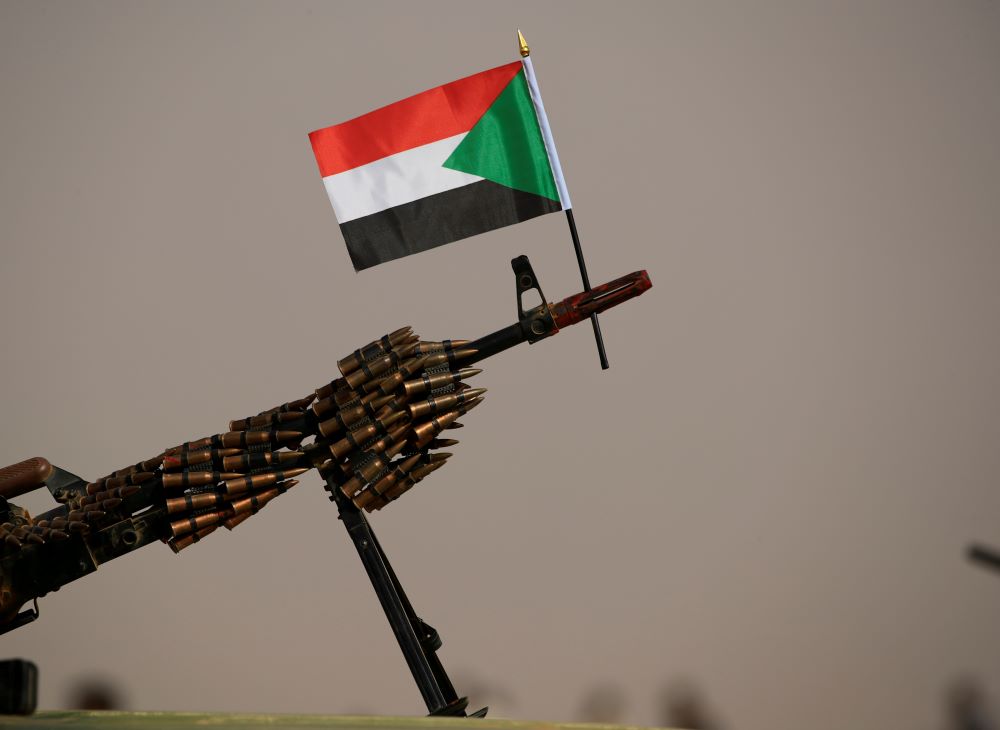
Since April 15, General Abdel Fattah al-Burhan, head of the Sovereign Council and the Sudanese Armed Forces (SAF), and General Mohamed Hamdan Dagalo, alias Hemedti – leader of the Rapid Support Forces (RSF) have, in their quest for power, engaged in deadly clashes across Sudan. In two days, nearly 100 civilians have been killed according to the Central Committee of Sudan Doctors and 1,100 injured. Fights between the two factions are still raging on Monday.