


human rights
-
Sudan: The UN Human Rights Council should act urgently and hold a special session

Following the 25 October 2021 military coup in Sudan, CIVICUS and partners have released a call on the UN Human Rights Council to convene a special session to address the crisis in the country.
To Permanent Representatives of Member and Observer States of the United Nations (UN) Human Rights Council (Geneva, Switzerland)
Excellencies,
As violence is increasing in Sudan following the military coup of 25 October 2021 and decisive action is needed to protect the transition, Sudan’s constitutional order, and the human rights of people in Sudan, the UN Human Rights Council has a responsibility to act urgently.
The Council should fulfil its mandate to prevent violations and respond promptly to human rights emergencies by convening a special session and adopting a resolution requesting the UN High Commissioner for Human Rights to set up a fact-finding mission to monitor, verify and report on the situation in Sudan with a view to preventing further human rights violations and abuses, identifying perpetrators, and ensuring accountability for these violations and abuses.
Ahead of the 48thsession of the Human Rights Council (13 September-11 October 2021), 37 civil society organisations (CSOs) highlighted[1] the need for the Council to extend its support to, and scrutiny of, Sudan. The CSOs highlighted that Sudan’s political transition remained incomplete, mentioned ongoing challenges and risks, and urged States to maintain the monitoring and public reporting capacity of the Office of the UN High Commissioner for Human Rights (OHCHR). They wrote: “[T]he Human Rights Council has a responsibility to keep Sudan high on its list of priorities and to contribute to meaningful progress in the country.”
Their call remained unanswered as the Council failed to adopt any Sudan-focused resolution.
Two weeks after the session ended, on 25 October 2021, Sudan’s military forces arrested Prime Minister Abdalla Hamdok and several civilian figures, including members of the Transitional Government and Transitional Sovereign Council (SC), who were placed under house arrest or taken to unknown locations. At the time of writing, several of them remain held incommunicado or under house arrest. Military elements took control of the national television and key centres of information. They imposed a partial internet shutdown in the country and closed roads, bridges, and the airport in Khartoum.
This military coup occurred one month before the head of the former Transitional Military Council (TMC), General Abdel-Fattah al-Burhan, who had since August 2019 been heading the SC, was due to hand over the presidency of the SC to civilian representatives, as per the power-sharing agreement and Constitutional Document of 2019.[2]
General al-Burhan announced a nation-wide state of emergency and the dissolution of the SC and the civilian-led Transitional Government.
He unilaterally announced the suspension of Articles 11, 12, 15, 16, 24-3, 71, and 72 of the Constitutional Document. These articles pertain to the SC, the Transitional Council of Ministers and Cabinet, the Transitional Legislative Council (which was to be constituted), and the TMC. The latter’s dissolution seems to have been annulled, paving the way for military rule.[3]
The coup and military takeover also threaten the implementation of the Juba Peace Agreement for Sudan, which was signed on 3 October 2020 between the Transitional Government and parties to the peace process, including armed groups that were involved in the conflicts that have affected several of Sudan’s regional States in the last three decades.
General al-Burhan sought to justify the illegal takeover by blaming “political infighting” within civilian bodies and groups, including the Transitional Government and the Forces for Freedom and Change (FFC), the coalition that brings together the Sudanese Professionals Association (SPA), civic groups, and political parties that signed the Declaration on Freedom and Change of January 2019 and led the peaceful popular revolution of 2018-2019 that led to the ouster of former President Omar al-Bashir, in April 2019, and the political transition. General al-Burhan even asserted that the army had ousted the government to avoid a “civil war.”[4]
* * * * * * * * *
Immediately after the coup was reported, and despite restrictions on communications, protesters peacefully took to the streets to denounce the military’s illegal actions and demand the reinstatement of the government and a transition to civilian rule. The SPA called for strikes and civil disobedience. Protesters erected barricades in the streets. Soldiers opened fire on crowds and reportedly killed at least ten people and injured dozens. Arrests have been reported.[5]
These acts demonstrate the armed and security forces’ lack of commitment to a democratic transition to civilian rule and their determination to consolidate control, including by using violence. The 25 October 2021 military coup followed a reported coup attempt on 21 September 2021, which “the military blamed on a cadre of Bashir-allied Islamists but which several diplomats described […] as a trial balloon,” as tensions were growing within the SC.[6]
Fears of a full-fledged, bloody crackdown are mounting. These fears are made credible by the illegal actions of the reconstituted TMC, the history of violence and abuse that characterises Sudan’s armed and security forces, including the Rapid Support Forces (RSF), and the current context, including restrictions on communications, which are reminiscent of the shutdown that was imposed following the atrocities committed on 3 June 2019 (known as the “Khartoum massacre”[7]).
While the total number of arrests made is unknown, it is likely to increase after the release of the present letter. Human rights defenders (HRDs), protest organisers, journalists, and independent voices, in particular women human rights defenders (WHRDs), women journalists, and women and girls protesting the coup, are at a heightened risk of being subjected to violations and abuses. These include arbitrary arrests, the use of unwarranted and lethal force, beatings, ill-treatment and torture, and sexual and gender-based violence, as was the case during the Khartoum massacre.[8]
* * * * * * * * *
The coup has drawn condemnation. States, including partners of Sudan, condemned it as a betrayal of the transition, demanded the release of political leaders, and urged full observance for the Constitutional Document and the reinstatement of transitional institutions.[9]
The Intergovernmental Authority on Development (IGAD), of which Sudan is a Member, issued a statement in which its Executive Secretary, Dr. Workneh Gebeyehu, said he was “alarmed by the current political developments.” He “strongly condemn[ed] any attempt to undermine the transitional government” and called for the “immediate release” of all arrested political leaders.[10]
The Arab League expressed “deep concern” about the military coup. The organisation’s Secretary-General urged all parties to “fully abide” by the Constitutional Declaration signed in August 2019.[11]
The Chairperson of the AU Commission, Moussa Faki Mahamat, who learned “with deep dismay of the serious development of the current situation in Sudan,” called “for the immediate resumption of consultations between civilians and military” and reaffirmed that “dialogue and consensus is the only relevant path to save the country and its democratic transition.” He further called “for the release of all arrested political leaders and the necessary strict respect of human rights.”[12] However, despite the Lomé Declaration on Unconstitutional Changes of Government,[13] he did not convey a “clear and unequivocal warning to the perpetrators of the unconstitutional change that, under no circumstances, will their illegal action be tolerated or recognized by the [AU].”
The AU Peace and Security Council (PSC) met on 26 October 2021. The following day, it released a communiqué[14] in which it “strongly condemn[ed] the seizure of power by the Sudanese military on 25 October 2021 and the dissolution of the Transitional Government, and totally reject[ed] the unconstitutional change of government, as unacceptable and an affront to the shared values and democratic norms of the AU.” It decided to “suspend, with immediate effect, the participation of the Republic of Sudan in all AU activities until the effective restoration of the civilian-led Transitional Authority.”
While this is a positive step, more needs to be done to stop military rule and protect the transition, Sudan’s constitutional order, and the human rights of people in Sudan. As repression increases, AU mediation efforts and Human Rights Council action are not mutually exclusive but complementary.
The UN Secretary-General, Mr. António Guterres, “strongly condemn[ed] the ongoing military coup d’état in Khartoum and all actions that could jeopardize Sudan’s political transition and stability.” He called for the immediate reconstitution of the governing arrangements provided for under the Constitutional Document.” He referred to the “unlawful detention” of the Prime Minister, government officials and politicians as “unacceptable” and called for the immediate release of those detained arbitrarily. He added: “Any attempts to undermine this transition process puts at risk Sudan’s security, stability and development.”[15]
The Special Representative for Sudan and Head of the UN Integrated Transition Assistance Mission in Sudan (UNITAMS), Mr. Volker Perthes, said he was “deeply concerned about reports of an ongoing coup and attempts to undermine Sudan’s political transition.” He “called on the security forces to immediately release those who have been unlawfully detained or placed under house arrest” and urged an “[immediate] return to dialogue and [engagement] in good faith to restore the constitutional order.”[16]
For her part, the UN High Commissioner for Human Rights, Ms. Michelle Bachelet, “strongly condemn[ed] [the] military coup in Sudan and the declaration of a nationwide state of emergency, the suspension of key articles of the Constitutional Document and the governing bodies.” She reminded “military and security forces to refrain from unnecessary and disproportionate use of force, to respect people’s freedom of expression, as well as the right of peaceful assembly.” She added: “It would be disastrous if Sudan goes backwards after finally bringing an end to decades of repressive dictatorship.”[17]
On 26 October, the UN Security Council met behind closed doors to discuss the crisis. It failed to adopt a resolution to unequivocally condemn the military coup, or even to release a statement.
* * * * * * * * *
In this context, the Human Rights Council cannot afford to stay silent or wait for its next regular session, which is due to open on 25 February 2022, to act.
It should make clear that the TMC cannot be considered a legitimate partner; strongly condemn the military coup; urge full respect for the Constitutional Document and the reinstatement of transitional institutions; call for an immediate stop to the violence against protesters; demand a release of all political prisoners; and demand accountability for the human rights violations and abuses committed.
The Human Rights Council should fulfil its mandate to prevent violations and respond promptly to human rights emergencies, convene a special session, and request the UN High Commissioner for Human Rights to set up a fact-finding mission to monitor, verify and report on the situation in Sudan with a view to preventing further human rights violations and abuses, identifying perpetrators, and ensuring accountability for these violations and abuses.
The report of the fact-finding mission should be shared with the UN Security Council. The Human Rights Council should further ensure that the High Commissioner publicly and regularly reports on the human rights situation in Sudan, relying on both in-house expertise and the work of the OHCHR country office in Sudan, and it should hold interactive dialogues on the human rights situation in Sudan twice a year.
We thank you for your attention to these pressing issues and stand ready to provide your delegation with further information as required.
Sincerely,
- African Centre for Justice and Peace Studies (ACJPS)
- AfricanDefenders (Pan-African Human Rights Defenders Network)
- African Initiative for Peacebuilding, Advocacy and Advancement (AfriPeace)
- Cairo Institute for Human Rights Studies (CIHRS)
- Centre for the Study of Violence and Reconciliation (CSVR)
- CIVICUS: World Alliance for Citizen Participation
- CSW (Christian Solidarity Worldwide)
- Darfur and Beyond
- DefendDefenders (East and Horn of Africa Human Rights Defenders Project)
- Global Centre for the Responsibility to Protect
- Global Rights
- Human Rights and Peace Centre (HURIPEC)
- International Federation for Human Rights (FIDH)
- International Refugee Rights Initiative (IRRI)
- International Service for Human Rights (ISHR)
- Justice Center for Advocacy and Legal Consultations
- Kamma Organization for Development Initiatives (KODI)
- Kenya Human Rights Commission
- Kongamano La Mapinduzi
- Lawyers for Justice Sudan
- Mouvement Inamahoro
- Never Again Coalition
- PAX
- Physicians for Human Rights
- REDRESS
- Regional Centre for Training and Development of Civil Society (RCDCS)
- The Sentry
- Skills for Nuba Mountains
- Sudan Archives
- Sudan Human Rights Hub
- Sudan Unlimited
- Victims Advocates International
- Zimbabwe Lawyers for Human Rights
[1] DefendDefenders et al., “The Human Rights Council should extend its support to, and scrutiny of, Sudan,” 10 September 2021 (accessed on 26 October 2021).
[2] For background, see DefendDefenders et al., “Sudan: ensuring a credible response by the UN Human Rights Council,” 3 September 2019, (and Annex) (accessed on 26 October 2021).
[3] Al Jazeera, “Sudan coup: Which constitutional articles have been suspended?” 26 October 2021, (accessed on 26 October 2021).
[4] France 24, “Sudan’s Burhan says army ousted government to avoid civil war,” 26 October 2021, (accessed on 27 October 2021).
[5] Al Jazeera, “‘No to army rule’: Pro-democracy protesters take to Sudan streets,” 27 October 2021; BBC News, “Sudan coup: Why the army is gambling with the future,” 27 October 2021, https://www.bbc.com/news/world-africa-59050473 (both accessed on 27 October 2021).
[6] International Crisis Group, “Reversing Sudan’s Dangerous Coup,” 26 October 2021. See also BBC News, “Killings of Peaceful Sudanese Democracy Protesters Demand Accountability: Urgent International Action Needed to Prevent Further Violence,” 21 September 2021, (both accessed on 27 October 2021).
[7] See previous civil society letters on Sudan, in particular International Refugee Rights Initiative et al., “Killings of Peaceful Sudanese Democracy Protesters Demand Accountability: Urgent International Action Needed to Prevent Further Violence,” 6 June 2019, ; DefendDefenders et al., “Sudan: ensuring a credible response by the UN Human Rights Council,” 3 September 2019, (and Annex); DefendDefenders et al., “The Human Rights Council should support human rights reforms in Sudan,” 9 September 2020, (all accessed on 26 October 2021).
[8] Human Rights Watch, “‘They Were Shouting ‘Kill Them’: Sudan’s Violent Crackdown on Protesters in Khartoum,” 17 November 2019, (accessed on 26 October 2021).
[9] For a comprehensive list of responses by Governments and intergovernmental organizations to the military coup, see Sudan Unlimited, “World Unites with the People of Sudan and Against #SudanCoup,” (accessed on 26 October 2021).
[10] “IGAD Statement On The Current Political Development In Sudan,” 25 October 2021, (accessed on 26 October 2021).
[11] Asharq al-Awsat, “Arab League Expresses ‘Deep Concern’ over Sudan,” 25 October 2021, (accessed on 26 October 2021).
[12] “Statement of the Chairperson of the African Union Commission on the situation in Sudan,” 25 October 2021, (accessed on 26 October 2021).
[13] AU PSC, “Declaration on the Framework for an OAU Response to Unconstitutional Changes of Government” (AHG/Decl.5 (XXXVI)), 10-12 July 2000, (accessed on 25 October 2021).
[14] “Communiqué of the 1041st meeting of the Peace and Security Council of the African Union held on 26 October 2021 on the Situation in Sudan,” 27 October 2021, (accessed on 27 October 2021).
[15] “Statement attributable to the Spokesperson for the Secretary-General - on Sudan,” 25 October 2021, (accessed on 26 October 2021).
[16] “SRSG Statement about Reports of an Ongoing Coup and Attempts to Undermine Sudan’s Political Transition,” 25 October 2021, (accessed on 26 October 2021).
[17] “Statement by UN High Commissioner for Human Rights Michelle Bachelet on the coup d’état in Sudan,” 25 October 2021, (accessed on 26 October 2021).
Civic space in Sudan is rated as repressed by the CIVICUS Monitor.
-
Sudan: Urgently convene a special session and establish an investigative mechanism

TO PERMANENT REPRESENTATIVES OF MEMBER AND OBSERVER STATES OF THE UNITED NATIONS (UN) HUMAN RIGHTS COUNCIL (GENEVA, SWITZERLAND)
Excellencies, In light of the unfolding human rights crisis in Sudan, and notwithstanding efforts to stop the fighting by the African Union (AU), the Intergovernmental Authority on Development (IGAD) and other regional and international actors, we, the undersigned non-governmental organisations, are writing to urge your delegation to address the human rights dimensions of the crisis by supporting the convening of a special session of the UN Human Rights Council.
In line with the Council’s mandate to prevent violations and to respond promptly to human rights emergencies, States have a responsibility to act by convening a special session and establishing an investigative and accountability mechanism addressing all alleged human rights violations and abuses in Sudan.
We urge your delegation to support the adoption of a resolution that requests the UN High Commissioner for Human Rights to urgently organize an independent mechanism to investigate human rights violations and advance accountability in Sudan, whose work would complement the work of the designated Expert on Sudan.
* * *
On 15 April 2023, explosions and gunfire were heard as violence erupted in Khartoum and other Sudanese cities between the Sudanese Armed Forces (SAF) led by Sudan’s current head of state as Chairperson of the Sovereign Council (SC), General Abdel-Fattah al-Burhan, and a paramilitary group, the Rapid Support Forces (RSF), led by General Mohamed Hamdan Dagalo (also known as “Hemedti”).
As of 25 April 2023, at midnight, a 72-hour ceasefire has been announced. The death toll, however, is estimated at over 400 civilians, with thousands injured. Actual figures are likely to be much higher as most of Khartoum’s hospitals have been forced to close and civilians injured during the crossfire cannot be rescued. Millions of residents are trapped in their homes, running out of water, food and medical supplies as electricity is cut and violence is raging in the streets of Khartoum. Banks have been closed and mobile money services severely restricted, which limits access to cash, including salary and remittances. Diplomats and humanitarians have been attacked. The fighting has spread to other cities and regions, including Darfur, threatening to escalate into full-blown conflict.
In a Communiqué, the AU Peace and Security Council noted “with grave concern and alarm the deadly clashes […], which have reached a dangerous level and could escalate into a full-blown conflict,” “strongly condemned the ongoing armed confrontation” and called for “an immediate ceasefire by the two parties without conditions, in the supreme interest of Sudan and its people in order to avoid further bloodshed and harm to […] civilians.”
* * *
In light of these developments, we urge your delegation to support the adoption, during a special session on the unfolding human rights crisis in Sudan, of a resolution that, among other actions:
-
-
- Requests the United Nations High Commissioner for Human Rights to urgently organize on the most expeditious basis possible an independent investigative mechanism, comprising three existing international and regional human rights experts, for a period of one year, renewable as necessary, and complementing, consolidating and building upon the work of the designated Expert on Human Rights in the Sudan and the country office of the United Nations High Commissioner for Human Rights, with the following mandate:
- To undertake a thorough investigation into alleged violations and abuses of international human rights law and violations of international humanitarian law and related crimes committed by all parties in Sudan since 25 October 2021, including on their possible gender dimensions, their extent, and whether they may constitute international crimes, with a view to preventing a further deterioration of the human rights situation;
- To establish the facts, circumstances and root causes of any such violations and abuses, to collect, consolidate, analyze and preserve documentation and evidence, and to identify, where possible, those individuals and entities responsible;
- To make such information accessible and usable in support of ongoing and future accountability efforts, and to formulate recommendations on steps to be taken to guarantee that the authors of these violations and abuses are held accountable for their acts and to end the cycle of impunity in Sudan;
- To provide guidance on justice, including criminal accountability, reparations, and guarantees of non-recurrence;
- To integrate a gender perspective and a survivor-centred approach throughout its work;
- To engage with Sudanese parties and all other stakeholders, in particular United Nations agencies, civil society, refugees, the designated Expert on Human Rights in the Sudan, the field presence of the Office of the High Commissioner in Sudan, African Union bodies and the Intergovernmental Authority on Development, in order to provide the support and expertise for the immediate improvement of the situation of human rights and the fight against impunity; and
- To ensure the complementarity and coordination of this effort with other efforts of the United Nations, the African Union and other appropriate regional and international entities, drawing on the expertise of, inter alia, the African Union and the African Commission on Human and Peoples’ Rights to the extent practicable;
- Decides to enhance the interactive dialogue on the situation of human rights in the Sudan, called for by the Human Rights Council in its resolution 50/1, at its 53rd session so as to include the participation of other stakeholders, in particular representatives of the African Union, the African Commission on Human and Peoples’ Rights, and civil society;
- Requests the independent investigative mechanism to present an oral briefing to the Human Rights Council at its 54th and 55th sessions, and a comprehensive written report at its 56th session, and to present its report to the General Assembly and other relevant international bodies; and
- Requests the Secretary-General to provide all the resources and expertise necessary to enable the Office of the High Commissioner to provide such administrative, technical and logistical support as is required to implement the provisions of the present resolution, in particular in the areas of fact-finding, legal analysis and evidence-collection, including regarding sexual and gender-based violence and specialized ballistic and forensic expertise.
- Requests the United Nations High Commissioner for Human Rights to urgently organize on the most expeditious basis possible an independent investigative mechanism, comprising three existing international and regional human rights experts, for a period of one year, renewable as necessary, and complementing, consolidating and building upon the work of the designated Expert on Human Rights in the Sudan and the country office of the United Nations High Commissioner for Human Rights, with the following mandate:
-
We thank you for your attention to these pressing issues and stand ready to provide your delegation with further information as required.
Sincerely,
First signatories (as of 26 April 2023):
- Act for Sudan
- Action by Christians for the Abolition of Torture in the Central African Republic (ACAT-RCA)
- African Centre for Democracy and Human Rights Studies (ACDHRS)
- African Centre for Justice and Peace Studies (ACJPS)
- AfricanDefenders (Pan-African Human Rights Defenders Network)
- Algerian Human Rights Network (Réseau Algérien des Droits de l’Homme)
- Amnesty International
- Angolan Human Rights Defenders Coalition
- Asian Forum for Human Rights and Development (FORUM-ASIA)
- Atrocities Watch Africa (AWA)
- Beam Reports – Sudan
- Belarusian Helsinki Committee
- Burkinabè Human Rights Defenders Coalition (CBDDH)
- Burundian Coalition of Human Rights Defenders (CBDDH)
- Cabo Verdean Network of Human Rights Defenders (RECADDH)
- Cairo Institute for Human Rights Studies (CIHRS)
- Cameroon Women’s Peace Movement (CAWOPEM)
- Central African Network of Human Rights Defenders (REDHAC)
- Centre for Democracy and Development (CDD) – Mozambique
- Centre de Formation et de Documentation sur les Droits de l’Homme (CDFDH) – Togo
- CIVICUS
- Coalition of Human Rights Defenders-Benin (CDDH-Bénin)
- Collectif Urgence Darfour
- CSW (Christian Solidarity Worldwide)
- DefendDefenders (East and Horn of Africa Human Rights Defenders Project)
- EEPA – Europe External Programme with Africa
- Ethiopian Human Rights Defenders Center (EHRDC)
- FIDH (International Federation for Human Rights)
- Forum pour le Renforcement de la Société Civile (FORSC) – Burundi
- Gender Centre for Empowering Development (GenCED) – Ghana
- Gisa Group – Sudan
- Global Centre for the Responsibility to Protect
- Horn of Africa Civil Society Forum (HoA Forum)
- Human Rights Defenders Coalition Malawi
- Human Rights Defenders Network – Sierra Leone
- Human Rights House Foundation
- Institut des Médias pour la Démocratie et les Droits de l’Homme (IM2DH) – Togo
- International Bar Association’s Human Rights Institute (IBAHRI)
- International Commission of Jurists
- International Refugee Rights Initiative (IRRI)
- International Service for Human Rights
- Ivorian Human Rights Defenders Coalition (CIDDH)
- Jews Against Genocide
- Journalists for Human Rights (JHR) – Sudan
- Justice Africa Sudan
- Justice Center for Advocacy and Legal Consultations – Sudan
- Libyan Human Rights Clinic (LHRC)
- Malian Coalition of Human Rights Defenders (COMADDH)
- MENA Rights Group
- Mozambique Human Rights Defenders Network (MozambiqueDefenders – RMDDH)
- NANHRI – Network of African National Human Rights Institutions
- National Coalition of Human Rights Defenders – Kenya
- National Coalition of Human Rights Defenders – Somalia
- National Coalition of Human Rights Defenders-Uganda (NCHRD-U)
- Network of Human Rights Journalists (NHRJ) – The Gambia
- Network of the Independent Commission for Human Rights in North Africa (CIDH Africa)
- Never Again Coalition
- Nigerien Human Rights Defenders Network (RNDDH)
- Pathways for Women’s Empowerment and Development (PaWED) – Cameroon
- PAX Netherlands
- PEN Belarus
- Physicians for Human Rights
- POS Foundation – Ghana
- Project Expedite Justice
- Protection International Africa
- REDRESS
- Regional Centre for Training and Development of Civil Society (RCDCS) – Sudan
- Réseau des Citoyens Probes (RCP) – Burundi
- Rights Georgia
- Rights for Peace
- Rights Realization Centre (RRC) – United Kingdom
- Salam for Democracy and Human Rights
- Society for Threatened Peoples
- Southern Africa Human Rights Defenders Network (Southern Defenders)
- South Sudan Human Rights Defenders Network (SSHRDN)
- Sudanese American Medical Association (SAMA)
- Sudanese American Public Affairs Association (SAPAA)
- Sudanese Women Rights Action
- Sudan Human Rights Hub
- Sudan NextGen Organization (SNG)
- Sudan Social Development Organisation
- Sudan Unlimited
- SUDO UK
- Tanzania Human Rights Defenders Coalition (THRDC)
- The Institute for Social Accountability (TISA)
- Togolese Human Rights Defenders Coalition (CTDDH)
- Tunisian League for Human Rights (LTDH)
- Waging Peace
- World Council of Churches
- World Organisation Against Torture (OMCT)
- Zimbabwe Lawyers for Human Rights
ANNEX: KEY HUMAN RIGHTS ISSUES IN SUDAN, PRE-15 APRIL 2023
Sudan’s human rights situation has been of utmost concern for decades. In successive letters to Permanent Missions to the UN Human Rights Council, Sudanese and international civil society groups highlighted outstanding human rights concerns dating back to the pre-2019 era, including near-complete impunity for grave human rights violations and abuses, some of which amounting to crimes under international law.
Civil society organisations also attempted to draw attention to post-2019 human rights issues, including the brutal crackdown on peaceful protesters during and after the 2018-2019 popular protests and after the military coup of 25 October 2021. They repeatedly called for ongoing multilateral action, stressing that as the UN’s top human rights body, the Council had a responsibility to ensure scrutiny of Sudan’s human rights situation and to support the Sudanese people’s demands for freedom, justice, and peace.
During a special session held on 5 November 2021, the Council adopted a resolution requesting the High Commissioner to designate an Expert on Human Rights in the Sudan. As per resolution S-32/1, which was adopted by consensus, the Expert’s mandate will be ongoing “until the restoration of [Sudan’s] civilian-led Government.” As per Council resolution 50/1, also adopted by consensus, in July 2022, the Council requested the presentation of written reports and the holding of additional debates on Sudan’s human rights situation.
The violence that erupted on 15 April 2023, which resulted from persisting disagreements regarding security and military reforms and unaddressed issues of accountability of security forces and lack of security sector reform, came against a backdrop of severe restrictions on human rights and fundamental freedoms.
Observers’ and civil society actors’ fears of a deterioration of the situation, immediately prior to 15 April 2023, including in the form of an intensified crackdown on peaceful protesters in Khartoum and violence in the capital and in the conflict areas of Darfur, Blue Nile, and South Kordofan, as well as in Eastern Sudan, were well founded. These fears were made credible by the history of violence and abuse that characterises Sudan’s armed and security forces, including the SAF, the RSF, and the General Intelligence Service (GIS) (the new name of the infamous National Intelligence and Security Service (NISS)).
Since the 25 October 2021 coup, de facto authorities systematically used excessive and sometimes lethal force, as well as arbitrary detention to crack down on public assemblies. The situation was particularly dire for women and girls, who face discriminatory laws, policies, and practices, as well as sexual and gender-based violence, including rape and the threat of rape in relation to protests and conflict-related sexual violence in Sudan’s conflict areas.
National investigative bodies, such as the committee set up to investigate the 3 June 2019 massacre in Khartoum, had failed to publish any findings or identify any perpetrators.
The situation in Darfur, 20 years after armed conflict broke out between the Sudanese government and rebel groups, remained particularly concerning. Intercommunal and localised violence in Darfur, South Kordofan, and Blue Nile had escalated since October 2021, resulting in civilian casualties, destruction of property and human rights violations. Emergency laws and regulations remained in place, stifling the work of independent actors. In Blue Nile State, fighting had increased in scope and expanded to new areas.
Cruel, inhuman and degrading punishments that were common in the Al-Bashir regime were still being handed out by the courts of laws. Throughout the country, the Humanitarian Aid Commission (HAC) continued to unduly restrict the operations of civil society organisations, including through burdensome registration and re-registration requirements, restrictions to movement, and surveillance.
These added to long-standing, unaddressed human rights issues UN actors, experts, and independent human rights organisations identified during the three decades of the Al-Bashir regime. Among these issues, impunity for grave human rights violations and abuses remains near-complete.
As of early April 2023, the country was in a phase of political dialogue. On 5 December 2022, the Sudanese military and civilian representatives, including the Forces for Freedom and Change (FFC), which played a key role in the 2018-2019 revolution, signed a preliminary agreement, known as the Political Framework Agreement. The agreement was supposed to be a first step in paving the way for a comprehensive agreement on the transition, which was supposed to be led by civilians and lead to the holding of elections at the end of a two-year period. The agreement, however, excluded key issues such as justice and accountability. Strong disagreements persisted regarding key security and military reforms. Influential actors, including major political parties and the resistance committees, rejected the deal altogether.
The political stalemate and mounting tensions also threatened the implementation of the Juba Peace Agreement, signed on 3 October 2020 between the then Transitional Government and parties to the peace process, including armed groups that were involved in the conflicts that have affected several of Sudan’s regional States in the last three decades.
-
-
SUMMIT OF THE FUTURE: ‘The UN Secretary-General underestimated the difficulty of reaching consensus’

 CIVICUS discusses the upcoming Summit of the Future with Renzo Pomi, who represents Amnesty International at the United Nations (UN) in New York.
In September, world leaders will gather at the UN World Summit of the Future to adopt the Pact for the Future. Ahead of the summit, civil society, academia and the private sector have contributed to the pact’s zero draft. Civil society sees the process as an opportunity to strengthen commitments on the environment, human rights and social justice, and CIVICUS advocates for the inclusion of language on the protection and expansion of civic space. But much work remains to be done before, during and after the summit to ensure ambitious commitments are adopted and then realised.
How did the Summit of the Future come about?
In September 2021, the UN Secretary-General released a report, ‘Our Common Agenda’, outlining global challenges and proposing a summit for world leaders to address them. Originally scheduled for September 2023, the summit was postponed due to a lack of consensus and will now take place in September 2024. Just before the opening of the 79th session of the UN General Assembly, world leaders will gather in New York to discuss the future and adopt by consensus an action-oriented document, the Pact for the Future.
The pact and its two annexes – the Global Digital Compact and the Declaration on Future Generations – will be the summit’s main outcome. It aims to address our global challenges through commitments in five thematic areas: sustainable development and financing for development, international peace and security, science, technology and innovation, youth and future generations, and transforming global governance. The pact will address a wide range of challenges facing humanity and the international system, and will seek to make intergovernmental institutions such as the UN more fit for the purpose they were created for.
What has the process towards the draft pact been like, and what role has civil society played in it?
The drafting process has been largely a state-owned and state-exclusive process. Germany and Namibia have co-facilitated the negotiations and presented the zero draft in January and subsequent revisions in May and July 2024.
Civil society participation has been very limited. We rely mostly on friendly states for information, as we are not in the room when negotiations take place. After each draft was released, we were invited to submit our recommendations and participate in virtual consultations to discuss the content. But, while we value these opportunities, nothing replaces the chance to be actively involved in negotiations. When you hold a virtual meeting like this, what you get is a series of hasty statements, not a real dialogue. As a result, we’ve had to lobby states to champion our issues, and it’s unclear whether our views will be reflected in the pact.
While the co-facilitators are often blamed for this, the truth is that the process was agreed by all states. The UN Charter recognises civil society as an important stakeholder, as does the Secretary-General, but many states believe the UN should be exclusively state-run and civil society shouldn’t have a place in discussing important issues.
Further, relations between civil society and the UN in New York are particularly strained compared to Geneva, where there is a more established tradition of including civil society in discussions. And the UN’s financial crisis means there’s no investment in hybrid meetings, which allow civil society organisations (CSOs) that can’t afford to travel to have a voice in meetings.
What did you advocate should be including in the pact?
We made two submissions, one before the zero draft was circulated and the other commenting on it. We analysed the whole document and focused on ensuring that a human rights perspective was adopted in every measure. Our proposals covered issues from Security Council reform to increased civil society participation in the UN.
We have long argued that Security Council permanent members should refrain from vetoing or blocking credible resolutions on serious violations such as war crimes, crimes against humanity and genocide. Unfortunately, this proposal is not accurately reflected on the draft. States may at the end agree to expand the Security Council, but otherwise most of the language simply reaffirms existing commitments, such as Article 27.3 of the Charter, which prevents states involved in conflicts voting on related resolutions but is currently ignored.
We also highlighted that CSOs face several barriers to engaging with the UN. The Economic and Social Council’s NGO Committee, which reviews applications for consultative status, often acts as a gatekeeper, unfairly denying access to CSOs that challenge the positions of particular states. We have proposed dismantling this committee and setting up an independent expert mechanism to assess applications on the basis of merit rather than political considerations. However, this proposal is unlikely to be included in the pact’s final draft.
How much real impact do you think the pact will have?
We hope some of our recommendations will be included in the pact, but the geopolitical climate suggests many will not. The Secretary-General has correctly identified the challenges, but he has underestimated the difficulty of reaching consensus on meaningful commitments. International cooperation is now almost non-existent. Today’s context resembles the Cold War, where there was no room for agreement on even basic issues. In the current circumstances, it was unrealistic for the Secretary-General to think he could launch such a massive undertaking and get an action-oriented document with real commitments for reform adopted.
It is said that even in the worst moments you have to push for the best. We may not get actionable commitments, but we may still get some good language and a minimum common denominator every country can agree on.
For the pact to have a real impact, global civil society needs to push for the strongest possible commitments and their implementation. In 2005, a similar summit ended with a decision to create the Human Rights Council in place of the discredited Commission on Human Rights. Now it’s very difficult to foresee getting commitments this specific, and as we approach the summit, proposals are being watered down. Civil society will have to be very creative in finding ways to use the watered-down language to demand change.
What’s next for civil society ahead of the summit?
In the days leading up to the summit, Summit of the Future Action Days will allow civil society, states and UN bodies to propose side events. Getting selected is very difficult, as requirements include sponsorship by two member states and one UN entity, and support by a coalition or network of CSOs. As a result, only a few side events will be approved.
As the summit approaches, civil society should focus on reviewing the second revision of the pact and identifying advocacy opportunities. Chances to advance our agenda will become more limited as September approaches. States will struggle to reach consensus on a final document and there will be no space to reopen closed discussions.
Once the pact is adopted, civil society will need to continue to push for critical issues and stay vigilant in monitoring its implementation.
Get in touch with Amnesty International through itswebsite orFacebook andInstagram pages, and follow@amnesty on Twitter.
This interview was conducted as part of the ENSURED Horizon research project funded by the European Union. Views and opinions expressed in this interview are those of the interviewee only and do not necessarily reflect those of the European Union. Neither the European Union nor the granting authority can be held responsible for them.
-
Supporting grassroots groups better through shifts in resourcing and practices
By Nosibabalwe Socikwa, Membership and Network Intern.
Having worked in the human rights and social justice space, I have realised the impact of grassroots movements, organisations, and activists and their role in fighting against inequality, oppression, and unmet social, political, economic, or cultural demand. In the face of political power challenges brought by a global economic crisis, there has been a growing network of social movements, organisations, groups, and activists collectively coming together to fight against the power dynamics that often threaten their fundamental human rights.
However, despite their efforts in fighting against these injustices, they often lack funds to catalyse their growth. These grassroots groups and movements are often unregistered and have limited capacity in comparison to large and established civil society organisations. The grant-making system that supports civil society is built in a way that excludes these types of group, as they are unable to comply with donors’ bureaucratic and sometimes illogical eligibility requirements to access resources and funding.
Such donor requirements include being formally registered, providing financial audits, Monitorig, Learning and Evaluation plans and/ or recommendation letters. This is near impossible for informal or small groups that perhaps are in their starting stage and have limited capacity and resources. These groups face challenges to secure funding and tend to have a short lifespan, thus limiting their potential to drive for locally led lasting change.
To continue functioning, some groups rely on personal contributions from the communities they serve, who are closer to the problem and understand the urgency of a solution. Of course, this furthers their disappointment with donors. It is counterproductive, unfair and reinforces colonial thinking that donors continue to undermine local communities' work by excluding them from accessing urgent resources. It also enforces power dynamics and promotes donor-driven projects that have no standing to represent and reflect the grassroots groups' struggles. Grassroots groups must determine their destinies, lead their own paths towards development, and participate in decision-making. However, the current support system for civil society makes it difficult for grassroots groups to sustainably thrive.
We need an urgent shift in how grant-making strategies for grassroots groups are designed and implemented to achieve social justice. To achieve social justice for all, no one must be left behind, so it is crucial for donors and grantees, together, to transform the grant-making space with more collaborate and meaningful relationships and support practices.
The CIVICUS Solidarity Fund (CSF) is one of the initiatives I have learnt about, through my internship at CIVICUS, that has undergone such a transformation. Recently, the CSF put its grant application process under review because it was not as accessible and inclusive as they thought it was. The CSF team decided to look inward, listen to their grantee-members, understand the costs and barriers they face when applying for their grants, and make some changes to make the CSF more accessible. This process involved redesigning the application, reporting, monitoring, and learning processes by considering the power relations at play, limited financial and non-financial resources available to grassroots groups, and thinking of new ways to avoid propagating the culture of competition. Through this transformation, the CIVICUS Solidarity Fund team learnt that building relationships and trust with its grantee-members is very important to the grantees.
I hope to see the CSF improve even more and inspire and empower others who are resourcing grassroots groups. Donors and grantees need to build friendly relationships based on trust and respect to maintain civil society's long-term longevity and development.
-
SWITZERLAND: ‘It was about time for everybody to have the same rights, with no discrimination’
 CIVICUS speaks with Reto Wyss,International Affairs Officer of Pink Cross, about the recentreferendum on same-sex marriage in Switzerland and the challenges ahead.
Pink Cross is Switzerland’s national umbrella organisation of gay and bisexual men, and for 28 years it has advocated for their rights in the country’s four language regions. It stands against discrimination, prejudice and violence based on sexual orientation, gender identity and HIV status, and strives for acceptance and equal rights for all queer people on both a national and international level. It conducts its work through an active media presence, advocacy, campaigning and efforts to strengthen the LGBTQI+ community.
What was the process leading to the legalisation of same-sex marriage in Switzerland, and what roles did Pink Cross play?
The same-sex marriage bill was submitted to parliament in 2013 and it went back and forth several times between the two legislative chambers until it was finally passed in December 2020. Pink Cross did intensive and quite traditional advocacy, lobbying and public campaigning all along the process.
We talked a lot with politicians of the conservative-liberal Free Democratic Party of Switzerland as well as the Christian Democratic People’s Party of Switzerland. We ordered a legal opinion that clearly stated that, contrary to what opponents of the law said, there was no need to change the Swiss Constitution to open marriage to all people. If that had been the case, the legalisation of same-sex marriage would have required a positive popular vote in the majority of the Swiss cantons, which would have made things a lot more complicated.
To enshrine same-sex marriage, all that was needed was a law like the one parliament had passed, amending the Civil Code to extend marriage to all couples beyond those of a man and a woman.
No referendum was necessary: the one held on 26 September was an optional referendum launched by opponents of the law, who intended to show that parliament’s decision was not welcome by the Swiss people and overturn it. To have this referendum called, they campaigned actively to gather the 50,000 signatures required. LGBTQI+ organisations would have been largely pleased with letting the decision made by parliament stand, rather than asking everybody whether they agreed with granting us the same rights as everyone else.
The civil society campaign was officially launched on 27 June, with events in 23 towns and villages across Switzerland. Over the following 100 days, the queer community mobilised around the country with dozens of actions to demand the right to equality. The campaign was supported by several LGBTQI+ organisations, including Pink Cross, the Swiss Organisation of Lesbians-LOS, Network-Gay Leadership, WyberNet-Gay Professional Women, Rainbow Families and Fédération Romande des Associations LGBTIQ+.
We wanted to gain as much visibility as possible, so we campaigned with thousands of rainbow flags hanging out of balconies throughout the country and posted many great videos online. This was a very broad grassroots campaign with many activists taking part in it, both online and in person. Our main message was that the same rights must be recognised for everybody, with no discrimination, and that in Switzerland it was about time.
Who campaigned for and against same-sex marriage in the run-up to the vote? How did groups opposed to same-sex marriage mobilise?
Leftist and liberal parties and organisations campaigned in favour of the law, while the right-wing populist Swiss People’s Party – although not all of its elected representatives – campaigned against it, along with a whole bunch of conservative and clerical organisations, including the rather small Evangelical People’s Party. The Catholic Church was against the law, although not all of its representatives or institutions had the same position. The Protestant Church backed the law, although not unanimously.
Mobilisation against the law took place mainly in the countryside and – obviously – online. Their arguments were mostly about the alleged well-being of children, and focused on the fact that the law allowed same-sex married couples access to adoption and conception through sperm donation.
What will be the immediate effects of the new law?
On 26 September, by 64 per cent of the vote, the Swiss people expressed their agreement with the law granting equal marriage for all. The law will come into force on 1 July 2022 and will have very important and immediate practical effects, because the legal status of marriage has several important differences from the registered partnership (RP) regime already available to same-sex couples.
The recognition of marriage to all couples will eliminate the inequalities in legal treatment that still exist regarding facilitated naturalisation, joint adoption, joint property, access to medically assisted reproduction and legal recognition of parent-child relationships in cases of medically assisted reproduction.
If they want to be recognised as legally married, same-sex couples currently in RPs will have to apply for the conversion of their RP into legal marriage at the registry office by means of a so-called ‘simplified declaration’, which won’t carry excessive costs, although the exact procedure is yet to be determined and may vary from one canton to the next.
Those who were married abroad but whose marriage was recognised in Switzerland as an RP will have their RP automatically and retroactively converted into marriage.
What other challenges do LGBTQI+ people in Switzerland face, and what else needs to change to advance LGBTQI+ rights?
A lot remains to be done in terms of preventing, registering and convicting hate crimes adequately. Pink Cross is currently advancing this issue in all cantons, because this is within their jurisdiction. Likewise, we are preparing a first ‘precedent’ to get a ruling on the ‘anti-LGBT agitation’ paragraph that was introduced into criminal law last year.
Finally, institutional anchorage of LGBTQI+ advocacy definitely still needs to be strengthened on a national level, specifically within the federal administration, either through a specific commission or by extending the mandate of the Federal Office for Gender Equality. So we are also working to move ahead on this.
Civic space in Switzerland is rated ‘open’ by theCIVICUS Monitor.
Get in touch with Pink Cross through itswebsite or itsFacebook andInstagram pages, and follow@pinkcross_ch on Twitter. -
SWITZERLAND: ‘The victory of marriage equality will boost our efforts towards the next steps’
 CIVICUS speaks with Jessica Zuber, co-leader of Operation Libero’s marriage for all campaign, about the recentreferendum on same-sex marriage in Switzerland. Operation Libero is a non-partisan civil society movement founded to campaign against populist initiatives. Its work focuses on preserving and developing liberal democracy, fostering strong relations between Switzerland and Europe, promoting a liberal citizenship law, supporting a democracy-strengthening digital transformation and encouraging more transparent, accountable and inclusive politics.
What role did Operation Libero play in the process leading to the recent legalisation of same-sex marriage?
Since its foundation, Operation Libero has fought for equal legal treatment. We accompanied the parliamentary process and lobbied so that the law was passed, which happened in December 2020, after almost seven years. A couple of days before the opponents of the law handed in their referendum request, we pushed our ongoing petition, which went viral and received over 60,000 online signatures within a single weekend. To us, that was a very strong signal on the state of public opinion.
We launched our campaign six weeks before the vote. It focused on the motto ‘same love, same rights’. Our campaign complemented that of the ‘official’ committee led by the LGBTQI+ community, showing real same-sex couples on their posters. To set ourselves apart and appeal to a more conservative target, we showed same-sex couples alongside heterosexual couples.
For the launch of our campaign, we staged a marriage and the pictures of this ceremony provided the visuals for media coverage during the campaign. Some of our main concepts were that fundamental rights must apply to all people, and that no one loses when love wins. It was a feel-good campaign, as we intentionally refrained from being too controversial – for instance, by highlighting that homophobia is still a phenomenon very present in Swiss society.
During the campaign, around 150,000 of our flyers were handed out, 13,000 coasters ordered and 10,000 stickers distributed. Our main financial income to pay for this was the sale of our special socks, of which we sold almost 10,000 pairs. We organised boot camps to prepare voters for debates and launched a poster campaign in train stations and public buses. The joint flyer distribution event with members of the right-wing populist party – who, against the official party line, supported marriage for all – attracted media attention and succeeded in showing how broad support for the law was.
Last but not least, a week before the vote we held an event where 400 people lined up on either side to applaud newlywed couples – same-sex and different-sex – as they ran through. This was a very inspiring event, the biggest of its kind in Switzerland.
We are very happy that we won the referendum with 64 per cent of voters supporting the law. September 26th marks a big step for Switzerland: after far too long a wait, access to marriage finally applies to all couples, regardless of gender or sexual orientation. This eliminates key legal inequalities for same-sex couples, for example in facilitated naturalisation, the receipt of widows’ pensions, adoption and reproductive medicine.
Why was a referendum called after parliament had already legalised same-sex marriage?
Opponents of the law launched the referendum to try to overturn it. Their arguments were centred on the traditional view of marriage as a ‘natural’ union between a man and a woman and its centrality in society. They said that ‘introducing universal marriage is a social and political rupture that nullifies the historic definition of marriage, understood as a lasting union between a man and a woman’. They were particularly upset by the fact that the law enables access to sperm donation for female couples, as they believe this forfeits the best interests of the child. They also feared that these changes would lead to the legalisation of surrogacy.
On a more technical level, they argued that universal marriage could not be introduced through a simple legislative amendment, but required a change to the constitution.
Who were on the ‘yes’ and ‘no’ sides in the referendum?
After parliament passed the law, a cross-party committee – mainly comprising representatives of the right-wing Swiss People’s Party and the Federal Democratic Union, an ultra-conservative Christian party – launched a petition for a referendum. They successfully gathered more than 50,000 signatures necessary to push their proposal through and get a national vote. The right to veto a parliamentary decision is part of the Swiss system of direct democracy.
During the campaign, these groups put out campaign posters and online ads and participated in public media discussions. Their main argument was that children’s well-being was in danger, so they put the focus of the public debate on adoption and reproductive rights.
Fortunately, civil marriage for same-sex couples enjoys widespread political support, as seen on 26 September. With the exception of the Swiss People’s Party, all the governing parties supported the bill, as did the Greens and Liberal Greens, who are not in the government.
There was even some openness from religious groups. In November 2019 the Federation of Swiss Protestant Churches spoke out in favour of same-sex civil marriage; however, the Conference of Swiss Bishops and the Swiss Evangelical Network remain opposed to it.
The aggressiveness with which the law granting marriage for all was fought and the fact that about a third of voters rejected it, partly for homophobic reasons, shows that homophobia is still widespread and still far too widely accepted.
We also faced the challenge that as the polls projected a relatively clear victory from the outset, it made it harder for us to mobilise people. Our fear was that people might take victory for granted and not go out to vote. But we were able to reach people with the message that a victory by a wider margin was an even stronger sign for equality in Switzerland.
What other challenges do LGBTQI+ people face in Switzerland, and what else needs to be changed to advance equal rights?
LGBTQI+ groups will continue to fight, notably against hate crimes. Marriage for all does not deliver absolute equality for female couples who receive a sperm donation from a friend or choose a sperm bank abroad, in which cases only the biological mother will be recognised. These debates will still occur, and the LGBTQI+ community will continue to fight for equality.
The clear ‘yes’ to marriage for all is a strong signal that the majority of our society is much more progressive and open towards diverse life choices than our legal system, strongly based on a conservative family model, might suggest. Indeed, marriage for all is just a small step towards adapting the political and legal conditions to the social realities we live in. The ‘yes’ to marriage equality will boost our efforts towards the next steps.
We demand that all consensual forms of relationships and family models – whether same-sex or opposite-sex, married or not – become equally recognised. Marriage, with its long history as a central instrument of patriarchal power, must no longer be considered the standard model. It must not be privileged, either legally or financially, over other forms of cohabitation. In the coming months and years, Operation Libero will campaign for individual taxation, regulated cohabitation, simplified parenthood and a modern sexual criminal law.
Civic space in Switzerland is rated ‘open’ by theCIVICUS Monitor.
Get in touch with Operation Libero through itswebsite or itsFacebook, Tik Tok, andInstagram pages, and follow@operationlibero and@jessicazuber on Twitter. -
SYRIA: ‘We spread the culture of human rights in a country with one of the world’s worst human rights records’
 CIVICUS speaks about Syria’s ongoing civil war and human rights crisis and its prospects for democratic change with Fadel Abdul Ghany, founder and Executive Director of the Syrian Network for Human Rights (SNHR).
Founded in 2011, SNHR is a human rights civil society organisation (CSO) that works to monitor and document human rights violations, protect victims’ rights and hold perpetrators accountable, promoting the conditions for transitional justice and democratic change.
What is the current security situation in Syria?
We have a team of approximately 22 people in Syria that daily monitors and documents human rights violations, including extrajudicial killings, arbitrary arrests, enforced disappearances, torture and forced displacement. We have published daily reports on the civilian death toll for a decade. In September 2023, 55 civilians, including 12 children, were killed. Ninety-seven were killed in August, 55 in July and 42 in June. In the first half of 2023, 501 civilians lost their lives due to the ongoing conflict. Our monthly reports also cover arbitrary arrests, with 223 cases reported in August and 204 in September.
We document crimes committed by all armed groups involved in the conflict, categorising them by perpetrator. From March 2011 to June 2023, a total of 230,465 civilian deaths were reported, with over 87 per cent attributed to Syrian regime forces and Iranian militias, three per cent to Russian forces and two per cent to ISIS. Based on our reporting and news of grave and pervasive violations no territory in Syria can be considered safe or secure.
What are the working conditions for your colleagues in Syria?
We consider ourselves on the frontline because we document violations on the ground and identify perpetrators. Our team operates discreetly in Syria, either from the office or from their homes using fantasy names. We safeguard their identities for security reasons. Their safety is more important than any documentation.
Our team faces intense pressure, and if arbitrarily arrested, they risk severe torture by the regime led by Bashar al-Assad or other parties. We do our best to protect and provide security education to our staff. Our IT infrastructure is highly secure, and we’ve implemented measures to thwart cyber-attacks, which have included Russian attempts to hack our website.
What’s the situation for Syrian refugees?
Many Syrians aren’t safe in other countries either. In Lebanon and Turkey, refugees face the risk of forced return to Syria in violation of international law, specifically the 1951 Refugee Convention. Conditions are dire, with Syrians often blamed for economic hardship in host countries, even though Lebanon and Turkey receive substantial funding from the European Union and other donors to welcome refugees.
The feeling of insecurity and lack of proper protection in neighbouring countries, which host over 70 per cent of refugees, drive Syrians towards-called ‘death boats’ to seek safety elsewhere in Europe. The international community should better distribute the responsibility of welcoming refugees, because the current allocation isn’t fair.
What should the international community do to address Syria’s dire human rights and humanitarian situation?
The international community must intensify efforts to achieve a political transition and end Syria’s 13-year-long conflict, which is taking a lot of lives and causing immense suffering, with widespread torture and forced displacement of half the Syrian population. Any prospect of political transition has been absent due to insufficient international pressure on all parties in the conflict, and particularly on the Assad regime, leaving the Syrian people and the conflict largely neglected.
The international community must actively support efforts to fight impunity. The Assad regime has got away with numerous war crimes and crimes against humanity. There should be a collective effort to bring justice. If accountability is to be achieved, it also requires a political transition leading to the establishment of independent local courts.
Chinese and Russian veto power at the United Nations Security Council obstructs the referral of war crimes to the International Criminal Court. With limited universal jurisdiction, only 27 sentences have been issued in Germany and other countries against Syrian war criminals, mostly from non-state terrorist groups such as Al-Nusra or ISIS.
True accountability requires dismantling the Assad regime, the Syrian National Army, the Syrian Democratic Forces, the Islamist organisation of Hay’at Tahrir al-Sham and other non-elected entities ruling Syria through fear.
Aid should be directed to people affected by the recent earthquake and those displaced in northwest and northeast Syria. Continuous assistance is also vital for Middle Eastern states hosting most Syrian refugees. Such comprehensive support on a large scale is essential for advancing the Syrian movement toward democracy.
How is Syrian civil society working for a transition to democracy?
Syrian civil society continues to protest to demand respect for human rights, investigates rights violations and expose perpetrators based on the principle of equality and promote human rights through education. We work hard to spread the culture of human rights in a country with one of the world’s worst human rights records and to get rid of a decades-long dictatorship.
SNHR publishes reports and statements urging a halt to violations and providing recommendations to other states. We conduct in-depth bilateral meetings with various foreign ministries, including those of France, Germany, the Netherlands, the UK and the USA, and convene other high-level meetings. We actively participate in and organise advocacy events. The most recent, held on 21 September, focused on human rights violations and avenues for accountability and was co-hosted by the USA and co-sponsored by France, Germany, Qatar and the UK.
I believe the international community should also provide substantial financial and logistical support to active Syrian CSOs that have played a significant role in the Syrian civil war and have, to some extent, replaced the state.
What has triggered recent protests across Syria?
Since early August, many regime-controlled areas of Syria have witnessed peaceful civil demonstrations. People took to the streets because they felt even more hopeless following Assad’s interview with Sky News Arabia on 9 August. He didn’t apologise nor did he express any willingness to change the way he’s ruling the country. Instead, he said that if he could go back to 2011, he would kill even more people than he did.
There are ongoing protests in areas of northern Syria that aren’t controlled by the regime. Protesters seek to hold the Syrian regime responsible for the worsening economic, social and political conditions. Their calls echo those of the 2011 Arab Spring: they demand an end to family rule and a transition to democracy, freedom of speech, the release of illegally detained people and accountability for perpetrators. Their major message is that Assad must go.
We have monitored and documented multiple vicious methods used by the regime’s security forces to suppress protests, including arrest, torture, enforced disappearances and prosecution of hundreds of protesters. The regime uses its media outlets to slander protesters or anyone criticising it as traitors or collaborators working with foreign entities. The Syrian regime has also attempted to stage counter-demonstrations with loyalists chanting pro-regime slogans and threatening anyone opposing the regime.
Civic space in Syria is rated ‘closed’ by theCIVICUS Monitor.
Get in touch with SNHR through itswebsite or itsFacebook page, and follow@snhr and@FADELABDULGHANY on Twitter.
-
Syria’s CSO sector and population buckle under humanitarian crisis

Following the chemical attack in Syria and the subsequent airstrikes on Syria by the United States, United Kingdom and France, CIVICUS interviews a representative of The Arguendo Initiative about the humanitarian crisis and human rights violations taking place in Ghouta, Syria. The objective of the Arguendo Initiative is to enhance collaboration and information sharing to help people create a better and more informed society. The Arguendo Initiative is a member of CIVICUS and expresses concerns over the crisis in Syria and the lack of an adequate response from the international community to address the human rights violations.
-
Syrian civil society not being heard by international donors

CIVICUS asked Nibal Salloum, program manager at the Syrian peace-building organisation Nuon, about the situation for civil society in Syria and the challenges faced working in a conflict area. Nuon is a Syrian civil society organisation that works on peace building from a human rights approach in Southern Syria and with Syrian refugees in Lebanon.
-
TAIWAN: ‘China will do to us what it did to Hong Kong, and what it has long done to Tibetans and Uighurs’
 CIVICUS speaks about the situation in Taiwan withMin-Hsuan Wu, known as ttcat,a social movement activist and campaigner and co-founder and CEO of a Doublethink Lab.
Founded in 2019, Doublethink Lab is a civil society organisation (CSO) focused on researching malign Chinese influence operations and disinformation campaigns and their impacts, bridging the gap between the democracy movement, tech communities and China experts, and facilitating a global civil society network to strengthen democratic resilience against digital authoritarianism.
What is the story behind Doublethink Lab?
Doublethink Lab was founded three years ago, in September 2019. Four years ago, we experienced a tremendous amount of disinformation influencing our 2018 local elections. After these elections, there were lots of signals and leads of information-related, mostly disinformation campaigns – all affiliated with or supported by China.
We realised that to tackle the challenge of strengthening and safeguarding our democracy we needed people to combine their talents and diverse professional backgrounds into a project focused on digital defence.
Our main mandate is to produce a better understanding of how Chinese external propaganda functions and effectively influences political processes and public opinion elsewhere, including in Taiwan.
Our strategy to combat disinformation differs from the usual fact-checking initiatives. Our work isn’t published in fact-checking reports. Instead, we follow the disinformation to try to understand who is spreading it and whether it is being spread by our citizens dynamically or by other kinds of actors funded by the Chinese state. Often, when analysing social media posts, it is possible to see the huge structure made up of Chinese bots liking, sharing and retweeting disinformation.
What is the likely outcome of rising Chinese aggression toward Taiwan?
It’s not news that tensions between Taiwan and China are increasing. China is increasingly using ‘grey zone’ tactics to push boundaries, increasing pressure and influencing people. Through various means, China is threatening Taiwanese people. This clearly increases the chance of the whole situation leading to China invading Taiwan.
Most military experts would agree that this won’t happen right now, with Xi Jinping having just secured his third term as chairman of the Chinese Communist Party and awaiting confirmation of a third term as president of China. Some say an invasion could occur in 2025 or 2027, but I think it will depend on how strongly the Taiwanese people can defend themselves from now on: if our resistance increases, the costs of an invasion for China increase accordingly. Our resistance might therefore postpone the crystallisation of China’s wishes for a bit longer.
On the other hand, China’s tactics may be backfiring: as China escalates militarily against us, the Chinese narrative is becoming less and less popular in Taiwan. More and more people have realised China is not a good neighbour. It is no longer thought of as a business opportunity for us but as a potent threat to our ways of life, our livelihoods and our lives. China’s aggressive attitude is pushing Taiwanese people towards embracing defence tactics to protect our country, which is a positive thing for us. We are much more aware of the need to build strong national and civil defence now.
Did the recent visit by US House Speaker Nancy Pelosi make any difference, for better or worse?
Pelosi’s visit didn’t complicate the situation, but whether we see it as helpful or not depends on the perspective we look at it from. Her visit in August 2022 was meant as a show of support to Taiwan, and happened despite China’s threats of retaliation. It was the first visit by a US House Speaker in a quarter of a century. From a democracy or human rights perspective, it was quite beneficial. Pelosi spoke up against China’s human rights violations and the challenges posed by totalitarian regimes. Her presence brought visibility to our country’s situation regarding China. It put a spotlight on it, and now people see how China treats us and what a destabilising factor it is for the region. It clearly bothered China, judging by the way it reacted to it on the international stage.
From a geopolitical and military perspective, Pelosi’s visit didn’t produce any benefit. It didn’t – couldn’t – bring any kind of peaceful dialogue. China’s vision and military exercises won’t change. But Pelosi’s visit didn’t complicate the situation; it just brought it under the spotlight so more Western media are paying attention to Taiwan. This kind of attention is somehow opening up many windows of opportunity for Taiwan to collaborate with other countries and agencies. No one knows what will come out of this, but from what I’ve seen so far, increased opportunities of international collaboration may improve our chances of safety.
What would it take to bring peace and stability to the region?
That’s a huge question. For me, the ultimate solution would be the opening up of civic space and the democratisation of China, Russia and other totalitarian regimes in Southeast Asia. However, we know this is too big a hope and it’s not really up to us.
There used to be a civil society in China, but under Xi’s rule civic space has been continuously shrinking for 10 years. More and more activists are getting arrested. We all saw what happened recently in Hong Kong: China cracked down hard on civic movements and arrested people for even having a podcast –regular citizens were sent to jail just in case. China shut down all forms of civic expression, including news agencies. China will do to Taiwan what it did to Hong Kong, and what it has long done to Tibetans and Uighurs within China.
If you ask me, I would say peace would require the demise of the Chinese Communist Party, but people think I am crazy when I put it this way. But from our perspective, this is the only forever solution. If you have an aggressive, expansionist neighbour trying to invade you, attaining peace is quite hard because it is not up to you. There can’t be peace unless your neighbour changes.
Without justice there won’t be any peace. I’m not sure which kind of peace people wish to see: I think they are wrong if they define peace as just the absence of war. It that’s what they want, they can move to Hong Kong. Hong Kong is peaceful now – there are no mobilisations, no protests, no disorder. But is this really peace? It’s just an illusion: people are quiet because they lost their rights and freedoms. This is not the kind of peace we want for Taiwan.
We need to find a way to open up civic space and bring democracy to the region – that is the only way forward.
How is Taiwanese civil society working to make this happen?
Lots of Taiwanese CSOs are working to limit China’s influence in the region, especially in Taiwan. There is an organisation called Economic Democracy Union that conducts serious research about Chinese influence on our economy; their work show how Chinese collaborators pretend to be Taiwanese companies and penetrate very sensitive industries such as electronics or e-commerce – industries that capture lots of personal data. Economy Democracy Union brings these issues to the surface with the aim of promoting new regulations to protect us from these influence-seeking tactics.
There are also many CSOs working to strengthen civic defence, which isn’t just war-related, but rather focused on preparedness for disaster or any kind of military operation; their goal is to teach citizens how to react in these cases.
Right now, Doublethink Lab is doing an investigation on China’s information operations. We do election monitoring and try to disclose disinformation campaigns or far-fetched narratives flooding into Taiwanese media. We are building a global network to bridge the gap between academia and civil society on a global scale. We want people to know what Chinese influence looks like in different countries, the channels it travels through, its tactics and its final goals.
Doublethink Lab isn’t the only organisation advocating for digital defence. There are several others focusing on Chinese media influence, disinformation campaigns, fact-checking processes and civic education to identify fake news, among other related issues.
What support does Taiwanese civil society need from the international community?
We need resources. Most Taiwanese CSOs are small grassroots organisations. People tend to view Taiwan as a rich country with a very prosperous economy, but the truth is that civil society movements struggle a lot. Human rights CSOs and those working to counter Chinese influence usually have fewer resources than a regular charity. CSOs need more resources to be able to recruit new talent.
Right now is the perfect time to ask ourselves what we really need. I always ask my fellow activists what they need, and answers resemble a lot those of activists in Hong Kong or Ukraine. Something the international community can also help with is by exposing Taiwan’s struggle. We don’t want people to think our issues are disconnected from those of the rest of the world – we want to become closer and we want to be understood. We need more connections with CSOs in the rest of the world. We need all forms of help to prepare and get ready for what’s coming.
Civic space in Taiwan is rated ‘open’ by theCIVICUS Monitor.
Get in touch with Doublethink Lab through itswebsite and follow @doublethinklab and@TTCATz on Twitter.
-
Tanzania: Systematic restrictions on fundamental freedoms in the run-up to national elections
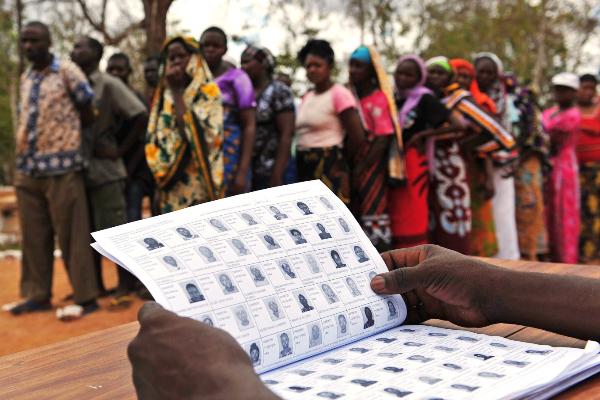
🇹🇿🗳️With national elections in #Tanzania on 28 October, over 65 civil society organsations from across the world have called on President, @MagufuliJP, to end the systematic restrictions on political and civic freedoms: https://t.co/ykZCoskeTo pic.twitter.com/4N6uTXQ0Wz
— CIVICUS (@CIVICUSalliance) October 22, 2020Civil society letter endorsed by over 65 organisations to President of Tanzania ahead of 28 October National Elections
To: President John Magufuli
Excellency,
We, the undersigned civil society organizations, are deeply concerned about the continued deterioration of democracy, human rights and rule of law in the United Republic of Tanzania. In the past five years, we have documented the steady decline of the country into a state of repression, evidenced by the increased harassment, intimidation, prosecution, and persecution of political activists, human rights defenders (HRDs), journalists and media houses; the enactment of restrictive laws; and disregard for rule of law, constitutionalism, as well as regional and international human rights standards. We are deeply concerned that the situation has worsened during the COVID-19 pandemic and as the country heads for general elections on 28 October 2020.[1]
Tanzania as a party to several regional and international treaties, including the International Covenant on Civil and Political Rights and the African Charter on Human and Peoples’ Rights, has a legal obligation to respect and protect fundamental rights, particularly the right to - freedom of expression and the media, peacefully assemble, form and join associations, and to participate in public affairs, which are fundamental rights for free and fair elections in a democratic society. As a member of the African Union (AU) and the Southern African Development Community (SADC), Tanzania has committed to uphold and promote democratic principles, popular participation, and good governance.
Leading up to the elections in Tanzania, we have unfortunately documented an unfavourable environment for public participation and free engagement in the political process. The role of the media in providing information and access to varying viewpoints in a true democracy is indispensable. Media houses must be allowed to provide these services without undue restrictions, yet in recent times, several independent media houses have been suspended. These have included the seven-day suspensions of The Citizen newspaper in February 2019,[2] Clouds TV and Clouds FM in August 2020, and the six-month suspension of Kwanza online TV in September 2019[3] and again in July 2020 for 11 months;[4] the online publication ban against Mwananchi news in April 2020;[5] the revocation, effective June 24, 2020, of the license of the Tanzania Daima newspaper;[6] and the fines against online stations, Watetezi TV and Ayo TV in September 2019.[7]We note, with great disappointment, that the government is yet to comply with a ruling by the East African Court of Justice requiring the amendment of the Media Services Act to address the unjustified restrictions on freedom of expression.[8]
We are further concerned about the restrictions on individuals peacefully expressing their opinions, including criticising public officials.[9] The latter are required to tolerate a greater amount of criticism than others - a necessary requirement for transparency and accountability. Tanzania’s criminal justice system has however been misused to target those who criticize the government. Tito Magoti and IT expert Theodory Giyani were arrested in December 2019 and questioned over their social media use and association with certain government critics.[10] The duo were subsequently charged with economic crimes, including “money laundering” which is a non-bailable offence. Despite their case being postponed more than 20 times since December 2019, and no evidence being presented against them, they remain in pre-trial detention.[11] Investigative journalist Erick Kabendera was similarly arrested and charged with “money laundering” where he was held in pre-trial detention for seven months with his case postponed over ten times.[12] Several United Nations (UN) mandate holders have raised concern about the misuse of the country’s anti-money laundering laws that “allow the Government to hold its critics in detention without trial and for an indefinite period.”[13]
Most recently, a prominent human rights lawyer and vocal critic of the government, Fatma Karume was disbarred from practising law in Tanzania following submissions she made in a constitutional case challenging the appointment of the Attorney General.[14] Other lawyers are also facing disciplinary proceedings for publicly raising issues on judicial independence and rule of law. Opposition leader, Zitto Kabwe was arrested and prosecuted for statements made calling for accountability for extrajudicial killings by State security agents.[15] The above cases are clear evidence of intolerance for alternative views and public debate.
In addition, authorities should ensure respect for the right of individuals to freely form associations and for those associations to participate in public affairs, without unwarranted interference. We note the increasing misuse of laws to restrict and suspend the activities of civil society organisations.[16] On August 12, Tanzania Human Rights Defenders Coalition (THRDC) was notified that its bank accounts had been frozen pending police investigations. THRDC’s coordinator was then summoned by the police to explain an alleged failure to submit to the State Treasury its contractual agreements with donors.[17] Prior to this, in June 2020, the authorities disrupted the activities of THRDC for allegedly contravening “laws of the land.”[18] Several other non-governmental organisations working on human rights issues have been deregistered or are facing harassment for issuing public statements critical of the government. Ahead of the elections some civil society organisations have reported being informally told by authorities to cease activities. As a result of the repressive environment, civil society organisations have been forced to self-censor activities.
We also note the enactment of further restrictive laws.[19] For example, the Written Laws Miscellaneous Amendments Act (The Amendment Act)[20] which has introduced amendments to 13 laws.[21] The Amendment Act requires anyone making a claim for violation of rights to have been personally affected.[22] This limits the ability of civil society organisations to carry out legal aid and law-based activities where they are not personally harmed. It violates Article 26(2) of the country’s Constitution, which provides for the right of every person “to take legal action to ensure the protection of this Constitution and the laws of the land.” Furthermore, it is an internationally recognized best practice that all persons, whether individually or in association with others, have the right to seek an effective remedy before a judicial body or other authority in response to a violation of human rights.[23] The Amendment Act further provides that lawsuits against the President, Vice-President, Prime Minister, Speaker, Deputy Speaker, or Chief Justice cannot be brought against them directly but must be brought against the Attorney General.[24] This provision undermines government accountability for human rights violations. We remind the authorities that international bodies have raised concerns about Tanzania’s repressive laws.[25]
We are especially concerned over the continued cases of verbal threats and physical attacks against members of opposition political parties.[26] We note with concern that to date, no one has been held accountable for the 2017 attack against the CHADEMA party leader, Tundu Lissu, who is a presidential candidate in the upcoming elections. Most recently, opposition leader Freeman Mbowe was brutally attacked and his assailants are still at large. Failure to thoroughly and impartially investigate such cases breeds a culture of violence and impunity, which in turn threatens the peace and security of the country. The government must take steps to bring perpetrators of such violence to account and to guarantee the safety of all other opposition party members and supporters.
Earlier, in November 2019, the African Commission on Human and Peoples’ Rights (ACHPR) issued a press statement on the “deteriorating human rights situation in Tanzania.”[27] The Commission specifically voiced concern over “the unprecedented number of journalists and opposition politicians jailed for their activities.” The ongoing crackdown on civic space in Tanzania also led the UN High Commissioner for Human Rights, Michelle Bachelet, to issue a strong warning ahead of the 28 October 2020 General Elections. At the opening of the UN Human Rights Council’s 45th session, she “[drew] the Council's attention to increasing repression of the democratic and civic space, in what is becoming a deeply deteriorated environment for human rights” and stressed that “[with] elections approaching later this month, we are receiving increasing reports of arbitrary arrests and detention of civil society actors, activists, journalists and members of opposition parties.” She added: “Further erosion of human rights could risk grave consequences, and I encourage immediate and sustained preventive action.”[28]
While we acknowledge measures taken by your government to halt the spread of the COVID-19 virus and protect the citizens of Tanzania, we are deeply concerned that the pandemic has been used to unduly restrict fundamental freedoms. Examples are the arrest and sentencing of two Kenyan journalists for interviewing members of the public in Tanzania on the status of the pandemic in the country[29] as well as, the suspension of Kwanza Online TV for reposting an alert by the U.S. embassy in Tanzania regarding the pandemic in the country.[30] The rights to peacefully express one’s opinion, receive information, peaceful assembly and association, and to participate in public affairs are not only essential in the context of the upcoming elections, but also in relation to the current COVID-19 pandemic. Freedom of expression in particular, ensures “the communication of information to the public, enabling individuals to … develop opinions about the public health threat so that they can take appropriate steps to protect themselves and their communities.”[31] The UN has repeatedly emphasized that Government responses to COVID-19 must not be used as a pretext to suppress individual human rights or to repress the free flow of information.[32]
The need for Tanzania to uphold human rights, democracy and the rule of law is now more than ever important as a matter of national security, following recent reports of insurgent attacks along Tanzania’s border with Mozambique.[33] Studies have shown that experiences of injustice, marginalization and a breakdown in rule of law, are root causes of disaffection and violence. A peaceful and prosperous nation requires good governance and respect for rule of law, with a society that protects fundamental freedoms and ensures justice for all.
As civil society organisations deeply concerned about constitutionalism, justice, and democracy in the United Republic of Tanzania, we strongly urge your Excellency to adhere to your undertaking to ensure a free and fair election in Tanzania. The government has an obligation to create an enabling environment for everyone, including political opposition, non-governmental organisations, journalists, and other online users, HRDs, and other real or perceived government opponents to exercise their human rights without fear of reprisals. As such, we call on the relevant authorities to immediately drop criminal charges and release defenders such as Tito Magoti and Theodory Giyani and any others being prosecuted for peacefully exercising their rights. Suspensions and the freezing of assets of non-governmental organisations such as THRDC, independent media houses such as Kwanza Online TV, and members of the legal profession- particularly Fatma Karume, must be reversed. Opposition parties must be allowed to freely and peacefully campaign and engage with their supporters without undue restrictions such as arbitrary arrests, physical attacks, forceful dispersal and intimidation of supporters, and harassment by security forces. The legitimacy of Tanzania’s elections is at stake.
We call on Tanzania to heed the messages delivered by national, African, and international actors and to change course before the country enters a full-fledged human rights crisis, with potentially grave domestic and regional consequences.
Signed:
- Access Now, Global
- Acción Solidaria on HIV/aids, Venezuela
- Africa Freedom of Information Centre
- Africa Judges and Jurists Forum
- AfroLeadership
- ARTICLE 19, Global
- Asia Dalit Rights Forum (ADRF), New Delhi and Kathmandu
- Association for Human Rights in Ethiopia (AHRE)
- Association of Freelance Journalists
- BudgIT Foundation, Nigeria
- CEALDES, Colombia
- Center for Civil Liberties, Ukraine
- Centre for Human Rights & Development (CHRD), Mongolia
- Centre for Law and Democracy, Canada
- Center for National and International Studies, Azerbaijan
- Child Watch, Tanzania
- CIVICUS, Global
- Civic Initiatives, Serbia
- CIVILIS Human Rights, Venezuela
- Collaboration on International ICT Policy for East and Southern Africa (CIPESA)
- Committee to Protect Journalists (CPJ)
- Community Empowerment for Progress Organization (CEPO), South Sudan
- Commonwealth Human Rights Initiative (CHRI)
- Corporación Comuna Nueva, Santiago de Chile
- DefendDefenders (East and Horn of Africa Human Rights Defenders Project)
- Democracy Monitor PU, Azerbaijan
- Eastern Africa Journalists Network (EAJN)
- Ethiopian Human Rights Council (EHRCO)
- Ethiopian Human Rights Defenders Coalition (EHRDC)
- Espacio Público, Venezuela
- Front Line Defenders, Global
- Gestos (HIV and AIDS, communication, gender), Brazil
- Greenpeace Africa
- Groupe d’Action pour le Progrès et la Paix (GAPP-Afrique), Canada
- Groupe d’Action pour le Progrès et la Paix (GAPP-BENIN)
- Groupe d’Action pour le Progrès et la Paix (GAPP Mali)
- HAKI Africa, Kenya
- Human Rights Concern - Eritrea (HRCE)
- Human Rights Defenders Network, Sierra Leone
- Humanium, Switzerland
- HuMENA for Human Rights and Civic Engagement (HuMENA Regional)
- International Partnership for Human Rights (IPHR) - Belgium
- Jade Propuestas Sociales y Alternativas al Desarrollo, A.C. (JADESOCIALES)- México
- Ligue Burundaise des droits de l’homme Iteka-Burundi
- Maison de la Société Civile (MdSC), Bénin
- MARUAH, Singapore
- Media Rights Agenda (MRA), Nigeria
- Nigeria Network of NGOs, Nigeria
- Nouvelle Dynamique de la Société Civile de la RD Congo (NDSCI)
- Odhikar, Bangladesh
- ONG Convergence des Actions Solidaires et les Objectifs de Développement Durable (CAS-ODD ONG) - Bénin
- ONG Nouvelle Vision (NOVI), Bénin
- Open School of Sustainable Development (Openshkola), Russia
- Open Society Initiative for Southern Africa (OSISA)
- Partnership for Peace and Development, Sierra Leone
- RESOSIDE, Burkina Faso
- Robert F. Kennedy Human Rights, Global
- Sisters of Charity Federation, United States
- Somali Journalists Syndicate (SJS), Somalia
- Southern Africa Human Rights Defenders Network (SAHRDN)
- Sudanese Development Initiative (SUDIA), Sudan
- The Human Rights Centre Uganda (HRCU), Uganda
- Tournons La Page (TLP)
- Water, Sanitation and Hygiene Network, Sierra Leone
- Women in Democracy And Governance, Kenya (WIDAG)
- Zambia Council for Social Development, Zambia
[1] United Nations, Office of the High Commissioner, UN Experts call on Tanzania to end the crackdown on civic space, July 22, 2020, available at https://www.ohchr.org/en/NewsEvents/Pages/DisplayNews.aspx?NewsID=26117&LangID=E.
[2] Committee to Protect Journalists, Tanzania imposes 7-day publication ban on The Citizen, March 01, 2019, available at https://cpj.org/2019/03/tanzania-citizen-7-day-publication-ban/
[3] Committee to Protect Journalists, Tanzanian authorities ban online TV station, fine 2 others, January 8, 2020, available at https://cpj.org/2020/01/tanzanian-authorities-ban-online-tv-station-fine-2/
[4] Committee to Protect Journalists, Tanzania bans Kwanza Online TV for 11 months citing ‘misleading’ Instagram post on COVID-19, July 09, 2020, available at https://cpj.org/2020/07/tanzania-bans-kwanza-online-tv-for-11-months-citing-misleading-instagram-post-on-covid-19/
[5] Committee to Protect Journalists, Tanzanian newspaper banned from publishing online for 6 months over COVID-19 report, May 11, 2020, available at https://cpj.org/2020/01/tanzanian-authorities-ban-online-tv-station-fine-2/
[6] Committee to Protect Journalist, Tanzanian government revokes license of Tanzania Daima newspaper, June 26, 2020, available at https://cpj.org/2020/06/tanzanian-government-revokes-license-of-tanzania-daima-newspaper/
[7] Committee to Protect Journalists, Tanzanian authorities ban online TV station, fine 2 others, January 8, 2020 available at https://cpj.org/2020/01/tanzanian-authorities-ban-online-tv-station-fine-2/
[8]Committee to Protect Journalists, East Africa court rules that Tanzania’s Media Services Act violates press freedom, March 28, 2019, available at https://www.mediadefence.org/news/important-media-freedom-judgment-east-african-court-justice
[9] We refer to cases such as the arrest of prominent comedian, Idris Sultan, in May 2020 (https://thrdc.or.tz/tanzanian-comedian-and-actor-mr-idris-sultan-charged-for-failure-to-register-a-sim-card/), and the disbarment from practicing law of prominent lawyer and human rights advocate, Fatma Karume (https://www.icj.org/tanzania-icj-calls-for-reinstatement-of-lawyer-fatma-karumes-right-to-practice-law/).
[10] Committee to protect journalists, Mwanachi, The Citizen, last seen in Tanzania, November 21, 2017, available at https://cpj.org/data/people/azory-gwanda/.
[11] American Bar Association, Center for Human Rights, Tanzania: Preliminary Analysis of the criminal case against Tito Magoti and Theodory Giyani, July 28, 2020, available at https://www.americanbar.org/groups/human_rights/reports/tanzania--preliminary-analysis-of-the-criminal-case-against-tito/.
[12] Committee to Protect Journalists, Tanzanian journalist Erick Kabendera freed but faces hefty fines, February 24, 2020, available at https://cpj.org/2020/02/tanzanian-freelancer-erick-kabendera-freed-but-fac/
[13] Mandates of the Special Rapporteur on the situation of human rights defenders; the Working Group on Arbitrary Detention; the Working Group on Enforced or Involuntary Disappearances; the Special Rapporteur on the promotion and protection of the right to freedom of opinion and expression; and the Special Rapporteur on the rights to freedom of peaceful assembly and of association, Letter to President of Tanzania, Reference AL TZA 1/2020, January 31, 2020, available at https://spcommreports.ohchr.org/TMResultsBase/DownLoadPublicCommunicationFile?gId=25049.
[14] International Commission of Jurists, Tanzania: ICJ Calls for the reinstatement of lawyer Fatma Karume’s right to practice law, October 8, 2020, available at https://www.icj.org/tanzania-icj-calls-for-reinstatement-of-lawyer-fatma-karumes-right-to-practice-law/
[15]The Citizen, Zitto Kabwe sentenced to serve one year ban not writing seditious statements, May 29, 2020, available at https://www.thecitizen.co.tz/news/Zitto-Kabwe-found-guilty-of-sedition/1840340-5567040-m7pifrz/index.htm
[16] The cancellation of a training organised by Tanzania Human Rights Defenders Coalition (THRDC), the subsequent arrest of THRDC’s Director, Onesmo Olengurumwa, and suspension of the activities of the organisation, as well as freezing of their accounts, exemplifies the misuse of these laws against civil society (See: https://www.aa.com.tr/en/africa/tanzania-human-rights-group-suspends-operations/1945400)
[17] DefendDefenders, Tanzania: Respect the right to freedom of association, August 24, 2020, available at https://defenddefenders.org/tanzania-respect-the-right-to-freedom-of-association/.
[18] Two employees of one of THRDC were arrested in Dar es Salaam and thereafter authorities proceed to arbitrarily cancel the hosting of a three-day security training for 30 human rights defenders. The police claimed that the training was in contravention of the “laws of the land” but did not give a specific provision
[19] These include the Electronic and Postal Communications (Online Content) Regulations; Media Services Act; Cybercrimes Act; and Political Parties Amendment Act.
[20] Written Laws (Miscellaneous Amendments Act (No. 3) of 2020)
[21] Southern Africa Litigation Center, Joint letter, The Written Laws Miscellaneous Amendments Act no.3 ( 2020), available at https://www.southernafricalitigationcentre.org/wp-content/uploads/2020/08/Honourable-Minister-of-Justice-for-the-Republic-of-Tanzania.pdf-August-2020.pdf
[22] Section 7(b) of the Written Laws Amendments Act
[23] The African Commission’s Principles and Guidelines on the Right to a Fair Trial and Legal Assistance in Africa provide that States must ensure through the adoption of national legislation that any individual, group of individuals or nongovernmental organization is entitled to bring a human rights claim before a judicial body for determination because such claims are matters of public concern.
[24] Amendments to Chapter 310 of the Law Reform (Fatal accidents and miscellaneous provisions) Act and to the Chapter 3 of the Basic Rights and Duties Enforcement Act
[25] See for example communication of the Mandates of the Special Rapporteur on the promotion and protection of the right to freedom of opinion and expression; and the Special Rapporteur on the rights to freedom of peaceful assembly and of association to the government of the United Republic of Tanzania, AL TZA 3/2020, 17 July 2020, https://spcommreports.ohchr.org/TMResultsBase/DownLoadPublicCommunicationFile?gId=25442
[26] These include the verbal abuse and threats of execution against Zitto Kabwe, leader of Alliance for Change and Transparency (ACT) Wazalendo opposition party (see: https://www.bbc.com/news/world-africa-51355148), his conviction for sedition for statements he made at a press conference in relation to alleged extra judicial killings by state security forces (https://www.thecitizen.co.tz/news/Zitto-Kabwe-found-guilty-of-sedition/1840340-5567040-m7pifrz/index.html), and his re-arrested together with several party members while they participated in an internal meeting (https://www.aljazeera.com/news/2020/06/24/tanzanian-opposition-leader-zitto-kabwe-released-on-bail/); as well as the conviction of nine Members of Parliament belonging to the opposition Chama Cha Demokrasia(CHADEMA) party and their sentencing in March 2020 to five months in prison or an alternative fine, for allegedly making seditious statements (https://www.reuters.com/article/us-tanzania-politics/tanzanian-opposition-lawmakers-found-guilty-of-making-seditious-statements-idUSKBN20X2O8); and the attack against the party leader, Freeman Mbowe, by unknown assailants leaving him with a broken leg (https://www.reuters.com/article/us-tanzania-politics/tanzanian-opposition-lawmakers-found-guilty-of-making-seditious-statements-idUSKBN20X2O8).
[27] African Commission on Human and Peoples’ Rights, Press statement of the African Commission on Human and Peoples’ Rights on the deteriorating human rights situation in Tanzania, available at https://www.achpr.org/pressrelease/detail?id=459.
[28] Office of the UN High Commissioner for Human Rights, “In her global human rights update, Bachelet calls for urgent action to heighten resilience and protect people's rights,” 14 September 2020, https://www.ohchr.org/EN/NewsEvents/Pages/DisplayNews.aspx?NewsID=26226&LangID=E
[29] Tanzania Human Rights Defenders Coalition, Two Kenyan Journalists convicted and fined in Tanzania, repatriated back to Kenya, May 21, 2020, available at https://thrdc.or.tz/blog/.
[30]American Bar Association, Center for Human Rights, Report on the arbitrary suspension of Kwanza Online TV for sharing information related to the COVID-19 pandemic, October 22, 2020. See also Kwanza TV Instagram, available athttps://www.instagram.com/p/CCGT_5ECT_n/?utm_source=ig_web_button_share_sheet
[31] Disease pandemics and the freedom of opinion and expression, A/HRC/44/49, para. 30
[32] The Guardian, Coronavirus pandemic is becoming a human rights crisis, UN warns, 23 April 2020, available at https://www.theguardian.com/world/2020/apr/23/coronavirus-pandemic-is-becoming-a-human-rights-crisis-un-warns. See also UNHRC,, UN Special Rapporteur on freedom of peaceful assembly and of association, States responses to Covid 19 threat should not halt freedoms of assembly and association, April 14, 2020, available at https://www.ohchr.org/EN/NewsEvents/Pages/DisplayNews.aspx?NewsID=25788&LangID=E.
[33] BBC, Tanzania border village attack “leaves 20 dead”, October 16, 2020, available at https://www.bbc.com/news/live/world-africa-47639452?ns_mchannel=social&ns_source=twitter&ns_campaign=bbc_live&ns_linkname=5f896f00c4548e02bf3cb441%26Tanzania%20border%20village%20attack%20%27leaves%2020%20dead%27%262020-10-16T10%3A29%3A29.229Z&ns_fee=0&pinned_post_locator=urn:asset:2f81fc88-030c-49d4-9d25-b8268a2dbf55&pinned_post_asset_id=5f896f00c4548e02bf3cb441&pinned_post_type=share
-
TANZANIA: ‘Despite threats, we will not retreat from defending the rights of our communities’
CIVICUS speaks to Joseph Ole Parsambei, Executive Director of the Tanzania Pastoralist Community Forum (TPCF), about the threats faced by environmental, land and indigenous rights activists in Tanzania. TPCF is non-partisan, not-for-profit civil society organisation (CSO) that advances the rights of Tanzania’s pastoralist peoples - the Maasai, the Barbaig, the Akie, the Taturu and the Hadzabe.
-
TANZANIA: ‘The human rights of the Maasai people are violated through involuntary assimilation and relocation’
 CIVICUS speaks about the unlawful eviction of Maasai people from their ancestral lands with Joseph Moses Oleshangay, a Tanzanian human rights lawyer and activist for democracy and Indigenous peoples’ land rights. Joseph is currently working with the Legal and Human Rights Centre to raise awareness of human rights violations and promote good governance in Tanzania.
Why are Maasai people being evicted from their land in Tanzania?
The Maasai eviction is largely caused by the government’s lust for money. The tourism and hunting business promises to bring a lot of capital, and unfortunately, that can only happen if the Maasai are removed from their native land. The government is currently planning to evict Maasai people living in Loliondo and Ngorongoro to establish a game-controlled area in Loliondo and potentially change the status of a conservation area in Ngorongoro to a game reserve.
The government has proposed to establish game reserves in every single district ancestrally occupied by Maasai communities. The way this project is being carried out is unethical and threatens many lives and the cultural survival of the Maasai.
Sadly, to gain public support and trust the government has created a narrative that this is a nature conservation project. But it has been scientifically proved that Maasai pastoralism is compatible with environmental and wildlife conservation. While the government generally accuses the Maasai as threatening tourism in Ngorongoro, 70 per cent of tourists in Tanzania in 2019 visited Ngorongoro, with the remaining 22 national parks and game reserves attracting only 30 per cent of the tourist inflow. Ngorongoro also contributes 52 per cent of the earnings from tourism. It is the only conservation area in Tanzania where humans – Maasai – are legally allowed to coexist with wildlife. As well as being by far the best tourism destination in Tanzania, it has the highest wildlife population density in the world. This shows that the government’s claim that the Maasai are threatening wildlife conservation and tourism is a completely false narrative.
In Ngorongoro over 80,000 people are facing the threat of eviction, which the government justifies by claiming the population has exceeded the carrying capacity of the land. But according to the latest census, Ngorongoro has a human population density of 10 people per square kilometre, compared to a national average of 60.
The tourism industrial complex is pushing the government to forcefully evict Maasai people from their land because they think the Maasai don’t add value to the business and will disrupt the activities they want to undertake in Loliondo, Ngorongoro and the neighbouring Serengeti National Park. The authorities know that wildlife massacre, one of the key businesses planned, won’t be possible under the Maasai’s watch and their pastoralism livelihoods will not fit the overall hunting and hotel aesthetic they are trying to create.
The government has an obligation to take care of the environment and ensure the safety of all who live in it. If Maasai people are allowed to stay in the newly created game reserves, they will witness wildlife massacre and will inevitably suffer harm. The government cannot risk this being exposed.
So without consulting with the Maasai community, the government has started its eviction plan in a manner that will force their integration with the majority community in the coastal region. To facilitate relocation, on 31 March the government withdrew all funds previously allocated to health, education and other key services. In 2021 the government threatened to demolish nine government primary schools and six health centres. In April 2022 the government’s chief spokesperson recognised that life-saving services were prolonging the Maasai presence in the Ngorongoro so there was a need to dismantle them.
What human rights violations have been reported?
Many human rights violations have been reported, and they are reaching a level we had not seen since our independence. They are more brutal than what our people experienced in the colonial era. Never before has our country witnessed a campaign targeting a specific community as we are now seeing in Ngorongoro. The Maasai are being portrayed as primitive people whose ancestral land is elsewhere, and the president has said they are new arrivals in Tanzania, so in case of a forceful relocation, the authorities can claim the Maasai have no attachment to Ngorongoro.
In early June, the authorities installed beacons in the place destined to become a game-controlled area, against Tanzanian law and in violation of an order issued by the East Africa Court of Justice in 2018. In 2017 a Maasai representative filed a complaint at the Tanzanian Human Rights and Good Governance Commission against the planned eviction and submitted a case to the East Africa Court of Justice seeking intervention against violent operations that ended with at least 349 Maasai homesteads being set ablaze.
Despite the temporary orders issued by the Court directing the government to halt relocation pending a final decision on the case, on 17 June 2022, just five days before the date set for delivery of a judgment, the government declared the contested land as a game-controlled area. Surprisingly, four days later the Court issued a notice that the decision would be delayed until September, giving the government leeway in executing atrocities in Loliondo.
The demarcated area includes not only village land, which is forbidden by the law, but also people’s homesteads. The police have used teargas and guns, wounding 31 Maasai people. Before beacons were installed, all elected political leaders were arrested and detained incommunicado for seven days before being arraigned in court on murder charges – for a murder that happened one day after they were arrested.
There are currently 27 Maasai people charged with murder and over 80 detained under the accusation of being unlawful immigrants. Some have been subjected to torture. Over 2,000 people have reportedly crossed the border with Kenya for security reasons.
Since June, Maasai livestock have been killed or impounded by security forces and a large-scale operation is ongoing to silence anyone who speak against the situation in Ngorongoro and Loliondo.
How will this eviction affect Maasai people?
To understand how Maasai people will be impacted upon, one needs to understand who the Maasai are. They are a semi-nomadic pastoral people who move from one place to another in search of their livelihood. They have lived alongside wildlife for centuries and know how to preserve their environment. They have established their cultural practices and spiritual sites that define them as a distinct society.
Relocation will disturb their culture. There is a place called Oldoinyo Lenkai (‘Mountain of God’) where the Maasai believe their god lives and usually conduct sacrifices during times of scarcity and crisis. If this land becomes a conservation area with restricted access their right to spirituality will be taken away. Ultimately, relocation has a strong chance of leading to their extinction as a people.
One of the government’s justifications of the relocation process is what they call the need for forced civilisation of the Maasai people, who would have a better life if they coexisted with people from different backgrounds. But this will force them to adopt a culture that is not their own. Involuntary assimilation and relocation are the greatest human rights violations and generally fall under the accepted meaning of genocide under the Rome Statute that established the International Criminal Court.
How are civil society activists and organisations fighting back?
We are fighting this in many ways. We are challenging the government by debunking its narrative. The government is spreading propaganda to get public support, so what we do is inform people about the dangers of these evictions and that they are founded on false narratives. We also use our various platforms to highlight that the Maasai add value to both nature conservation and tourism, providing accurate information to counter false claims.
We also have filed a court case against eviction. The law is one of the strongest tools we are using in fighting injustice in this battle. We can use the law to hold the government accountable and demand it halts the planned eviction. We are trying to make sure that the truth about what is happening is known not only internally but also by the international community.
We have been fortunate enough to have regional and international organisations such as the African Commission on Human and Peoples’ Rights and United Nations human rights experts publicly condemn the actions of the Tanzanian government and urge it to stop unlawful evictions.
But we have faced challenges, including the lack of functional legal processes in Tanzania. The 2018 court order requiring a halt to the operations have not been respected. Our government thinks it is above the law and this is affecting our progress in fighting the eviction. As activists our lives are in danger. The government threatens us and many activists had fled the country for safety.
What kind of assistance do you need from international civil society?
We need international organisations and activists to help us expose what is happening in Tanzania, because if this is known about internationally the government might be pressured to do better. International allies should use their platforms to highlight the gruesome violations of rights experienced by the Maasai people and keep people informed about our activities.
Civic space in Tanzania is rated ‘repressed’ by theCIVICUS Monitor.
Follow@Oleshangay on Twitter.
-
TANZANIA: ‘The new administration is committed to ending discriminatory policies that undermine girls’ rights’
 CIVICUS speaks with Prudence Mutiso, Legal Adviser at the Center for Reproductive Rights-Africa about the Tanzanian government’s policy on pregnant and married girls in schools.
Founded in 1992, the Center for Reproductive Rights is a global human rights organisation of lawyers and advocates seeking to ensure the protection of reproductive rights as basic human rights fundamental to the dignity, equality, health and wellbeing of every person.
The Center works across five continents and has played a critical role in securing legal victories on reproductive rights issues, including access to life-saving obstetrics care, contraception, maternal health and safe abortion services, as well as the prevention of forced sterilisation and child marriage, in national courts, United Nations’ committees and regional human rights bodies.
-
Tanzania: Civil society groups express concern over rapid decline in human rights

Tanzania: 65 civil society groups call on the Tanzanian Government to address rapidly deteriorating environment for media, human rights defenders and opposition party members
#Tanzania: 65 rights groups urge government to end attacks on activists, journalists and members of the opposition party. #Civicspace in rapid decline https://t.co/PVn1DdeCM8 pic.twitter.com/UfSocmIx9p
— CIVICUS (@CIVICUSalliance) May 10, 2018To President John Magufuli
Your Excellency,
We, the undersigned civil society organisations (CSOs) from across the world, write to express our deep concern over the worrying decline in respect for human rights, including the rights to freedom of association, expression and peaceful assembly, in Tanzania. We urge your government to take proactive measures to protect these rights which are crucial to civic space and publicly recognise the essential role that a vibrant civil society and an independent media play in creating peaceful and equal societies.
Tanzania’s long-standing commitment to improving the human rights of all people, both nationally and within the region, is notable and should be acknowledged as such. However, we are deeply alarmed that these human rights issues are being precipitously undermined by the unwarranted closure of media outlets, judicial persecution and harassment of independent journalists, the targeted assassination of opposition party members, blanket restrictions on peaceful protests and the introduction and invocation of a raft of laws to undermine freedom of speech online. These and other forms of harassment and persecution of civil society and media discussed below erode Tanzania’s role as a regional champion of public freedoms, peace and stability and represent a breach of its international, national and regional human rights obligations and commitments.
New legal restrictions criminalizing freedom of expression on social and traditional media
The Electronic and Postal Communications (Online Content) Regulations, which was signed into law in March 2018, criminalises a broad scope of legitimate forms of online freedom of expression. Under the regulation, all bloggers and persons operating online radio and television streaming services must secure a license and pay an annual fee of over $900 before they can publish any material online. Such fees are not only financially prohibitive but place an arbitrary bar to entry to exercise the right to freedom of expression. We are also deeply concerned by provisions which endow the government with the authority to revoke a permit if a site or blogger publishes content that "causes annoyance" or "leads to public disorder."
Of equal concern are vague and overbroad provisions of the 2015 Cybercrimes Act which empower the government to arbitrarily ban and sanction the dissemination of newspaper articles or social media posts which it deems critical, including insulting the President. In particular, Article 16 criminalizes the publication of all information deemed “false, deceptive, misleading or inaccurate.” Persons found to have contravened the Act are subject to draconian prison sentences and harsh fines of not less than five million shillings ($2,190) or a term of not less than three years or both. Since coming into force, the law has been invoked to persecute dozens of individuals and journalists. In one week alone, five private citizens were charged under the Cybercrimes Act for statements made on Facebook, WhatsApp and other social media platforms, including a three-year sentence handed down to a private citizen for insulting President John Magufuli on Facebook.
Moreover, the Media Services Act, which came into force in November 2016, allows the authorities to unilaterally determine which journalists receive licenses, forces all journalists to obtain a license, and makes defamation and sedition a criminal offense. Under the law, the government-run Accreditation Board is empowered to “suspend or expunge journalists” for committing “gross professional misconduct as prescribed in the code of ethics for professional journalists.” The penalties for violating provisions of law are severe. According to the law, anyone found guilty of acting with a seditious intention who commits an offence is liable to a fine of not less than 5 million Shillings (approximately $2,260) or three years in prison or both.
Suspensions, fines and banning media outlets
Despite strong constitutional, United Nations and African Charter on Human and Peoples’ Rights safeguards protecting the right to freedom of expression, the government has systematically targeted Tanzanian media outlets through a combination of closures and hefty fines on newspapers. This campaign of harassment, which appears to be an attempt to suppress their work to report on government policy and conduct, has resulted in four prominent newspapers being banned in 2017 and four other papers being heavily fined in early 2018.
On 24 October 2017, the government banned the Swahili-language Tanzania Daima for a period of 90 days on specious claims of publishing false news about anti-retroviral drug use for people with HIV. This was the fourth newspaper banned since June 2017 including Mwanahalisi which was banned for 24 months in September 2017; the weekly Raia Mwema for 90 days in September and Mawio newspaper for 24 months in June 2017.
On 2 January 2018, the Tanzania Communications Regulatory Authority (TCRA) fined five television stations a combined 60 million Tanzanian shillings ($27,000) for broadcasting “offensive and unethical” content, in particular for airing a press statement issued on 30 November by the Legal Human Rights Centre (LHRC). The report by LHRC documented violations such as detentions, intimidation and physical abuse in the context of the 6 November 2017 elections of councillors in 43 wards. The TV stations that featured the LHRC's press statement and were subsequently penalised include: Star TV, Azam Two, East Africa TV, Channel 10 and ITV.
Judicial harassment and persecution of journalists and human rights defenders
In stark contrast to the authorities’ human rights obligations to uphold and protect the safety of journalists, several independent media practitioners have recently been subject to physical attacks and judicial persecution. Recently on 21 November 2017, newspaper journalist Azory Gwanda was abducted by a group of unknown assailants in the Coast Region. Prior to his enforced disappearance, Gwanda who is a journalist with newspapers, Mwananchi and The Citizen, had authored a number of articles documenting the murders of several local officials and police officers. To date Gwanda’s whereabouts remain unknown.
In August 2017, a Tanzania court began hearing a case against Micke William and Maxence Melo Mubyazi, co-owners of the whistleblower website, Jamii Forums. Both journalists were charged under the Cybercrimes Act on spurious accusations of obstructing justice for failing to disclose the identities of persons who posted details of allegedly corrupt officials on Jamiiforums. There have been over 40 adjournments of the case, including most recently on 3 May 2018. If convicted, they face fines up to 3 million shillings ($1,300) or a jail term of at least one year, or both.
Groups and defenders advocating for the rights of LGBTI individuals have also been equally persecuted. Among a wave of recent attempts to suppress organisations and activists working on SOGI issues, in October 2017, 13 human rights lawyers and defender were arbitrarily arrested and detained on allegations of promoting “promoting homosexuality”. Three civil society representatives, including Ugandan and South African lawyers from the Initiative for Strategic Litigation in Africa and nine members of Tanzanian Community Health and Education Services and Advocacy (Chesa), were arrested during a private meeting.
Killings and criminal cases against political opposition members
Since the start of 2018, scores of political opposition members and parliamentarians have been violently attacked and even killed. On 22 February, Godfrey Luena, a member of parliament with Tanzania’s main opposition party Chama Cha Demokrasia Na Maendeleo (CHADEMA) and a vocal land rights defender, was killed with machetes outside of his home. Mr Luena had been a critic of alleged state sponsored land-grabbing. Days earlier, on 13 February, Daniel John, a CHADEMA official in Dar es Salaam, was abducted and killed by unknown assailants using machetes. Mr John was supporting an opposition political campaign for a contested parliamentary seat in Dar es Salaam.
A number of opposition party members and lawmakers have also been targeted in what appears to be a systematic campaign of judicial harassment. Among other worrying cases, two opposition leaders, CHADEMA MP Joseph Mbilinyi and local party leader Emmanuel Masonga were sentenced to five months on 26 February 2018 for insulting President John Magufuli during a political rally.
Harassment, intimidation arbitrary arrest of peaceful protesters
In response to growing public frustration over human rights backsliding in the country, individuals and groups have increasingly sought to exercise their rights to peaceful assembly to air their legitimate grievances. Worryingly, the authorities, including members of the government and security apparatus, have resorted to arbitrary arrests, excessive use of force and intimidation to silence these protests.
In April 2018, Tanzanian activists called for national demonstrations to bring attention to the decline in respect for human rights in Tanzania. However, in contravention of international standards, the authorities, which require anyone seeking to hold a public assembly to secure a permit, declared the protests illegal.
The government and police forces responded to these calls to stage public protests with severe intolerance, including hostile statements by senior government and police officials, including threats that protesters “will be beaten like stray dogs."Days before the planned 26 April demonstrations seven people were arrested in Arusha for their purported role in organising the protests. The few who dared to take part in the protests were quickly persecuted; nine protesters, who marched in Dar Es Salaam, were almost immediately arrested.
Recommendations to the Government of Tanzania
The undersigned groups urge your government to create an enabling environment for civil society and the media to operate in accordance with the rights enshrined in the Constitution of Tanzania, International Covenant on Civil and Political Rights (ICCPR), the UN Declaration on Human Rights Defenders and the African Charter on Human and Peoples’ Rights, including the guidelines on freedom of association and peaceful assembly. Tanzania has ratified both the ICCPR and the African Charter. At a minimum, the following conditions should be ensured: freedom of association, freedom of expression, the right to operate free from unwarranted state interference, the right to seek and secure funding and the state’s duty to protect. In light of this, the following specific recommendations are made.
1) All disabling and restrictive provisions in the Cybercrimes Act, the Electronic and Postal Communications (Online Content) Regulations and the Media Services Act must be amended and replaced by progressive sections that will guarantee freedom of expression and the media in line with international human rights standards.
2) The cases of newspapers banned, suspended or fined under the Media Service Act 2016 should be reviewed to enable them to continue their operations without undue interference.
3) Independent investigations should be conducted into cases of attacks and assaults on journalists, human rights defenders and opposition party members with a view to bringing suspected perpetrators to justice and these attacks should be publicly and unequivocally condemned.
4) Government officials should desist from publicly threatening human rights defenders including when activists that are working to expose corrupt practices in government or are critical of government policies and actions.
5) Best practices on the right to freedom of peaceful assembly prescribed by the UN Special Rapporteur on the rights to freedom of peaceful assembly and of association should be adopted by the Government of Tanzania including removing the permission regime and providing recourse in cases of unlawful denial of the right to freedom of peaceful assembly.
Sincerely,
- Access Now
- African Centre for Democracy and Human Rights Studies (ACDHRS)
- Americans for Democracy & Human Rights in Bahrain (ADHRB)
- Amnesty International
- ARTICLE 19 East Africa
- The Article 20 Network
- Asian Legal Resource Centre (ALRC)
- Association for Human Rights in Ethiopia (AHRE) - Ethiopia
- Association for Progressive Communications (APC)
- Bahrain Center for Human Rights - Bahrain
- Balkan Civil Society Development Network (BCSDN)
- Cairo Institute for Human Rights Studies (CIHRS)
- Caucasus Civil Initiatives Center (CCIC)
- Center for Civil Liberties - Ukraine
- Centre for Human Rights and Rehabilitation (CHRR) - Malawi
- Centre for Research on Multinational Corporations
- Chapter Four - Uganda
- Citizens for Democratic Rights in Eritrea (CDRiE) - Eritrea
- CIVICUS
- Civil Rights Defenders (CRD)
- Committee to Protect Journalists (CPJ)
- Commonwealth Human Rights Initiative (CHRI)
- Community Empowerment for Progress Organization (CEPO) - South Sudan
- DefendDefenders (East and Horn of Africa Human Rights Defenders Project)
- End Impunity Organisation
- Ethiopia Human Rights Project (EHRP) - Ethiopia
- Freedom House
- Front Line Defenders
- Greenpeace Africa
- Governance, Elections, Advocacy, Research Services (GEARS) Initiative - Zambia
- Groupe d’Action pour le Progrès et la Paix (ONG GAPP-BÉNIN) - Bénin
- HAKI Africa - Kenya
- Human Rights Defenders Network - Sierra Leone
- International Civil Society Center (ICSC)
- International Rivers - Africa Program
- Iraqi Network of Social Media - Iraq
- Jamaa Resource Initiatives - East Africa
- JOINT Liga de ONGs em Mocambique - Mozambique
- Karapatan Alliance for the Advancement of People’s Rights - Philippines
- Kepa - the Finnish NGO platform - Finland
- Latin American and Caribbean Network for Democracy (REDLAD)
- Liberia Coalition of Human Rights Defenders (LICHRD) - Liberia
- Ligue Djiboutienne des Droits Humains (LDDH) - Djibouti
- Ligue Iteka - Burundi
- Lumiere Synergie pour le Developpement - Senegal
- Malawi Human Rights Defenders Coalition - Malawi
- Minority Rights Group International
- National Civic Forum - Sudan
- Observatoire des Droits de l'Homme au Rwanda - Rwanda
- Odhikar - Bangladesh
- OutRight Action International
- Pan-African Human Rights Defenders Network (PAHRDN)
- Public Interest Law Center (PILC) - Chad
- RESOCIDE - Burkina Faso
- Robert F. Kennedy Human Rights
- Robert L. Bernstein Institute for Human Rights | NYU School of Law
- Servicios y Asesoría para la Paz (Serapaz) - México
- Sinergia - Venezuela
- Solidarity Center
- Sudanese Development Initiative (SUDIA) - Sudan
- Tournons la page (TLP)
- West African Human Rights Defenders’ Network (WAHRDN)
- World Movement for Democracy
- The Zambia Council for Social Development (ZCSD) - Zambia
- Zimbabwe Human Rights NGO Forum - Zimbabwe
-
Tanzania’s Illiberal Tilt
By Teldah Mawarire
Immediately after his 2015 election, Tanzanian President John Magufuli appeared poised to lead one of Africa’s most stable democracies to a bright future. Instead, he has launched an intensifying campaign of repression against journalists, human rights activists, and civil-society organisations.
Read on: Project Syndicate
-
Thai officials must drop all the ongoing prosecutions under the Emergency Decree

CIVICUS and various civil society organisations have written a letter expressing concern over the use of the Emergency Decree to restrict human rights and silence dissent in Thailand.
Dear Honorable Ambassador,
We, the undersigned non-governmental organizations, are writing to express our serious concern regarding the ongoing impact of the implementation of the Emergency Decree on Public Administration in Emergency Situation B.E. 2548 (“Emergency Decree”) in response to the Covid-19 pandemic in Thailand. We are troubled by reports of the continuing prosecution of individuals charged under the Emergency Decree, despite the end of the declaration of the “emergency situation” in all areas of Thailand as well as the effect of regulations, announcements, and orders issued thereunder.
We urge you to call on Thailand to cease all intimidation, harassment and prosecution of all individuals solely for peacefully exercising their rights to freedom of expression, information, peaceful assembly, movement, and public participation through the abuse of laws and administrative regulations, and to immediately drop all charges, issue non-prosecution orders, and refrain from further charges, against any individual, including those facing prosecution solely for peacefully exercising their human rights for alleged violation of the Emergency Decree.
Purportedly to combat the Covid-19 outbreak, Thailand had been operating under a state of emergency since 26 March 2020, with the executive government having extended the declaration of an emergency situation 19 times since then. During this period, a series of regulations containing several Emergency Decree measures have been periodically announced pursuant to Emergency Decree powers. These include several vague and overbroad restrictions on the rights to freedom of movement, expression, peaceful assembly and public participation.
-
THAILAND: ‘Marriage equality is likely to pass – and inspire change in other Asian countries’

CIVICUS speaks about the progress being made toward legalising same-sex marriage in Thailand with Mookdapa Yangyuenpradorn, an LGBTQI+ activist and Human Rights Associate at Fortify Rights.
Founded in 2013, Fortify Rights is a human rights civil society organisation (CSO) working to bring laws, policies and practices in line with human rights standards through evidence-based research, strategic truth-telling and empowerment.
Why are there currently four different bills in parliament aimed at legalising same-sex marriage?
LGBTQI+ marriage is such a significant issue in Thailand today that bills to legalise it have been submitted to parliament simultaneously by the government and other political groups. It is unusual and encouraging to see political parties competing to propose changes that would benefit LGBTQI+ people.
Out of the four bills up for consideration, one was submitted by the government, two were submitted by political parties, the Move Forward Party and Democratic Party, and another was submitted by civil society. The one submitted by the cabinet and approved by the prime minister takes precedence over the rest.
The civil society bill was initiated by the Rainbow Coalition for Marriage Equality, which brings together numerous CSOs. It was developed at the grassroots level and drafted and submitted on behalf of Thailand’s LGBTQI+ people. It successfully made its way into parliament, with its authors securing seats in the readings as discussions progressed. It is uncommon for a bill proposed by civil society to enter parliament, so this is a very positive development.
The civil society bill is also more progressive than the other three because it ensures parental rights for LGBTQI+ people and proposes a transitional procedure to allow LGBTQI+ couples to register their marriages and enjoy spousal rights while other relevant laws are still being revised and amended, rather than make them wait until all of the process is finished.
Still, the primary objective is consistent across all four bills: they all seek to amend the civil and commercial code, which now defines marriage as a union between man and woman and grants them the status of ‘husband and wife’, by replacing these gendered words with the gender-neutral expressions ‘individuals’ and ‘spouses’. This simple change will enable LGBTQI+ people to register their marriages.
How have LGBTQI+ activists advocated forthe bill?
The constitution establishes that if a bill is proposed by a group of citizens or civil society groups, representatives from the initiating group should be involved with the parliamentary committee working on the bill. This provided space for LGBTQI+ activists to participate in the legislative process and advance their agenda. The Rainbow Coalition for Marriage Equality has played a crucial role in presenting a unified and consolidated stance on marriage equality in parliament. The activists currently engaged in discussions have been advocating for this bill for over a decade.
As an advisor to the committee drafting the marriage equality bill, I provide expert opinions from the perspective of human rights law and international standards. For instance, I make sure the bill aligns with the International Covenant on Civil and Political Rights, among other international conventions and treaties, and incorporates good practices and advanced protections found in the laws of countries with marriage equality.
What are the prospects of the same-sex marriage bill being passed?
The bill will likely be passed, although it will take some time. The legislative process in Thailand involves three readings in the House of Representatives, the elected 500-member lower house of the National Assembly, followed by three readings in the Senate, the appointed upper house. Proposed legislation then undergoes scrutiny by the Constitutional Court and is ultimately signed into law by the king, then published in the Royal Gazette.
The marriage equality bill is currently in its initial stage in the lower house. It successfully passed its first reading in December 2023 and is now undergoing its second reading. All four bills are now being examined and consolidated into a single version. The second reading is expected to finish by early March, after which the final bill will proceed to the third reading in the lower house before advancing to the Senate.
The bill’s adoption seems highly likely because civil society’s decade-long public campaigning has succeeded in getting marriage equality included on Thailand’s main political agenda. Despite some challenges, prospects for adoption have gradually and steadily increased. The prime minister and cabinet have expressed their support and opposition to the bill has decreased. I believe it is just a matter of time until the bill becomes law and comes into force.
What impact would the passage of this law have for LGBTQI+ struggles?
Marriage equality is a lot more than a mere administrative process of signing papers. It’s about securing the rights of LGBTQI+ couples to adopt children together and be recognised as legal parents. It’s also a matter of life and death if an LGBTQI+ person is in an accident and their partner must give permission for them to undergo surgery or other medical procedures. Ultimately, the fight for marriage equality is about enabling LGBTQI+ people to live normal lives and form families. This is the true meaning of marriage equality that we are fighting for and the message we strive to convey to society.
The legalisation of LGBTQI+ marriage would further raise awareness about LGBTQI+ issues in society, setting a solid stage for advancing other LGBTQI+ rights. It would be a firm first step towards full legal recognition of the rights of LGBTQI+ people, including parenting and inheritance rights, as well as equal social rights and other benefits currently enjoyed only by heterosexual couples. Moreover, a gender recognition bill is in line for parliamentary consideration.
I also hope that the achievement of marriage equality in Thailand will inspire change in other Asian countries. We learned a lot from the experience of Taiwanese LGBTQI+ activists, who were the first to achieve legalisation of same-sex marriage in Asia, and I hope others will be able to learn from us too.
Do you expect conservative backlash to happen?
During the previous government led by the military junta, the regime attempted to project an image of Thailand as open to LGBTQI+ people, but reality told otherwise, as it disregarded LGBTQI+ rights and treated LGBTQI+ people as a deviant group with special needs. A 2021 constitutional court ruling even referred to LGBTQI+ people as a ‘special species’ that needs to be singled out and studied. This reflected the state’s views of LGBTQI+ people. Similar attitudes are occasionally present among the public, particularly among older generations, who still need to understand and get used to society becoming more inclusive and open.
Islamic parties are likely to pose the biggest threat of conservative backlash. They have so far either abstained or voted against the marriage equality bill in parliament, but their current representation is low. However, in southern Thailand, where Islamic beliefs have significant political and cultural influence, there is potential for unequal implementation of the bill once it is passed.
On a positive note, public attitudes toward LGBTQI+ people have improved over the past few years and discussions about LGBTQI+ rights, gender equality and social inclusion have become common on social media platforms. This positive shift can be attributed to the continuous efforts of LGBTQI+ activists in running public awareness campaigns.
What international support do you need to further advance LGBTQI+ rights in Thailand?
Based on my experience of organising protests on the ground, access to resources is key to advancing our cause, since these are scarce at the grassroots level of LGBTQI+ activism. Local activists, often students and young people who are not affiliated with renowned human rights organisations, play a crucial role as change-makers. However, limited funds hinder many young activists from becoming full-time human rights defenders, threatening the sustainability of the LGBTQI+ movement. I believe that for the movement to move forward sustainably, it is crucial to establish connections with international donors and explore ways to form a coalition of Thai LGBTQI+ activists to amplify our voices on the international stage.
We are all passionate about claiming our rights, but passion alone is not enough. LGBTQI+ activism needs resources and support to continue to mobilise and sustain the movement.
Civic space in Thailand is rated ‘repressed’ by theCIVICUS Monitor.
Get in touch with Fortify Rights through itswebsite orFacebook page, and follow@FortifyRights and@mdpyy on Twitter.
-
THAILAND: ‘Part of our success in claiming LGBTQI+ rights came from intersecting with the democracy movement’
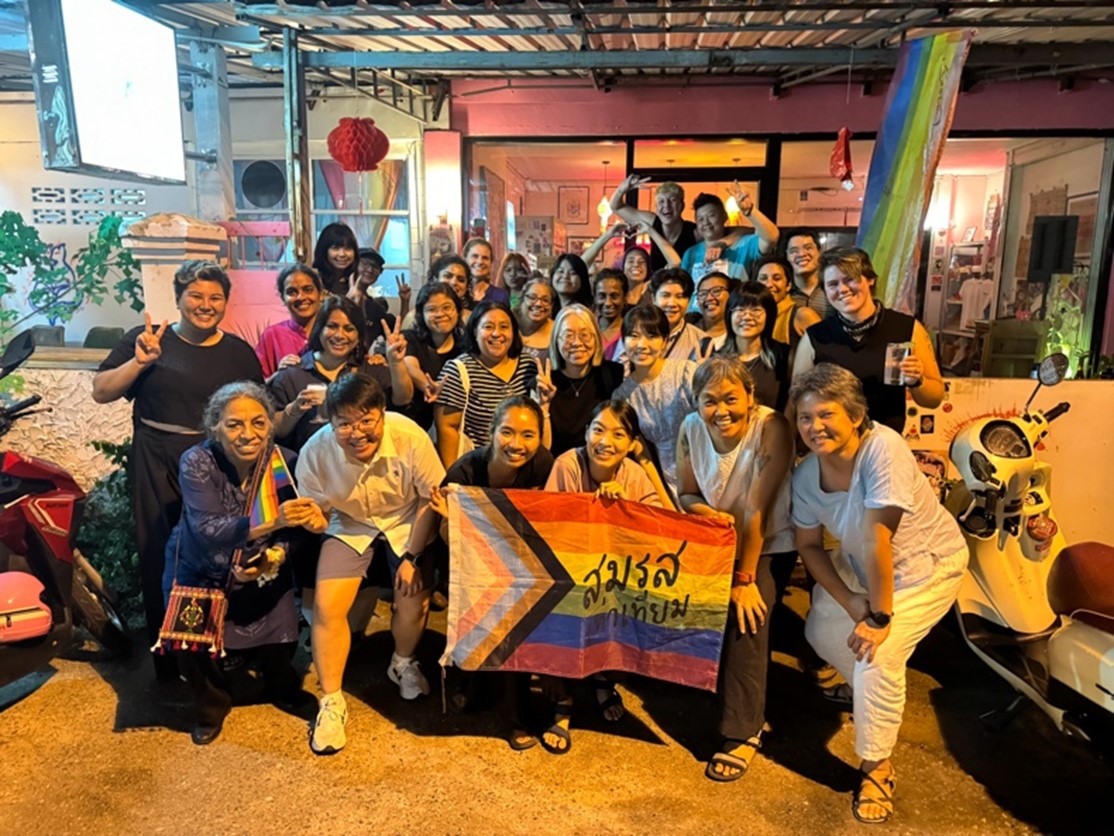
 CIVICUS discusses Thailand’s legalisation of same-sex marriage with Matcha Phornin, founder of Sangsan Anakot, an ethnic minority and Indigenous LGBTQI+ feminist organisation working to empower Indigenous women, girls and young LGBTQI+ people.
Thailand has just become Southeast Asia’s first country, and only the third in Asia, to legalise same-sex marriage. Passed by the Senate with 130 votes for and only four against, the bill now just needs formal royal assent to become law, which is expected within 120 days. The new law grants LGBTQI+ couples the same legal rights as heterosexual couples, including inheritance, adoption and healthcare rights. This milestone comes after over two decades of activism and is expected to enhance Thailand’s reputation as an inclusive destination for LGBTQI+ people and inspire wider regional acceptance of their rights.
What were the key factors leading to the legalisation of same-sex marriage?
Our success was due to a combination of factors: intersectional collaboration, international advocacy, education reform, political representation and media engagement. It can be traced back 20 years ago, when despite a lack of any political support, Thai LGBTQI+ people began to advocate for changes to restrictive laws that denied them the right to form families. We got inspiration from progress elsewhere, including in the USA in 2015 and Taiwan in 2019.
We’ve had a long journey, including periods of democratic regression and military rule. A significant part of our success came from intersecting with other movements, particularly democracy movements. When democracy is compromised, it becomes difficult to advocate for LGBTQI+ rights. That’s why many LGBTQI+ activists are also pro-democracy activists, which makes our movement more united and therefore stronger.
Links with the broader gender justice movement have also been crucial. Many young LGBTQI+ activists identify as feminists. To address the toxic masculinity and homophobia that are so common in activist circles, we work to create a safer and more inclusive movement.
We advocate for broader rights beyond marriage equality. We seek gender recognition, the decriminalisation of sex work and land rights for Indigenous peoples. The use of international human rights mechanisms, such as the United Nations Human Rights Council Universal Periodic Review process, has been instrumental in holding our government to account and pushing for legislative change.
A key component of our advocacy has been the concept of the rainbow family. In 2017, we hosted the Asia Pacific Rainbow Family Conference in Hong Kong, bringing together families from across the region to share experiences and support each other. This helped build a strong, supportive network to advocate for marriage equality and other rights.
We’ve also worked with educational institutions to protect young LGBTQI+ people from bullying and discrimination. Ten years ago, there was no protection for LGBTQI+ students in the Thai education system. Since then, we have worked with organisations such as UNESCO to make schools safer and more inclusive.
Many of our activists have also entered politics, increasing our visibility and influence. For example, there’s a transgender member of parliament who tirelessly promotes LGBTQI+ rights.
The media has also played an important role. Over the past decade, we’ve worked to shift media narratives from stigmatisation to positive portrayals of LGBTQI+ people and families. This has helped change public perceptions and build wider support for our movement.
What challenges have you faced?
We’ve faced individual and collective challenges. Many activists have made significant personal sacrifices, including imprisonment and loss of life. LGBTQI+ organisations have limited resources, particularly as the LGBTQI+ community is marginalised. The fact that many activists work full-time without pay makes it difficult to sustain the movement. Lack of resources has often led to internal conflict – but it’s also fuelled creativity and resilience, as we’ve compensated for limited resources by using humour and other innovative means to gain visibility and support.
Another key challenge has been political instability. The disruption of democratic processes by coups has hindered progress on LGBTQI+ rights. However, the democracy movement, which includes many young LGBTQI+ activists, has been instrumental in pushing for legislative change.
Patriarchal, hierarchical and ethnocentric societal norms have been a major challenge. For example, when six years ago, my wife, daughter and I built our house using traditional methods with the help of friends from various countries, we faced hostility from homophobic people who tried to burn our house down. We reported it to the police but there was minimal intervention.
There is an entrenched gender binary system that only recognises men and women, ignoring those who don’t fit either category. This is the case even in social movements, many of which are led by men who don’t acknowledge their privilege and can be sexist or homophobic, excluding women and LGBTQI+ people. We need to deconstruct these hierarchies by ensuring equal access to spaces and decision-making power for young people, women and LGBTQI+ people. This effort must extend beyond our movement to society as a whole, linking to democratic processes and parliamentary representation. Currently, women and LGBTQI+ people make up under 20 per cent of members of parliament, making it challenging to pass inclusive legislation.
Feminism plays a crucial role in addressing these issues, both theoretically and practically. Our movement needs an intersectional approach and a strong feminist presence to move forward.
Do you foresee any challenges in implementing the new law?
This law will have a significant impact on the daily lives of LGBTQI+ people, as it will give them greater protection and recognition in society. It will set a precedent for future generations and other countries to follow. In the region, it will likely inspire countries such as the Philippines, Singapore and Vietnam to achieve marriage equality.
But implementation won’t be without obstacles. It will be crucial to ensure government officials and judges are trained and understand the importance of this law so they apply it inclusively. The law will also need to be understood by those in the education and health systems and in society as a whole, and comprehensive manuals and training programmes will be needed. There may be resistance in religious areas, particularly among Muslim communities. Proactive measures will be needed to ensure compliance and prevent discrimination.
What’s next on the LGBTQI+ advocacy agenda?
LGBTQI+ people continue to face several challenges, including the lack of resources to mobilise a strong movement, the lack of recognition for transgender and non-binary people and a very limited understanding of intersectionality.
Transgender and non-binary people often have to use names and pronouns that don’t align with their gender identities. That’s why we push for the passage of a law supporting gender self-determination.
The education system also often violates the rights of children who don’t conform to traditional gender norms. LGBTQI+ and gender non-conforming children need protection in schools so they aren’t bullied for their sexual orientation or gender identity.
In addition, the LGBTQI+ community is not homogeneous: many LGBTQI+ people face overlapping discrimination due to their intersectional identities. Such is the case for Muslim LGBTQI+ people, LGBTQI+ people with disabilities and LGBTQI+ people from Indigenous communities. We must defend not only LGBTQI+ rights but also the rights of other excluded groups, including those disproportionately affected by climate change and environmental crises.
The advocacy agenda should aim for a holistic approach that includes several key elements: strengthening marriage equality laws to ensure they are inclusive, widely understood and properly implemented, promoting gender recognition laws, reforming education and addressing the needs of LGBTQI+ people with intersecting identities.
Civic space in Thailand is rated ‘repressed’ by theCIVICUS Monitor.
Get in touch with Sangsan Anakot through itsFacebook page and follow@SangsanAnakot and@Matcha_Phornin on Twitter.
-
THAILAND: ‘Spyware was used to monitor protesters’ online activity’
 CIVICUS speaks about the use of surveillance technology against civil society activists in Thailand with Sutawan Chanprasert, founder and executive director of DigitalReach, a civil society organisation (CSO) that promotes digital rights, human rights and democracy in Southeast Asia.
What is DigitalReach working on?
DigitalReach is a digital rights organisation working in southeast Asia. We are looking at the impact of technology on human rights and democracy in the region. We initiated this project with a focus on the use of Pegasus spyware in Thailand and reached out to The Citizen Lab and iLaw for collaboration. This is because iLaw is a well-known organisation based in Thailand with a great connection with local activists, and The Citizen Lab is well-known for its expertise in spyware investigation.
What were the main findings of this research?
Pegasus spyware, which is produced by NSO group and sold only to state agencies, can infect devices (both iOS and Android) through a technology called ‘zero click’, which means that it needs no action on the part of the targeted user. Once the spyware is installed, it can gain access to everything on the device, including photos and text messages, and can turn the camera and microphone on and off.
In Thailand, this spyware has been used against at least 35 iPhone users: 24 activists, three CSO workers, three academics and five opposition politicians. These infections happened between October 2020 and November 2021, which was peak time for the democracy movement.
There were three reasons why the spyware was used against dissidents: to monitor protesters’ online activity, to monitor the protests and to find out more about the movement’s funding. On the basis of forensic evidence, The Citizen Lab confirmed that zero-click technology was used, exploiting vulnerabilities in the system to gain access to the devices.
This was likely not the first time spyware was used against activists in Thailand, but we have no evidence to confirm this suspicion. Other digital surveillance tools have also been used: as detailed in our report, GPS devices were found attached to some dissidents’ vehicles during democracy mobilisations.
How did the government react to your findings?
On 22 July the Prime Minister said in parliament that he does not know anything about this spyware, and he added that such spyware would be unnecessary as we all knew what was going on from social media. The Deputy Minister of Defence also declared in parliament that it is not the government’s policy to use spyware against people or ‘generally’ violate their rights. Meanwhile, the Minister of Digital Economy and Society stated in parliament that spyware technology had been purchased but not by a department or agency under his authority. However, he referred to it generically as ‘spyware technology’, without ever confirming that he was referring to Pegasus.
Is there anything CSOs and activists can do to counter spyware?
Spyware is considered a dual-use item, which means it can also be useful in criminal investigations. However, we all know this is not always the case. In Thailand and many other countries, spyware has been used against dissidents and members of the opposition, which means that the technology needs to be strictly regulated so it’s not abused. However, it’s hard to see that happening under the current administration, as the government itself is the likely perpetrator. Only policymakers who care about human rights will be able to make progress on this.
As for individual activists, there is no total solution to prevent a device from being infected by this kind of spyware. However, exposure to this threat can be reduced in several ways, such as by using two-factor authentication, using a security key or an authenticator app rather than an SMS, using a messaging platform with the disappearing message feature and by enrolling in Google’s Advanced Protection Program.
What can the international community do to support Thai activists facing surveillance?
This is a tricky question. Thailand doesn’t currently have an active local digital rights organisation, so working on this would be a good first step to increase digital security protection. The global community that works on digital security can play an important role. However, training activities offered in Thailand must be conducted in the local language and customised to fit the Thai context.
There’s also a need for digital security work in Thailand that goes beyond training, including monitoring to watch for emerging digital threats against dissidents, more research and work with local activists and organisations to ensure their long-term digital safety with a sustainable approach. Funding is also needed because local activists and organisations must buy tools to support their digital security.
Civic space in Thailand is rated ‘repressed’ by theCIVICUS Monitor.
Follow DigitalReach via itswebsite and follow@DigitalReachSEA on Twitter.