human rights
-
Thai officials must drop all the ongoing prosecutions under the Emergency Decree

CIVICUS and various civil society organisations have written a letter expressing concern over the use of the Emergency Decree to restrict human rights and silence dissent in Thailand.
Dear Honorable Ambassador,
We, the undersigned non-governmental organizations, are writing to express our serious concern regarding the ongoing impact of the implementation of the Emergency Decree on Public Administration in Emergency Situation B.E. 2548 (“Emergency Decree”) in response to the Covid-19 pandemic in Thailand. We are troubled by reports of the continuing prosecution of individuals charged under the Emergency Decree, despite the end of the declaration of the “emergency situation” in all areas of Thailand as well as the effect of regulations, announcements, and orders issued thereunder.
We urge you to call on Thailand to cease all intimidation, harassment and prosecution of all individuals solely for peacefully exercising their rights to freedom of expression, information, peaceful assembly, movement, and public participation through the abuse of laws and administrative regulations, and to immediately drop all charges, issue non-prosecution orders, and refrain from further charges, against any individual, including those facing prosecution solely for peacefully exercising their human rights for alleged violation of the Emergency Decree.
Purportedly to combat the Covid-19 outbreak, Thailand had been operating under a state of emergency since 26 March 2020, with the executive government having extended the declaration of an emergency situation 19 times since then. During this period, a series of regulations containing several Emergency Decree measures have been periodically announced pursuant to Emergency Decree powers. These include several vague and overbroad restrictions on the rights to freedom of movement, expression, peaceful assembly and public participation.
-
THAILAND: ‘Marriage equality is likely to pass – and inspire change in other Asian countries’

CIVICUS speaks about the progress being made toward legalising same-sex marriage in Thailand with Mookdapa Yangyuenpradorn, an LGBTQI+ activist and Human Rights Associate at Fortify Rights.
Founded in 2013, Fortify Rights is a human rights civil society organisation (CSO) working to bring laws, policies and practices in line with human rights standards through evidence-based research, strategic truth-telling and empowerment.
Why are there currently four different bills in parliament aimed at legalising same-sex marriage?
LGBTQI+ marriage is such a significant issue in Thailand today that bills to legalise it have been submitted to parliament simultaneously by the government and other political groups. It is unusual and encouraging to see political parties competing to propose changes that would benefit LGBTQI+ people.
Out of the four bills up for consideration, one was submitted by the government, two were submitted by political parties, the Move Forward Party and Democratic Party, and another was submitted by civil society. The one submitted by the cabinet and approved by the prime minister takes precedence over the rest.
The civil society bill was initiated by the Rainbow Coalition for Marriage Equality, which brings together numerous CSOs. It was developed at the grassroots level and drafted and submitted on behalf of Thailand’s LGBTQI+ people. It successfully made its way into parliament, with its authors securing seats in the readings as discussions progressed. It is uncommon for a bill proposed by civil society to enter parliament, so this is a very positive development.
The civil society bill is also more progressive than the other three because it ensures parental rights for LGBTQI+ people and proposes a transitional procedure to allow LGBTQI+ couples to register their marriages and enjoy spousal rights while other relevant laws are still being revised and amended, rather than make them wait until all of the process is finished.
Still, the primary objective is consistent across all four bills: they all seek to amend the civil and commercial code, which now defines marriage as a union between man and woman and grants them the status of ‘husband and wife’, by replacing these gendered words with the gender-neutral expressions ‘individuals’ and ‘spouses’. This simple change will enable LGBTQI+ people to register their marriages.
How have LGBTQI+ activists advocated forthe bill?
The constitution establishes that if a bill is proposed by a group of citizens or civil society groups, representatives from the initiating group should be involved with the parliamentary committee working on the bill. This provided space for LGBTQI+ activists to participate in the legislative process and advance their agenda. The Rainbow Coalition for Marriage Equality has played a crucial role in presenting a unified and consolidated stance on marriage equality in parliament. The activists currently engaged in discussions have been advocating for this bill for over a decade.
As an advisor to the committee drafting the marriage equality bill, I provide expert opinions from the perspective of human rights law and international standards. For instance, I make sure the bill aligns with the International Covenant on Civil and Political Rights, among other international conventions and treaties, and incorporates good practices and advanced protections found in the laws of countries with marriage equality.
What are the prospects of the same-sex marriage bill being passed?
The bill will likely be passed, although it will take some time. The legislative process in Thailand involves three readings in the House of Representatives, the elected 500-member lower house of the National Assembly, followed by three readings in the Senate, the appointed upper house. Proposed legislation then undergoes scrutiny by the Constitutional Court and is ultimately signed into law by the king, then published in the Royal Gazette.
The marriage equality bill is currently in its initial stage in the lower house. It successfully passed its first reading in December 2023 and is now undergoing its second reading. All four bills are now being examined and consolidated into a single version. The second reading is expected to finish by early March, after which the final bill will proceed to the third reading in the lower house before advancing to the Senate.
The bill’s adoption seems highly likely because civil society’s decade-long public campaigning has succeeded in getting marriage equality included on Thailand’s main political agenda. Despite some challenges, prospects for adoption have gradually and steadily increased. The prime minister and cabinet have expressed their support and opposition to the bill has decreased. I believe it is just a matter of time until the bill becomes law and comes into force.
What impact would the passage of this law have for LGBTQI+ struggles?
Marriage equality is a lot more than a mere administrative process of signing papers. It’s about securing the rights of LGBTQI+ couples to adopt children together and be recognised as legal parents. It’s also a matter of life and death if an LGBTQI+ person is in an accident and their partner must give permission for them to undergo surgery or other medical procedures. Ultimately, the fight for marriage equality is about enabling LGBTQI+ people to live normal lives and form families. This is the true meaning of marriage equality that we are fighting for and the message we strive to convey to society.
The legalisation of LGBTQI+ marriage would further raise awareness about LGBTQI+ issues in society, setting a solid stage for advancing other LGBTQI+ rights. It would be a firm first step towards full legal recognition of the rights of LGBTQI+ people, including parenting and inheritance rights, as well as equal social rights and other benefits currently enjoyed only by heterosexual couples. Moreover, a gender recognition bill is in line for parliamentary consideration.
I also hope that the achievement of marriage equality in Thailand will inspire change in other Asian countries. We learned a lot from the experience of Taiwanese LGBTQI+ activists, who were the first to achieve legalisation of same-sex marriage in Asia, and I hope others will be able to learn from us too.
Do you expect conservative backlash to happen?
During the previous government led by the military junta, the regime attempted to project an image of Thailand as open to LGBTQI+ people, but reality told otherwise, as it disregarded LGBTQI+ rights and treated LGBTQI+ people as a deviant group with special needs. A 2021 constitutional court ruling even referred to LGBTQI+ people as a ‘special species’ that needs to be singled out and studied. This reflected the state’s views of LGBTQI+ people. Similar attitudes are occasionally present among the public, particularly among older generations, who still need to understand and get used to society becoming more inclusive and open.
Islamic parties are likely to pose the biggest threat of conservative backlash. They have so far either abstained or voted against the marriage equality bill in parliament, but their current representation is low. However, in southern Thailand, where Islamic beliefs have significant political and cultural influence, there is potential for unequal implementation of the bill once it is passed.
On a positive note, public attitudes toward LGBTQI+ people have improved over the past few years and discussions about LGBTQI+ rights, gender equality and social inclusion have become common on social media platforms. This positive shift can be attributed to the continuous efforts of LGBTQI+ activists in running public awareness campaigns.
What international support do you need to further advance LGBTQI+ rights in Thailand?
Based on my experience of organising protests on the ground, access to resources is key to advancing our cause, since these are scarce at the grassroots level of LGBTQI+ activism. Local activists, often students and young people who are not affiliated with renowned human rights organisations, play a crucial role as change-makers. However, limited funds hinder many young activists from becoming full-time human rights defenders, threatening the sustainability of the LGBTQI+ movement. I believe that for the movement to move forward sustainably, it is crucial to establish connections with international donors and explore ways to form a coalition of Thai LGBTQI+ activists to amplify our voices on the international stage.
We are all passionate about claiming our rights, but passion alone is not enough. LGBTQI+ activism needs resources and support to continue to mobilise and sustain the movement.
Civic space in Thailand is rated ‘repressed’ by theCIVICUS Monitor.
Get in touch with Fortify Rights through itswebsite orFacebook page, and follow@FortifyRights and@mdpyy on Twitter.
-
THAILAND: ‘Part of our success in claiming LGBTQI+ rights came from intersecting with the democracy movement’
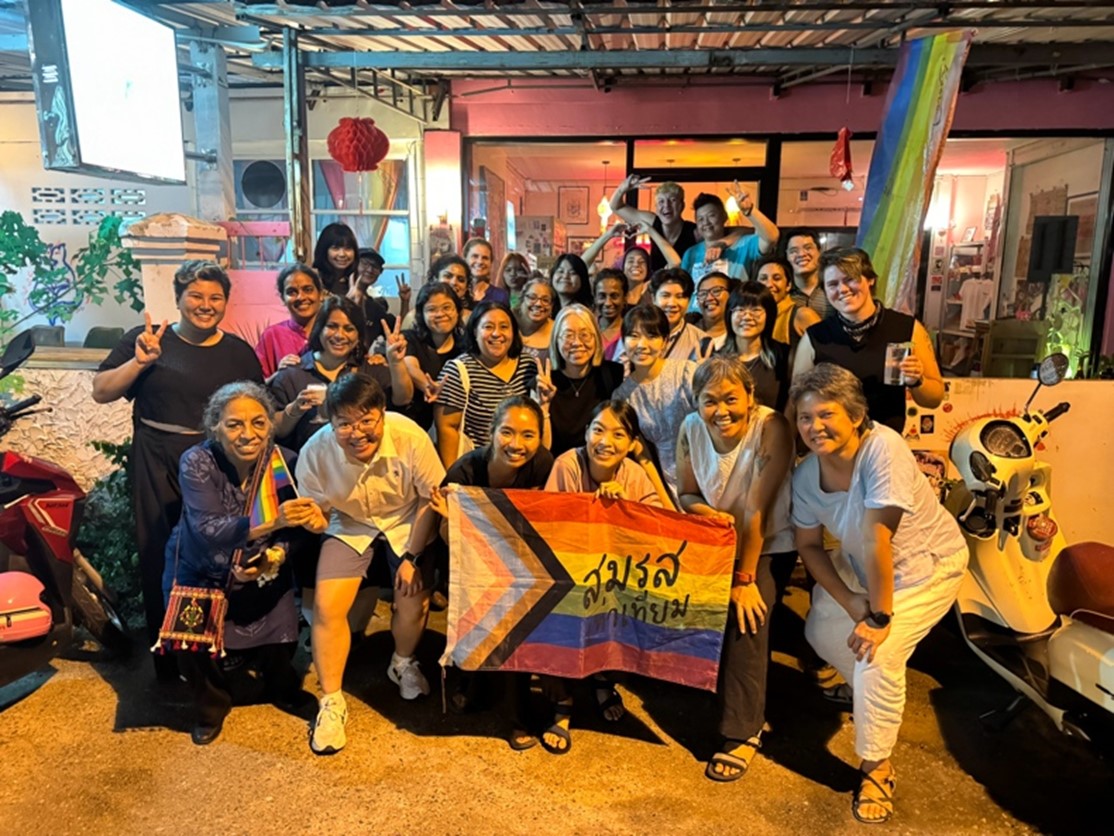
 CIVICUS discusses Thailand’s legalisation of same-sex marriage with Matcha Phornin, founder of Sangsan Anakot, an ethnic minority and Indigenous LGBTQI+ feminist organisation working to empower Indigenous women, girls and young LGBTQI+ people.
Thailand has just become Southeast Asia’s first country, and only the third in Asia, to legalise same-sex marriage. Passed by the Senate with 130 votes for and only four against, the bill now just needs formal royal assent to become law, which is expected within 120 days. The new law grants LGBTQI+ couples the same legal rights as heterosexual couples, including inheritance, adoption and healthcare rights. This milestone comes after over two decades of activism and is expected to enhance Thailand’s reputation as an inclusive destination for LGBTQI+ people and inspire wider regional acceptance of their rights.
What were the key factors leading to the legalisation of same-sex marriage?
Our success was due to a combination of factors: intersectional collaboration, international advocacy, education reform, political representation and media engagement. It can be traced back 20 years ago, when despite a lack of any political support, Thai LGBTQI+ people began to advocate for changes to restrictive laws that denied them the right to form families. We got inspiration from progress elsewhere, including in the USA in 2015 and Taiwan in 2019.
We’ve had a long journey, including periods of democratic regression and military rule. A significant part of our success came from intersecting with other movements, particularly democracy movements. When democracy is compromised, it becomes difficult to advocate for LGBTQI+ rights. That’s why many LGBTQI+ activists are also pro-democracy activists, which makes our movement more united and therefore stronger.
Links with the broader gender justice movement have also been crucial. Many young LGBTQI+ activists identify as feminists. To address the toxic masculinity and homophobia that are so common in activist circles, we work to create a safer and more inclusive movement.
We advocate for broader rights beyond marriage equality. We seek gender recognition, the decriminalisation of sex work and land rights for Indigenous peoples. The use of international human rights mechanisms, such as the United Nations Human Rights Council Universal Periodic Review process, has been instrumental in holding our government to account and pushing for legislative change.
A key component of our advocacy has been the concept of the rainbow family. In 2017, we hosted the Asia Pacific Rainbow Family Conference in Hong Kong, bringing together families from across the region to share experiences and support each other. This helped build a strong, supportive network to advocate for marriage equality and other rights.
We’ve also worked with educational institutions to protect young LGBTQI+ people from bullying and discrimination. Ten years ago, there was no protection for LGBTQI+ students in the Thai education system. Since then, we have worked with organisations such as UNESCO to make schools safer and more inclusive.
Many of our activists have also entered politics, increasing our visibility and influence. For example, there’s a transgender member of parliament who tirelessly promotes LGBTQI+ rights.
The media has also played an important role. Over the past decade, we’ve worked to shift media narratives from stigmatisation to positive portrayals of LGBTQI+ people and families. This has helped change public perceptions and build wider support for our movement.
What challenges have you faced?
We’ve faced individual and collective challenges. Many activists have made significant personal sacrifices, including imprisonment and loss of life. LGBTQI+ organisations have limited resources, particularly as the LGBTQI+ community is marginalised. The fact that many activists work full-time without pay makes it difficult to sustain the movement. Lack of resources has often led to internal conflict – but it’s also fuelled creativity and resilience, as we’ve compensated for limited resources by using humour and other innovative means to gain visibility and support.
Another key challenge has been political instability. The disruption of democratic processes by coups has hindered progress on LGBTQI+ rights. However, the democracy movement, which includes many young LGBTQI+ activists, has been instrumental in pushing for legislative change.
Patriarchal, hierarchical and ethnocentric societal norms have been a major challenge. For example, when six years ago, my wife, daughter and I built our house using traditional methods with the help of friends from various countries, we faced hostility from homophobic people who tried to burn our house down. We reported it to the police but there was minimal intervention.
There is an entrenched gender binary system that only recognises men and women, ignoring those who don’t fit either category. This is the case even in social movements, many of which are led by men who don’t acknowledge their privilege and can be sexist or homophobic, excluding women and LGBTQI+ people. We need to deconstruct these hierarchies by ensuring equal access to spaces and decision-making power for young people, women and LGBTQI+ people. This effort must extend beyond our movement to society as a whole, linking to democratic processes and parliamentary representation. Currently, women and LGBTQI+ people make up under 20 per cent of members of parliament, making it challenging to pass inclusive legislation.
Feminism plays a crucial role in addressing these issues, both theoretically and practically. Our movement needs an intersectional approach and a strong feminist presence to move forward.
Do you foresee any challenges in implementing the new law?
This law will have a significant impact on the daily lives of LGBTQI+ people, as it will give them greater protection and recognition in society. It will set a precedent for future generations and other countries to follow. In the region, it will likely inspire countries such as the Philippines, Singapore and Vietnam to achieve marriage equality.
But implementation won’t be without obstacles. It will be crucial to ensure government officials and judges are trained and understand the importance of this law so they apply it inclusively. The law will also need to be understood by those in the education and health systems and in society as a whole, and comprehensive manuals and training programmes will be needed. There may be resistance in religious areas, particularly among Muslim communities. Proactive measures will be needed to ensure compliance and prevent discrimination.
What’s next on the LGBTQI+ advocacy agenda?
LGBTQI+ people continue to face several challenges, including the lack of resources to mobilise a strong movement, the lack of recognition for transgender and non-binary people and a very limited understanding of intersectionality.
Transgender and non-binary people often have to use names and pronouns that don’t align with their gender identities. That’s why we push for the passage of a law supporting gender self-determination.
The education system also often violates the rights of children who don’t conform to traditional gender norms. LGBTQI+ and gender non-conforming children need protection in schools so they aren’t bullied for their sexual orientation or gender identity.
In addition, the LGBTQI+ community is not homogeneous: many LGBTQI+ people face overlapping discrimination due to their intersectional identities. Such is the case for Muslim LGBTQI+ people, LGBTQI+ people with disabilities and LGBTQI+ people from Indigenous communities. We must defend not only LGBTQI+ rights but also the rights of other excluded groups, including those disproportionately affected by climate change and environmental crises.
The advocacy agenda should aim for a holistic approach that includes several key elements: strengthening marriage equality laws to ensure they are inclusive, widely understood and properly implemented, promoting gender recognition laws, reforming education and addressing the needs of LGBTQI+ people with intersecting identities.
Civic space in Thailand is rated ‘repressed’ by theCIVICUS Monitor.
Get in touch with Sangsan Anakot through itsFacebook page and follow@SangsanAnakot and@Matcha_Phornin on Twitter.
-
THAILAND: ‘Spyware was used to monitor protesters’ online activity’
 CIVICUS speaks about the use of surveillance technology against civil society activists in Thailand with Sutawan Chanprasert, founder and executive director of DigitalReach, a civil society organisation (CSO) that promotes digital rights, human rights and democracy in Southeast Asia.
What is DigitalReach working on?
DigitalReach is a digital rights organisation working in southeast Asia. We are looking at the impact of technology on human rights and democracy in the region. We initiated this project with a focus on the use of Pegasus spyware in Thailand and reached out to The Citizen Lab and iLaw for collaboration. This is because iLaw is a well-known organisation based in Thailand with a great connection with local activists, and The Citizen Lab is well-known for its expertise in spyware investigation.
What were the main findings of this research?
Pegasus spyware, which is produced by NSO group and sold only to state agencies, can infect devices (both iOS and Android) through a technology called ‘zero click’, which means that it needs no action on the part of the targeted user. Once the spyware is installed, it can gain access to everything on the device, including photos and text messages, and can turn the camera and microphone on and off.
In Thailand, this spyware has been used against at least 35 iPhone users: 24 activists, three CSO workers, three academics and five opposition politicians. These infections happened between October 2020 and November 2021, which was peak time for the democracy movement.
There were three reasons why the spyware was used against dissidents: to monitor protesters’ online activity, to monitor the protests and to find out more about the movement’s funding. On the basis of forensic evidence, The Citizen Lab confirmed that zero-click technology was used, exploiting vulnerabilities in the system to gain access to the devices.
This was likely not the first time spyware was used against activists in Thailand, but we have no evidence to confirm this suspicion. Other digital surveillance tools have also been used: as detailed in our report, GPS devices were found attached to some dissidents’ vehicles during democracy mobilisations.
How did the government react to your findings?
On 22 July the Prime Minister said in parliament that he does not know anything about this spyware, and he added that such spyware would be unnecessary as we all knew what was going on from social media. The Deputy Minister of Defence also declared in parliament that it is not the government’s policy to use spyware against people or ‘generally’ violate their rights. Meanwhile, the Minister of Digital Economy and Society stated in parliament that spyware technology had been purchased but not by a department or agency under his authority. However, he referred to it generically as ‘spyware technology’, without ever confirming that he was referring to Pegasus.
Is there anything CSOs and activists can do to counter spyware?
Spyware is considered a dual-use item, which means it can also be useful in criminal investigations. However, we all know this is not always the case. In Thailand and many other countries, spyware has been used against dissidents and members of the opposition, which means that the technology needs to be strictly regulated so it’s not abused. However, it’s hard to see that happening under the current administration, as the government itself is the likely perpetrator. Only policymakers who care about human rights will be able to make progress on this.
As for individual activists, there is no total solution to prevent a device from being infected by this kind of spyware. However, exposure to this threat can be reduced in several ways, such as by using two-factor authentication, using a security key or an authenticator app rather than an SMS, using a messaging platform with the disappearing message feature and by enrolling in Google’s Advanced Protection Program.
What can the international community do to support Thai activists facing surveillance?
This is a tricky question. Thailand doesn’t currently have an active local digital rights organisation, so working on this would be a good first step to increase digital security protection. The global community that works on digital security can play an important role. However, training activities offered in Thailand must be conducted in the local language and customised to fit the Thai context.
There’s also a need for digital security work in Thailand that goes beyond training, including monitoring to watch for emerging digital threats against dissidents, more research and work with local activists and organisations to ensure their long-term digital safety with a sustainable approach. Funding is also needed because local activists and organisations must buy tools to support their digital security.
Civic space in Thailand is rated ‘repressed’ by theCIVICUS Monitor.
Follow DigitalReach via itswebsite and follow@DigitalReachSEA on Twitter. -
Thailand: Concerns regarding the right to peaceful assembly


1 September 2021
Prime Minister Prayut Chan-O-Cha
Royal Thai Government
1 Pitsanulok road
Dusit, Bangkok
ThailandRe: Concerns regarding the right to peaceful assembly in Thailand
Dear Prime Minister Prayut Chan-o-cha,
We, the 13 undersigned organizations, write to express our concern regarding violence and the excessive use of force by police at recent protests in Bangkok. We are troubled by the disproportionate response of riot police to provocations by protesters. We are also concerned by the arbitrary detention of protest leaders who have recently faced new criminal charges and have been denied bail and detained. Thailand needs to do more to protect protesters from violence and ensure that the public can safely exercise the right to peaceful assembly during the COVID-19 pandemic.
In recent weeks, both riot police and protesters have contributed to a significant escalation in violence at political protests in Bangkok. In August alone, police have forcibly dispersed at least ten demonstrations using rubber bullets, water cannons, and tear gas. At several protests, demonstrators threw rocks and Molotov cocktails, launched fireworks, and used slingshots to shoot nuts and bolts at riot police. Many of the clashes have occurred near Din Daeng intersection, which is close to the headquarters of the 1st Infantry Division of the Royal Guard. Youth participation in these protests has been high, with a large proportion of protesters under the age of 18.
Crowd control measures and other actions taken by law enforcement officers have frequently violated the human rights of protesters and international standards on the policing of protests. Police officers have repeatedly fired rubber bullets at protesters in an indiscriminate fashion. Footage from a recent protest shows riot police firing rubber bullets from a highway overpass at a distance too great to ensure the targeting of violent individuals in a manner consistent with international standards. In other videos, police officers appear to shoot rubber bullets at individuals passing on motorcycles, including at point blank range. Journalists, including those who visibly identified themselves as press, have also reported being hit with rubber bullets at protests.
Police have reportedly fired tear gas canisters directly at protesters. On 13 August 2021, a protester, Thanat Thanakitamnuay, was hit in the face by an object believed to be a tear gas canister fired by police at Din Daeng intersection and has reportedly lost sight in his right eye.
The recent use of firearms by unknown assailants at a protest raises further grave concerns. On 18 August 2021, three teenage protesters were shot with live ammunition in front of the Din Daeng Police Station. One of the victims—a 15-year-old boy—was hit by a bullet in the neck and remains in intensive care. According to a hospital report he is suffering from paralysis of both arms and legs and is not responding to stimulus. The other two injured protesters were reportedly 14 and 16 years old. The police have denied using live ammunition during the protest and said they are investigating the shooting.
In addition to cracking down on street protests, Thai authorities have continued their harassment of protest leaders and participants through legal processes. Since July 2020, more than 700 individuals, including at least 130 children, have been investigated in connection to their protest activities.[1] Between 7 and 9 August 2021, at least 32 protest leaders and participants were arrested and charged with a variety of offences. Ten were arbitrarily denied bail and subjected to pre-trial detention.
Two of the protesters who were arrested, Arnon Nampa and Jatupat Boonpattararaksa, are Gwangju Prize for Human Rights laureates. Arnon was charged, inter alia, with lèse-majesté (defaming the monarchy) in relation to a speech he gave on monarchy reform at a protest in Bangkok on 3 August 2021. Jatupat was charged with, inter alia, violating a COVID-19 emergency regulation after he organized a protest in front of Thung Song Hong Police Station on the same day. Seven other protest leaders—Parit Chiwarak, Nutchanon Pairoj, Sirichai Natueng, Phromsorn Weerathamjaree, Panupong Chadnok, Thatchapong Kaedam, and Panadda Sirimatkul—were all charged, inter alia, with violating a COVID-19 emergency regulation as a result of their participation in a peaceful protest in front of the Border Patrol Police Region 1 Headquarters on 2 August 2021. Sam Samart, a 19-year-old, was arrested on 7 August and charged, inter alia, with violating a COVID-19 emergency regulation in relation to the protest in front of the Border Patrol Police Region 1 Headquarters on 2 August 2021.
Many of these activists have previously been detained, prosecuted, and imprisoned for their protest activities. In 2016, Jatupat was sentenced to two-and-a-half years’ imprisonment after he was convicted of lèse-majesté. Earlier this year, Parit was detained for 91 days on similar charges. Arnon, Panupong, and Phromsorn were also arrested earlier this year and were released from pre-trial detention in June.
The court determined that the activities of key protest leaders including Arnon, Parit, and Jatupat violated the bail conditions connected to their previous lèse-majesté cases, which prohibited them from participating in political protests or further defaming the monarchy. They could face years of pretrial detention.
At least eight of the detained protesters have reportedly tested positive for COVID-19 while jailed. On 26 August 2021, the Court of Appeal granted bail to Sirichai Natueng, Panadda Sirimasakul, and Sam Samart, and they were released from custody. Even though prisons are overwhelmed with COVID-19 cases, the other seven protest leaders remain in pre-trial detention, each having been denied bail at least twice.
Thailand’s obligations under international law and relevant standards
Article 21 of the International Covenant on Civil and Political Rights (ICCPR), which Thailand ratified in 1996, guarantees the right to peaceful assembly. While some restrictions on assembly are permissible under international law, any restriction on this right must be ‘imposed in conformity with the law and . . . necessary in a democratic society.’[2] ICCPR Article 21 enumerates a list of the permissible justifications for a restriction on assembly: to protect national security, public safety, public order, public health, public morals, or the rights and freedoms of others.[3] No other governmental interest can justify a restriction on peaceful assembly.
The Convention on the Rights of the Child, which Thailand ratified in 1992, protects children’s right to freedom of peaceful assembly.[4]
In its General Comment No. 37, the UN Human Rights Committee elaborated on the importance of the right to peaceful assembly:
Together with other related rights, [the right to freedom of peaceful assembly] constitutes the very foundation of a system of participatory governance based on democracy, human rights, the rule of law and pluralism. Peaceful assemblies can play a critical role in allowing participants to advance ideas and aspirational goals in the public domain and to establish the extent of support for or opposition to those ideas and goals. Where they are used to air grievances, peaceful assemblies may create opportunities for the inclusive, participatory and peaceful resolution of differences.[5]
The right to peaceful assembly is foundational to many other rights and, in particular, helps to ensure economic, social, and cultural rights are upheld. Moreover, protest is often one of the most effective tools available for marginalized individuals and groups to successfully advocate for change.[6]
For these reasons, international law is especially protective of protests with a political nature. According to the Human Rights Committee, ‘assemblies with a political message should enjoy a heightened level of accommodation and protection.’[7] As such, the creation of perimeters around government buildings or official locations that demarcate where assemblies may not take place ‘should generally be avoided, inter alia, because these are public spaces. Any restrictions on assemblies in and around such places must be specifically justified and narrowly circumscribed.’[8]
The threat to public health posed by the COVID-19 pandemic may justify narrow restrictions on the right to freedom of peaceful assembly, but such restrictions must meet the requirements of legality, necessity, and proportionality under international human rights law.[9] In assessing whether a measure is necessary and proportionate to a legitimate aim, consideration should be given to whether the measure in question is the least intrusive means of achieving that aim. The Office of the UN High Commissioner for Human Rights has issued guidance on issues affecting civic space in the context of the COVID-19 pandemic, noting that:
States should ensure that the right to hold assemblies and protests can be realized, and only limit the exercise of that right as strictly required to protect public health. Accordingly, States are encouraged to consider how protests may be held consistent with public health needs, for example by incorporating physical distancing.[10]
In April 2020, UN Special Rapporteurs and Working Groups warned against the excessive use of force to enforce COVID-19-related restrictions on protesters, stating, ‘emergency measures can be a more direct threat to their life, livelihood, and dignity than even the virus itself.’[11] Moreover, aggressive police action against protesters may defeat the purpose of emergency measures. Arrest, detention, the use of force, and dispersal of protests can increase the risk of virus transmission for protesters and law enforcement officials alike.[12]
States have an obligation to protect journalists, monitors, and members of the public - as well as public and private property - from harm.[13] As such, state actors must take steps to ensure that protesters can exercise their rights safely, while exerting the ‘minimum force necessary’ to reduce the likelihood of injuries and property damage.[14]
In a joint statement, the UN Special Rapporteurs on the freedoms of association and expression declared that there is ‘no such thing in law as a violent protest’.[15] Rather, there are only violent protesters who should be dealt with individually. According to the Special Rapporteurs and Human Rights Committee, the right to peaceful assembly is an individual right, not a collective right, and must be treated as such.[16] Any isolated act of violence by some participants must not be attributed to other participants in the assembly. In addition, so long as organizers take reasonable efforts to encourage peaceful conduct during an assembly, they may not be held responsible for the violent actions of others.[17]
State authorities may only disperse assemblies when ‘strictly unavoidable,’ such as when there is clear evidence of an imminent threat of serious violence that cannot be dealt with by targeted arrests or other less drastic actions.[18] Before dispersing a crowd, law enforcement officers must take all reasonable measures to enable the assembly by providing a safe environment. Even if some protesters act violently, all those involved retain all their rights under the ICCPR, including, of course, the right to life and protection against arbitrary detention.[19]
Law enforcement officers should only resort to force in ‘exceptional’ circumstances.[20] Any use of force must only be the minimum amount necessary, targeted at specific individuals, and proportionate to the threat posed.[21] The restrictions on the use of force at assemblies are even more important when police use lethal force, including the use of firearms. When policing an assembly, firearms may only be used when strictly necessary to counter an imminent threat of death or serious injury.[22]
Rubber bullets can also be deadly. The OHCHR Guidance on Less Lethal Weapons in Law Enforcement states that ‘kinetic impact projectiles should generally be used only with the aim of striking the lower abdomen or legs of a violent individual and only with a view to addressing an imminent threat of injury to either a law enforcement official or a member of the public.’[23] Rubber bullets should not be used as a general tool to disperse protesters, nor should they be fired indiscriminately into a crowd.[24]
Tear gas and other ‘area weapons’ also pose risks to protesters and should only be used in response to widespread violence with the sole purpose of dispersal and as a measure of last resort after giving an audible warning and providing reasonable time for protesters and bystanders to vacate the area.[25] Tear gas cartridges and canisters may not be aimed at individuals or used in confined spaces.[26] Their use on a person who is already restrained amounts to a violation of the prohibition against torture or other cruel, inhuman or degrading treatment under international law.
According to the Human Rights Committee, states should ‘consistently promote a culture of accountability for law enforcement officials during assemblies.’[27] As such, it is essential that police receive adequate training to facilitate assemblies. Law enforcement officers must understand the legal framework governing assemblies, their obligation to enable peaceful assemblies, and the importance of political assemblies in a rights-respecting society. They should receive training on proper techniques to manage crowds and how to avoid escalation while responding to violence by protesters.[28] Any use of force must be investigated to determine whether the force was necessary and proportionate.[29] States have ‘an obligation to investigate effectively, impartially and in a timely manner any allegation or reasonable suspicion of unlawful use of force or other violations by law enforcement officials … in the context of assemblies’.[30]
In March 2020, the UN High Commissioner for Human Rights urged all states to release ‘every person detained without sufficient legal basis, including political prisoners, and those detained for critical, dissenting views’ in response to the COVID-19 pandemic.[31] By continuing to detain protest leaders despite high infection rates and overcrowding in prisons, the Thai government is unnecessarily putting their lives at grave risk.
Conclusion
In order to fulfill its human rights obligations, the Thai government should not only refrain from suppressing protests but also needs to create a safe and enabling environment for members of the public to exercise their rights to peaceful assembly and freedom of expression in the context of the COVID-19 pandemic.
We call on the Thai government to ensure that law enforcement officials only resort to the use of force against protesters in full compliance with international human rights law and standards. In particular, authorities must not use greater force than necessary to achieve a legitimate objective and must not cause greater harm than the harm they seek to prevent. Any use of force must be proportionate to a legitimate law enforcement objective, such as meeting any threat of violence. We further call on your government to ensure that all law enforcement personnel present at protests have been properly trained in strategies and tactics that comply with international human rights law and standards. Authorities should promptly, effectively, impartially, and independently investigate any violations of domestic law and international standards and ensure that perpetrators are held accountable.
We further call on the Thai government to immediately end its harassment of protest leaders and participants. Individuals detained solely because of their exercise of the right to peaceful assembly, including protest leaders recently denied bail, should be immediately and unconditionally released. No one should be detained merely for exercising a human right, such as the rights to peaceful assembly or freedom of expression.
We urge you to initiate a review of all laws and policies impacting the right to freedom of peaceful assembly in Thailand. Laws and policies that unjustifiably restrict the rights to freedom of peaceful assembly and expression should be amended in line with international law and standards.
Thank you for your attention to the issues and recommendations raised in this letter. We would welcome the opportunity to assist and support the Thai government in meeting its human rights obligations.
Sincerely,
Amnesty International
ARTICLE 19
ASEAN Parliamentarians for Human Rights
Asia Democracy Network
Asian Forum for Human Rights and Development (FORUM-ASIA)
Asian Network for Free Elections (ANFREL)
CIVICUS: World Alliance for Citizen Participation
Civil Rights Defenders
FIDH – International Federation for Human Rights
Fortify Rights
Human Rights Watch
International Commission of Jurists
Manushya Foundation
CC:
Police General Suwat Jangyodsuk,
Commissioner-General of the Royal Thai Police
Rama I Rd, Pathum Wan
Bangkok 10330
Civic space in Thailand is rated Repressed by the CIVICUS Monitor
[1] Thai Lawyers for Human Rights, ‘สถิติคดี 1 ปี หลังเยาวชนเริ่มปลดแอก: ยุติการใช้ “กฎหมาย เป็นเครื่องมือปราบปรามทางการเมือง’, 18 July 2021, available at: https://tlhr2014.com/archives/32258.
[2] International Covenant on Civil and Political Rights, Article 21.
[3] Ibid.
[4] Convention on the Rights of the Child, Article 15.
[5] Human Rights Committee General Comment No. 37, UN Doc. CCPR/C/GC/37, para. 1, (23 July 2020) [hereinafter General Comment No. 37]. Unofficial Thai language translation is available at: https://www.icj.org/wp-content/uploads/2021/08/1.-ไทย_GC-37.pdf
[6] Id. at para. 2.
[7] Id. at para. 32.
[8] Id. at para. 56.
[9] See Human Rights Committee General Comment No. 37, UN Doc. CCPR/C/GC/37, para. 45, (23 July 2020) [hereinafter General Comment No. 37].
[10] Office of the High Commissioner for Human Rights, ‘Civic Space and COVID-19: Guidance’, 4 May 2020, available at: https://www.ohchr.org/Documents/Issues/CivicSpace/CivicSpaceandCovid.pdf.
[11] UN OHCHR, ‘COVID-19 security measures no excuse for excessive use of force, say UN Special Rapporteurs’, 17 April 2020, available at: https://www.ohchr.org/EN/NewsEvents/Pages/DisplayNews.aspx?NewsID=25802&LangID=E.
[12] Amnesty International, ‘COVID-19 Crackdowns: Police abuse and the global pandemic’, 2020, p. 25, available at: https://policehumanrightsresources.org/content/uploads/2020/12/ACT3034432020ENGLISH.pdf?x96812.
[13] Id. at paras. 74, 76.
[14] Id. at paras. 76, 79.
[15] UN OHCHR, ‘UN rights experts urge lawmakers to stop “alarming” trend to curb freedom of assembly in the US’, 30 March 2017, available at: https://www.ohchr.org/EN/NewsEvents/Pages/DisplayNews.aspx?NewsID=21464&LangID=E.
[16] Id. See also: General Comment No. 37 at para. 4.
[17] Joint report of the Special Rapporteur on the rights to freedom of peaceful assembly and of association and the Special Rapporteur on extrajudicial, summary or arbitrary executions on the proper management of assemblies, U.N. Doc A/HRC/31/66, 4 February 2016, at para. 26 [hereinafter HRC 31/66].
[18] HRC 31/66 at para 61; General Comment No. 37 at para. 85.
[19] General Comment No. 37 at para. 9.
[20] HRC 31/66 at para. 57.
[21] Id. at paras. 57–58.
[22] General Comment No. 37 at para 88; HRC 31/66 at para. 59. See also: Basic Principles on the Use of Force and Firearms by Law Enforcement Officials, principles 9 and 14; Amnesty International, Dutch Section, ‘Use of Force: Guidelines for the implementation of the UN Basic Principles on the Use of Force and Firearms by Law Enforcement Officials’, August 2015, section 2, available at: https://www.amnesty.org.uk/files/use_of_force.pdf, [hereinafter Amnesty International, ‘Use of Force’].
[23] United Nations Human Rights Guidance on Less Lethal Weapons in Law Enforcement, para. 7.5.8, available at: https://www.ohchr.org/Documents/HRBodies/CCPR/LLW_Guidance.pdf [hereinafter Guidance on Less Lethal Weapons].
[24] Amnesty International, ‘Use of Force’, section 7.4.2.
[25] Id. at para. 87.
[26] Guidance on Less Lethal Weapons, paras. 7.3.6-8.
[27] General Comment No. 37 at para. 89.
[28] HRC 31/66 at para. 42.
[29] General Comment No. 37 at para. 91.
[30] Id. at para. 90.
[31] UN High Commissioner for Human Rights Michelle Bachelet, ‘Urgent action needed to prevent COVID-19 “rampaging through places of detention”’, 25 March 2020, available at: https://www.ohchr.org/EN/NewsEvents/Pages/DisplayNews.aspx?NewsID=25745&LangID=E.
-
Thailand: End unjust pre-trial detention against youth pro-democracy activists

Photo credit: FORUM ASIA
CIVICUS: World Alliance for Citizen Participation, Asian Forum for Human Rights and Development (FORUM-ASIA) and Asia Democracy Network (ADN) are deeply concerned about the condition of youth pro-democracy activists who have been on hunger-strike from prison for more than a week. The activists are protesting against their unjust pre-trial detention and are acting in support of other activists who have been exercising their right to protest and freedom of expression in the country. Our organisations call on the government to immediately and unconditionally release all the youth activists and drop all charges against them.
-
Thailand: Government must immediately and unconditionally drop royal defamation charges against youth activists

CIVICUS: World Alliance for Citizen Participation and Asia Democracy Network are alarmed by the ongoing judicial harassment against youth pro-democracy activists in Thailand for exercising their rights to expression and peaceful assembly.
As the State Party to the International Covenant on Civil and Political Rights (ICCPR), Thailand should guarantee an enabling environment for the public, including human rights defenders and activists, to convey their legitimate criticism instead of criminalising them.
Two youth pro-democracy activists, Netiporn 'Bung' Sanesangkhon and Nutthanit' Bai Po' Duangmusit, were detained on 3 May 2022 after the Court revoked their bail for their involvement in conducting two polls on the monarchy in February and March 2022. Their requests for bail have been denied.
Recently, the Court granted bail for two other youth activists facing royal defamation charges (Section 112 or Lese Majeste). Activist, Tantawan 'Tawan' Tuatulanon, was granted bail on 26 May 2022 but ordered to wear a monitoring device and not leave her house premises without a court order. Tawan is known for her affiliation with the pro-democracy Draconis Revolution group, continuously advocating to abolish Section 112 (Lese Majeste). She was detained in March 2022 for questioning the monarchy in a live streaming broadcast on social media and faces five counts of resisting officers in the execution of their duty, violating the Computer Crimes Act and royal defamation. While she was initially given bail it was revokedon 20 April 2021 after the police claimed that she had attempted to commit a similar offence following a Facebook post commenting about a royal motorcade and going near the motorcade. Following the prolonged detention by the Court, she went on a 30-day hunger strike. On 20 May, the Ratchadaphisek Criminal Court denied her bail again after prosecutors said they had just received a case file.
The other activist, Sophon 'Get' Surariddhidhamrong was arrested on 1 May 2022 for giving a critical speech during a protest march in the Ratchadamnoen area 10 days earlier. He was denied bail by the South Bangkok Criminal Court and was in a hunger strike for 22 days before the bail granted on 31 May. He faces two other royal defamation charges for his speeches in the Chakri Memorial Day Protest in April and the Labour Day rally on 1 May. Despite being granted bail, the royal defamation charges against Tawan and Get remain.
The cases add to the long list of prosecution under Section 112, which the Thailand Prime Minister revived in 2020 after not being used for three years. Statistics from the Thai Lawyer for Human Rights (TLHR) have revealed that at least 190 individuals had been subjected to royal defamation charges between 18 July 2020 and 30 April 2022. At this time, apart from the activists mentioned, at least 5 others are still detained awaiting trial - namely Weha Sanchonchanasuk (since 10 March), Kataporn (since 10 April), Kongphet (since 10 April), Parima (since 11 April) and Pornpoj Chaengkrachang (since 11 April). Also, two activists, Ekkachai Hongkangwan and Sombat Thongyoi, who have sentenced to imprisonment are currently in the appeal process.
The royal defamation charges are not the only law the Thailand government has used to stifle fundamental freedoms such as the freedom of expression and peaceful assembly. Other draconian provisions used include sedition charges under Section 116, charges under the Emergency Decree, charges under the Public Assembly Act, Computer Crime Act, and Contempt of Court, to name a few.
The prolonged pre-trial detention under the royal defamation charge violates Thailand's international human rights obligation under the ICCPR. Article 9 of the Covenant stipulates the State Party's obligation to conduct a trial on criminal offences within a reasonable time. Detention for those awaiting trial should not be mandatory for all defendants charged with a particular crime. Further, the state is obligated to re-examine if the pretrial detention has to be continued, whether it is reasonable and necessary for lawful purposes in the light of possible alternatives. The arrest or detention of legitimate activities of exercising guarantees rights, such as freedom of expression, is considered arbitrary.
Our organisations call for the immediate and unconditional release of these activists and for the government to guarantee a safe and enabling environment for Thai people to express their opinion without fear of reprisal. This includes abolishing provisions and laws, including on royal defamation and sedition charges which are often used to stifle critics.
Civic space in Thailand is rated as "Repressed" by the CIVICUS Monitor
-
Thailand: Release human rights defender Mongkorn ‘BusBas’ Thirakot, repeal royal defamation law


Photo credit: Thai Lawyers for Human Rights (TLHR)
The Asian Forum for Human Rights and Development (FORUM-ASIA), CIVICUS: World Alliance for Citizen Participation, and Asia Democracy Network (ADN) strongly condemn the conviction of Mongkorn ‘BusBas’ Thirakot, a 30-year-old activist and online clothing retailer from Chiang Rai.
BusBas has been sentenced to an unprecedented 50 years in prison–the longest in Thailand’s history–for his remarks on the monarchy. This marks the most severe sentence ever issued under Thailand's draconian lèse-majesté (royal defamation) law, surpassing the previous record set in 2021 when a woman received a 43-year sentence.
Civic space in Thailand was rated as ‘repressed’ by the CIVICUS Monitor.
Our organisations express solidarity with BusBas and all pro-democracy defenders in Thailand. We call upon the Thai authorities to release activists, to repeal the lèse-majesté law, and to refrain from further undermining people’s fundamental rights and freedoms.
Suppressing Freedom of Expression
Arrested in April 2021, Bas was initially sentenced to 28 years in January for 14 counts of royal defamation for Facebook posts he made three years ago. On 18 January 2024, the Appeals Court affirmed the original conviction and added 11 more violations to his charges. For each violation, a 3-year imprisonment term was imposed. Considering the defendant's cooperation, a one-third reduction was granted, culminating in a total of 22 years in prison under Article 112 of Thailand's criminal code over his 27 Facebook posts. When combined with the initial 28-year sentence from the Court of First Instance, the overall sentence stands at 50 years of imprisonment.
Lèse-majesté, also known as the offence of injury to royalty, is stipulated in Article 112 of the Thai Criminal Code. This statute specifies that making defamatory, insulting, or threatening remarks about the king, queen, or regent can result in a maximum penalty of 15 years for each alleged violation.
According to Thai Lawyers for Human Rights, at least 262 individuals have faced charges related to lèse-majesté since 2020. This surge in legal actions coincided with unprecedented youth-led street protests wherein protest leaders openly criticised the monarchy.
‘Thailand as a State Party to the International Covenant on Civil and Political Rights (ICCPR) must respect and protect fundamental freedoms for all individuals. We reiterate our call to repeal Article 112 and all other laws used to curtail free speech. Likewise, we demand an immediate and unconditional release of all detainees held in prison under this act. The Thai Government must ensure a secure and supportive environment for all human rights defenders to exercise their basic freedoms as outlined in the ICCPR,’ the organisations stressed.
Overturn the Conviction
FORUM-ASIA, CIVICUS, and ADN are urging the Thai Government to overturn BusBas' conviction. We demand the immediate release of BusBas, pro-democracy activist Arnon Nampa, and all other human rights defenders in Thailand.
In addition, we endorse the call for the abolition of the lèse-majesté law as its contents and enforcement are in conflict with international human rights standards.
In the first place, individuals exercising their rights to freedom of expression and peaceful assembly should never be criminalised and silenced. Laws that unfairly shield public figures from criticisms and suppress political dissent have no place in a vibrant civic space.
We call on the Government of Thailand to fulfil its international obligations by upholding the people's right to freedom of expression and peaceful assembly.
For media inquiries, please contact:
-
Thailand: Time for Democracy

By Andrew Firmin CIVICUS Editor-in-Chief, co-director and writer for CIVICUS Lens and co-author of the State of Civil Society Report.
Thailand’s voters have spoken. In the 14 May general election, they overwhelmingly backed change. Two major opposition parties won 293 seats in the 500-member House of Representatives.
-
Thailand/Laos: investigate the killing of Lao refugee and put an end to transnational repression of human rights defenders

In response to news on 17 May 2023 of the fatal shooting of Bounsuan Kitiyano, a 56-year-old Lao human rights defender and a refugee recognized the UN High Commissioner for Refugees (UNHCR), in a border town in northeastern Thailand, we, the ten undersigned organizations, urge the government of Thailand to independently, effectively and promptly investigate this incident and ensure effective remedy to the victim’s family and loved ones. We also call on the Lao and Thai governments, together with diplomatic communities in Laos and Thailand and UN bodies, to address human rights violations faced by Lao human rights defenders who have sought asylum in Thailand.
BOUNSUAN KITIYANO'S KILLING
On 17 May 2023, Thai authorities found Bounsuan’s body in Pho Sai District of Ubon Ratchathani Province in northeastern Thailand bordering Laos. Bounsuan, a member of Thailand-based “Free Lao,” a network of Lao migrant workers and human rights defenders, participated in activities including peaceful protests at the Lao Embassy in Bangkok and human rights workshops on topics including human and rights, environmental rights, anti-corruption and democracy. According to media reports, he had been shot three times while he was riding a motorcycle.[1] While the undersigned organizations do not have information on who is responsible for this killing, we have verified that the human rights defender had fled persecution from Laos and been living in Thailand for many years. According to media reports, Bounsuan was in the process of applying for a resettlement in Australia.[2]
Other individuals associated with the Free Lao network have faced arbitrary detention and alleged enforced disappearance either in Laos or Thailand.
REPRESSION AT HOME AND ABROAD
The undersigned organizations note a recurring targeting of human rights defenders affiliated with Free Lao. The fatal shooting of Bounsuan took place only one month after the arrest and detention of Savang Phaleuth, another Free Lao member living in Bangkok. Reportedly, on 20 April 2023, Savang visited his home at Done Sart Village in Song Khon District of Savannaket Province, Laos, where he was arrested by police authorities from an unidentified unit.[3] Currently, he remains detained incommunicado. According to information obtained by the signatories, the police has not informed his relatives of the charges against him, nor allowed any family visits.
On 26 August 2019, prominent human rights defender Od Sayavong “disappeared” from his home in Bangkok after he and his fellow Free Lao members, including Phetphouthon Philachane, met with the then-UN Special Rapporteur on Extreme Poverty and Human Rights.[4] Od also played an active role in leading a demonstration in Bangkok on 16 July 2019 to call for the release of other Free Lao members imprisoned in Laos and the protection of environmental and land rights in the country.[5] In that case, Thai authorities failed to conduct a prompt, impartial and effective investigation into this alleged disappearance, despite consistent calls from the UN and civil society organizations.[6]
Three months later, Phetphouthon, another member of Free Lao who was also a housemate of Sayavong, also went missing after he left Bangkok to visit his family in Vientiane.[7] His fate and whereabouts remain unknown to date.
Earlier, on 5 March 2016, three human rights defenders from the same group – Somphone Phimmasone, Soukane Chaithad, and Lodkham Thammavong – were arrested and detained by Lao authorities incommunicado due to their online criticisms of the Lao government and participation in a peaceful protest in front of the Lao Embassy in Bangkok. On 22 March 2017, the Vientiane People’s Court found them guilty of violating article 56 (treason to the nation), article 65 (propaganda against the state), and article 72 (gatherings aimed at causing social disorder) of Laos’s Penal Code. They were sentenced to 20, 16, and 12 years in prison, respectively.
These repeated allegations of arrest, detention, conviction and, in some instances, disappearance of members of Free Lao, suggests that what appear to be targeted attacks are not only taking place in Lao territories. Rather, they seem to be part of an ongoing pattern of transnational repression against activists and human rights defenders fleeing persecution from Laos to Thailand in order to silence the exercise of human rights, including the rights to freedom of peaceful assembly and freedom of expression involving peaceful dissent.
In this context, on 11 December 2020, eight independent experts of the UN Human Rights Council submitted a letter to the Lao and Thai governments raising concerns regarding a “pattern of disappearances” with “countries in the region coordinating, assisting, or acquiescing to extraterritorially abduct political activists leading to disappearances.”[8] The letter also indicated that the Foreign Ministries of Laos and Thailand in 2018 released a joint statement on strengthening their collaboration to “stand firm on the policy to not allow any person or group of people plan for disorder or anti-government activities in another country on their land.”
According to testimonies collected by the undersigned organizations, pervasive impunity for the cases listed above have led to a widespread chilling effect among Lao human rights defenders. Under this repressive climate, these human rights defenders who fled their country continue to live in fear of being targeted for exercising their human rights.
STATE OBLIGATIONS UNDER INTERNATIONAL HUMAN RIGHTS LAW
Thailand and Laos are both State parties to the International Covenant on Civil and Political Rights (ICCPR) pursuant to which they must respect and ensure the rights to life, to liberty and security of person, to freedom from torture and other cruel, inhuman or degrading treatment or punishment, and freedom of expression, association and peaceful assembly and right to public participation among other rights. Enforced disappearance constitutes a violation of multiple provisions of the ICCPR. They have a duty to promptly, effectively and thoroughly investigate with independence, impartiality and transparency, and to prosecute potentially unlawful deprivations of life, including enforced disappearances, in accordance with relevant international standards, including the Minnesota Protocol on the Investigation of Potentially Unlawful Death.[9] States must also provide access to an effective remedy and reparation to redress any violations of human rights under their jurisdiction.
The protection of the aforementioned rights also covers human rights defenders who face heightened risks of targeted violence due to their legitimate human rights work.
During the third cycle of Thailand’s Universal Periodic Review (UPR) in 2021, the government of Thailand “supported” at least six recommendations on the protection of human rights defenders, including to “[e]nsure the protection of human rights defenders, including through prompt and thorough investigation of attacks”; “[t]ake further steps to ensure a safe and enabling environment for human rights defenders, stop all forms of harassment, violence and intimidation against them and ensure prompt, transparent and independent investigation of all reported cases”, and “[c]reate a safe and enabling environment to exercise the rights to peaceful assembly and freedom of expression and prevent attacks and intimidation against human rights defenders.”[10]
The government of Laos also received similar recommendations during its UPR in 2020, including to “[e]nhance freedom of expression, lifting restrictions for independent media and providing a safe environment for the work of journalists and human rights defenders”; “[e]nsure the full enjoyment of the freedom of expression, association and peaceful assembly, and progress to fully investigate all allegations of arbitrary arrests, enforced disappearances and criminal convictions for expressions of political opposition or criticism of State policies”; and “[u]ndertake domestic independent investigations into the disappearances and deaths of democracy and human rights activists.” Regrettably, the Lao government refused to accept most of these recommendations from the Review.[11]
The increasing number of transnational repression cases, including the recent killing of Bounsuan, indicates that both governments have not effectively implemented their human rights obligations of ensuring that human rights defenders can safely exercise their human rights and fundamental freedoms in both countries.
CALLS TO THE GOVERNMENTS OF THAILAND, LAOS AND THE INTERNATIONAL COMMUNITY
In response to the situation set out above, the undersigned organizations urgently request that:
To the governments of laos and thailand
- Immediately undertake a prompt, thorough, effective, impartial and independent investigation into the killing of Bounsuan, as well as other possible human rights violations and abuses as set out in this statement, in line with international human rights law and standards, including the Minnesota Protocol on the Investigation of Potentially Unlawful Death;
- Ensure that the investigations lead to accountability for these crimes, by identifying, prosecuting and sanctioning any responsible person or persons;
- Provide access to an effective remedy and reparation for the family and loved ones of these crimes;
- Publicly commit to preventing further persecution, intimidation and harassment, providing a safe, respectful and enabling environment for all human rights defenders and ceasing from criminalizing freedom of expression, peaceful assembly and association;
- Urgently terminate the aforementioned official agreement between both governments and any other measures enabling transnational repression of legitimate human rights activism;
TO THE DIPLOMATIC COMMUNITIES IN LAOS AND THAILAND AND DONORS
- Demand prompt and effective accountability and an end to the human rights violations that have long been shrouded in the culture of impunity in both countries;
- For governments involved in inter-governmental dialogues with Lao and Thai authorities, raise the issue of alleged transnational repression against human rights defenders in both countries and ensure to make the results of such dialogues public;TO UN BODIES
- Ensure protection of refugees and asylum seekers living in fear of transnational repression and immediately facilitate the processing of their applications for resettlement in a third country.LIST OF UNDERSIGNED ORGANIZATIONS
1. Amnesty International
2. Human Rights Watch
3. International Commission of Jurists
4. International Federation for Human Rights
5. Manushya Foundation
6. Focus on the Global South
7. CIVICUS: World Alliance for Citizen Participation
8. Front Line Defenders
9. Asia- Europe Peoples Forum (AEPF) International Organising Committee
10. Fresh Eyes
[1] Thai Rath,สลดหนุ่มใหญ่ นักเคลื่อนไหวชาวลาว ถูกยิงตายที่อุบลฯ คาดตามฆ่าล้างแค้น, 19 May 2023, https://www.thairath.co.th/news/crime/2695135
[2] Khaosod English, Thai Police: A Lao activist’s relatives may murder him, 21 May 2023, khaosodenglish.com/news/2023/05/21/thai-police-a-lao-activists-relatives-may-murder-him/
[3] Radio Free Asia, “Thailand-based rights activist arrested in Laos after returning to home village” 9 May 2023, rfa.org/english/news/laos/activist-returns-arrest-05092023164548.html
[4] UN Office of the High Commissioner for Human Rights, “Thailand/Lao PDR: UN experts concerned by disappearance of Lao human rights defender” 1 October 2019, ohchr.org/en/press-releases/2019/10/thailandlao-pdr-un-experts-concerned-disappearance-lao-human-rights-defender
[5] UN Office of the High Commissioner for Human Rights, Letter to the Governments of Load and Thailand (UA LAO 2/2019), 25 September, 2019, spcommreports.ohchr.org/TMResultsBase/DownLoadPublicCommunicationFile?gId=24867
[6] Some examples of the calls could be found at amnesty.or.th/en/latest/news/7581/ fidh.org/en/region/asia/thailand/investigate-disappearance-of-lao-activist-seeking-asylum and hrw.org/news/2019/09/07/thailand-lao-refugee-feared-disappeared
[7] Radio Free Asia, “Lao Migrant Goes Missing, Friends Suspect Government Abduction” 9 December 2019, rfa.org/english/news/laos/phetphouthon-philachane-12092019161409.html
[8] UN Office of the High Commissioner for Human Rights, Letter to the Governments of Load and Thailand (AL LAO 4/2020), 11 December 2020, spcommreports.ohchr.org/TMResultsBase/DownLoadPublicCommunicationFile?gId=25648
[9] UN Office of the High Commissioner for Human Rights, Minnesota Protocol on the Investigation of Potentially Unlawful Death, 2017, ohchr.org/sites/default/files/Documents/Publications/MinnesotaProtocol.pdf
[10] UN Human Rights Council, Report of the Working Group on the Universal Periodic Review: Thailand, Recommendations received from Norway, Czechia, and Italy respectively, A/HRC/49/17/Add.1, Para 19 and 51. ohchr.org/sites/default/files/2022-03/A_HRC_49_17_Add.1_AV_Thailand_E.docx
[11] UN Human Rights Council, Report of the Working Group on the Universal Periodic Review: Thailand, Recommendations received from Italy, Czechia, and the United States of America, A/HRC/44/6/Add.1, Para.6. undocs.org/A/HRC/44/6/Add.1
-
The Human Rights Council should listen to the voices of those affected

Statement at the 49th Session of the UN Human Rights Council
Item 2 General Debate
Delivered byLisa Majumdar
Thank you, Mr. President, and thank you to the High Commissioner for her update.
There is so much the Council can and should do during this session to address the grave situations you reported. The successes and failures of this Council have a tangible impact for those at the forefront of defending human rights.
Last week the Council acted strongly on the conflict in Ukraine to take a step towards accountability for Russian aggression. This session, we expect the Council to take its opportunity to strengthen human rights and protect civic space elsewhere. To build on accountability efforts in Myanmar. To take robust action on Nicaragua’s worsening human rights crisis, and to address the civic space backsliding in Cambodia. And to strengthen protection for those standing up for human rights in conflict zones.
The success and credibility of the Council relies on the engagement and participation of those on the frontline of human rights – the activists, journalists, environmentalists, colleagues – who risk their lives and freedom to stand up for human rights. The Council is stronger when it has the full participation of civil society, and can hear the voices of those affected. It can protect and support those trying to effect positive change in extraordinarily difficult circumstances. It can create a route to justice for victims of violations and accountability for perpetrators.
But it can only do so if its members, as set out in GA Resolution 60/251 ‘uphold the highest standards in the promotion and protection of human rights.’ Their failure to do so weakens the Council, and undermines its outcomes. We call on the Council to seek the reform needed to address this.
We thank you.
-
The climate emergency is a threat to human rights and human life

Statement at the 43rd Session of the UN Human Rights Council
Watch statement delivered by youth climate activist, Paloma Costa:My name is Paloma Costa and I am from a region where the Amazon is threatened and human rights seem to mean nothing. I am the outcome of this dominant paradigm of development, an economic model that we insist that "sustains" our nations but is not sustainable at all. Where mining and large enterprises are destroying our land and our people.
So, I want to state something today: Our lives are not for sale. Our lands are not for sale. We are facing a systemic crisis and we cannot come with market solutions to human problems.
While we are here convened and discussing human rights, there are still people being killed, arrested and oppressed, just for being social-environmentalists, forest protectors or activists. There are still negotiations of climate change lead by deniers of science and deniers of the climate crisis. The climate emergency is a threat to human rights and human life. And we are drowning in your lack of action in order to make deep structural changes in our society.
And we have the solutions! We can defeat local struggles if it becomes a global fight! What more do we need to see to start turning all those resolutions and recommendations available into commitments and policies? To adopt mechanisms where people have responsibility for their actions and recommendations given really guide the parties, in an inclusive, deliberative and binding way?
That’s why I stand here, to amplify those unheard voices of young people whose human rights are being violated, especially in the global south. But what I really wanted to see is all of these voices here with me, because we are the conscience in the work you do, and we are ready to be part of the solution andtake climate action NOW! We just need to be heard and that our calls turn into concrete action.So I still have hope. Because, your pencils have both the power to heal or to kill. So what will you choose?
We all have a dream of a beautiful world, and we should honour that dream by doing the necessary work to make it happen. I want to be a co-creator of the world I dream of. The indigenous united themselves in Raoni’s land to protect their territories and as Célia Xakriabá, said: the limits of these lands are in our conscience. So, are you conscious to unite and protect our planet?
-
The Commonwealth's 2.4 billion citizens — what are their rights?

By Cathal Gilbert and Trinanjan Radhakrishnan
There has been a lot of talk of shared values ahead of the Commonwealth Heads of Government Meeting (CHOGM), due to be held in London from 16th to 20th April. Described as the biggest heads of government meeting the UK has ever hosted, leaders from 53 countries will meet to hold talks aimed at creating a “prosperous, secure, sustainable and fair future”, particularly for young people. Expect a lot of pomp and circumstance. But what about substance?
Read on: The Hindu
-
The Council must address deteriorating human rights situations before they become crises

Statement at the 51st Session of the UN Human Rights Council
Item 4 General Debate
Delivered by Lisa Majumdar
Thank you, Mr President.
The Council’s prevention mandate is a responsibility to address situations which face becoming human rights crises. One of the warning signs of this is of a serious and rapid decline in the respect for civic space. The CIVICUS Watchlist, published last week, identified a number of countries to take note of in this regard.
Sri Lanka continues to see arbitrary arrests and the use of excessive force by the security forces as part of a crackdown on anti-government protests, as well as attacks on journalists, following its worst economic crisis in decades. We urge the Council to adopt a strong resolution addressing the situation, as well as progressing long-overdue accountability and reconciliation initiatives.
Serious civic space violations have been ongoing in Guatemala as the government moves to undermine the rule of law and reverse anti-corruption efforts of recent years. As Zimbabwe gears up for general elections next year, civic space is under severe attack as the incumbent President, seeks to defend his presidency. In Serbia, the government has attempted to ban LGBTQI+ events and there remain ongoing threats to environmental rights defenders and journalists. In Guinea, the government is becoming increasingly intolerant of dissenting voices, particularly those criticising management of the ongoing political transition.
We call on the Council to use its prevention mandate to address these situations before they deteriorate still further.
In situations where crises are already all too apparent, the Council must respond accordingly. Human rights violations in Russia and those documented by the High Commissioner in China demand the strongest response, and we call on the Council to urgently establish monitoring and reporting mechanisms for these respective human rights situations.
We thank you.
-
The deterioration of civic space in Colombia, Guatemala and Honduras

37th Session of the UN Human Rights Council
Statement during the High Commissioner's country briefingsCIVICUS is extremely concerned about the spate of attacks against HRDs journalists and peaceful protestors that has taken place across Colombia, Guatemala and Honduras.
We remain gravely alarmed by the striking inattention given to the disturbing increase of killings of HRDs since the signing of the Peace Agreement by the Colombian government and the FARC guerrilla group. Local partners report that 106 defenders were killed and 310 attacks on media workers and journalists took place during 2017. In addition, arbitrary detentions, attacks and judicial harassment are also on the rise.
Moreover, CIVICUS is concerned about the situation in Honduras. Honduras has been placed on the CIVICUS Monitor Watch List because of the violence surrounding the November 2017 contested presidential elections. Protests were met with excessive police force and more than 20 protesters were killed, with many others injured or detained. Additionally, reports show increasing attacks against HRDs who denounce the repression of protests. There has also been an increase in violations of the right to freedom of expression, including smear campaigns, threats, harassment and physical attacks against media workers and activists expressing dissent on the media.
Finally, Mr President, CIVICUS is extremely concerned by the continuing violence against local communities involved in land rights struggles in Guatemala. These violations are perpetrated by state security forces or by private security working under the orders of private corporations. The authorities have not taken any action to protect these communities. During one such event in late November 2017, a Maya community that had been evicted from their land and were camping on the side of a road was attacked by security guards that opened fire, killing one community member and injuring another.
In all three cases, CIVICUS calls on the authorities to stop the use of violence against activists, media workers and peaceful demonstrators, to conduct investigations on threats and attacks, and ensure perpetrators of unlawful killings are brought to justice without further delays.
-
The G20 must put human rights at the heart of its response to COVID-19 pandemic

In the COVID-19 outbreak, the global community is facing one of the most challenging crises for decades. As of mid-March 2020 more than 200,000 people have been infected and over 8,000 people have lost their lives. The economic impact is only starting to be felt, and will likely affect the livelihoods of millions worldwide. This is a global crisis that needs to be addressed with clear, fair, coordinated and concrete measures - measures that the G20 can and should implement.
The policy response to the previous global financial crisis a little over a decade ago was widely seen to have been lopsided and to have led to socially unfair outcomes, including increasing poverty, the loss of millions of jobs, and stagnating or dropping incomes for workers.
Economic and Social Rights
The indicationsare that the coming economic downturn will be even swifter and more severe than in the previous crisis. In addition to dealing with the public health crisis, a decisive policy response from governments will be essential to provide social security – including sick pay, health care and parental leave
– to all members of society, including those in insecure forms of labour who are suffering the brunt of many of the control measures introduced to date. Coordinated international cooperation and assistance is also vital to ensure that states with fewer resources are also able to respond effectively to the COVID- 19 pandemic.
In this context, we welcome the announcementof a G20 extraordinary virtual Summit and urge G20 Leaders to urgently adopt and implement concrete and measurable policies and plans in order to tackle the COVID-19 pandemic at home and abroad, protect people’s health, and reduce its economic impacts, while ensuring a just and human rights-centred transition to a zero-carbon economy. Such measures must guarantee access for all to preventive care and good quality and affordable treatment, including those most at risk or less able to implement preventive measures through poverty, homelessness, or living and working in environments where they are more exposed to the virus. In doing so, G20 Leaders should guarantee:
Access to information
All affected individuals and communities are entitled to easy, accessible, timely and meaningful information concerning the nature and level of the health threat, possible measures to mitigate risks, early warning information of possible future consequences and information on ongoing response efforts.
Information should be available in the languages necessary to meet the various needs of those affected, and through media and in formats that can be easily understood and accessed, so that those affected can take informed decisions and fully participate in the response efforts.
As has already been recognisedby the G7, public access to reliable and real-time information is key to prevent and mitigate public health crises. G20 leaders should commit to real-time information sharing and to publish gender-disaggregated data on how the virus is impacting women,and ensure access to protection from domestic violence and to sexual and reproductive health services.
Civic space and media freedom
Both the human rights of individuals and media freedom are essential in times of crisis. Responsible journalism can help arrest the spread of misinformation and thereby shore up public trust in government, which is key to effective crisis responses. Input and oversight by civil society organizations is also critical, both to strengthen overall accountability and to boost the quality and inclusiveness of public decision- making.
We are already seeing international battles for control of the narrative around the virus, in particular between the world’s two largest national economies - the USA and China. Such attempts to “compete” over the truth have to stop. It is vital that the media, domestic and foreign, are able to report freely on the crisis, to present the public with facts – even if these facts are uncomfortable to those in power. For lessons to be learned from this crisis and applied to the prevention and mitigation of the next, the public must remain informed of the truth throughout.
Transparency around decision-making
In an environment of unprecedented pressure and uncertainty, there is a high risk that public decisions will be captured or distorted by vested private interests for their own gain. Governments must provide reasoned justification for the choices they make, both to contain the pandemic and to boost their economies. A public health emergency should not be taken as an opportunity to bypass accountability. Now, more than ever, government decisions must be “open by default”. As the Council of Europe has affirmed,“fundamental safeguards to the rule of law, parliamentary oversight, independent judicial control, and effective domestic remedies, must be maintained even during a state of emergency.”
Already before the current crisis, it was clear that governments must strengthen checks and balances, limit the influence of big money in politics and ensure inclusive and broad input in political decision- making. Public policies and the allocation of resources should not be determined by economic power or political influence, but by fair consultation and impartial budget allocation. That is why governments must urgently tackle the channels through which private interests can gain undue leverage over public decision- making.
Over the years, G20 countries have committed to put in place a wide range of policies, from tackling conflicts of interest to protectingwhistleblowers. What they have not yet done is adequately implement these in practice. If implemented in an effective and complementary way, existing commitments can address many aspects of the challenge that undue influence will pose to an effective and sustainable long- term response to the current crisis.
In addition, parliaments, governments and international organizations should postpone any ongoing non- emergency related measures that require public consultation, until they have put in place effective alternative measures to ensure public participation in the decision-making process.
Furthermore, to avoid abuses of power, any state of emergency declared by national governments should be limited in duration and scope, and emergency powers should be exercised only for the purposes for which they were granted.
We call on all governments and other actors involved to ensure that all responses to the COVID-19 outbreak are in compliance with international human rights law and standards, taking into account the specific needs of marginalized groups and people and those most at risk, and that the specific human rights risks associated with any particular response are addressed and mitigated.
-
The human rights situation continues to worsen amid increasing hostility against civil society

Statement at the 50th Session of the UN Human Rights Council
Interactive Dialogue with International Commission of Human Rights Experts on Ethiopia
Delivered by Sibahle Zuma
Thank you Mr. President, and thank you to the Commission of Experts for this initial briefing.
Your mandate is critical: as the conflict continues in Tigray and Amhara regions, the human rights situation continues to worsen. Restrictions to civic space have increased; the Ethiopian government has become more hostile to civil society including humanitarian organisations, and human rights defenders have been the targets of torture and intimidation. The arrest of journalists Sabontu Ahmed, Bekalu Alamirew and Meaza Muhamed in May 2022 brought the total of journalists and media personnel detained since the beginning of the conflict to 19, and their whereabouts is unknown.
We are seriously alarmed by reports of crimes against humanity amidst a wide range of human rights violations, including mass killings, sexual violence, and military targeting of civilians. On 18 June more than 200 people, mostly from the Amhara ethnic community, were reportedly killed in an attack in the country's Oromia region. About 12 journalists were arrested and detained incommunicado. Two have been reported murdered.
Freedom of religion and belief is at further risk throughout the country: police used teargas to disperse Muslims during prayers marking the end of Ramadan in Addis Ababa.
It is imperative that the Ethiopian government protects civic space, and we call on the Ethiopian government to cease all forms of intimidation of human rights defenders, journalists and other media actors. We ask the Commission of Inquiry what States can do to protect civil society on the ground and to ensure their ability to operate safely.
We thank you.
Civic space in Ethiopia is rated as "Repressed" by the CIVICUS Monitor.
-
The Maldives: Adoption of Universal Periodic Review on Human Rights
Statement at the 46th Session of the UN Human Rights Council
Universal Periodic Review on Human Rights -- Outcome Adoption for Maldives
-
THE NETHERLANDS: ‘People are beginning to realise that we need real and systemic change’

 CIVICUS speaks with Sieger Sloot, an actor and climate activist from a Dutch branch of Extinction Rebellion (XR), about climate protests and the criminalisation of climate activism in the Netherlands.
XR is a global decentralised network of climate activists working to compel governments to address climate change and prevent biodiversity loss and ecological collapse through the use of non-violent civil disobedience tactics.
What forms of protests has XR deployed in the Netherlands, and what have you achieved?
In the Netherlands, XR organised over 300 protests in 2022 alone. One of the most successful was a blockade of the A12 highway in The Hague city centre. We were 30 people when we started blocking the road last June, and since then, the number of participants doubled or tripled every time, so we grew exponentially. On 11 March 2023, around 4,000 protesters blocked the same spot.
It is XR’s strategy to use non-violent disruptive actions like blockades to draw attention to the climate crisis, and especially to the €30 billion (approx. US$32.9 billion) annual fossil fuel subsidies provided by the government. These attract way more media coverage than regular protests. The Dutch law allows a great deal of protesting and XR is actively investigating the limits of what is allowed.
These forms of protest have had a huge effect on Dutch society. For the first time we witness mainstream media talking about fossil fuel subsidies. Some 400 Dutch economists wrote an op-ed on why and how fossil fuel subsidies should be terminated. Members of parliament are making proposals for ending fossil fuel subsidies. The Dutch Secretary for Climate has announced a press conference on the climate crisis. A wave of famous musicians, actors, writers and directors are joining the XR movement. So our tactics are proving to be quite effective.
What are your demands to the Dutch government, and how has the government reacted?
The Dutch government promised to end fossil fuel subsidies in 2020 but still hasn’t done it, so with every blockade XR demands it end all fossil fuel subsidies immediately, or otherwise the protesters won’t leave. Until now, the government hasn’t complied with our demand. Instead, police have arrested protesters who weren’t willing to leave and fined others. They also used water cannon to disperse crowds and tried to infiltrate XR.
Over the past months, between 40 and 50 climate activists have been prosecuted in the Netherlands. The accusations vary from vandalism, which can be just about spray paint, to not following police orders and trespassing, all the way to sedition.
This included eight activists arrested for sedition because they posted on social media about their intention to go to the protest and block the highway. This had never happened before: it is a totally unprecedented attack on free speech and freedom of assembly. This provoked a lot of anger among Dutch people, since according to both Dutch and European Union law it’s allowed to block roads while protesting. Over 70 civil society organisations showed their solidarity with XR following the arrest of those eight activists by joining the A12 protest.
I think the Dutch government is criminalising climate activists just to ‘restore law and order’, but it has totally backfired on them. The District Attorney (DA) is prosecuting the eight activists, probably to make a case that not all ways of protesting are allowed – even though XR’s actions are always non-violent. We’ve had some quite violent farmers’ protests in recent years, but it seems that the DA didn’t dare to make a case against them. Of course they have tractors and aren’t as easy to target as climate activists.
What kind of support are your receiving from international allies?
We get a lot of international support online, which is absolutely awesome. Right now, I think we’re really thriving and growing rapidly. It feels as if XR is becoming more and more accepted and mainstream every day. Along with other activists I’ve started giving ‘Headed for Extinction’ talks to all kinds of people, which translated into more attention for our story from people in power and in the media. More and more people are now joining us because they see it’s the logical thing to do. A lot of powerful and smart people are beginning to realise that we need change, real and systemic change.
Civic space in the Netherlands is rated ‘open’ by theCIVICUS Monitor.
Get in touch with XR through itswebsite orFacebook page, and follow@ExtinctionR onTwitter.
-
The UN-Philippines Programme on human rights falls short of addressing systematic violations & ensuring accountability

Statement at the 49th Session of the UN Human Rights Council
Item10: General debate on technical assistance and capacity-building - General Debate
Delivered by Ahmed Adam, On behalf of Asian Forum for Human Rights and Development (FORUM-ASIA) and CIVICUS World Alliance for Citizen Participation