


Tajikistan
- blank
-
Civil Society “Contested and Under Pressure”, says new report

Read this press release in Arabic, French, Portuguese and Spanish
Civil society around the globe is “contested and under pressure” according to a 22-country research findings report released by CIVICUS, the global civil society alliance, and The International Center for Not-for-Profit Law (ICNL). The report, Contested and Under Pressure: A Snapshot of the Enabling Environment of Civil Society in 22 Countries, brings together insights from Enabling Environment National Assessments (EENA) conducted around the world between 2013 and 2016.
-
Civil society demands Tajikistan release jailed human rights defender

With Tajikistan marking its Independence Day on 9 September 2023, global civil society alliance CIVICUS and the Brussels-based International Partnership for Human Rights (IPHR) call on Tajikistani authorities to immediately release imprisoned human rights defender Manuchehr Kholiqnazarov, and other activists and journalists detained for their human rights activities.
“Manuchehr Kholiqnazarov is a peaceful human rights lawyer and activist who has sat in jail for far too long on trumped-up charges,” said Mandeep Tiwana, CIVICUS Chief Programmes Officer. “As Tajikistan celebrates its national day, the authorities must free him and others unjustly imprisoned without hesitation.”
Authorities arrested Manuchehr on 28 May 2022 while he was a member of “Commission 44,” an official body investigating a November 2021 extrajudicial killing which sparked mass protests in Tajikistan’s Gorno-Badakhshan Autonomous Oblast (GBAO). Prosecutors falsely charged Manuchehr with participating in a criminal association and publicly calling for violent change of the constitutional order. After a closed trial which failed to meet international fairness standards, Tajikistan’s Supreme Court sentenced him to 16 years’ imprisonment in December 2022.

“It is completely absurd that the government appointed someone to a commission to investigate and report on human rights violations and then charged that same person for doing the work they were commissioned to do,” said IPHR director Brigitte Dufour. “Manuchehr should be released immediately.”
Manuchehr’s continued detention is symptomatic of the ongoing civic space restrictions in Tajikistan, which is one of the world’s most repressed countries. Tajikistan authorities have repeatedly levelled trumped-up charges of “extremism” and “terrorism” against journalists, bloggers and activists who criticise the government. CIVICUS Monitor, which assesses civic space worldwide, rates Tajikistan as “closed,” its worst possible ranking.
CIVICUS and IPHR recognise Manuchehr as part of the Stand As My Witness campaign, which advocates for the release of jailed activists and human rights defenders worldwide.
“Manucher Kholiqnazarov has spent 15 months in detention,” said Brigitte Dufour, Director of IPHR. “It is clear he is being persecuted for his commitment to fight human rights violations and injustice in Tajikistan, and he is not the only one. Tajikistan should free Manuchehr immediately, and with him all the other human rights defenders who sit behind bars just for standing up for human rights!”
CIVICUS is the global alliance of civil society organisations and activists dedicated to strengthening citizen action and civil society throughout the world. A worldwide community of informed, inspired, committed citizens engaged in confronting the challenges facing humanity. We were established in 1993 and since 2002 have been proudly headquartered in Johannesburg, South Africa, with additional hubs across the globe. We are a membership alliance with more than 9,000 members in more than 175 countries.
International Partnership for Human Rights (IPHR) is an independent, non-governmental organisation founded in 2008. Based in Brussels, IPHR works closely together with civil society groups from different countries to raise human rights concerns at the international level and promote respect for the rights of vulnerable communities. IPHR is committed to promoting human rights worldwide. It acts to empower local civil society groups who are working to advance the protection of human rights in their respective countries and assists them with raising human rights concerns at the international level. In cooperation with partner organisations, IPHR advocates on behalf of individuals and communities who are among those most vulnerable to discrimination, injustice and human rights violations.
-
Joint Universal Periodic Review (#UPR53) Submissions on Civil Society Space
CIVICUS makes UN Universal Periodic Review (UPR) submissions on civil society space in Thailand, Tanzania, Papua New Guinea, and collaborated on a joint submission on Tajikistan.
The United Nations Human Rights Council's Universal Periodic Review is a unique process that reviews the human rights records of all 193 UN Member States every 4.5 years.
CIVICUS and its partners have submitted UN Universal Periodic Review submissions on four countries Thailand, Tanzania, Papua New Guinea and Tajikistan, in advance of the 53rd UPR session, scheduled to take place in November 2026, as part of the 4th UPR cycle. The submissions evaluate the state of civil society in each country, with a focus on the promotion and protection of the rights to freedom of association, peaceful assembly, and expression (including media freedom), as well as the broader environment for human rights defenders (HRDs). Each submission includes an assessment of how the respective State has implemented civic space-related recommendations received during the 3rd UPR cycle, which concluded over four years ago. In addition, the submissions offer a series of concrete follow-up recommendations to strengthen civic space and ensure alignment with international human rights obligations.
Thailand – CIVICUS, Asia Democracy Network (ADN) and the Asian Forum for Human Rights and Development (FORUM-ASIA) assess the Government of Thailand’s compliance with its international human rights obligations to ensure a safe and enabling environment for civil society. The submission focuses on the rights to freedoms of association, expression (including media freedom) and peaceful assembly, and unwarranted restrictions on HRDs. During the 3rd UPR cycle, Thailand received 50 civic space-related recommendations, accepted 28 and noted 22, but has only partially implemented one. The submission raises concerns regarding criminalisation of HRDs under the lèse-majesté law and sedition provisions, which have been used to arrest, detain, prosecute and imprison activists, journalists, opposition figures, including students and minors. Serious threats to freedom of association are posed by the 2024 Draft Act on Associations and Foundations, which regulates civil society organisations (CSOs) and builds on a series of earlier legislative attempts to restrict civil society activity. Cases of transnational repression have also been documented, involving the forced return of refugees and foreign activists to countries where they face severe persecution. Civic space in Thailand is rated as ‘repressed’ by the CIVICUS Monitor.
Tanzania – CIVICUS, the Tanzania Human Rights Defenders Coalition (THRDC), East and Horn of Africa Human Rights Defenders Project (DefendDefenders) and the International Service for Human Rights (ISHR) assess the Government of Tanzania’s compliance with its international human rights obligations to ensure a safe and enabling environment for civil society. The submission focuses on the rights to freedoms of association, expression (including media freedom) and peaceful assembly, and unwarranted restrictions on HRDs. During the 3rd UPR cycle, Tanzania received 31 recommendations related to civic space, accepted 19, partially accepted 10 and noted 2, but has only partially implemented 10. The submission raises concerns about the systematic suppression of opposition parties and their members, including the mass deregistration of around 10,000 CSOs and the disqualification of the main opposition party CHADEMA from the 2025 general election. Authorities have continued to harass, intimidate and arbitrarily arrest, detain and prosecute HRDs including activists and journalists, notably by using the Cybercrimes Act and the Media Services Act. Post-election protests in October and November 2025 were violently repressed, with credible reports documenting the killing of hundreds of people and the prosecution of over 700 individuals on treason charges. Restrictions on online expression, including the blocking of social media platforms and the shutdown of tens of thousands of websites, further undermine freedom of expression. Civic space in Tanzania is rated as ‘repressed’ by the CIVICUS Monitor.
Papua New Guinea – CIVICUS, the Pacific Island Association of Non-Government Organisations (PIANGO) and Transparency International Papua New Guinea (TIPNG) assess the Government of Papua New Guinea’s compliance with its international human rights obligations to ensure a safe and enabling environment for civil society. The submission focuses on the rights to freedom of association, expression (including media freedom) and peaceful assembly, and unwarranted restrictions on HRDs. During the 3rd UPR cycle, Papua New Guinea received 4 recommendations related to civic space, all of which it supported, but has only partially implemented them. The submission raises concerns about the use of the Cybercrime Act to silence critics, activists and journalists through broadly defined online defamation offences carrying penalties of up to 25 years' imprisonment. A National Media Policy introduced in 2025 and a National Social Media Policy raise further concerns about government control over media and online expression. Papua New Guinea has failed to enact right to information legislation despite longstanding constitutional guarantees. HRDs face harassment, dismissal and strategic lawsuits, while the government has yet to establish a national human rights institution despite repeated UPR recommendations to do so since 2011. Blocking of protests and unresolved accountability for the unlawful killing of protesters have also been documented. Civic space in Papua New Guinea is rated as ‘obstructed’ by the CIVICUS Monitor.
Tajikistan – CIVICUS joined its partners’ submission, the Helsinki Foundation for Human Rights (HFHR) and the International Partnership for Human Rights (IPHR), assessing the Government of Tajikistan’s compliance with its international human rights obligations to ensure a safe and enabling environment for civil society. The submission focuses on the rights to freedom of expression (including media freedom), association and peaceful assembly, and restrictions against HRDs. During the 3rd UPR cycle, Tajikistan received more than 80 recommendations related to civic freedoms but has failed to implement most of them. The submission raises serious concerns about the systematic use of broadly worded criminal provisions on extremism, treason and incitement to prosecute HRDs, journalists and lawyers, with Tajikistan ranking among the countries with the highest number of imprisoned journalists globally. Civic space has significantly deteriorated following the violent crackdown on protests in the Gorno-Badakhshan Autonomous Oblast (GBAO) in 2021–2022, which left at least 40 people dead and jailing over 200 residents in closed and unfair trials that includes the victims of the transnational repressions. The security service harassment continues to undermine freedom of association, while peaceful assembly remains severely curtailed in law and in practice. Civic space in Tajikistan is rated as ‘closed’ by the CIVICUS Monitor. -
Tajikistan: Democracy Dialogue Report: 28 July 2018

Democracy Dialogue held by the Tajikistan National NGO Association, Dushanbe, Tajikistan, 28 July 2018
-
Tajikistan: Lawyer Wrongfully Held for a Decade
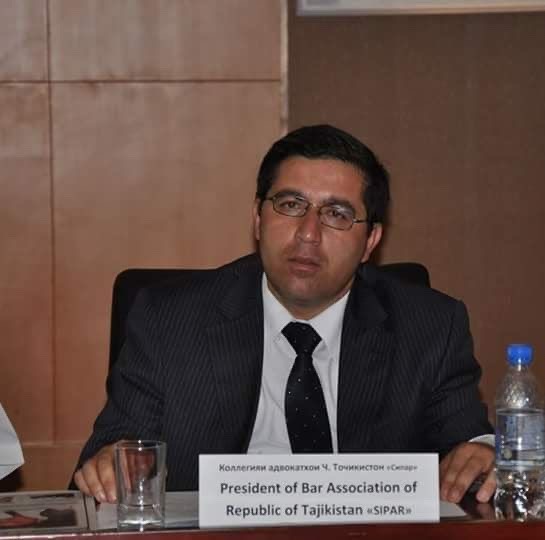
Free Buzurghmer Yorov and All Others Held for Exercising their Human Rights
Tajikistan authorities have wrongfully imprisoned a human rights lawyer for 10 years for exercising his human rights, 12 organizations said today. Buzurgmehr Yorov is serving a 23-year prison sentence because of his work representing political opposition leaders.
Tajikistani authorities should quash Yorov’s conviction and sentence and release him immediately. The authorities should also release all other prisoners, including lawyers, arbitrarily and unjustifiably detained for peacefully exercising their human rights.
Yorov, 54, earned a reputation as one of the most fearless human rights lawyers in Tajikistan by taking on high-profile legal cases, representing individuals prosecuted by the government on politically motivated charges. In early September 2015, Yorov began representing several members of the Islamic Renaissance Party of Tajikistan. The party had been one of the few officially registered opposition parties in the country, but it was labeled a terrorist organization and banned in September 2015.
On September 28, 2015, police arrested Yorov, raided his home and legal office without a warrant, and ultimately charged him with forgery, fraud, “arousing national, racial, local or religious hostility,” and extremism. The charges appear to have been prompted by an interview Yorov gave shortly before his arrest in which he announced that one of his clients had been tortured in pre-trial detention and called for a coalition of lawyers to join him in representing the detained Islamic Renaissance Party members.
Yorov was held in pre-trial detention for eight months, where he was beaten and held in solitary confinement. On October 6, 2016, after a trial riddled with due process violations, he was sentenced to 23 years in prison. Since then, his sentence has twice been shortened under mass amnesties. However, authorities have repeatedly brought new, trumped-up charges against him—most recently in July 2023. The ensuing convictions have extended his sentence and pushed his expected release date to September 2043, by which time he will be 72 years old.
Like Yorov’s first trial, those that followed were rife with violations of fair-trial rights, including prohibiting Yorov from freely communicating with or receiving the assistance of counsel or presenting his own defense.
Yorov has been severely mistreated in prison, including through torture, and held incommunicado. The authorities have restricted visits from his wife and reportedly pressured his family not to advocate on his behalf. In May 2019, the UN Working Group on Arbitrary Detention issued an opinion stating that Tajikistan’s detention and treatment of Yorov violated international law and calling for his immediate release. Nevertheless, he remains in prison.
Yorov’s detention and abuse are indicative of a broader human rights crisis in Tajikistan. Under the decades-long rule of President Emomali Rahmon, the rule of law has been weakened in the country, and the authorities have become increasingly repressive. The decline accelerated further after November 2021, when the authorities initiated a violent campaign to repress protests in the Gorno-Badakhshan Autonomous Region, wiping out independent media and civil society in the region.
Dozens of lawyers, civic activists, journalists, community leaders, and others have been arrested and persecuted for politically motivated reasons in recent years, including journalists Ulfatkhonim Mamadshoeva, Mamadsulton Mavlonazarov, and Ruhshona Khakimova, and human rights lawyer, Manuchehr Kholiknazarov.
The Tajikistani authorities should release Yorov immediately and unconditionally and release all other prisoners jailed on politically motivated charges. The government should abide by its obligations under international law to protect everyone’s free and peaceful exercise of their human rights.
Tajikistan’s international partners should use bilateral and multilateral diplomacy to raise Yorov’s case and insist on his release.
SIGNATORIES:
Araminta
Amnesty International
CIVICUS: World Alliance for Citizen Participation
Civil Rights Defenders
Freedom Now
Helsinki Foundation for Human Rights
Human Rights Watch
International Bar Association’s Human Rights Institute (IBAHRI)
International Commission of Jurists
International Partnership for Human Rights
Lawyers for Lawyers (L4L)
Norwegian Helsinki Committee