


democracy
-
SPAIN: ‘Territory will become the backbone of Spanish politics’
 CIVICUS speaks with Spanish political scientist and political consultant Eva Silván about the recent re-election of Pedro Sánchez as Spanish prime minister at the head of a coalition with left-wing and pro-independence parties, in a country deeply divided by the Catalonia issue.
How did socialist Pedro Sánchez manage to win a new mandate rather than a government that included the far right being formed?
On 28 May 2023, municipal and regional elections were held in Spain. The results showed a political map clearly favourable to the centre-right Popular Party (PP), which received some 750,000 more votes than the Spanish Socialist Workers’ Party (PSOE), from which it snatched almost all local power. The PP regained six of the 10 regional governments that were in the hands of the PSOE, but in five of them – Aragón, Baleares, Cantabria, Comunidad Valenciana and Extremadura – it needed the support of the extreme right-wing party Vox to reach a majority that allowed it to form a government. The PSOE was only able to retain three of the 17 regional governments: Castilla la Mancha, Navarra and the Principality of Asturias.
Faced with this result, the following day socialist Prime Minister Pedro Sánchez made a surprise move, bringing forward general elections, scheduled for the end of the year, to 23 July. This served to curb internal contestation at the loss of territorial power. It was the first time that general elections have been held in July, in the middle of summer. These elections found an exhausted citizenry and political class, and came as Spain started its mandate at the head of the European Union.
The context seemed favourable for the PP, as the results of the May elections seemed to anticipate an epochal shift. In the first weeks polls were indeed favourable to the PP. But its signing of government agreements with Vox brought a reaction of rejection among a very large part of public opinion, which mobilised in fear that the entry of the far right into government would mean a setback for hard-won rights.
The PP also erred by focusing its electoral campaign on Sánchez and his alleged lies and shifts of position. This did not serve to mobilise the electorate and ended up working against the PP when the some of the arguments put forward by its leader, Alberto Núñez Feijóo, were exposed as false in the only election debate he took part in.
Sánchez, for his part, ran a campaign in which he showed leadership, had an extensive media presence, including in outlets that had been hostile to his government, and spearheaded a social media campaign that enabled him to connect with new audiences. This, together with fear of the far right, ended up isolating the PP, which although it took the most votes performed much worse than expected.
Having come first, Feijóo was given the task of forming a government, but he was unable to gather enough support. Vox’s backing did not suffice, and no other party wanted to be part of a government that included the far right.
What will be the costs of the alliances formed by Sánchez to retain government?
The political landscape resulting from the 23 July elections called for agreements. No party received sufficient support for its candidate to be elected prime minister without the backing of other political forces.
Once Feijóo’s attempt to form a coalition government failed, it was the turn of Sánchez, who sought agreements with the nationalist parties in the Basque Country, Catalonia and Galicia.
Throughout his career, Sánchez has shown great flexibility and adaptability: he knows how to read the situation and decide what to do to develop a progressive agenda that allows him to govern. In this case, this included admitting the possibility of an amnesty law for politicians prosecuted or tried for promoting Catalan independence, which during the campaign he denied he would do.
The support gathered by the new government is the clearest manifestation of the fact that, following the break-up of the two-party system and the emergence of a multi-party politics, we have entered a stage of bloc politics characterised by polarisation, with two blocs led by the PP and the PSOE whose identities are defined not so much in terms of the left-right divide as in territorial terms.
According to available data, the PSOE’s alliance with two pro-Catalan independence parties, Esquerra Republicana de Catalunya and Junts per Catalunya, has the majority support of Catalan society, and the same is true in the Basque Country. In fact, the PSOE won the most votes in these two territories in the general elections.
In the case of the Basque Country, the agreements reached between the PSOE and the nationalist forces are based on the transfer within two years of competences provided for in previous agreements, in addition to some longstanding demands such as the transfer of the financial management of social security and the development of an autonomous framework for labour relations.
In Catalonia, the agreements focus on the transfer of the management of commuter trains and an increase in public resources earmarked for Catalonia or a debt write-off, a move that has been strongly rejected by the PP and Vox. And specifically in relation to Junts, the agreement was possible thanks to the PSOE’s promise, already fulfilled, to send an amnesty bill to parliament. In the event that the law is approved and then ratified by the Constitutional Court, it will put an end to the criminal status of all politicians involved in calling a Catalan independence referendum in 2017 and allow the return to Spain of separatist leader Carles Puigdemont, more than five years after he settled in Belgium, evading justice.
How has the public reacted to the agreement?
The amnesty law is, broadly, supported or rejected on the basis of geography. The biggest demonstrations against it have taken place in cities governed by the PP, while elsewhere they have been very small.
As soon as it became known that there was going to be an agreement between PSOE and Junts, demonstrations and violent protests began outside the PSOE’s headquarters. Demonstrations by far-right groups included anti-constitutional symbols and flags and fascist and xenophobic chants. In competing for the leadership of anti-amnesty demonstrations, the PP called for Sunday demonstrations that were more peaceful in tone, but equally firm in their opposition.
According to polling data, a majority of public opinion rejects the amnesty law. None of the government’s arguments in support of the law have public approval. The amnesty divides PSOE voters and unites those of the PP and Vox.
A survey published in October found that 57 per cent of people rejected the amnesty. A more recent poll finds that support is concentrated among voters of the left-wing coalition Sumar and pro-autonomy parties. Territorially, there is majority support only in Catalonia and the Basque Country.
Arguments against the amnesty law range from very simplistic claims, such as that it will ‘break Spain apart’, to legal arguments centred on the privilege it would entail for the accused and the violation of the principle of equality before the law. In contrast, Sánchez’s arguments underline the opportunity to advance coexistence among Spaniards and resolve a problem that has divided Spanish society for the past decade. It is undoubtedly one of Sánchez’s riskiest moves since he became prime minister, both in the public eye and within his party.
What are the main problems that should be tackled by the incoming government?
This will be the period of plurinationality. Territory will become the backbone of Spanish politics.
But there are other important issues. One of them, which also causes fierce debate and has been demanded by the European Commission, is the renewal of the judiciary. The mandate of the Council of the Judiciary, tasked with ensuring judicial independence, expired five years ago, leading to its biggest institutional and reputational crisis since the transition.
The main issues of concern to Spanish society are inflation, access to housing, healthcare and the situation of young people. Spain is among the European countries where it takes the longest time for young people to get jobs and become independent. The new government will have to find ways to improve the productivity of the Spanish economy, promote measures to tackle climate change and deal with a socio-demographic reality affected by a falling birthrate and an ageing population.
The two parties that form the coalition government, PSOE and Sumar, dominate the progressive side of the political spectrum. Their government agreement seeks to advance the policies already promoted in the previous administration, with social measures such as the gradual reduction of the working week to 37.5 hours, the extension of paternity and maternity leave to 20 weeks, an increase in the public housing stock for affordable rentals and the commitment to continue raising the minimum wage. They also push for measures to respond to climate change, such as reducing domestic flights on routes with rail alternatives that take under two and a half hours and the production of cheap and clean renewable energy. It remains to be seen whether these measures receive the support of the rest of the parties that allowed the formation of this government, particularly those on the centre-right axis such as the Basque Nationalist Party and Junts.
Civic space in Spain is rated ‘narrowed’ by theCIVICUS Monitor.
Get in touch with Eva Silván through herwebsite and follow@silvan_miracle on Twitter.
-
SPAIN: ‘The LGBTQI+ community fears both legal and social backlash’

 CIVICUS speaks about the situation of LGBTQI+ people in the context of Spain’s election withEmilio de Benito, spokesperson for Health and Seniors of the LGTB+ Collective of Madrid (COGAM).
Founded in 1986, COGAM is a civil society organisation (CSO) working for LGBTQI+ equality. It is one of the founding organisations of the Spanish State Federation of Lesbians, Gays, Transsexuals and Bisexuals and one of the promoters of equal marriage, legalised in 2005.
What recent changes have occurred in the situation of LGBTQI+ people in Spain?
Following the approval this March of the Trans Law, the situation in Spain is, at least on paper, one of the best in the world. The Trans Law allows free choice of registered sex based solely on each person’s will, prohibits conversion therapies and imposes measures for diversity in education and employment.
We have a problem, however, namely the rise of hate speech propagated by the far right, represented by Vox, and even by the more traditional conservative party, the Popular Party (PP). This election campaign has been plagued by expressions of homophobia and transphobia. We have seen politicians refuse to address trans people in a manner consistent with their gender identity and threaten to abolish laws that have enshrined rights, such as the Equal Marriage Law and the Trans Law. This has reflected in an increase in harassment of LGBTQI+ people both in the classroom and on the streets. According to official data, last year hate crimes in Spain increased by 45 per cent, although real figures may be much higher, because people do not always report these crimes. The LGBTQI+ community fears both legal and social backlash.
Why did LGBTQI+ rights become a campaign issue?
Over the past year, there has been much debate about the Trans Law, which was only passed in February. That is why several political parties have the issue on their agenda. This law is possibly the most shocking for the far right and it affects very few people, so even if they don’t try to repeal it, they will certainly try to amend it. In other words, in the best-case scenario, a medical diagnosis pathologising transsexuality will again be required and minors will not receive treatment or will face many obstacles.
As for the Equal Marriage Law, I doubt that the PP will be able to repeal it, although Vox calls for it. Instead, the party is more likely to seek to put obstacles in the way of adoption or registration of a partner’s child.
Unfortunately, the Trans Law has also been very strongly rejected by a segment of left-wing feminism, which has given an additional advantage to the right. I believe, however, that this is a philosophical rather than a legal debate. We can debate as much as we like about what makes us identify as male or female, but we must still recognise the right of each person to express their identity.
Did the LGBTQI+ movement align with any electoral choice?
We do not align ourselves with any political party, but we do point out that there are parties, such as Vox, with messages and proposals that threaten our rights. This has not been without controversy. The State Federation of Lesbians, Gays, Transsexuals and Bisexuals of Spain has mounted a campaign calling on people not to vote for the right, but some have expressed disagreement with this because in principle one can be right-wing in economic matters without being homophobic. But in our case, the two things overlap.
Pedro Zerolo, a very important gay activist who was at the forefront of the struggle for equal marriage, used to say that rights must not only be won and enjoyed, but also defended. Clearly we are now in the phase where we must defend our victories.
So all LGBTQI+ collectives have been involved in the election campaign. We have done so during Madrid Pride, which is one of the most important in the world, because of its duration – it lasts four days – and the number of people it attracts, including many non-LGBTQI+ people, and also because of the many cultural and social activities it includes. We have also participated in debates with political parties: COGAM, for instance, held a debate with representatives of four parties. Not all of them were left-wing parties, although these are the ones who always want to meet with us, listen to us and learn our opinion. But we did not invite the far right, because there is no point in us giving them a voice.
What are the possible post-election scenarios?
The PP has opposed all laws that recognised rights for LGBTQI+ people as well as women’s rights, even taking them to the Constitutional Court. But when the Constitutional Court has concluded that these laws do not infringe any constitutional norms, PP governments have not repealed them. But they will likely attack the Trans Law. One of the great achievements of this law is that it listens to minors. When minors know perfectly well who they are and want to be, it makes no sense to repress them until they are of age. It’s the same with abortion: in the past, minors under 16 were required to have their parents’ permission, but then this requirement was removed because there are cases, such as incest, where it was highly problematic. I think they are going to try to go back on these rights as far as minors are concerned.
They could also go back to requiring trans women to undergo two years of diagnostic psychological treatment. Transgender men have been erased from the debate altogether, as if they don’t exist. There is too much concern about what might happen if a trans woman enters a women’s locker room, but no one is concerned about what might happen to a trans man in the gym.
In the field of education, very serious setbacks are likely to occur – for instance, we could lose the space that allows us to explain the reality of LGBTQI+ people in schools. For an LGBTQI+ adolescent or pre-adolescent it is essential that someone tells them that what is happening to them is not the usual thing, but it is not abnormal either, and that they can indeed be happy. But they are trying to erase this message.
Even structures such as equality departments, the local and regional government’s equality bodies, are in many places disappearing or being diluted, renamed ‘family agencies’ when taken over by the far right. Obviously, when LGBTQI+ CSOs need state support for our campaigns, we will receive a very weak response, if any at all.
The LGBTQI+ movement has pushed for important legal changes. How have you worked to build public support for these?
Most LGBTQI+ organisations in Spain are political actors and not just welfare organisations. We advocate with parties, lawmakers and public officials. But in my opinion, our main work is about creating visibility.
The Pride events that take place in Spain, particularly those in Barcelona, Madrid and Valencia, give us the kind of visibility that brings other people closer to us. There is now a trans senator. We campaign in the media. We use social media intensively because it allows us to do two things: reach out to LGBTQI+ teenagers and pre-teens and project a proactive and positive image to society as a whole.
But we are aware that visibility also exposes us. Every year after Pride events there are cases of guys returning from Chueca, the neighbourhood where Madrid Pride events are concentrated, to their neighbourhoods on the outskirts and being beaten up as soon as they come out of the metro. It happens because they come back from the city centre feeling like the kings of the world. They have been happy, integrated, free. In that euphoria, they don’t realise that they have entered a dangerous zone, where hatred messaging has penetrated deep. And these days there are fewer qualms about insulting LGBTQI+ people. A few years ago, people wouldn’t do it or would do so in a whisper, but now they are emboldened so they are loud, as if they were showing off.
What links do you maintain with LGBTQI+ organisations internationally?
At the national level, Spanish CSOs are organised in the State Federation, which maintains relations with ILGA, the International LGBTI Association. Several Spanish organisations are also very focused on Latin America and other Spanish-speaking countries such as Equatorial Guinea. In this former Spanish colony in Africa, for instance, they have just launched a campaign.
Another form of collaboration involves working with LGBTQI+ migrants from Latin America. The main foreign population groups in Spain are from Romania, Morocco and then Venezuela, Colombia and Ecuador. We are a place of refuge. It is culturally easy, and also many have a Spanish background, which makes it easier for them to stay and can even give them access to citizenship. We play a clear role in this. As our websites are in Spanish, they are very easily consulted by Latin American organisations and our messages reach them without any barrier.
However, as the situation stands, it is more about us campaigning to support others, than about others supporting us. Within Europe, for instance, we are among the countries that are doing relatively well, so it seems logical that the focus should be on countries like Hungary and Poland. But in any case, working at the European level is the most effective way to resist the conservative backlash, so that countries that break laws or withdraw rights come under pressure from the European Union.
How do you see the future?
Right now, at this crossroads, I see it with fear. I was a teenager at the time of Franco’s dictatorship and I lived through it in fear. Now I fear the idea that we might be headed back to that.
In recent decades many people have accepted us, but they have not all done it for the same reasons. Many people have done so because they did not dare to express their rejection, because it was frowned upon. But now the part of the population in which rejection is well regarded is growing.
The other day in a public debate a trans girl who is a member of a party was called ‘chronically ill’. Members of regional parliaments insist on addressing trans women lawmakers in masculine terms. Until recently, those who thought these things kept quiet because they were frowned upon and feared social rejection. But now there is a public emboldened to express their hatred. And this will continue regardless of the outcome of the election, because the groups that promote hatred have a public presence that transcends parliament. So I fear for the fate of egalitarian laws, but I fear the streets even more.
Civic space in Spain is rated ‘narrowed’ by theCIVICUS Monitor.
Get in touch with COGAM through itswebsite or itsFacebook andInstagram pages, and follow@COGAM and@emiliodebenito on Twitter.
-
SRI LANKA: ‘By peacefully protesting, we hope to protect our democracy’
 CIVICUS speaks about protests in Sri Lanka in response to the country’s deepening economic crisis and civil society’s role in supporting protesters with human rights lawyer Bhavani Fonseka of the Centre for Policy Alternatives (CPA).
CPA is a Sri Lankan civil society organisation (CSO) and leading public policy research think tank. It advocates for policy alternatives of non-violent conflict resolution and democratic governance to facilitate post-war recovery in Sri Lanka.
How significant are the current economic protests in Sri Lanka? What are the main demands?
The protests are spontaneous and come as a direct result of the current economic crisis, which is imposing a heavy burden on the people. They have been suffering from severe hardships due to a lack of essential items, including medicines, long power cuts and skyrocketing prices. Such a catastrophic situation manifested in several citizens dying while waiting in fuel queues. In response, people have taken to the streets in peaceful protests across the country for more than a month.
It is important to state that the widespread protests are not linked to any political party. The opposition held their own protests weeks ago and continue to protest currently. But the ongoing protests that are catching global media attention are largely driven by angry citizens who oppose the involvement of politicians and members of parliament in their peaceful protests. The reason behind this is that there is frustration with existing political parties, including the opposition; people denounce them for not doing enough as representatives of the people.
In line with that, the thousands of people who have continued to protest in recent weeks demand a radical change. They call for the President and government to step down, a peaceful transition of power, and for structural reforms including the abolishing of the executive presidency. There is also a loud call to address immediate needs such as shortages of essential items, livelihoods and rising cost of living, among the many other calls from the protesters.
The impact of the peaceful protests was evident when there were mass-scale resignations from the cabinet on 3 April. But the call for the resignation of the President and Prime Minister has yet to materialise. As the protests expanded and became extremely vocal, people sent a clear message to the regime that a real change is needed. Protesters insist on the resignation of the president and the prime minister. They chant on the streets ‘Go Home Rajapaksas’ and ‘Go Home Gota’ – referring to the president – and post on social media under the hashtag #GoHomeGota2022.
Sri Lanka has not seen this scale of protests in recent years – none that I can remember. Even the older generations are saying that they have not seen a similar movement. As most of these protests are peaceful, they are making a difference by raising the profile of our domestic issues across the region and internationally. As a result, there is a recognition that the situation is quite bad in Sir Lanka.
What do you think the resignation of the cabinet means for the prospect of political change? What role is the army playing?
The country is also seeing a political crisis with the mass resignation of the cabinet, which is extremely significant. It shows there is an unstable government ruling the country under mounting pressure from both protesters and the economic crisis.
A few weeks ago, the country was ruled by a powerful family, the Rajapaksas, but now there are only two members of this family who remain in power, the president and the prime minister. We are going through a very unprecedented time that raises many questions about the future of Sri Lanka, including the question of whether this government can continue in the way of ruling it has been doing it so far.
Regarding the possible drift towards militarisation, the military institution is a powerful force, and its influence has increased sharply in recent post-war years with former military officials holding various positions in government with an active role in governance. In that sense, the drift toward militarisation is a great concern for the Sri Lankan people as the political vacuum may be an opportunity for military rule.
What is the scale of arrests among protesters?How have CSOs, including your organisation respond?
The authorities responded to the protests with arrests even though most of these protests were peaceful. For instance, security forces arrested around 50 people near the president’s residence when a protest became violent. But according to reports most of those arrested weren’t involved in that incident; we found out later that the violence was orchestrated by certain groups. There were random arrests of people who are now before the court.
Also, when the state of emergency was declared, there were several arrests of people for breaking the curfew.
From our side, CPA and other CSOs have issued several public statements commenting on the situation and reminding of the rights guaranteed in our constitution. Personally, I have been protesting for a month now and my colleagues have joined the peaceful protests. We are protesting because it is a democratic right. In this regard, civil society and citizens have taken a stand on the need to uphold constitutional democracy because we are now confronted by an unprecedented political and economic crisis in Sri Lanka. By peacefully protesting, we hope to protect our democratic rights and our democracy.
Overall, the mobilisation of lawyers and of civil society to offer solidarity and support are quite high. Over 500 lawyers turned up to support those who were arrested on 31 March, and many other instances have seen lawyers appearing to protect the rights of citizens.
How have protests mobilised despite the arrests and social media shut down?
I do not think that arrests of the protesters prevented others from joining protests. Not at all. In fact, I think the violence unleashed on peaceful protests coupled with the economic crisis prompted more to join the protests. Despite the curfew on the first weekend of April, there were thousands who came to the streets that Sunday to protest peacefully. This was a large-scale civil disobedience from the citizens, unprecedented in Sri Lanka because it is the first time, we have seen such large numbers of people coming to peacefully protest during a curfew.
Regarding the social media shutdown, it is now being challenged in court, and we will see how it goes. Sri Lanka’s people are highly creative and resilient, and many used virtual private networks (VPNs) to continue to use social media to communicate and protest against the government. Every attempt used by this government to stop people from protesting, from speaking out, has failed.
Generally, I believe that it is amazing how people are stepping out, creating ways of protesting despite the challenges and hardships.
Civic space in Sri Lanka is rated ‘obstructed’ by theCIVICUS Monitor.
Get in touch with the Centre for Policy Alternatives (CPA) through itswebsite orFacebook page and follow@CPASL on Twitter. -
SRI LANKA: ‘The ongoing protests have put the government on the defensive’
 CIVICUS speaks about protests in response to deepening economic crisis in Sri Lanka with Ruki Fernando, a human rights activist, writer and consultant to the Centre for Society and Religion (CSR) in Colombo.
How significant are the current protests in Sri Lanka?
This protest movement is the biggest and most diverse one I have ever experienced in Sri Lanka. The protests are largely driven by angry, frustrated, disappointed citizens. Mainly the protests have been triggered by the ramification of the economic crisis that reached its peak with shortages of fuel, electricity, gas and medicines among many essential items that either disappeared from the market or had their prices hiked.
Most protests have taken place around Colombo, the capital, and its suburbs. Still, there have been protests all over the county. A large continuous day and night protest has been happening at the Galle Face Green in Colombo adjoining the Presidential Secretariat and similar initiatives have appeared in other districts. In addition to the streets, social media has been an important battleground.
Protesters are also now demanding the truth about people who disappeared during Sri Lanka’s civil war and even before. Their demands have expanded beyond the severe financial crisis to call for those in power to be held accountable for war crimes, crimes against humanity, disappearances and killings, disappearances and assaults on journalists.
The protesters are demanding long-term legal and institutional changes to the current governance system that must start with the resignation of the Sri Lankan president Gotabaya Rajapaksa and the Rajapaksa family, the ruling family. Others call for the abolition of the 20th amendment to the constitution, which expanded the president’s executive powers.
Protest slogans calling on the president to ‘Go Home’ are now evolving into ‘Go to Jail’ and ‘Return Stolen Money’.
Do you think the protests will make a difference?
These protests have put the government on the defensive. As a result, the cabinet resigned and the government lost its majority in parliament when more than 40 lawmakers abandoned the ruling coalition to become independent members of parliament. These mass resignations are quite significant, as it proves that small groups can influence the political system. However, I believe we are still long way from any real change and meeting all people’s aspirations, especially for poor people and marginalised groups, including ethnic and religious minorities.
Repressive measures did not last in the face of the ongoing protests. The authorities had to release arrested protesters and revoke the declaration of emergency, the curfew was not extended, and the social media shutdown was withdrawn.
I believe that when President Rajapaksa revoked the declaration of a state of emergency on 5 April, it was because he realised, he was not able to sustain the necessary parliamentary majority that was needed for its continuation.
Most importantly, these protests, which are largely being led by young and students, represent a political awakening of various groups of our nation. Many women, older people, LGBTQI+ people, lawyers, religious clergy, artists and well-known people such as former cricketers have been part of the protests. They have enriched the spirit of defiance, resistance, courage and creativity unleashed by youth, on an unprecedented scale.
How has civil society responded to the arrest of protesters?
More than 50 people, including journalists and bystanders were arrested after the protest had marched on the evening of 31 March to the president’s residence. Other arrests since have led not only to fear, but also outrage. As a result, the protesters have received much public sympathy and support from lawyers, journalists and the public. Some civil society groups support and stand with the protesters, but most significant roles in the protest movement is by ordinary people, especially young people.
Do you think repression will dissuade people from protesting in bigger numbers?
We cannot deny that the proclamation of a state of emergency, curfew and the shutdown imposed on some social media platforms led to fears. At the same time, the curfew was challenged by tens of thousands of protesters who came to the streets to protest despite the curfew. Overall, these repressive measures galvanised more people to join, organise and support protests.
Aside from that, there is fear and uncertainty about what the future may hold for our country. There are many concerns about a potential military–police crackdown, especially after the shooting at protesters in Rambukkana that had led to at least one death and several others injured. There have been other incidents of concern, such as the presence of police trucks at the key protest site, special training for the military at army camp in Ganemulla and police reporting about the main protest site to courts. There are also worries about sustaining the protests and a lack of clear political alternatives. But it has been an inspiring, heartening moment to see so many people, especially young people, standing up, creatively and courageously. As I said earlier, this is a moment of political awakening for many.
How can the international community best support Sri Lankan civil society?
They must show solidarity for our struggles for justice, including economic justice, ethnic justice, gender justice and environmental justice. In that sense, the international community must defend and protect protesters and those criticising, questioning and challenging the government.
On the economic level, international financial institutions, foreign governments and multinational corporations must not engage in exploitative and opportunistic practices in Sri Lanka. They should refrain from going ahead with investments that will negatively affect economic justice, economic democratisation and labour rights.
Civic space in Sir Lanka is rated ‘obstructed’ by theCIVICUS Monitor.
Get in touch with Ruki Fernando through hiswebsite and follow@rukitweets on Twitter. -
SRI LANKA: ‘We’ve held Pride celebrations since 2004; we’re very proud of what we have achieved’
 CIVICUS speaks about the status of LGBTQI+ rights and progress being made towards decriminalising homosexuality in Sri Lanka with Rosanna Flamer-Caldera, founder and Executive Director of EQUAL GROUND.
Founded in 2004, EQUAL GROUND is the oldest LGBTQI+ civil society organisation (CSO) in Sri Lanka. It fights for the recognition and realisation of civil, political, economic, social and cultural rights and focuses on empowerment, wellbeing and access to health, education, housing and legal protection services for Sri Lanka’s LGBTQI+ people.
How has the situation of LGBTQI+ rights in Sri Lanka recently changed?
We still have laws inherited from British colonial times that date back to 1883. These are articles 365 and 365A of the Penal Code, which criminalise ‘carnal intercourse against the order of nature’ and ‘acts of gross indecency’. Both of these target LGBTQI+ people.
Sri Lanka is among over 40 former British colonies that also criminalise same-sex sexual relationships between women. In 2018, I filed a complaint with the United Nations (UN) Committee for the Convention on the Elimination of All Forms of Discrimination against Women. In its decision, finally taken in February 2022, the Committee requested that the Sri Lankan government decriminalise homosexuality in general and between consenting same-sex women specifically.
Soon after, in August 2022, a private member’s bill to decriminalise homosexuality was put forward in parliament. In February 2023, in response to Sri Lanka’s Universal Periodic Review at the UN Human Rights Council, where most LGBTQI+ organisations requested the repeal this legislation, the Sri Lankan Minister of Foreign Affairs said that Sri Lanka would follow this recommendation, while making clear it would not legalise same-sex marriage. We understand that’s a fight for another day.
In the meantime, the bill reached the attorney general of Sri Lanka, who released an order that both articles of the Penal Code were to be repealed rather than amended, which made us very happy. But as soon as the bill started being discussed in parliament, a petition was filed claiming it was unconstitutional. There were more than 12 intervening petitions filed to counter this petition, and in response the Supreme Court issued a ground-breaking decision stating that the bill amending the Penal Code to decriminalise consensual same-sex behaviour does not violate the Constitution of Sri Lanka. The case specifically touched upon the concepts of human dignity and privacy underlying equal rights for all, because the preamble of our constitution recognises the value of dignity. The Supreme Court of India used a similar argument in a 2018 case on the right to equality, saying that ‘life without dignity is like a sound that is not heard. Dignity speaks, it has its sound, it is natural and human’.
Now, the bill is up for a parliamentary vote, and all it needs to pass is a simple majority. While the government has said it will decriminalise homosexuality, there are still homophobes in the government. But we hope that the vote will turn out positively.
What role has civil society played in the case?
EQUAL GROUND was among the organisations that submitted petitions in the case that was filed with the Supreme Court. Not only LGBTQI+ organisations, but many other CSOs and individuals also took part in the process. Petitions were also filed by a former UN Special Rapporteur on violence against women and by professors, lawyers, activists and people from all walks of life. The was a lot of positive media coverage, on top of civil society work to create awareness and take to the media to promote the issue.
Of course, there has also been backlash, with some members of parliament attacking the bill and others reconsidering support following a recent Pride march that many thought was not appropriate to Sri Lankan culture due to partial nudity and problematic messaging.
How would you describe relations between Sri Lanka’s LGBTQI+ people and state authorities?
The police have played a huge role in subjugating LGBTQI+ people in Sri Lanka. Not coincidentally, the first event at Colombo Pride 2023 will be devoted to discussing the more than 200 human rights violations against LGBTQI+ people that have been recently recorded in Sri Lanka. In most cases the perpetrator has been linked to the police.
In 2021, EQUAL GROUND filed a case against the police for hiring a motivational speaker who propagated among officers a narrative connecting child abuse and homosexuality. We won the case and the police have been forced to distribute instructions to all police stations alerting officers to be very mindful of their treatment of LGBTQI+ people, particularly transgender people. This has made it clear that asking for sexual favours, blackmailing LGBTQI+ people and stopping them on the streets with no probable cause is against the law.
With the aim of protecting LGBTQI+ people from police brutality, we reopened the case, and the police have recently promised to the court that they will change the terminology to make it inclusive of all LGBTQI+ people. Our strategy was to engage only three LGBTQI+ people along with several heterosexual people, to show the court this was an issue for everyone and not just LGBTQI+ people. Doing it with straight support also showed that not everyone shared anti-LGBTQI+ prejudice. The fact that we filed these cases and got some form of commitment from the authorities was ground-breaking.
Our upcoming Pride march has been sanctioned by the police. We sought their permission, and we’re proud to say that we have been the first organisation to officially get it. Right now, we have a very good Inspector General of Police, he’s easy to talk to, but there’re rumours he will be replaced in three months. I would say there are mixed elements in the current relations between LGBTQI+ people and the authorities.
How does EQUAL GROUND advocate for LGBTQI+ rights?
Our fight, even after decriminalisation is achieved, will continue to aim to integrate LGBTQI+ people into our society. This is the cause we have been working on for the last 19 years.
We’ve held sensitising and educational programmes around the country. We’ve run a lot of social media and mainstream media campaigns, produced research backing our claims regarding the number of people who identify as LGBTQI+ in Sri Lanka and the kind of challenges they face, and have created self-help books for families and allies of LGBTQI+ people. We have an ongoing campaign that has been running for over a year called ‘Live with Love‘, targeted at people who are not haters but are rather neutral or in-between, and could be swayed either way.
All that’s happened over the last 19 years has given rise to many other LGBTQI+ organisations in Sri Lanka that have become involved in advocacy and the struggle for non-discrimination and decriminalisation. When we established our organisation back in 2004, we were the only ones fighting for all LGBTQI+ people, and we remained alone in this journey for a very long time. Only after 2015 did other organisations and people start coming out and getting involved. Until then we lived under a dictatorship and it was difficult to be open, but we have held Pride celebrations since 2004. Our Pride celebrations are turning 19 this year, and so is EQUAL GROUND. We’re very proud of what we have achieved so far.
What forms of international support are Sri Lanka’sLGBTQI+ organisations receiving, and what further support would you need?
We are quite underfunded due to inflation and the ever-rising cost of living, so we aren’t sure that we can retain good staff considering the scale of wages we’re able to pay. We’ve also lost funding due to the fluctuating exchange rate. The state of the economy is one of our major issues, so funding is always welcome.
EQUAL GROUND has been constantly involved in various networks internationally that have opened up avenues of funding and learning, including the International Lesbian, Gay, Bisexual, Trans and Intersex Association (ILGA) and ILGA Asia, Innovation for Change (I4C), and the Commonwealth Equality Network, a network of Commonwealth countries and their LGBTQI+ organisations.
Civic space in Sri Lanka is rated ‘obstructed’ by theCIVICUS Monitor.
Get in touch with EQUAL GROUND through itswebsite or itsFacebook page, and follow@EQUALGROUND_ on Twitter.
-
SUDAN: ‘The government and the international community must engage more with civil society’
 CIVICUS speaks about the prospects for democracy and civilian rule in Sudan with Abdel-Rahman El Mahdi, founder and director of the Sudanese Development Initiative (SUDIA). SUDIA is a civil society organisation (CSO) that works toward stability, development and good governance in Sudan. With 25 years of experience in international development, Abdel-Rahman specialises in organisational management and programming, with a thematic expertise extending to peacebuilding and human security, and civic engagement and democratic transformation.
What was civil society’s reaction when Prime Minister Abdalla Hamdok returned to power in November?
After being ousted by a coup in October 2021, Prime Minister Hamdok managed to return to power in November as a result of a deal he reached with the military, which was signed on 21 November 2021. Reactions to this varied, because Sudanese civil society is very diverse.
Since the December 2018 revolution, Sudanese civil society is in three distinct segments. The first contains what can be called revolutionary civil society movements and groups such as neighbourhood resistance committees, the Sudan Professional Association and other alliances and networks that sprang up during or in the aftermath of the revolution. Second, there is the segment that includes formal state-regulated CSOs, which are usually registered under various laws and have a licence to operate. Third, there are informal or traditional forms of civil society that existed from before independence, including the traditional or native administrative system and tribal leaders, and faith-based groups such as various Sufi groups.
In terms of the size of their constituencies and their representation of the public, the biggest segment is that of informal and traditional forms of civil society, followed by revolutionary civil society movements and groups, with formal and state-regulated CSOs being the smallest.
Each part of civil society has had a different reaction to the Hamdok’s agreement with the military. On one end of the spectrum, traditional or native administrative structures and tribal leaders welcomed the agreement and were even represented at the signing ceremony. At the other, revolutionary civil society movements and groups completely opposed the agreement, which they saw as treason to the values and aspirations of the revolution. As for the third group – that of formal and state-regulated CSOs – reactions were mixed, with a majority seeing the agreement as the most viable way forward and the best possible outcome given the situation.
Divisions and polarisation regarding the issue of military versus civilian rule and governance in the transition period are evident among both citizens and their representative institutions – including civil society and political parties – as well as among democracy movements in Sudan.
How significant is the recent resignation of Prime Minister Hamdok? Has anything changed as a result?
Prime Minister Hamdok’s resignation in early January 2022 is a significant development in the trajectory of Sudan’s transition. Hamdok was the only candidate viewed as acceptable by all the main parties that have shaped the transitional period over the past two years, namely the military, the Forces of Freedom and Change - a political coalition made up of civilian, political and armed groups and signatories to the constitutional declaration of 2019 -, revolutionary groups and the international community. His departure has only complicated the political crisis, because now agreement needs to be reached not just on how to proceed with the governance of the transitional period moving forward, but also on who will lead and represent the civilian element in future governance arrangements – and someone needs to be identified who might be acceptable to all parties involved.
Representatives of the international community, the European Union and the Troika (Norway, the UK and the USA) issued a statement on 4 January 2022 in which they warned against any unilateral move by the military to appoint a new prime minister and called for a Sudanese-led and all-inclusive process to address this and other transitional issues. Meanwhile the situation on the ground continues to worsen, with protests in the capital, Khartoum, and in other cities continuing unabated.
How has civil society organised since the coup?
Organising and responses to the military takeover of 25 October differ from one kind of civil society group to the other. Revolutionary civil society movements and groups, along with some political parties, have been organising mass protests in Khartoum and other cities and states to express their rejection of the 21 November political agreement and call for a civilian leadership for the transitional period.
Beyond welcoming the agreement and military takeover, traditional native administrative structures and tribal leaders have thus far been absent from the scene, taking no visible actions or positions. Meanwhile, formal, state-regulated CSOs have been slow to mobilise a coordinated response but are gravitating towards facilitating dialogue between stakeholders and are beginning to take concrete actions towards that end.
What factors led to the coup and what needs to happen for Sudan to get on the path to democracy?
Several factors led to the coup and military takeover on 25 October 2021, but the most important in my opinion was the lack of a robust dispute resolution mechanism that should have been agreed to and put in place by the key parties leading the transitional period. Such a mechanism would have helped resolve differences among civilian elements and between the civilian and military elements of the transition.
The transitional constitutional decree was a rushed fix to a complex and rapidly deteriorating situation and has many shortcomings, such as vague language allowing for different interpretations. The political milestones and issues to be tackled during the transitional period – including elections, constitution-making processes and to a great extent security sector reform and transitional justice – can be extremely divisive and are likely to be sharply contested by the key parties leading the transition.
To overcome these potentially divisive issues and improve the chances of a successful transition to a democratic, peaceful and just Sudan, it will require that such a dispute resolution mechanism is established in any future arrangement put in place to govern the remaining period of the transition.
What role are international institutions playing, and what should they be doing?
The role of international institutions, including the United Nations (UN) and African regional institutions, has been one of damage control rather than damage prevention. The United Nations Integrated Transition Assistance Mission in Sudan (UNITAMS) was deployed to Sudan in 2020 but throughout the months prior to the coup and the escalating tensions and differences between the parties leading the transitional period it remained totally absent. Its mediation role only materialised at a later stage, following the unfortunate events of 25 October and after the axe had already fallen, so to speak.
Regional institutions such as the African Union and the Arab League have played a marginal role, with the former only issuing statements threatening suspension of Sudan’s membership, and the latter sending a delegation to help with negotiations in the wake of the coup.
More recently, on 8 January 2022, UNITAMS issued a statement announcing it was ‘formally launching a UN-facilitated intra-Sudanese political process which is aimed at supporting Sudanese stakeholders in agreeing on a way out of the current political crisis and agree on a sustainable path forward towards democracy and peace’.
While this step by UNITAMS is to be applauded, it is important for UNITAMS as well as the international community supporting UNITAMS to consider carefully the details of the process. Rather than taking a head-on approach or focusing on a single objective of just simply resolving the current political crisis, the process should include embedded elements that ensure ownership and transparency and help build visions for common ground amongst the stakeholders involved, for the transitional period and beyond.
The process should also ensure the elaboration of a dispute resolution mechanism for when differences arise. UNITAMS will have only one shot at this and if it fails, it will lose credibility and the continued presence of the mission in Sudan will come into question.
Moreover, beyond the immediate challenge of surpassing the immediate political crisis, the UN and other international institutions need to step up their act and stay one step ahead of the transition game in Sudan. Transitions in countries such as Sudan, which is emerging from conflict and years of authoritarian rule, require greater agility, heightened levels of coordination and collaboration and more strategic responses on the part of the UN system and international institutions more generally. To achieve this, they need the help of Sudanese civil society, so they will also need to adopt a more structured and strategic approach in engaging with them, instead of the current ad hoc and largely symbolic form of engagement.
What are the main challenges Sudanese civil society faces, and what support does civil society need?
Three of the top-most challenges facing Sudanese CSOs are, in order of priority, the restrictive and disabling environment in which they operate, their limited financial viability and access to funding, and their limited organisational capacity. These are interconnected and have a knock-on effect on each other. They have thus far prevented civil society from playing the promising role that is expected of it in the context of the transition.
The 30-plus years of authoritarian rule in Sudan have had a devastating effect on the development of civil society and it will take years to reverse it. Both civil society and those investing in it need to factor this into their expectations and aspirations and adopt both short-term and long-term approaches to improving civil society’s contributions to the calls of the revolution: freedom, peace and justice.
Once the current political crisis is overcome and the path to the democratic transition is resumed, there must be greater investment in and commitment to civil society on the part of both the government and the international community. Support will be needed for efforts to improve civic space and create a more enabling environment for civil society. Support should also be geared towards facilitating dialogue across the various groups that make up the non-political civic scape in Sudan and strengthening their ability to act and speak as one on critical national issues and future challenges.
Civic space in Sudan is rated ‘repressed’ by theCIVICUS Monitor.
Get in touch with SUDIA through itswebsite or itsFacebook orLinkedIn pages, and follow@FollowSUDIA on Twitter. -
SUDAN: ‘The only way out of this mess is through civilian rule’
 CIVICUS speaks about thewar in Sudan and its repercussions for women and civil society with Reem Abbas, a Sudanese feminist activist, writer and fellow at the Tahrir Institute for Middle East Policy (TIMEP).
Founded in 2013, TIMEP is a civil society organisation that works to centre advocates and experts from and in the Middle East and North Africa in policy discourse to foster more fair and democratic societies.
What’s the current humanitarian situation in Sudan?
Active conflict persists in around 60 per cent of Sudan’s territory. The continuous fighting entails targeting of civilians and mass displacement. In some states, much of the civilian infrastructure, including hospitals, markets, schools and universities, has been damaged. In Khartoum and West Darfur states, about 70 per cent of hospitals have been damaged or partially destroyed.
Civilians and civil society activists are unsafe. The situation greatly restricts people’s freedom of movement, their ability to sustain a livelihood and their capacity to express their opinions freely. There are pockets of relative security in Eastern and Northern Sudan, but even in areas deemed secure displacement persists and schools remain closed because internally displaced people are living in them and other public buildings.
Many livelihoods have totally collapsed, leaving people increasingly dependent on aid. We are already witnessing cases of famine, particularly affecting children, resulting in deaths.
How has the conflict impacted on women and girls?
Women have always been targeted in conflicts in Sudan. Political violence, rife in Sudan given its volatile political history, has also often taken aim at women. There’s rarely any accountability for sexual and gender-based violence. The Rapid Support Forces (RSF) – the militias that are fighting against the army – are abducting women and selling them as sexual slaves in markets or holding them captive for extended periods. Families are left in distress, unsure of the whereabouts of their daughters, and are sometimes embezzled for money.
This is a war on women. Part of it stems from structural factors that place women in subordinate positions, but there’s also a punitive element directed at women for their pivotal role in the 2019 revolution that overthrew dictator Omar al-Bashir. During the revolution, women were out there, highly visible on the frontlines, and now it feels like they’re being punished for it.
The targeting of women is tearing the social fabric apart. As public spaces become unsafe for women, fewer women are participating in public life, including in economic activities and activism. This will have long-term consequences.
What roles is civil society playing in this context, and what challenges does it face?
It’s important to recognise that civil society in Sudan isn’t a monolithic entity, but rather a complex mix of different layers. Some were heavily involved during the transitional period that followed the revolution, getting deeply integrated with government structures at the time. Then there are women’s groups, each with their own focus and agenda. Alongside them, there are more formal organisations such as non-governmental organisations and trade unions. And let’s not overlook the revolutionary elements, such as the resistance committees and emergency responserooms, decentralised and horizontal structures working to shelter displaced people, support hospitals and secure food and water supplies.
The more formal parts of civil society are currently heavily involved in politics, while its revolutionary segments are deeply engaged in grassroots humanitarian efforts. They’re essentially functioning as local governments in areas where official governance structures are absent.
Despite its crucial role, civil society faces numerous challenges. The organic growth of grassroots movements is stunted by conflict and dictatorship. The polarising effects of war have led to divisions along political, ethnic and regional lines, further fragmenting civil society. Activists are increasingly targeted by the RSF or the army, threatening their ability to operate.
In an environment where conformity to mainstream opinions is increasingly enforced, it becomes increasingly difficult to maintain dissenting voices. This situation underscores the urgent need to safeguard the diversity and autonomy of civil society in Sudan.
However, attention and funding often gravitate towards already well-funded organisations, leaving grassroots initiatives to rely solely on community support. While funding alone doesn’t create a functional organisation, it’s important for organisations and groups to grow in an organic way and be able to garner support from the community.
How is civil society advocating for peace and democracy?
Right now, the conversation is all about security and getting things back to normal. People are doubting whether we can even think about democracy after all this chaos. The situation’s tough, with militarisation and conflict everywhere. But the only way out of this mess is through civilian rule. We need to figure out how to link the peace process to a long-term political solution that puts us back on track for democracy.
Unfortunately, the focus of the political elite appears to be more on preserving its positions rather than addressing urgent issues. There are concerns that the largest political coalition has developed close ties with the militia, causing unease among those involved in the revolution. Without a bigger political group that really listens to people and leads responsibly, we’re going to be stuck with military rule for ages. Right now, it should be all about finding common ground and putting the focus on the people who’ve suffered most from this war – not about politicians trying to claw back power or siding with the military.
There’s a lot of talk about how the transitional government messed up and led to the coup and the war. People are sceptical about civilian rule and whether it can fix things. It’s easier to sell the idea of a military-run government when people are feeling scared and vulnerable. Even though it’s militarisation that got us into this mess in the first place, it’s understandable because people just want to feel safe again.
What should the international community do to address Sudan’s dire security and humanitarian situation?
It’s time for the international community to stop sticking to one side of the story and start listening to everyone involved. They’re pumping all their funds into one camp and ignoring a whole bunch of other perspectives. We need more humanitarian aid, particularly considering the famine situation. Millions of people are at risk, with nowhere to turn and nothing to support themselves with.
Investment in basic infrastructure like hospitals and water plants is crucial too. People need services, and they need them now. Some areas haven’t had clean water for months because water plants are getting caught in the crossfire.
The international community must also demonstrate political determination. People’s lives are on the line. We need clear plans and urgent action to stop this war.
I want to emphasise the significance of civil society solidarity. This is crucial when our governments show ambivalence towards our concerns. In such situations, we must become each other’s voices and amplify our collective message. We must seek ways to connect, demonstrate solidarity and collaborate effectively.
It’s important to learn from one another and work together towards shared objectives. Collaboration with civil society groups and networks across the world is greatly appreciated. It’s through such partnerships that we can make a meaningful impact and bring about positive change.
Civic space in Sudan is rated ‘repressed’ by theCIVICUS Monitor.
Get in touch with TIMEP through itswebsite or itsFacebook andLinkedIn pages, and follow@TimepDC and@ReemWrites on Twitter.
-
SUDAN: ‘We are back to the situation that preceded the revolution’
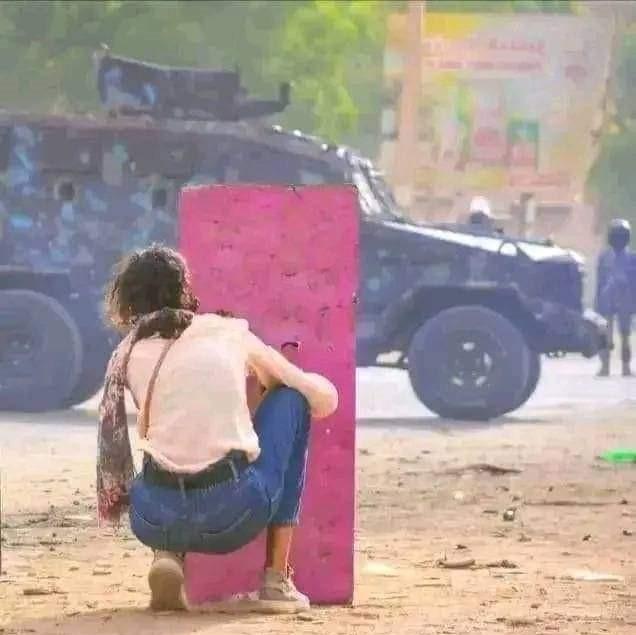 CIVICUS speaks about Sudan’s situation under military rule with Nazik Kabalo, a woman human rights defender (HRD) from Sudan. Nazik has worked in human rights advocacy, research and monitoring, with a focus on women’s rights, for the past 15 years.
What happened to Sudan’s transition to democracy?
Sudan is now facing the consequences of the major problems of the deal made by the military and civilian leaders in August 2019. Following the revolution, this deal initiated a transitional government in Sudan, a partnership between civilians and the military council. But this partnership was never equal: the military and former regime forces – including paramilitaries, militias, tribal militias and the security apparatus – had more economic and political power. They had controlled the country for 30 years, after all.
On the other hand, for 30 years political parties and civil society had been under so much pressure that they only managed to stay together with the momentum of the revolution, to defeat the former regime. But the Sudanese democracy movement has too many internal divisions.
Ours is an unfinished political transition that is missing transitional justice and mechanisms to limit the power of military and other armed groups. All armed groups had been involved in very severe human rights violations and remained partners with civilians in the new government. To be honest, I think the military coup was bound to happen. The political deal achieved in 2019 gave the presidency to the military for almost one and a half years. The coup happened on 25 October 2021, only few weeks before the date the military was expected to hand over the Supreme Council presidency to civilian leaders. But we always knew civilians didn’t really have a chance to lead the country.
How has the situation evolved after the coup?
Following the coup, the amount of violence and human rights violations was quite overwhelming. Violence is to be expected from the Sudanese military; it has led civil wars for 50 years and killing people is basically all it knows.
Seven months after the coup, at least 102 people have been killed in peaceful protests, more than 4,000 have been injured, and over 5,000 have been detained. There have been attacks on the freedoms of association and expression. Journalists are being attacked: at least three female journalists have been prosecuted or arrested in the past couple of days. The military coup has completely destroyed the civic space and freedoms created after the revolution. Our military is learning from our neighbour, Egypt, to effectively crush the civic movement.
For the past seven months we have lived under a state of emergency that was only lifted three weeks ago. But the lifting of the state of emergency made no difference to military practices on the ground. The international community has put some pressure on the government and the military but has not been able to stop the violence and civic space and human rights violations.
An aspect to consider is that Sudan has three conflict areas: Blue Nile, Darfur and Nuba Mountains. As well as western and southern Sudan, there’s also inter-communal violence in eastern Sudan. The coup hasn’t been able to provide security, although this is always the main excuse for the military to take power. Violence in urban areas, including the capital, has increased, especially for women. Members of the security forces, including the Central Reserve Police (CRP), have perpetrated gang rapes and sexual assaults against women; for this reason, the CRP has been recently sanctioned by the USA. A peace agreement was signed in October 2020 with several armed groups but hasn’t been effectively implemented.
Sudan’s economy has been in a freefall since the coup. We expected to have our debt cancelled by this year, but because of the coup, the Paris Club, the International Monetary Fund (IMF) and the World Bank decided not to move forward. Instead, the IMF, the World Bank and international donors have frozen over two billion dollars in economic aid, which is directly affecting the general humanitarian situation. Recent reports from the United Nations Office for the Coordination of Humanitarian Affairs estimate at least half of Sudanese people will need humanitarian aid this year.
Another impact of the coup was the internet shutdown. For at least seven weeks, HRDs lived under a complete communications shutdown. This has now been partially lifted, but internet and phone communications continue to be cut off on every day of protest – which means it has happened every single day for several weeks. Internet access is under very harsh surveillance, so no Sudanese activist feels safe to use the phone for work. Sudan has one of the worst cybercrime laws in the world: you can be prosecuted, tried and sentenced to five years in jail just for posting something on Facebook. A couple of months ago, a female HRD who reported the sexual violence that took place during protests was sent to jail, accused of posting ‘fake news’. She may be punished with up to 20 years in prison. The military have used this law to threaten activists both inside and outside Sudan.
We are back to the situation that preceded the revolution. We feel that the old regime is back; in fact, the military has started appointing people from the former regime everywhere, from national television to the Humanitarian Commission, which is responsible for managing the work of civil society organisations (CSOs) inside Sudan. So CSOs are back to needing to request authorisation to hold meetings at venues outside our offices and are under constant surveillance. Activists, journalists and lawyers are being silenced because power went back to the military.
What are protesters’ demands?
Following the revolution, the deal reached between the military and civilians never satisfied the protest movement, which includes a high proportion of young people and women. They have never stopped protesting, not even during the transitional period, from August 2019 to October 2021. There have been at least 20 killings of HRDs since the transition began, but this hasn’t stopped them. So when the coup happened, people were instantly in the streets, even before an official announcement of the coup was made.
Since 2018, protesters have demanded real democracy and civilian rule. We have had military governments 90 per cent of the time since we became independent: 59 years out of 64. After the regime fell on 11 April 2019, people started a sit-in in front of the military’s headquarters. This continued for two months and ended with the Khartoum Massacre on 3 June 2019, with attacks perpetrated by militias and security forces. Two hundred people were killed and at least 60 women were gang-raped. In August a deal was reached with the military, despite the massacre that literally happened outside their headquarters! This was a stab in the heart for many democracy groups.
Right now, the protest movement wants to make sure civilians are the ones ruling the country. Military leaders should go back to guarding the borders and shouldn’t have anything to do with running the government anymore. The 2019 deal didn’t work, which means our only option is demanding radical change that puts power in people’s hands. Resistance committees have a slogan of ‘three nos’: no partnership, no negotiation or compromise, and no legitimacy. A process of dialogue and negotiations led by some political parties is currently taking place, but resistance committees refuse to engage. Unfortunately, this has not been welcomed by some international actors, but it comes as a direct result of recent Sudanese experience.
Who are the people on the streets?
Protesters have built an amazing grassroots movement; resistance committees have formed in every neighbourhood, even every block. Those who participate in them are ordinary people who have nothing to lose, so unlike the civilian elites, they are willing to continue the struggle until the end. They organise street protests every single day and are creating new ways of protesting, such as strikes, stand-ups, music, movies and poems. They use every tool available, including recreating Sudanese traditions and bringing our cultural heritage to the streets.
Women and feminist movements are doing an amazing job, breaking so many norms. During the revolution, many young women were on the frontlines. The Angry, a protest group that stays on the frontlines of every protest, protecting other people and leading clashes with the police, includes lots of young women.
Women are also working to provide medical care and trauma support. After 50 years of civil war, you will definitely be a traumatised country, but this has intensified following the past five years of revolt. Before, one was able to distinguish between people from war zones and people from cities. Right now, the whole country is a war zone. There are machine guns everywhere, firing bullets into neighbourhoods, and children are dying inside their own homes because bullets go through their roofs.
Diaspora activism has also been key. Activists from the diaspora have been super effective in spreading the word, and during the internet shutdown they were online 24/7 to get information out to the world, not only sharing it on social media but also connecting people inside Sudan, who could receive international calls but not domestic ones.
What kind of work are pro-democracy groups doing?
The pro-democracy camp is very diverse. There are longstanding CSOs that have always promoted and advocated for human rights and continue to document violations, advocate, engage and build capacity inside the democracy movements. There are also new grassroots groups, the resistance committees, thar right now are the key movement leaders: other CSOs will follow their lead since they express the majority view. Professional organisations and trade unions are also a major group; they are key in organising mobilisations in urban areas. Doctors, lawyers, engineers and similar roles play an important role in putting pressure through strikes and civil disobedience.
Unfortunately, for the time being there’s not a single unified network or body that can represent the democracy movement in Sudan. This is the movement’s main weakness. Resistance committees are trying to produce a unified political declaration and how to unify this movement while including all of Sudan, even conflict areas, is being discussed.
What international support do Sudanese HRDs need?
Our country must not be forgotten. The international community must take action and support the democracy movement’s demands for fundamental change. International human rights bodies must put make Sudan a priority. Sudanese civil society is fighting to get Sudan on top of their agenda, especially since the war started in Ukraine and most attention is going that way.
Neglecting building democracy in Sudan and leaving power in the hands of the military would be a big mistake. What’s going on here isn’t disconnected from what’s going on in Ukraine. Reports indicate the involvement of the Sudanese military and militias in smuggling gold that supports the Russian economy during this conflict. Moreover, many reports have exposed the strong relations of Sudanese Rapid Support Forces (RSF) leaders with Russian leadership; they were in Russia the week the war started to ensure the flow of gold. RSF militias have relations with other African countries like Chad and the Central Africa Republic, which are sources of blood gold and blood diamonds entering Russia through Sudan.
Sanctions would be an important tool. A couple of days ago, the International Bar Association called on the UK to apply Magnitsky sanctions in Sudan. International CSOs should move ahead with similar actions.
It’s understandably hard for the international community to deal with the people in the absence of an actual government or elite they could deal with. But young university students are the democracy movement’s leaders, and they represent us. Protests have continued for eight months now and will probably continue for many more, and activists need a lot of help.
Because of persecution and violence, many CSOs and local groups have had to move their operations outside Sudan, and activists have had to relocate. Those working inside Sudan are having a very low-profile and using all the digital and physical security strategies available. Access to funding has also been increasingly challenging. The military wants to find out where funding for the democracy movement is coming from and has therefore increased surveillance, which makes it very risky to receive funds inside Sudan. Organisations working at grassroots levels and in conflict areas are suffering the most.
Civic space in Sudan is rated ‘repressed’ by theCIVICUS Monitor.
Follow@nazik_kabalo on Twitter. -
SWITZERLAND: ‘Right-wing populists pose a true threat when other parties meet their demands’

 CIVICUS speaks withLea Schlenker, board member of Operation Libero,about the rise of right-wing populism in Switzerland’s recent elections.
Founded in 2014, Operation Libero is a Swiss civil society organisation working to preserve and advance liberal democracy by campaigning against populist initiatives and advocating for an open, progressive and just society.
How concerning are the results of the 22 October Swiss federal election?
On 22 October, the right-wing Swiss People’s Party (SVP) came first, securing 62 out of 200 parliamentary seats, nine more than it previously had. The SVP is becoming increasingly extremist, and its election victory shouldn’t lead us to trivialise the racism and hatred they stoked during the campaign. We shouldn’t normalise the fact that they called queer people ‘sick’ and let far-right extremists manage their campaign accounts on social media. We shouldn’t endorse them by posing in photos at the Federal Palace with the leader of Switzerland’s largest party.
The outcome of this election leaves us deeply concerned about issues such as climate change and asylum policies and the treatment of refugees.
The trend of the rising far right is not exclusive to Switzerland – it is being observed globally. Right-wing parties instrumentalise legitimate citizen concerns, such as inflation or the ongoing war in Europe, to spread misinformation and target minorities. Under the guise of what they call a ‘culture war’, right-wing populists stoke unfounded fears of ‘cancel culture’ and ‘foreign infiltration’. This is very worrying. As a political movement that defends fundamental rights and combats right-wing populism from a liberal perspective, we believe our work is now more necessary than ever.
How did Operation Libero engage with the election?
We launched a campaign called ‘Du hast die Wahl’ (‘It’s your Choice’). Our goal was to persuade as many progressive people as possible to participate in the elections and stand up for their values by emphasising the importance of their voice. The SVP is attacking our liberal achievements, including the freedom of religion, the right to abortion, women’s bodily autonomy and equal rights. Some SVP members deny climate change, while others flirt with autocrats like Vladimir Putin. It is our mission to thwart these attacks on democratic values.
During the campaign, we distributed stickers and used billboards across Switzerland. The design incorporated a white background on the left side and a black background on the right side, symbolising a clear choice. The design, resembling voting ballots, visually reinforced the choice people faced in the election: equal rights or sexism, populism or democracy, isolation or openness, SVP or the future. We deliberately wrote ‘future’ in white lettering on a black background, sparking a lot of public debate and challenging either black or white stereotypes. Our campaign was funded exclusively by donations from members and supporters.
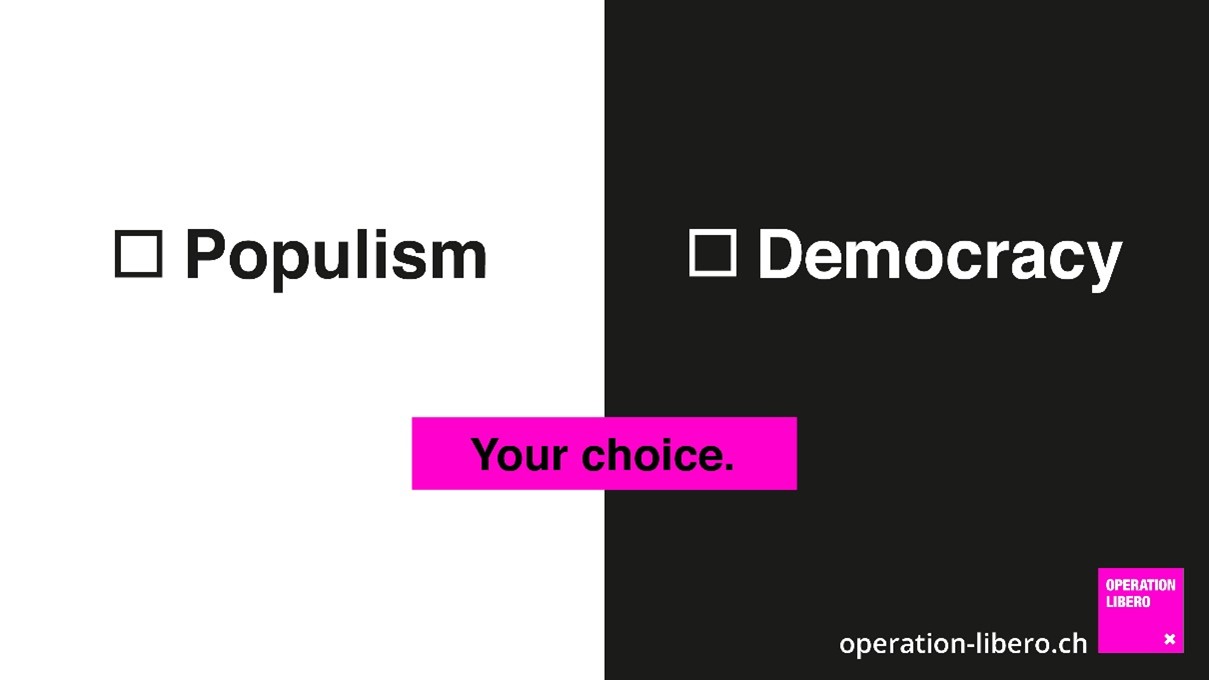
Another important element of our campaign was the petition ‘Wahlen ohne Hass’ (‘Elections without Hate’), which we ran in collaboration with the National Coalition Building Institute. We advocated for elections free from hate speech targeting any minority group. This petition was primarily a response to the racist and xenophobic rhetoric employed by right-wing populists during the campaign. The SVP manipulated police reports to refer to isolated incidents as widespread trends. The impact of our petition was further amplified by the Federal Commission against Racism, which described the SVP campaign as ‘racist, xenophobic, and inflammatory’.
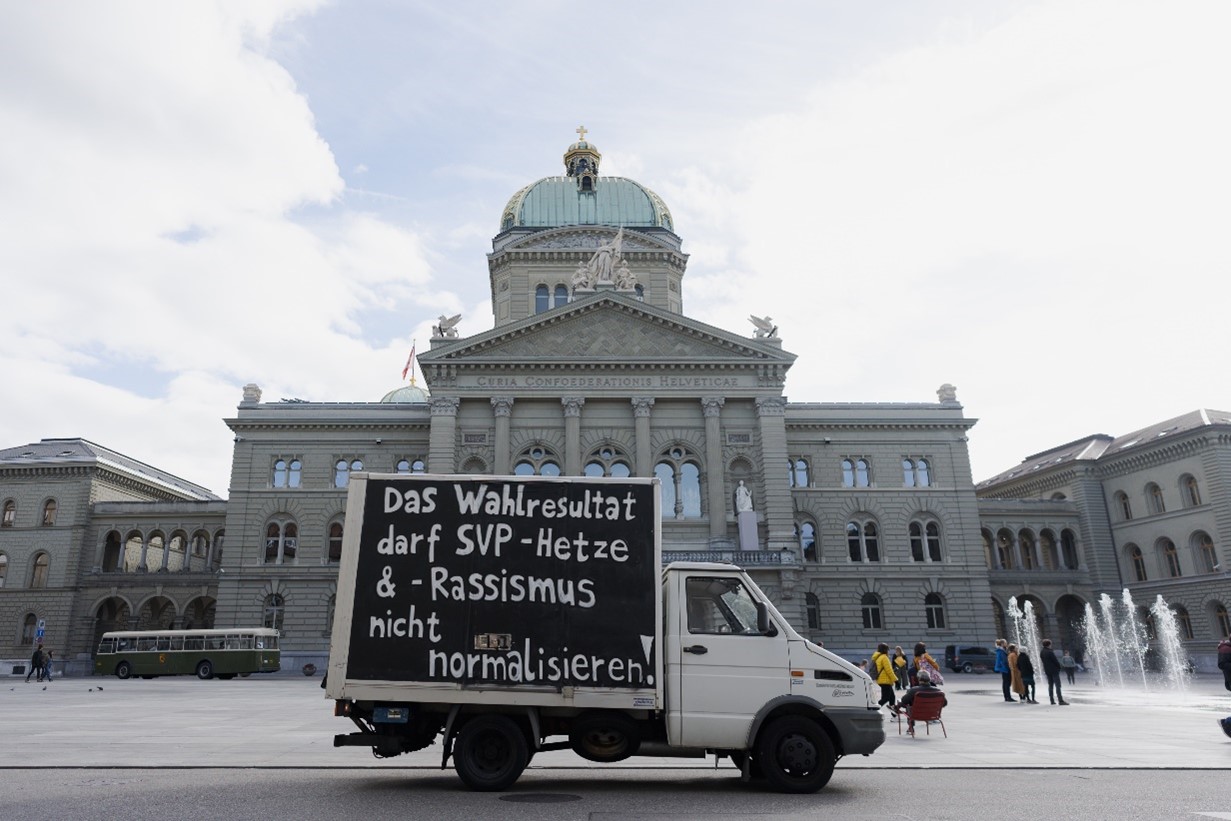
On election day, we rented a truck and drove it to the capital, Bern. The truck displayed the message we wanted to convey to the public: that we reject the normalisation of the SVP’s discourse and its effect of shifting the whole political spectrum rightwards.
What can be done to prevent further advances of the Swiss far right?
Right-wing populists pose a true threat when other parties meet their demands, a trend already observed in countries such as Germany. It would be a great mistake for conservative parties to respond to the election results by aligning even more closely with the SVP. The SVP must be treated as a radical outsider so that it remains a minority – albeit a large one that received 28 per cent of the vote. Swiss liberals must distance themselves from the SVP, which often conceals its populist and extremist nature behind a conservative facade.
Non-extremist parties must urgently form a coalition for an open and progressive Switzerland even if they maintain fundamental differences on specific issues. To counter the SVP’s initiatives on immigration, downsizing public media and promoting ‘neutrality’, Switzerland requires a robust progressive coalition. This is feasible, despite the SVP’s electoral advances, if conservative parties refuse to become their allies.
With a mostly conservative and right-wing parliament, it will be challenging to implement progressive reforms for a more open and equal society. But we remain hopeful because there are numerous political activists and forces aligned with our democratic vision.
How does Operation Libero work to protect human rights and safeguard democracy?
Since its foundation in 2014, Operation Libero has been dedicated to defending liberal and inclusive democracy, advocating for equal rights and fostering European collaboration. We scale up our campaigning every time our liberal democracy or its underlying values come under attack, which unfortunately occurs with regularity.
Operation Libero was founded to stop right-wing populist advances but we have expanded our mission to actively shape the country through two current initiatives. Firstly, we are working to build a broad alliance to break deadlocks in relations between Switzerland and the European Union (EU) by promoting a popular initiative to embed the objectives of cooperation with the EU in the Swiss Federal Constitution. We want to have close ties with the unique peace and freedom project that is the EU. The Europe Initiative already has the support of 11 organisations.
And in May we started collecting signatures for the Democracy Initiative, which addresses a fundamental democratic challenge: the fact that Switzerland currently excludes from citizenship, and therefore from the political decision-making process, around a quarter of its permanent resident population. Including all these people as fellow citizens with equal political rights is essential for Switzerland to become a democracy worthy of the name.
Civic space in Switzerland is rated ‘open’ by theCIVICUS Monitor.
Get in touch with Operation Libero through itswebsite or itsFacebook page, and follow@operationlibero onTwitter.
-
SYRIA: ‘We spread the culture of human rights in a country with one of the world’s worst human rights records’
 CIVICUS speaks about Syria’s ongoing civil war and human rights crisis and its prospects for democratic change with Fadel Abdul Ghany, founder and Executive Director of the Syrian Network for Human Rights (SNHR).
Founded in 2011, SNHR is a human rights civil society organisation (CSO) that works to monitor and document human rights violations, protect victims’ rights and hold perpetrators accountable, promoting the conditions for transitional justice and democratic change.
What is the current security situation in Syria?
We have a team of approximately 22 people in Syria that daily monitors and documents human rights violations, including extrajudicial killings, arbitrary arrests, enforced disappearances, torture and forced displacement. We have published daily reports on the civilian death toll for a decade. In September 2023, 55 civilians, including 12 children, were killed. Ninety-seven were killed in August, 55 in July and 42 in June. In the first half of 2023, 501 civilians lost their lives due to the ongoing conflict. Our monthly reports also cover arbitrary arrests, with 223 cases reported in August and 204 in September.
We document crimes committed by all armed groups involved in the conflict, categorising them by perpetrator. From March 2011 to June 2023, a total of 230,465 civilian deaths were reported, with over 87 per cent attributed to Syrian regime forces and Iranian militias, three per cent to Russian forces and two per cent to ISIS. Based on our reporting and news of grave and pervasive violations no territory in Syria can be considered safe or secure.
What are the working conditions for your colleagues in Syria?
We consider ourselves on the frontline because we document violations on the ground and identify perpetrators. Our team operates discreetly in Syria, either from the office or from their homes using fantasy names. We safeguard their identities for security reasons. Their safety is more important than any documentation.
Our team faces intense pressure, and if arbitrarily arrested, they risk severe torture by the regime led by Bashar al-Assad or other parties. We do our best to protect and provide security education to our staff. Our IT infrastructure is highly secure, and we’ve implemented measures to thwart cyber-attacks, which have included Russian attempts to hack our website.
What’s the situation for Syrian refugees?
Many Syrians aren’t safe in other countries either. In Lebanon and Turkey, refugees face the risk of forced return to Syria in violation of international law, specifically the 1951 Refugee Convention. Conditions are dire, with Syrians often blamed for economic hardship in host countries, even though Lebanon and Turkey receive substantial funding from the European Union and other donors to welcome refugees.
The feeling of insecurity and lack of proper protection in neighbouring countries, which host over 70 per cent of refugees, drive Syrians towards-called ‘death boats’ to seek safety elsewhere in Europe. The international community should better distribute the responsibility of welcoming refugees, because the current allocation isn’t fair.
What should the international community do to address Syria’s dire human rights and humanitarian situation?
The international community must intensify efforts to achieve a political transition and end Syria’s 13-year-long conflict, which is taking a lot of lives and causing immense suffering, with widespread torture and forced displacement of half the Syrian population. Any prospect of political transition has been absent due to insufficient international pressure on all parties in the conflict, and particularly on the Assad regime, leaving the Syrian people and the conflict largely neglected.
The international community must actively support efforts to fight impunity. The Assad regime has got away with numerous war crimes and crimes against humanity. There should be a collective effort to bring justice. If accountability is to be achieved, it also requires a political transition leading to the establishment of independent local courts.
Chinese and Russian veto power at the United Nations Security Council obstructs the referral of war crimes to the International Criminal Court. With limited universal jurisdiction, only 27 sentences have been issued in Germany and other countries against Syrian war criminals, mostly from non-state terrorist groups such as Al-Nusra or ISIS.
True accountability requires dismantling the Assad regime, the Syrian National Army, the Syrian Democratic Forces, the Islamist organisation of Hay’at Tahrir al-Sham and other non-elected entities ruling Syria through fear.
Aid should be directed to people affected by the recent earthquake and those displaced in northwest and northeast Syria. Continuous assistance is also vital for Middle Eastern states hosting most Syrian refugees. Such comprehensive support on a large scale is essential for advancing the Syrian movement toward democracy.
How is Syrian civil society working for a transition to democracy?
Syrian civil society continues to protest to demand respect for human rights, investigates rights violations and expose perpetrators based on the principle of equality and promote human rights through education. We work hard to spread the culture of human rights in a country with one of the world’s worst human rights records and to get rid of a decades-long dictatorship.
SNHR publishes reports and statements urging a halt to violations and providing recommendations to other states. We conduct in-depth bilateral meetings with various foreign ministries, including those of France, Germany, the Netherlands, the UK and the USA, and convene other high-level meetings. We actively participate in and organise advocacy events. The most recent, held on 21 September, focused on human rights violations and avenues for accountability and was co-hosted by the USA and co-sponsored by France, Germany, Qatar and the UK.
I believe the international community should also provide substantial financial and logistical support to active Syrian CSOs that have played a significant role in the Syrian civil war and have, to some extent, replaced the state.
What has triggered recent protests across Syria?
Since early August, many regime-controlled areas of Syria have witnessed peaceful civil demonstrations. People took to the streets because they felt even more hopeless following Assad’s interview with Sky News Arabia on 9 August. He didn’t apologise nor did he express any willingness to change the way he’s ruling the country. Instead, he said that if he could go back to 2011, he would kill even more people than he did.
There are ongoing protests in areas of northern Syria that aren’t controlled by the regime. Protesters seek to hold the Syrian regime responsible for the worsening economic, social and political conditions. Their calls echo those of the 2011 Arab Spring: they demand an end to family rule and a transition to democracy, freedom of speech, the release of illegally detained people and accountability for perpetrators. Their major message is that Assad must go.
We have monitored and documented multiple vicious methods used by the regime’s security forces to suppress protests, including arrest, torture, enforced disappearances and prosecution of hundreds of protesters. The regime uses its media outlets to slander protesters or anyone criticising it as traitors or collaborators working with foreign entities. The Syrian regime has also attempted to stage counter-demonstrations with loyalists chanting pro-regime slogans and threatening anyone opposing the regime.
Civic space in Syria is rated ‘closed’ by theCIVICUS Monitor.
Get in touch with SNHR through itswebsite or itsFacebook page, and follow@snhr and@FADELABDULGHANY on Twitter.
-
TAIWAN: ‘China has tried to intimidate voters and pressure Taiwanese civil society organisations’
 CIVICUS discusses Taiwan’s upcoming presidential election with Brian Hioe, one of the founders of New Bloom Magazine.
New Bloom is an online magazine that covers activism and youth politics in Taiwan and Asia and the Pacific. A former fellow at the Taiwan Foundation for Democracy, Brian is currently a non-resident fellow at the University of Nottingham’s Taiwan Research Hub.
What’s at stake in the 2024 election?
Taiwan’s elections consistently capture global attention due to the anticipation surrounding China’s response. Typically, elections feature two candidates representing the two major parties. One of them, the Democratic Progressive Party (DPP), is historically pro-independence and the other, Kuomintang (KMT), is historically pro-unification. This pattern persists in the current election, although there are other parties in the race.
Traditionally, Taiwanese voters opt for what they perceive as the safest choice in terms of safeguarding their hard-earned democratic freedoms. The overarching concern is to avoid actions that might trigger backlash from China.
Now it looks like the centre-left candidate of the ruling DPP is going to win because the pro-unification camp is very divided. But with multiple candidates running, fragmentation is to be expected, potentially affecting the outcome.
What are the most relevant domestic campaign issues?
There is a lot of dissatisfaction with the current government’s inability to address pressing economic issues. Young people’s salaries are very low, working hours are among the world’s longest and most people cannot afford to buy a house. We also have a declining birthrate and a growing older population.
Dissatisfaction has translated into some support for the pro-China party. The KMT is the historic Chinese nationalist party and was the ruling party during Taiwan’s authoritarian era, from 1949 to 1987. Its campaign centres on deepening economic relations with China, promising to bring back the good old days of economic success.
Environmental issues, and particularly air pollution, also weigh heavily on voters. The question of Taiwan’s future energy needs is key, as a balance is sought between maintaining a stable energy supply and minimising pollution. There is heated debate around nuclear energy. Taiwan’s environmental movement is anti-nuclear, as is the DPP, unlike the KMT. There are concerns about what to do with nuclear waste. People are worried that the frequent earthquakes that hit Taiwan could cause a potential catastrophe, as happened in Fukushima, Japan in 2011.
Past elections also featured debate on culture-war issues such as same-sex marriage, which the DPP pushed for but the KMT opposed. But these have now taken a back seat to economic and environmental issues.
However, the defining matter remains the cross-strait issue – the question of what kind of relations Taiwan will maintain with China.
What are the positions of the main candidates?
DPP candidate Lai Ching-te, the current vice president and expected winner, previously served as mayor of Taiwan’s historical capital Tainan and Taiwan’s premier. He is perceived as more conservative than the incumbent and is strongly pro-independence, although as he has climbed in the polls he has tempered his position in fear that strong rhetoric could provoke a reaction from the military or China. Despite his comparatively conservative background, he has signalled openness to progressive ideas, notably by becoming the first presidential candidate to participate in the Pride parade this October.
KMT candidate Hou Yu-ih is the current mayor of New Taipei and a former police chief with a record of involvement in the arrest of political dissidents during the authoritarian period. He is more moderate than other KMT candidates on unification issues, which is perceived to improve the KMT’s chances. However, his choice of running mate signalled a potential shift towards a more dogmatic position on unification.
The third candidate is former Taipei mayor Ko Wen-je, the leader of the Taiwan People’s Party (TPP), a new party leaning towards unification. He has gained some support from young people, who tend not to support the KMT. He has a populist style, often making gaffes or misspeaking. He has faced criticism for making misogynistic and homophobic comments, but this hasn’t affected his popularity.
How do young people feel about this election?
There seems to be a notable decrease in enthusiasm and engagement with the election process. The 2020 election came around the same time of the protest wave in Hong Kong, which gave many young people a glimpse of what the future could look like for Taiwan if it were to become part of China.
Now the context is different and what prevails among people is dissatisfaction with the DPP due to challenging circumstances, which has resulted in the rise of the third-party anti-establishment candidate. Ko Wen-je is, ironically, a candidate opposed to progressive causes such as LGBTQI+ rights, but many young people are still attracted by his anti-establishment message.
In contrast, the DPP is perceived as the status quo and despite its recent progressivism under the Tsai administration has not managed to win over young people. Broadly, while millennials may still support it, Gen Z does not.
What role are foreign powers playing in the election process?
China’s persistent efforts to interfere in Taiwan’s political processes have resulted in recent arrests of people accused of operating in favour of China to influence the election, with efforts made to stiffen sentences for espionage. Ten military officials have, for example, been arrested in connection with these interference attempts.
A tactic employed to influence the election is paint the DPP as overly provocative towards China or overly reliant on the USA, suggesting that this may lead to adverse consequences. The DPP has indeed strengthened relations with the USA, while the KMT, once the US-backed authoritarian ruling party, has shifted its position. The KMT now argues that growing too close to the USA might provoke China, questions arms sales and civic exchanges and disseminates conspiracy theories regarding fictional US plans to destroy Taiwan in the event of a war.
The other side of the political aisle attacks the KMT for being too close to China and criticises its attempts to revive trade agreements such as the Cross Strait Services Trade Agreement (CSSTA), opposition to which led to the 2014 Sunflower Movement.
Have there been any concerns about the integrity of civic space?
Taiwan is the only country in Asia rated by the CIVICUS Monitor as having open civic space. There are questions about how civil society engages with both major political parties and concerns about potential co-optation. Civil society faces the challenge of balancing relations with political parties and maintaining a critical position without being perceived as partisan. Civil society is often closer to the DPP, because it is more centre-left and suspicious of China.
But there haven’t been government attempts to restrict civic space. The government does take actions to curb Chinese influence but to date has not infringed on civil society rights.
China in contrast has tried to pressure Taiwanese civil society organisations (CSOs), particularly those focusing on cross-strait issues. Five years ago, a Taiwanese CSO worker was arrested in China on vague national security charges, in what seemed aimed at sending a warning to Taiwanese civil society not to meddle with China.
China has also tried to intimidate voters. In a recent example, a person who purchased a book on the possibility of a Chinese invasion received a suspicious phone call from someone impersonating a customer service representative asking them about it.
What are your expectations for the post-election period?
Unless something unexpected happens, a DPP victory is the likeliest outcome. China is unlikely to take any drastic actions before the election, as such moves might inadvertently strengthen support for the DPP.
Following the election, however, China is expected to respond with intimidation tactics, possibly through military exercises, to signal its opposition to a new DPP administration. The intensity of these exercises may be influenced by China’s relations with the USA at the time.
In terms of civic space, should the DPP continue in power, civil society may need to broaden its outreach, both regionally and internationally, to build resilience and avoiding being sucked in by the two-party dynamics.
However, were the KMT to win, civil society would likely refocus on domestic concerns. It may regroup to resist, particularly in the face of potential attempts to reintroduce trade agreements such as the CSSTA.
If the status quo is maintained, Taiwan will continue strengthening ties with the USA and the west while actively reaching out to southeast Asian countries, a strategy aimed at reducing economic reliance on China and diversifying political ties.
The geopolitical landscape will play a crucial role in shaping Taiwan’s future, and the actions and reactions of both China and Taiwan will be closely watched on the international stage.
Civic space in Taiwan is rated ‘open’ by theCIVICUS Monitor.
Get in touch with New Bloom Magazine through itswebsite, contact Brian Hioe through hisFacebook page and follow @brianhioe onTwitter orInstagram.
The opinions expressed in this interview are those of the interviewee and do not necessarily reflect the views of CIVICUS.
-
TAIWAN: ‘China will do to us what it did to Hong Kong, and what it has long done to Tibetans and Uighurs’
 CIVICUS speaks about the situation in Taiwan withMin-Hsuan Wu, known as ttcat,a social movement activist and campaigner and co-founder and CEO of a Doublethink Lab.
Founded in 2019, Doublethink Lab is a civil society organisation (CSO) focused on researching malign Chinese influence operations and disinformation campaigns and their impacts, bridging the gap between the democracy movement, tech communities and China experts, and facilitating a global civil society network to strengthen democratic resilience against digital authoritarianism.
What is the story behind Doublethink Lab?
Doublethink Lab was founded three years ago, in September 2019. Four years ago, we experienced a tremendous amount of disinformation influencing our 2018 local elections. After these elections, there were lots of signals and leads of information-related, mostly disinformation campaigns – all affiliated with or supported by China.
We realised that to tackle the challenge of strengthening and safeguarding our democracy we needed people to combine their talents and diverse professional backgrounds into a project focused on digital defence.
Our main mandate is to produce a better understanding of how Chinese external propaganda functions and effectively influences political processes and public opinion elsewhere, including in Taiwan.
Our strategy to combat disinformation differs from the usual fact-checking initiatives. Our work isn’t published in fact-checking reports. Instead, we follow the disinformation to try to understand who is spreading it and whether it is being spread by our citizens dynamically or by other kinds of actors funded by the Chinese state. Often, when analysing social media posts, it is possible to see the huge structure made up of Chinese bots liking, sharing and retweeting disinformation.
What is the likely outcome of rising Chinese aggression toward Taiwan?
It’s not news that tensions between Taiwan and China are increasing. China is increasingly using ‘grey zone’ tactics to push boundaries, increasing pressure and influencing people. Through various means, China is threatening Taiwanese people. This clearly increases the chance of the whole situation leading to China invading Taiwan.
Most military experts would agree that this won’t happen right now, with Xi Jinping having just secured his third term as chairman of the Chinese Communist Party and awaiting confirmation of a third term as president of China. Some say an invasion could occur in 2025 or 2027, but I think it will depend on how strongly the Taiwanese people can defend themselves from now on: if our resistance increases, the costs of an invasion for China increase accordingly. Our resistance might therefore postpone the crystallisation of China’s wishes for a bit longer.
On the other hand, China’s tactics may be backfiring: as China escalates militarily against us, the Chinese narrative is becoming less and less popular in Taiwan. More and more people have realised China is not a good neighbour. It is no longer thought of as a business opportunity for us but as a potent threat to our ways of life, our livelihoods and our lives. China’s aggressive attitude is pushing Taiwanese people towards embracing defence tactics to protect our country, which is a positive thing for us. We are much more aware of the need to build strong national and civil defence now.
Did the recent visit by US House Speaker Nancy Pelosi make any difference, for better or worse?
Pelosi’s visit didn’t complicate the situation, but whether we see it as helpful or not depends on the perspective we look at it from. Her visit in August 2022 was meant as a show of support to Taiwan, and happened despite China’s threats of retaliation. It was the first visit by a US House Speaker in a quarter of a century. From a democracy or human rights perspective, it was quite beneficial. Pelosi spoke up against China’s human rights violations and the challenges posed by totalitarian regimes. Her presence brought visibility to our country’s situation regarding China. It put a spotlight on it, and now people see how China treats us and what a destabilising factor it is for the region. It clearly bothered China, judging by the way it reacted to it on the international stage.
From a geopolitical and military perspective, Pelosi’s visit didn’t produce any benefit. It didn’t – couldn’t – bring any kind of peaceful dialogue. China’s vision and military exercises won’t change. But Pelosi’s visit didn’t complicate the situation; it just brought it under the spotlight so more Western media are paying attention to Taiwan. This kind of attention is somehow opening up many windows of opportunity for Taiwan to collaborate with other countries and agencies. No one knows what will come out of this, but from what I’ve seen so far, increased opportunities of international collaboration may improve our chances of safety.
What would it take to bring peace and stability to the region?
That’s a huge question. For me, the ultimate solution would be the opening up of civic space and the democratisation of China, Russia and other totalitarian regimes in Southeast Asia. However, we know this is too big a hope and it’s not really up to us.
There used to be a civil society in China, but under Xi’s rule civic space has been continuously shrinking for 10 years. More and more activists are getting arrested. We all saw what happened recently in Hong Kong: China cracked down hard on civic movements and arrested people for even having a podcast –regular citizens were sent to jail just in case. China shut down all forms of civic expression, including news agencies. China will do to Taiwan what it did to Hong Kong, and what it has long done to Tibetans and Uighurs within China.
If you ask me, I would say peace would require the demise of the Chinese Communist Party, but people think I am crazy when I put it this way. But from our perspective, this is the only forever solution. If you have an aggressive, expansionist neighbour trying to invade you, attaining peace is quite hard because it is not up to you. There can’t be peace unless your neighbour changes.
Without justice there won’t be any peace. I’m not sure which kind of peace people wish to see: I think they are wrong if they define peace as just the absence of war. It that’s what they want, they can move to Hong Kong. Hong Kong is peaceful now – there are no mobilisations, no protests, no disorder. But is this really peace? It’s just an illusion: people are quiet because they lost their rights and freedoms. This is not the kind of peace we want for Taiwan.
We need to find a way to open up civic space and bring democracy to the region – that is the only way forward.
How is Taiwanese civil society working to make this happen?
Lots of Taiwanese CSOs are working to limit China’s influence in the region, especially in Taiwan. There is an organisation called Economic Democracy Union that conducts serious research about Chinese influence on our economy; their work show how Chinese collaborators pretend to be Taiwanese companies and penetrate very sensitive industries such as electronics or e-commerce – industries that capture lots of personal data. Economy Democracy Union brings these issues to the surface with the aim of promoting new regulations to protect us from these influence-seeking tactics.
There are also many CSOs working to strengthen civic defence, which isn’t just war-related, but rather focused on preparedness for disaster or any kind of military operation; their goal is to teach citizens how to react in these cases.
Right now, Doublethink Lab is doing an investigation on China’s information operations. We do election monitoring and try to disclose disinformation campaigns or far-fetched narratives flooding into Taiwanese media. We are building a global network to bridge the gap between academia and civil society on a global scale. We want people to know what Chinese influence looks like in different countries, the channels it travels through, its tactics and its final goals.
Doublethink Lab isn’t the only organisation advocating for digital defence. There are several others focusing on Chinese media influence, disinformation campaigns, fact-checking processes and civic education to identify fake news, among other related issues.
What support does Taiwanese civil society need from the international community?
We need resources. Most Taiwanese CSOs are small grassroots organisations. People tend to view Taiwan as a rich country with a very prosperous economy, but the truth is that civil society movements struggle a lot. Human rights CSOs and those working to counter Chinese influence usually have fewer resources than a regular charity. CSOs need more resources to be able to recruit new talent.
Right now is the perfect time to ask ourselves what we really need. I always ask my fellow activists what they need, and answers resemble a lot those of activists in Hong Kong or Ukraine. Something the international community can also help with is by exposing Taiwan’s struggle. We don’t want people to think our issues are disconnected from those of the rest of the world – we want to become closer and we want to be understood. We need more connections with CSOs in the rest of the world. We need all forms of help to prepare and get ready for what’s coming.
Civic space in Taiwan is rated ‘open’ by theCIVICUS Monitor.
Get in touch with Doublethink Lab through itswebsite and follow @doublethinklab and@TTCATz on Twitter.
-
TANZANIA: ‘What is needed is a new constitution reflecting the will of the people’

CIVICUS speaks about the prospects for democratic change under a new president in Tanzania with Maria Sarungi Tsehai, a communications expert and founder of Change Tanzania. Change Tanzania is a social movement that began on social media as an informal group of people focused on bringing positive, sustainable change to Tanzania.
What is the current state of civic space – the freedoms of association, peaceful assembly, and expression – in Tanzania?
Civic space continues to be restricted, as the legal framework has not changed. Amendments have been proposed to the 2020 Electronic and Postal Communications (Online Content) Regulations, which have led to the severe restriction of online freedom of expression and digital media freedoms. However, these amendments are limited good news, as critical issues such as the criminalisation of what is perceived as ‘fake news’ or misinformation remain and the authorities have retained ultimate arbitrary power to take action and have so-called ‘prohibited content’ removed within two hours. The list of prohibited content, which is open to interpretation and has been used to restrict media freedom and the freedom of expression in the past, remains.
Regarding the freedom of peaceful assembly, restrictions have become harsher, to the extent that internal political party meetings are now banned and have been disrupted by riot-geared police, as witnessed recently in the case of a number of meetings and convenings held by the main opposition party, the Party for Democracy and Progress – better known as CHADEMA for its acronym in Swahili – as well as in the case of the National Convention for Construction and Reform, another opposition party, whose internal council meeting was broken up by the police on 28 August 2021.
Those who continued to gather in defiance have been illegally detained and kept incommunicado. In some cases, this has involved dozens of people, while recently in Mwanza, in northern Tanzania, it has affected close to 100 CHADEMA supporters. The chairman of CHADEMA, Freeman Mbowe, was recently abducted by masked security forces and held incommunicado for days before being charged with terrorism – all because he defied police calls and flew to Mwanza to be part of a symposium on constitutional reforms.
President Samia Suluhu Hassan has accused citizens leading movements for constitutional reform of fostering foreign interests and seeking to destabilise the country for personal gain, therefore designating their actions as ‘sedition’.
When CHADEMA supporters assembled outside the court building the day Freeman Mbowe was due to appear in court, they received rough treatment from the police and were picked off the streets and detained just for standing silently with banners and wearing opposition t-shirts. Many women have been detained in such a way and denied their basic rights to food, water and sanitary pads while in illegal detention. One female CHADEMA leader, Neema Mwakipesile, was detained for over 14 days, and was initially denied any access to a lawyer or contact with family members.
The government has also frequently instrumentalised the COVID-19 pandemic to limit political gatherings. Specifically, any gathering deemed to be critical of the government is restricted using COVID-19 regulations, while mass gathering in stadiums for sports and entertainment are still allowed.
As for restrictions on the freedom of expression, harsh reprisals against those speaking up have not been limited to opposition members and critics but have recently started to target dissenting voices within the ruling Party of the Revolution (Chama Cha Mapinduzi, CCM). On 31 August 2021, a CCM member of parliament, Jerry Silaa Ukonga, was suspended because during a meeting with his constituents he said that parliamentarians should pay income taxes. His suspension will deter other lawmakers from speaking up any matter that may be deemed critical of the government, as the parliamentary leadership is an extension of the executive rather than an independent pillar of government.
Has the new government under President Suluhu – who came to power following the death of President John Magufuli – taken any steps to improve the conditions for civil society and the expression of dissent?
First of all, calling it a ‘new government’ is a misnomer, because it is basically the same government, in which the former vice president became president and a little cabinet reshuffle took place, but most key positions were retained by the same group of people. There was some hope around the new minister responsible for foreign affairs, but for civil society not much has changed, as the mechanisms for the oversight of civil society organisations (CSOs) and the legal framework have remained in place.
In fact, a by-law has been recently introduced whereby CSOs are not allowed to give out joint statements without previously developing a memorandum of understanding that needs to be submitted and registered with the NGO Registrar. So it’s the same laws and the same people who continue to be a threat to any open dissent. This continuity is visible in the government’s response to Tanzania’s Universal Periodic Review examination at the United Nations Human Rights Council, which hardly seems to have addressed any area of concern.
The only visible difference under the new president has been the government’s admission of the existence of the COVID-19 pandemic. The new president has introduced and encouraged COVID-19 preventative measures and Tanzania officially joined the COVAX initiative, as a result of which it has received vaccines.
However, there has been no change regarding the key people overseeing health policies, and as a result trust in the government is low. The mixed messaging has led to apathy and disbelief; therefore, vaccine uptake is slow and even precautions are not enforced genuinely and systematically. Additionally, COVID-19 data has not been released in a regular and systematic manner. The government randomly releases ad hoc and aggregate numbers that are impossible to assess. There are evidently a lot of COVID-19-related deaths that go undocumented.
Do you think the fact that the country has its first female president will make a difference for women’s rights?
So far, nothing has changed. In fact, President Suluhu has fronted herself as a patriarchy enabler, both in rhetoric and appointments. She has adopted approaches similar to those used by previous governments to target opposition and dissent. She has even refused to lift a ban on pregnant schoolgirls from re-entering formal education after delivery.
For real change to happen, a shift in fundamental structures needs to take place, starting with constitutional and legal reforms to enable political competition and allow access for more female decision-makers who are not dependent on patronage by the male-dominated leadership of the CCM. But President Suluhu is ignoring calls for constitutional reform.
What would the government need to do so that Tanzania becomes more open and democratic?
Unfortunately, the government led by the CCM, which is in power as a result of an openly rigged election that was accompanied by one of the most violent post-election repression episodes, is not capable of driving any democratic reform. What is needed is a new constitution reflecting the will of the people. A good place to start would be the ‘Warioba draft’ – named after the chairperson of the Constitutional Review Commission, retired judge Joseph Warioba - that was published in 2013 and ditched at the last minute by CCM in October 2014, during its failed attempt to pass a new constitution through a constituent assembly.
The process has to be revived and it has to be multi-party and involve the citizenry more broadly. But President Suluhu seems unwilling to do this, and in some cases, as in that of Freeman Mbowe, she has shown outright hostility towards the opposition. If its only goal is to cling to power, the government will not work on any real reforms. The sooner this becomes clear to everyone, the better.
Besides writing a new constitution, the government would also need to improve accountability, especially by following up on the Controller and Auditor General’s (CAG) Annual Report. The first thing that President Suluhu did when she was sworn in was to ask the CAG to submit its report and promised that measures would be taken against those civil servants who were involved in wrongdoing. She also ordered a CAG special audit of the Central Bank for the first quarter of 2021. But the report was never published, and only a press statement was released which said that everything was in order. Regarding accountability and transparency, rejoining the Open Government Partnership would be a good starting point. The government should also introduce police and prison reforms and make new appointments for positions including judges, the Inspector General of Police, the Attorney General, the Chief Justice, and other positions to improve justice and social services.
How can global civil society support civil society in Tanzania?
The main focus should be on high-level, intense pressure on the government of Tanzania to engage with the opposition and credible civil society representatives and citizen groups in ushering in constitutional reforms so that by 2025 we will have laid down the foundations for free and fair elections. Otherwise, the next elections may put Tanzania on a very dangerous path in many regards.
Global civil society needs to make sure that Tanzania is held accountable and that in all discussions fundamental structural and legal framework reforms are emphasised. It should make sure not to succumb to nice promising rhetoric and superficial cosmetic changes because allowing the government to get away with such flimsy actions will have very grave consequences.
Those funding projects in Tanzania need to consider funding social movements and more loose coalitions of citizens and groups rather than small circles of civil society actors that embrace a top-down approach. This will have significant impacts on building a society conducive to the greater good and serving the wider population.
Civic space inTanzaniais rated as ‘repressed’by theCIVICUS Monitor.
Get in touch with Change Tanzania through itsFacebook page and follow@ChangeTanzania and@MariaSTsehai on Twitter. -
THAILAND: ‘Marriage equality is likely to pass – and inspire change in other Asian countries’
CIVICUS speaks about the progress being made toward legalising same-sex marriage in Thailand with Mookdapa Yangyuenpradorn, an LGBTQI+ activist and Human Rights Associate at Fortify Rights.
Founded in 2013, Fortify Rights is a human rights civil society organisation (CSO) working to bring laws, policies and practices in line with human rights standards through evidence-based research, strategic truth-telling and empowerment.
Why are there currently four different bills in parliament aimed at legalising same-sex marriage?
LGBTQI+ marriage is such a significant issue in Thailand today that bills to legalise it have been submitted to parliament simultaneously by the government and other political groups. It is unusual and encouraging to see political parties competing to propose changes that would benefit LGBTQI+ people.
Out of the four bills up for consideration, one was submitted by the government, two were submitted by political parties, the Move Forward Party and Democratic Party, and another was submitted by civil society. The one submitted by the cabinet and approved by the prime minister takes precedence over the rest.
The civil society bill was initiated by the Rainbow Coalition for Marriage Equality, which brings together numerous CSOs. It was developed at the grassroots level and drafted and submitted on behalf of Thailand’s LGBTQI+ people. It successfully made its way into parliament, with its authors securing seats in the readings as discussions progressed. It is uncommon for a bill proposed by civil society to enter parliament, so this is a very positive development.
The civil society bill is also more progressive than the other three because it ensures parental rights for LGBTQI+ people and proposes a transitional procedure to allow LGBTQI+ couples to register their marriages and enjoy spousal rights while other relevant laws are still being revised and amended, rather than make them wait until all of the process is finished.
Still, the primary objective is consistent across all four bills: they all seek to amend the civil and commercial code, which now defines marriage as a union between man and woman and grants them the status of ‘husband and wife’, by replacing these gendered words with the gender-neutral expressions ‘individuals’ and ‘spouses’. This simple change will enable LGBTQI+ people to register their marriages.
How have LGBTQI+ activists advocated forthe bill?
The constitution establishes that if a bill is proposed by a group of citizens or civil society groups, representatives from the initiating group should be involved with the parliamentary committee working on the bill. This provided space for LGBTQI+ activists to participate in the legislative process and advance their agenda. The Rainbow Coalition for Marriage Equality has played a crucial role in presenting a unified and consolidated stance on marriage equality in parliament. The activists currently engaged in discussions have been advocating for this bill for over a decade.
As an advisor to the committee drafting the marriage equality bill, I provide expert opinions from the perspective of human rights law and international standards. For instance, I make sure the bill aligns with the International Covenant on Civil and Political Rights, among other international conventions and treaties, and incorporates good practices and advanced protections found in the laws of countries with marriage equality.
What are the prospects of the same-sex marriage bill being passed?
The bill will likely be passed, although it will take some time. The legislative process in Thailand involves three readings in the House of Representatives, the elected 500-member lower house of the National Assembly, followed by three readings in the Senate, the appointed upper house. Proposed legislation then undergoes scrutiny by the Constitutional Court and is ultimately signed into law by the king, then published in the Royal Gazette.
The marriage equality bill is currently in its initial stage in the lower house. It successfully passed its first reading in December 2023 and is now undergoing its second reading. All four bills are now being examined and consolidated into a single version. The second reading is expected to finish by early March, after which the final bill will proceed to the third reading in the lower house before advancing to the Senate.
The bill’s adoption seems highly likely because civil society’s decade-long public campaigning has succeeded in getting marriage equality included on Thailand’s main political agenda. Despite some challenges, prospects for adoption have gradually and steadily increased. The prime minister and cabinet have expressed their support and opposition to the bill has decreased. I believe it is just a matter of time until the bill becomes law and comes into force.
What impact would the passage of this law have for LGBTQI+ struggles?
Marriage equality is a lot more than a mere administrative process of signing papers. It’s about securing the rights of LGBTQI+ couples to adopt children together and be recognised as legal parents. It’s also a matter of life and death if an LGBTQI+ person is in an accident and their partner must give permission for them to undergo surgery or other medical procedures. Ultimately, the fight for marriage equality is about enabling LGBTQI+ people to live normal lives and form families. This is the true meaning of marriage equality that we are fighting for and the message we strive to convey to society.
The legalisation of LGBTQI+ marriage would further raise awareness about LGBTQI+ issues in society, setting a solid stage for advancing other LGBTQI+ rights. It would be a firm first step towards full legal recognition of the rights of LGBTQI+ people, including parenting and inheritance rights, as well as equal social rights and other benefits currently enjoyed only by heterosexual couples. Moreover, a gender recognition bill is in line for parliamentary consideration.
I also hope that the achievement of marriage equality in Thailand will inspire change in other Asian countries. We learned a lot from the experience of Taiwanese LGBTQI+ activists, who were the first to achieve legalisation of same-sex marriage in Asia, and I hope others will be able to learn from us too.
Do you expect conservative backlash to happen?
During the previous government led by the military junta, the regime attempted to project an image of Thailand as open to LGBTQI+ people, but reality told otherwise, as it disregarded LGBTQI+ rights and treated LGBTQI+ people as a deviant group with special needs. A 2021 constitutional court ruling even referred to LGBTQI+ people as a ‘special species’ that needs to be singled out and studied. This reflected the state’s views of LGBTQI+ people. Similar attitudes are occasionally present among the public, particularly among older generations, who still need to understand and get used to society becoming more inclusive and open.
Islamic parties are likely to pose the biggest threat of conservative backlash. They have so far either abstained or voted against the marriage equality bill in parliament, but their current representation is low. However, in southern Thailand, where Islamic beliefs have significant political and cultural influence, there is potential for unequal implementation of the bill once it is passed.
On a positive note, public attitudes toward LGBTQI+ people have improved over the past few years and discussions about LGBTQI+ rights, gender equality and social inclusion have become common on social media platforms. This positive shift can be attributed to the continuous efforts of LGBTQI+ activists in running public awareness campaigns.
What international support do you need to further advance LGBTQI+ rights in Thailand?
Based on my experience of organising protests on the ground, access to resources is key to advancing our cause, since these are scarce at the grassroots level of LGBTQI+ activism. Local activists, often students and young people who are not affiliated with renowned human rights organisations, play a crucial role as change-makers. However, limited funds hinder many young activists from becoming full-time human rights defenders, threatening the sustainability of the LGBTQI+ movement. I believe that for the movement to move forward sustainably, it is crucial to establish connections with international donors and explore ways to form a coalition of Thai LGBTQI+ activists to amplify our voices on the international stage.
We are all passionate about claiming our rights, but passion alone is not enough. LGBTQI+ activism needs resources and support to continue to mobilise and sustain the movement.
Civic space in Thailand is rated ‘repressed’ by theCIVICUS Monitor.
Get in touch with Fortify Rights through itswebsite orFacebook page, and follow@FortifyRights and@mdpyy on Twitter.
-
THAILAND: ‘People understood election monitoring was important to ensure checks and balances’
 CIVICUS speaks about the 14 Mayelection in Thailand with Yingcheep Atchanont, executive director ofInternet Law Reform Dialogue (iLaw).
Founded in 2009, iLaw is a civil society organisation (CSO) that campaigns for democracy, freedom of expression and a fair and accountable justice system in Thailand. Alongside Amnesty International Thailand, in 2020 iLaw developed the websiteMob Data Thailand that compiles protest data and jointly with other groups it exposed the use ofPegasus spyware against prominent leaders of Thailand’s pro-democracy protests.
-
THAILAND: ‘Spyware was used to monitor protesters’ online activity’
 CIVICUS speaks about the use of surveillance technology against civil society activists in Thailand with Sutawan Chanprasert, founder and executive director of DigitalReach, a civil society organisation (CSO) that promotes digital rights, human rights and democracy in Southeast Asia.
What is DigitalReach working on?
DigitalReach is a digital rights organisation working in southeast Asia. We are looking at the impact of technology on human rights and democracy in the region. We initiated this project with a focus on the use of Pegasus spyware in Thailand and reached out to The Citizen Lab and iLaw for collaboration. This is because iLaw is a well-known organisation based in Thailand with a great connection with local activists, and The Citizen Lab is well-known for its expertise in spyware investigation.
What were the main findings of this research?
Pegasus spyware, which is produced by NSO group and sold only to state agencies, can infect devices (both iOS and Android) through a technology called ‘zero click’, which means that it needs no action on the part of the targeted user. Once the spyware is installed, it can gain access to everything on the device, including photos and text messages, and can turn the camera and microphone on and off.
In Thailand, this spyware has been used against at least 35 iPhone users: 24 activists, three CSO workers, three academics and five opposition politicians. These infections happened between October 2020 and November 2021, which was peak time for the democracy movement.
There were three reasons why the spyware was used against dissidents: to monitor protesters’ online activity, to monitor the protests and to find out more about the movement’s funding. On the basis of forensic evidence, The Citizen Lab confirmed that zero-click technology was used, exploiting vulnerabilities in the system to gain access to the devices.
This was likely not the first time spyware was used against activists in Thailand, but we have no evidence to confirm this suspicion. Other digital surveillance tools have also been used: as detailed in our report, GPS devices were found attached to some dissidents’ vehicles during democracy mobilisations.
How did the government react to your findings?
On 22 July the Prime Minister said in parliament that he does not know anything about this spyware, and he added that such spyware would be unnecessary as we all knew what was going on from social media. The Deputy Minister of Defence also declared in parliament that it is not the government’s policy to use spyware against people or ‘generally’ violate their rights. Meanwhile, the Minister of Digital Economy and Society stated in parliament that spyware technology had been purchased but not by a department or agency under his authority. However, he referred to it generically as ‘spyware technology’, without ever confirming that he was referring to Pegasus.
Is there anything CSOs and activists can do to counter spyware?
Spyware is considered a dual-use item, which means it can also be useful in criminal investigations. However, we all know this is not always the case. In Thailand and many other countries, spyware has been used against dissidents and members of the opposition, which means that the technology needs to be strictly regulated so it’s not abused. However, it’s hard to see that happening under the current administration, as the government itself is the likely perpetrator. Only policymakers who care about human rights will be able to make progress on this.
As for individual activists, there is no total solution to prevent a device from being infected by this kind of spyware. However, exposure to this threat can be reduced in several ways, such as by using two-factor authentication, using a security key or an authenticator app rather than an SMS, using a messaging platform with the disappearing message feature and by enrolling in Google’s Advanced Protection Program.
What can the international community do to support Thai activists facing surveillance?
This is a tricky question. Thailand doesn’t currently have an active local digital rights organisation, so working on this would be a good first step to increase digital security protection. The global community that works on digital security can play an important role. However, training activities offered in Thailand must be conducted in the local language and customised to fit the Thai context.
There’s also a need for digital security work in Thailand that goes beyond training, including monitoring to watch for emerging digital threats against dissidents, more research and work with local activists and organisations to ensure their long-term digital safety with a sustainable approach. Funding is also needed because local activists and organisations must buy tools to support their digital security.
Civic space in Thailand is rated ‘repressed’ by theCIVICUS Monitor.
Follow DigitalReach via itswebsite and follow@DigitalReachSEA on Twitter. -
THAILAND: ‘Young people question the government abusing their rights and compromising their future’

CIVICUS speaks to Amnesty International Thailand’s executive director, Piyanut Kotsan, about the Thai pro-democracy movement and the repression of protests. Established in Bangkok in 1993, Amnesty International Thailand has more than 1,000 members across Thailand. Its work focuses on the promotion of the freedoms of online and offline expression and peaceful assembly, human rights education, abortion rights and the rights of people on the move, while denouncing torture, enforced disappearances and the death penalty.
-
Thailand: Time for Democracy

By Andrew Firmin CIVICUS Editor-in-Chief, co-director and writer for CIVICUS Lens and co-author of the State of Civil Society Report.
Thailand’s voters have spoken. In the 14 May general election, they overwhelmingly backed change. Two major opposition parties won 293 seats in the 500-member House of Representatives.
-
THE GAMBIA: ‘Civil society works to ensure Jammeh and other perpetrators of human rights violations face justice’
 CIVICUS speaks about the prospects of The Gambia’s former dictator Yahya Jammeh being put on trial with Adama Jallow, National Coordinator of the Gambia Center for Victims of Human Rights Violations (Victim’s Center).
Founded in 2017, the Victims Center is a civil society organisation (CSO) that seeks justice and reparations for victims of human rights violations under the dictatorship. It has successfully pressured the government to recognise the Truth, Reconciliation and Reparations Commission (TRRC).
What are the main conclusions of the TRRC report?
After consulting with victims of Yahya Jammeh’s inhumane treatment, the TRRC’s report concluded that Jammeh should be brought to justice and victims must receive help and support to recover from the atrocious experience they endured under the former dictator’s rule. The government has released a white paper in which it accepts the recommendations made by the TRRC. We believe this is huge, considering the amount of work civil society put into advocating for the establishment of the TRRC.
The TRRC report is a sort of roadmap we can use so that justice can be served in The Gambia. Out of the 265 recommendations made by the TRRC, the government rejected only two, while marking the rest for implementation. Many atrocities were committed under Jammeh’s dictatorship and were highlighted by both perpetrators and victims before the TRRC. These include sexual and gender-based violence, torture, enforced disappearances and killings, arbitrary detention and crimes in which the victims were accused of witchcraft.
The TRRC’s report states that The Gambia’s society and government institutions have a responsibility to prevent the reoccurrence of the crimes it documented. Its recommendations focus basically on the well-being of victims, who are expected to receive individual and collective reparations, and the prosecution of perpetrators.
We initially did not think the government would agree to implementing the TRRC’s recommendations. It came as a shock to us when the government agreed to it, because it is a new experience for civil society to be seen and heard by the government. It is a positive indication that our government is prepared to work together with us. The fact that only two of the recommendations were rejected surpassed our expectations. Now we will focus on pushing the government to implement the recommendations.
What does the Victims Center do?
The Victim’s Center was established in 2017, right after the regime change. Under Jammeh’s rule citizens lived in an oppressive state that restricted their rights and freedoms, and there was no freedom of association, assembly and expression. Many human rights violations and abuses occurred, including killings, torture and other cruel, inhumane and degrading treatment, disappearances, arbitrary arrests and detention, sexual violence and the indiscriminate and illegal use of force. Many civil society activists and organisations were arrested because of the work they did – basically for speaking up against the regime and pushing for democracy.
When Jammeh was overthrown, and we got a new government, civil society and victims felt the need to seek justice and hold Jammeh accountable for the atrocities committed under his rule. We formed the Victims Center to offer a platform for victims to express their issues, seek support and assistance and advocate towards the government.
Part of our mission is to advocate for the TRRC report. We have been fortunate enough to receive international support. Organisations such as Human Rights Watch have released letters in solidarity with the victims and to demand the government responds to our advocacy asks. We have also worked closely with other CSOs and victim-led organisations to ensure that the government takes its duty seriously, recognises victims and provides reparations. We want to make sure the government provides reparations to all victims, without discriminating against anyone.
We have also seen a need to go out and sensitise people on transitional justice processes, victims’ rights and the cases submitted to the TRRC. The Victim’s Center has always been at the forefront of advocating and engaging with the Ministry of Justice and mobilising media to ensure victims are getting the help they need. Despite the challenges we have faced, such as intimidation and lack of capacity, we remain committed to helping victims get justice.
How has civil society advocated for prosecution?
The Gambia’s civil society has been very active throughout the process. We understood the importance of engaging with the government because it will play a key role in ensuring that justice is served. We had meetings with the Ministry of Justice staff to find out how they intend to support victims.
We have also disseminated press releases demanding that justice take place at the societal level. We think it is important to inform victims, their families and society at large about the contents of the TRRC report and how The Gambia’s society will benefit from it, so we have held conferences. We have also formed partnerships with other local and international CSOs to reach a wider audience and to put additional pressure on our government.
We know that our laws present obstacles. We were supposed to have a new constitution to replace the 1997 one, but the new text was rejected by the National Assembly. The legislation presently in place does not consider enforced disappearance or torture as crimes, which is something civil society advocates for. We now hope the National Assembly can adjust the old constitution to ensure the possibility of litigation in such cases. In the meantime, the Ministry of Justice has promised to form a body to handle cases involving crimes that are not codified in our legislation.
In essence, civil society has engaged extensively to ensure that Jammeh and other perpetrators face justice.
Do you foresee any challenges in the implementation of the report’s recommendations?
We foresee several challenges, one of them being the Ministry of Justice’s lack of capacity to handle cases of extrajudicial killings, enforced disappearance and torture. We need experts to oversee these cases so that everyone who is prosecuted is brought to justice.
Another challenge lies with our constitution, as neither the old nor the current draft recognises enforced disappearance and torture. These are some of the human rights violations victims experienced and we need them to be recognised so that victims can receive help and perpetrators can be tried.
We are also concerned about whether Jammeh can be brought to trial outside The Gambia, given that he is not currently residing in the country. We are trying our best to see how we can work with other organisations to address this issue.
But all these challenges have not discouraged us. We continue advocating with partners to ensure the TRRC’s recommendations are implemented. We are also putting pressure on the Ministry of Justice to come up with a realistic timeframe that will convince us that the government is really committed to implementing the recommendations. We encourage the government to work closely with CSOs and victim-led organisations to ensure they implement the white paper with an inclusive approach.
What kind of support does civil society in The Gambia need from the international community?
Local CSOs and victim-led organisations need funding to continue their advocacy work, build capacity and support victims. International CSOs should partner with us and advise us on a way forward in terms of what types of cases could be brought, and how they can be brought if the constitution is not changed or amended. We also need them to use their resources to put pressure on the Gambian government to make sure justice prevails.
Civic space in The Gambia is rated ‘obstructed’ by theCIVICUS Monitor.
Get in touch with the Gambia Center for Victims of Human Rights Violations through itsFacebook, and follow@gambia_vc on Twitter. -
TUNISIA: ‘Civil society is not yet under direct threat, but we believe that our turn is coming’
 CIVICUS speaks about the prospects for democracy in Tunisia following the president’s July 2021 power grab with Amine Ghali, director of Al Kawakibi Democracy Transition Center (KADEM). KADEM is a civil society organisation (CSO) aimed at promoting civil society’s contribution to democracy and transitional justice in Tunisia and the wider region, through awareness-raising, capacity-strengthening and documentation.