


democracy
-
NEW CALEDONIA: ‘The French parliamentary elections will have an impact on our future’

 CIVICUS speaks with Nathalie Tehio, president of the Human Rights League, aboutrecent protests against electoral changes imposed by the French government in New Caledonia.
In May 2024, protests broke out in New Caledonia after the French parliament passed a law that would have allowed more non-Indigenous people to vote. The French government presented the measure as a democratic reform, but many Indigenous Kanaks, who make up around 40 per cent of the population, saw the prospects of independence receding. When clashes between pro-independence protesters and police led to riots, the French authorities declared a state of emergency, deployed troops and banned TikTok. The French government suspended the electoral changes, but has recently detained some pro-independence leaders, and the situation remains tense.
What is New Caledonia’s political status and what how does this mean for its governance?
The 1988 Matignon-Oudinot Accords, the 1998 Nouméa Accords and the 1999 Organic Law gave New Caledonia special status within the French Republic, transferring many powers other than those of sovereignty – the army, the police, the judiciary and the currency – as part of a scheme of ‘shared sovereignty’. A title on ‘transitional provisions for New Caledonia’ was added to the French Constitution.
This title provided for the freezing of the electorate for three planned referendums on self-determination and provincial elections, which determine the composition of the Congress that elects the government of New Caledonia. To vote in provincial elections, you have to be born before 1998 and have lived in New Caledonia for 10 years. Other elections follow French national rules.
What led to recent protests?
The Nouméa Accord provided for a gradual transfer of sovereignty, with three referendums on self-determination to be held in 2018, 2020 and 2021. The pro-independence Kanak and Socialist National Liberation Front (FLNKS) had called for the third referendum but then rejected the proposed date because of the pandemic that hit New Caledonia late. In 2021, many families were in mourning and a campaign could not be properly conducted due to restrictions.
The French government maintained the date of the referendum, and the FLNKS called for a boycott. This call was widely followed by Kanak people, resulting in a turnout of only 43.90 per cent, compared to 85.64 per cent for the second referendum in 2020. In the Loyalty Islands, 95.46 per cent of voters, mainly Kanak people, abstained, and in the Northern Province 83.38 per cent did so. Despite this, the French government recognised the results and declared the Nouméa Accord null and void, urging local politicians to reach a new agreement, specifically on the composition of the electoral body.
In the absence of an agreement, the government decided to change the make-up of the electorate by amending the constitution, allowing anyone who has lived in New Caledonia for 10 years to vote in provincial elections. This caused tensions as Kanak people, already in a minority as a result of colonisation and the nickel boom of the 1970s, saw this as a threat to their representation in institutions and the conclusion of the decolonisation process.
After the 2021 referendum, the Caledonian Union, a FLNKS member, set up a mobilisation group, the Field Action Coordinating Cell (CCAT), which has organised protests against the electoral change. The French government ignored our warnings about the dangers of forcefully passing the amendment, and protests degenerated into blockades and fires in and around the capital, Nouméa, leading to the imposition of a curfew, a state of emergency and the blocking of TikTok. The army was deployed. There are reports of police abuse and people forming anti-Kanak militias.
How did Kanak leaders react?
Kanak leaders called for calm but were not listened to, nor were traditional leaders or the president of the government.
The FLNKS refused to talk to the three senior officials who accompanied French president Emmanuel Macron on a whirlwind visit and called for a political solution to the conflict.
The president of the Southern Province and a former deputy made fiery statements on the question of links with France. Another current in the loyalist – anti-independence – camp, represented by another ex-deputy and the mayor of Nouméa, is in favour of dialogue and the search for a new institutional agreement. Some independence supporters back dialogue with this faction of the Loyalist Party. The Oceanian Awakening party, which represents people from the Wallis and Futuna islands, considers the 2021 referendum to be ‘political nonsense’ and could play a role in dialogue if the French government adopts a position of neutrality, as promised in the preamble to the Nouméa Agreement.
How is civil society promoting peace in New Caledonia?
The Human Rights League was instrumental in the signing of the Matignon Accords at a time when civil war had claimed over 90 lives. But recently the Minister of the Interior criticised us and ignored our warnings. We hope the next government will listen to voices for peace.
The unrest has so far mostly been confined to Nouméa and the surrounding communes, leaving the islands and northern provinces largely untouched. This shows that the peace process has forged links between communities. In 2022, a statue symbolising the handshake between loyalist politician Jacques Lafleur and pro-independence leader Jean-Marie Tjibaou was unveiled in the Place de la Paix (Koo We Joka). Women called for a peace rally on that square.
New Caledonian civil society, which is deeply attached to this country, can still work towards a common destiny if France respects its commitment to the decolonisation process as set out in the Nouméa Accord.
France must carry out impartial investigations to restore peace through legal channels. Both pro-independence and loyalist politicians must commit themselves to rebuilding a common destiny and fighting the social inequalities at the root of the revolt of young Kanaks.
Civil society must influence elected representatives to work towards this goal and demand impartial justice. The decision to transfer CCAT leaders to provisional detention in France, more than 17,000 km away, to the detriment of their private and family lives and their rights to defence, was followed by new riots, this time in the north and on one of the Loyalty Islands.
The French parliamentary elections will have an impact on the future of New Caledonia, and it’s vital to encourage and seek dialogue and agreement on a common destiny.
Get in touch with the Human Rights League through itswebsite and follow@LDH_Fr and@nathalietehio on Twitter.
-
New sentence by Venezuela´s Supreme Court consecrates a coup against the Venezuelan parliament

Sentence No. 156, released around midnight on March 29, by which the Constitutional Chamber of Venezuela´s Supreme Court (TSJ) assumes all the powers of the National Assembly or delegates them to whom it decides, places Venezuela before the dissolution of the parliament by judicial means.
There is no constitutional provision that allows the judicial body, designated by means of second-degree elections, to assume the functions of the National Assembly, which directly represents the population.
The Constitutional Chamber has issued over 50 decisions that have gradually deprived the National Assembly of its legislative, controlling, investigative and designating functions, until it suspended parliamentary immunity by Sentence No. 155 the previous day, and finally assumes parliamentary functions as the legislative power.
The parliament is a fundamental pillar of democratic institutions, as it is a space for participation and expression of the different groups that make up a nation. It is the space in which elected representatives, as well as organizations and members of civil society can debate and discuss the different proposals to create legislation and public policies. In this sense, this measure not only disrupts the constitutional order, but also violates the right of citizens to participate in public affairs.
We call on the Supreme Court of Justice and the National Executive to cease ignoring the Constitution, as has been evidenced after the publication of the most recent decisions of the Constitutional Chamber, which allow for the implementation of measures and actions that undermine the Constitutional thread and break the democratic order in Venezuela, reaffirming the absence of the Rule of Law and consolidating a Dictatorial regime.
Finally, we again urge that corrective measures be taken to reverse any decision that violates the constitutional norm, ignore the power of the popular vote represented in the elected National Assembly and deepen the country's withdrawal from a democratic system of respect for fundamental guarantees and human rights, in order to restore democracy and the rule of law, beginning with restoring and respecting the functions of the National Assembly.
Subscribed by the following Venezuelan Civil Society Organizations:
Acceso a La Justicia
Acción Campesina
Acción Solidaria
Amigos Trasplantados de Venezuela
Asamblea De Educación
Asociación Civil María Estrella De La Mañana
Asociación Civil Mujeres En Línea
Asociación Civil Nueva Esparta En Movimiento
Asociación Civil Radar De Los Barrios
Asociación de Profesores de la Universidad Simón Bolívar, APUSB
Asociación Venezolana de Mujeres
Asociación Venezolana para La Hemofilia
Aula Abierta Venezuela
Banco Del Libro
Cedice Libertad
Centro de Animación Juvenil
Centro de Derechos Humanos de la Universidad Católica Andrés Bello, CDH-UCAB
Centro de Estudios Sociales y Culturales
Centro de Justicia y Paz, CEPAZ
CIVILIS Derechos Humanos
Coalición Cambio Climático 21
Coalición por el Derecho a la Salud y la Vida, CODEVIDA
Comisión de Derechos Humanos de la Facultad de Ciencias Jurídicas y Políticas, Universidad del Zulia
Comisión de Derechos Humanos de la Federación Venezolana de Colegios de Abogados, Estado Táchira
Comisión de Derechos Humanos de la Federación Venezolana de Colegios de Abogados, Estado Apure
Comisión de Derechos Humanos de la Federación Venezolana de Colegios de Abogados, Estado Mérida
Comisión para los Derechos Humanos del Estado Zulia
Convite Asociación Civil
Correo Del Caroní
Espacio Humanitario
Espacio Público
EXCUBITUS, Derechos Humanos en Educación
Federación Nacional de Sociedades de Padres y Representantes, FENASOPADRES
Frente en Defensa del Norte de Caracas y Asamblea de Ciudadanos de La Candelaria
Funcamama
Fundación TAAP
Fundamujer
Fundeci
Instituto Venezolano de Estudios Sociales y Políticos, INVESP
IPYS Venezuela
Laboratorio De Paz
Llamado a la Conciencia Vial
Médicos Unidos Carabobo
Movimiento Vinotinto
Observatorio de Derechos Humanos de la Universidad de Los Andes
Observatorio Global de Comunicación y Democracia
Observatorio Hannah Arendt
Observatorio Venex
Observatorio Venezolano de Conflictividad Social, OVCS
Observatorio Venezolano de Prisiones, OVP
OPCION Venezuela Asociación Civil
Programa Venezolano de Educación-Acción en Derechos Humanos, PROVEA
ProIuris
Promoción Educación y Defensa en Derechos Humanos, PROMEDEHUM
Sinergia, Asociación Venezolana de Organizaciones de Sociedad Civil
Sociedad Hominis Iura, SOHI
StopVIH
Transparencia Venezuela
Un Mundo Sin Mordaza
Una Ventana a la Libertad
Unión Afirmativa de Venezuela
Unión Vecinal para la Participación Ciudadana
Veedores por la Educación Aragua -
NICARAGUA: ‘For the government, these fraudulent elections were a total failure’

CIVICUS discusses the recent elections in Nicaragua, characterised by the banning of candidates, fraud and repression, with a woman human rights defender from a national platform of Nicaraguan civil society, who requested anonymity for security reasons.
What was the political context in which the 7 November presidential election took place?
The context began to take shape in 2006, with the pact between the leaders of the Sandinista National Liberation Front (FSLN), Daniel Ortega, and the then-ruling Constitutionalist Liberal Party (PLC), led by former president Arnoldo Alemán. The aim of the so-called ‘Alemán-Ortega pact’ was to establish a two-party system dominated by both leaders, which did not work out for both: it resulted in a complete restructuring of the political system, including a reform of the constitution and the modification of election dates, which allowed the FSLN – which had failed to win the presidency on several occasions – to win the 2006 election with 38 per cent of the vote, never to leave power since.
Once in power, the FSLN carried out several constitutional and electoral law reforms ordered by Daniel Ortega, in collusion with legislative, judicial and electoral institutions, to impose a constitution tailored to its needs and to allow himself to be re-elected indefinitely.
Since the most recent package of electoral changes, carried out in May 2021, the electoral stage was already set so that the current government would win the election. The changes gave the FSLN control of the entire electoral structure, gave the police the power to authorise or ban opposition political rallies and took away funding for candidates.
Already in December 2020, the National Assembly had passed a law to neutralise opposition candidacies: under the pretext of rejecting foreign interference in Nicaragua’s internal affairs, it prohibited the candidacies of people who had participated in the 2018 protests, labelled by the government as an attempted coup d’état financed by foreign powers.
All these laws were applied by state institutions in a way that resulted in the banning of all democratic candidates who could in any way be viewed as positioned to defeat the FSLN candidate. The result was an election lacking all real competition.
Was there any attempt to postpone the election until the proper conditions were met?
First, in the context of the 2018 protests, which were heavily repressed and resulted in hundreds of deaths, several groups, including the Nicaraguan Bishops’ Conference, proposed holding an early election to resolve the crisis. Some also considered the possibility of forcing the resignation of the president due to his responsibility for the systematic human rights violations committed in the context of the 2018 protests.
But Ortega refused to call an early election, and instead challenged the alleged ‘coup perpetrators’ protesting against him to get the people’s vote in the 2021 election. In the meantime, instead of proceeding with the electoral reform that had been demanded for years, he set about preparing the ground so that no one could challenge him in the elections.
With the 2021 electoral process already underway, and in view of the fact that there would be no real competition, voices from civil society recommended suspending and rescheduling an election that would be clearly illegitimate and lacking in credibility, but this call was not echoed.
How do you assess the election results?
Clearly the overwhelming majority of Nicaraguan citizens viewed these elections as illegitimate, since only about 10 per cent of eligible voters turned out to vote. Some of those who did vote are government supporters, while others – such as members of the military and police and public servants – were compelled by fear and their work circumstances.
These claims are supported by polling data from various civil society groups inside and outside Nicaragua, such as Coordinadora Civil, Mujeres Organizadas and Urnas Abiertas. On election day, some of these organisations did a quick poll on the ground, twice – morning and afternoon – and documented. through photos, videos and testimonies by some election observers invited by the government, that the majority of the population did not turn out to vote.
From civil society’s perspective, these elections were a complete failure for the government, as they gave us all the elements to demonstrate at the international level that the president does not meet the minimum conditions of legitimacy to remain in office. It is not only Nicaraguans who do not recognise the results of these elections: more than 40 countries around the world have not recognised them either. The government conducted a fraudulent election to gain legitimacy, but it failed to do so because no one recognises it at the national or international level.
What is the outlook for Nicaraguan civil society following the election?
The panorama has not changed. What awaits us is more of the same: more repression, more persecution, more kidnappings, more political prisoners, more exiles. At the same time, this unresponsive and unaccountable government is completely incapable of solving any of Nicaragua’s problems, so poverty, unemployment and insecurity will also continue to deepen.
In response, we can do nothing but sustain resistance and try to break the chains of fear, because fear is what this illegitimate government rules through.
What kind of international support does Nicaraguan civil society need?
Nicaraguan civil society needs all kinds of support, from support for building and strengthening alliances to amplify our voices, so we can publicise the political situation in Nicaragua and demand action in international forums, to financial and in-kind support to equip us with the tools with which to do our work, sustain our organisations and provide protection for human rights defenders who are being persecuted and attacked.
Civic space in Nicaragua is rated as ‘repressed’ by theCIVICUS Monitor. Nicaragua is currently on ourWatch List, which includes cases in which a severe and abrupt deterioration in the quality of civic space is taking place.
-
NICARAGUA: ‘María Esperanza’s case is part of a growing process of criminalisation of social protest’

CIVICUS speaks with Ana Lucía Álvarez, Nicaragua officer of the Mesoamerican Initiative of Women Human Rights Defenders (IM-Defensoras), about the case of María Esperanza Sánchez, unjustly imprisoned in Nicaragua since March 2020, and the ongoing campaign for her release.
IM-Defensoras is a network of activists and organisations from El Salvador, Guatemala, Honduras, Mexico and Nicaragua that seeks to provide a comprehensive, regional response to the increasing violence against women human rights defenders in Mesoamerica. Founded in 2010, it seeks to empower and connect women defenders involved in various organisations and social movements to strengthen networks of protection and solidarity among them and to increase the visibility, recognition and impact of their human rights work.
How long has María Esperanza been in prison, and why?
María Esperanza was captured on 26 January 2020. She is an activist who for a long time accompanied relatives of political prisoners. I believe she began her activism and her organisation after the citizens’ uprising of April 2018. She was already being persecuted, so she was staying in a safe house. The police illegally and arbitrarily raided the house, without a search warrant, and arrested her. She was accused of trafficking narcotics, psychotropics and other controlled substances to the detriment of public health. Her trial is being handled by lawyer Julio Montenegro, who specialises in cases of criminalisation of protest and judicial prosecution of activists and human rights defenders.
Do you consider María Esperanza’s case to be part of a broader attack on civic space in Nicaragua?
There is definitely a growing process of criminalisation of social protest in Nicaragua. The first upsurge in criminalisation came after Operation Clean-up, which ended around August 2018. This was a pseudo-military operation carried out by police and para-police forces to dismantle any organisation of territorial protection that the population had built through barricades in neighbourhoods and roadblocks around the country.
Once Operation Clean-up was over, the criminalisation of those who had taken part in the civic struggle began. More than 800 people became political prisoners, before being released in 2019 by unilateral decision of the government through the Amnesty Law.
María Esperanza had already been persecuted, harassed, put under surveillance and threatened before she was imprisoned for her human rights work. Her arrest and trial, like those of so many others, were plagued by irregularities. Violations of due process are systematic. In Nicaragua, the justice system is totally co-opted. It has collapsed and is under the control of the presidential couple: President Daniel Ortega and his vice-president and wife, Rosario Murillo.
How has the situation of civil society changed since the 2018 wave of protests?
More than 350 people were killed in a span of six months during the 2018 protests. The symbolic and emotional weight of that death toll in a country that has experienced civil wars, dictatorships and armed uprisings has been tremendous. In Nicaragua there has never been accountability, there have always been policies of wiping the slate clean, which has deepened the wounds.
In addition to the suffering of the 350 dead, there were over 800 people imprisoned for political reasons, and while many have since been released from prison, we purposefully say that they have been released rather than that they are free, because after their release, political persecution has not ended for them. Systematic harassment by police and para-police forces continues, and it becomes an obstacle to the enjoyment of many rights, including the right to work.
For these people, the effects of the economic crisis that the country is currently experiencing are compounded by the difficulties brought about by political persecution. They often cannot leave their home because there is a patrol outside, or they go out and they are followed, and then those who follow them learn the names of their employers and start to harass them as well.
Persecution happens at the local, neighbourhood level. The ruling party, the Sandinista National Liberation Front, has established various structures that are used to maintain territorial control through surveillance and repression: Councils of Citizen Power, Family Cabinets and Sandinista Leadership Committees. If you are an opponent or a human rights defender, there will always be a neighbour of yours who is involved in one of these structures and informs the regime and the police of what you are doing, and then you start to be persecuted and harassed, and maybe at some point you get arbitrarily arrested.
Harassment and hypervigilance cause psychological damage not only to the persecuted individual but also to their family. This has had an impact on the increase in emigration, which is a dual phenomenon, caused by both political persecution and social need. Since 2018, 120,000 people have left Nicaragua, a huge number for a country of just six million.
The 2021 presidential election openly exposed the regime’s lack of legitimacy. On what basis does the government stand?
In the run-up to the 2021 election, persecution was only exacerbated. In order to carry out the electoral farce of November, the government imprisoned 10 presidential pre-candidates and many people with a key role in the electoral process and in the formation of alternatives. This sent a very clear message, as a result of which there is still a lot of self-censorship.
Daniel Ortega has continued to concentrate and consolidate his power. We are currently living under a regime that has become totalitarian, where all freedoms are totally restricted. This is the only way the government can sustain itself, because it has no legitimacy. That is why repression and social control continue to increase rather than decrease. In the absence of such levels of repression and social control, the very high level of popular rejection of the regime would make it impossible for it to maintain political control.
As a result, repression, territorial control, neighbourhood repression, the criminalisation of protest and social dissent, and the closing of spaces for the exercise of the freedom of expression and media freedoms can be expected to continue.
Now a combination of laws has been passed that includes a Cybercrime Law. And we have already seen the first political prisoner convicted under this law, which does nothing other than criminalise the freedom of opinion.
What the government is looking for with political prisoners is to use them as hostages. Among the people arrested recently are presidential candidates, businesspeople, bankers, lawyers, activists and human rights defenders. The government is trying to negotiate their release to gain legitimacy and international approval.
The truth is that the government has no international support. The only foreign leaders who attended the presidential inauguration were Cuba’s Miguel Díaz-Canel, Venezuela’s Nicolás Maduro and outgoing Honduran president Juan Orlando Hernández.
How can the international community support Nicaraguan civil society in its struggle for the recovery of democracy and human rights?
We need to amplify denunciations of violations and sharpen accountability mechanisms. Civil society in Nicaragua has made a tremendous effort not only to document human rights violations but also to identify their perpetrators. Given that the justice system in Nicaragua has collapsed, and that civil society is doing everything within its power, the onus is on the international community to push for accountability and punishment of those responsible.
Daniel Ortega’s regime is no longer a political project but an economic enterprise. Its control of the state allows Ortega to use corruption networks to his advantage. In the light of this, the international community should fine-tune its mechanisms, review economic sanctions and identify the companies that continue to do business, not always entirely legally, with the Ortega regime. Since many association agreements have democratic and anti-corruption clauses, they need to be made operational. Personal sanctions must also be imposed on the architects of corruption and repression.
What kind of pressure should be exerted to get María Esperanza Sanchez released?
María Esperanza was sentenced to 10 years in prison. Everything that has happened to her and to the rest of the political prisoners is completely arbitrary; that is precisely why we consider them to be political prisoners. What we demand is the unconditional and guaranteed release of them all.
What happens to them will depend to a large extent on the strength with which the opposition and the international community manage to exert pressure, and on the correlation of forces that is established between the Nicaraguan government and the human rights movement.
We must campaign and keep up the pressure. We must continue to put our finger on all the arbitrariness, illegalities and human rights violations. There are still people in Europe and other parts of the world who think Ortega is the idealistic revolutionary of the past, and not the despot he has become. The best way to expose dictators and human rights abusers is to keep communicating the truth on the basis of well-documented evidence.
Civic space in Nicaragua is rated ‘closed’ by theCIVICUS Monitor. Nicaragua is currently on theCIVICUS Monitor Watch List, which identifies countries in which a severe and abrupt deterioration in the quality of civic space is taking place.
Get in touch with IM-Defensoras through itswebsite orFacebook page, and follow@IM_Defensoras on Twitter. -
NICARAGUA: ‘The regime seeks to annihilate all forms of autonomous citizen organisation’

CIVICUS speaks with María Teresa Blandón, a Nicaraguan human rights defender and director of Feminist Programme La Corriente, a civil society organisation (CSO) whose legal status was recently cancelled by the authoritarian regime led by President Daniel Ortega and Vice President Rosario Murillo.
What is the reason for the current wave of intensified in repression in Nicaragua?
Repression increased on the eve of the fraudulent 2021 elections, when the state specifically targeted the leaders of the main opposition groups who had been building alliances to participate in the elections, because even though they knew that conditions were extremely adverse, they insisted that this was the way out of the crisis.
From January 2022 onwards, the Ortega-Murillo regime further escalated its offensive, possibly due to a failure in its political calculations: it had thought that once the electoral fraud had been consummated and the opposition was thrown in jail, the opposition would abdicate its role and the regime would obtain the endorsement of the international community.
But neither of these things happened: the opposition did not resign itself and there was no international support; on the contrary, the regime’s isolation only deepened. The Nicaraguan opposition continued to constantly denounce the establishment of a de facto police state and to call for the regime’s exit through civic means. The CSOs that managed to remain in the country continued to denounce systematic human rights violations and repression, hence the approval of new laws to strip them of their legal status and assets.
Faced with a lack of legitimacy, the Ortega-Murillo regime has deepened its strategy of annihilating any form of citizen organisation that is not subordinate to its interests. To date, more than 1,600 CSOs have been eliminated by the National Assembly and in many cases their assets have been confiscated through the application of laws that openly violate our country’s constitution, which recognises the right to free association and expressly prohibits confiscation.
Until very recently, the power to cancel an organisation’s legal personality was in the hands of the National Assembly, but a new law assigned it to the Ministry of the Interior, which now has the absolute power to decide who has the right to associate and who does not. The procedure has been expedited and there is no recourse to appeal, which clearly speaks of the situation of defencelessness Nicaraguan civil society finds itself in.
The judiciary has remained silent in the face of the unconstitutionality appeals filed in 2021, following the approval of the Law on Foreign Agents, which obliges CSOs that receive funds from international cooperation sources to report their activities at a level of detail that makes it practically impossible for them to operate.
This way, the regime eliminates all forms of autonomous participation, leaves activists and human rights defenders in a more precarious situation, and obtains the resources it needs to feed the clientelist practices that are its trademark.
One of the problems faced by the regime is precisely its lack of resources to sustain the community development projects carried out by many of the eliminated CSOs. It can no longer count on support from Venezuela, nor can it continue to expand the family businesses that the Ortega-Murillo clan has built while in power. Many of these companies have been sanctioned, including the one that monopolises the fuel business, which has forced them to carry out various manoeuvres to keep them active.
What work does your organisation do?
Feminist Programme La Corriente has existed for almost 30 years and was born with the aim of contributing to generating critical thought and encouraging new forms of participation by women in Central America. Over the last 15 years we have expanded our work with young people and sexual and gender dissident collectives.
Throughout our journey, we have contributed to challenging heterosexism, misogyny and macho violence and built vital networks for the defence of rights. We have prioritised issues related to the prevention of violence, voluntary motherhood, women’s right to decide about their bodies and respect for sexual and gender diversity.
Efforts to research the reality experienced by women, young people and dissident bodies have been key to the development of training and public communication programmes. For us it is of vital importance to strengthen collective action through social movements capable of thinking and acting on the changes required by Nicaraguan society. We are also part of Central American and Latin American networks and alliances, from where we contribute to advocacy processes with governments and global institutions.
Precisely because we generate critical thought and defend rights, in May this year the National Assembly cancelled our legal status and in early July the police took over our facilities.
On what grounds was the organisation ordered to shut down?
Generally speaking, the arguments put forward by the Sandinista deputies who control parliament include an unfounded accusation that CSOs are potential money launderers because they receive funding from foreign sources, deliberately ignoring the fact that these sources are linked to governments and duly established cooperation agencies.
They also cite alleged bureaucratic infractions such as the expiry of the term of the board of directors, failure to update statutes and refusal to provide information requested by the Ministry of the Interior. On the latter point, it is worth highlighting the abusive ministry’s intervention: in accordance with the new law, it requires CSOs to submit detailed information on each activity to be carried out and personal data of the people with whom they work.
Such demands denaturalise the meaning of CSOs, turning them into an extension of the state, clear evidence of the totalitarian zeal of this regime. It is clearly an attempt to impose a model of absolute control that requires the dismantling of all forms of autonomous civil society participation.
Likewise, by shutting down CSOs that work with low-income groups of the population, the regime is trying to regain control of what it thinks of as its social base, which it seeks to recover or retain by means of clientelist policies. This is why it has eliminated organisations that promote access to education for low-income children and young people, fulfil the needs of people with disabilities, promote access to land and other resources for rural and Indigenous women and provide sexual and reproductive health services and support for women who are victims of violence, among others.
CSOs that work in the field of citizen participation from a rights-based perspective and with a clear focus on the defence of democratic values have also been closed. They have been declared opponents of the regime and their representatives have been subjected to surveillance, threats, exile and imprisonment. It is also a kind of revenge for generating evidence that contradicts the official discourse and denouncing the systematic violation of rights by the Sandinista regime.
Why has the regime specifically targeted feminist organisations?
Hostility against Nicaraguan feminists dates back to the 1980s. The Sandinista National Liberation Front (FSLN), as a guerrilla force turned into party that came to power, never really reflected on the patriarchal logics of power, but simply replicated them unceremoniously.
The feminists of my generation had to endure an authoritarian and abusive relationship with the Sandinista government, which at different times expressed discomfort with the existence of women’s organisations, because from their perspective this weakened the unity of revolutionary forces.
They exercised their veto power to prevent women’s collectives from placing demands related to macho violence and sexual and reproductive rights on the public agenda. The leaders of these collectives were silenced and forced to take on the priorities set by the ruling party leadership.
The watershed that marked the feminist movement’s definitive break with the FSLN occurred in the late 1990s, when Zoilamérica Narváez, daughter of Rosario Murillo, who is both Daniel Ortega’s wife and Vice President, denounced the abuses committed by her stepfather for more than 20 years. When feminists clearly stood on the victim’s side it meant a break with the FSLN leadership, which has since perceived us as enemies. Zoilamérica’s denunciation encouraged further accusations involving other members of the FSLN national leadership, including the late Tomás Borge.
Additionally, during the 2005-2006 electoral campaign, part of the feminist movement participated in an electoral alliance of opposition parties that included the Sandinista Renovation Movement, now UNAMOS, which the FSLN considers traitors to the revolution for having demanded democratisation of the party and questioned Ortega’s authoritarian and strongman leadership.
As he returned to power in 2007, it immediately became clear that Ortega’s strategy was to dismantle feminist networks, which by that point had increased their capacity to put forward ideas and influence Nicaraguan society. The stigmatisation campaign began with a speech by Murillo in which she accused feminists of trafficking in women’s suffering and of wanting to impose a way of life alien to Nicaraguan culture. That same year, the government began to pressure international aid agencies to suspend their support for feminist collectives, causing many of them to leave the country.
Among the main strands of the Ortega-Murillo regime’s discourse was its supposed commitment to gender equality: they proclaimed as a key advance the achievement of gender parity in all branches of government. This idea was taken up by United Nations (UN) bodies and multilateral financial institutions, but feminists provided clear evidence confirming the persistence of inequalities and the absence of public policies to address women’s demands.
The absolute criminalisation of abortion, the absence of policies to prevent and punish macho violence, including sexual abuse against girls and adolescents, which is prevalent in Nicaragua, the absence of sex education, the failure to comply with the law that established the creation of a fund to distribute land to rural women and the violation of the labour rights of workers in foreign factories are among the many problems that remain unresolved by a regime that dares to compare itself with the countries that have made the most progress in terms of gender equality in the world.
What should donors, and the international community in general, do to help Nicaraguan civil society?
In such turbulent times and with so many hotspots of tension in the world, it is hard to appeal for solidarity with Nicaraguan society, which continues to bet on civic and peaceful change to move away from this new dictatorship and lay the foundations for the country’s democratisation.
However, we must continue to appeal to democratic governments, regardless of their ideology, so they do not look away from what is happening in Nicaragua and support our just demands for the immediate release of political prisoners, the suspension of the police state, an end to the persecution of CSOs and the Catholic Church and the full restoration of our rights.
We call for a coherent position on the part of democratic governments, UN agencies, multilateral financial institutions, regional integration blocs and political party forums to avoid any action that could contribute to prolonging the stay of the Ortega-Murillo dictatorship in power.
At this point it is inadmissible that they denounce the regime’s systematic human rights violations, including the commission of crimes against humanity, while at the same time voting in favour of granting loans to the very same regime, which in addition to increasing a debt that is already greater than the country’s GDP gives it greater room for manoeuvre to remain in power.
Active support for human rights defenders, independent journalists and CSOs is vital to sustain hope for democratic change that does not impose further suffering on the Nicaraguan people.
Civic space in Nicaragua is rated ‘closed’ by theCIVICUS Monitor.
Get in touch with La Corriente through itswebsite or itsFacebook page, and follow@LaCorrienteNica on Twitter. -
NIGER: ‘Threats don’t solve problems; the international response must emphasise dialogue and negotiation’

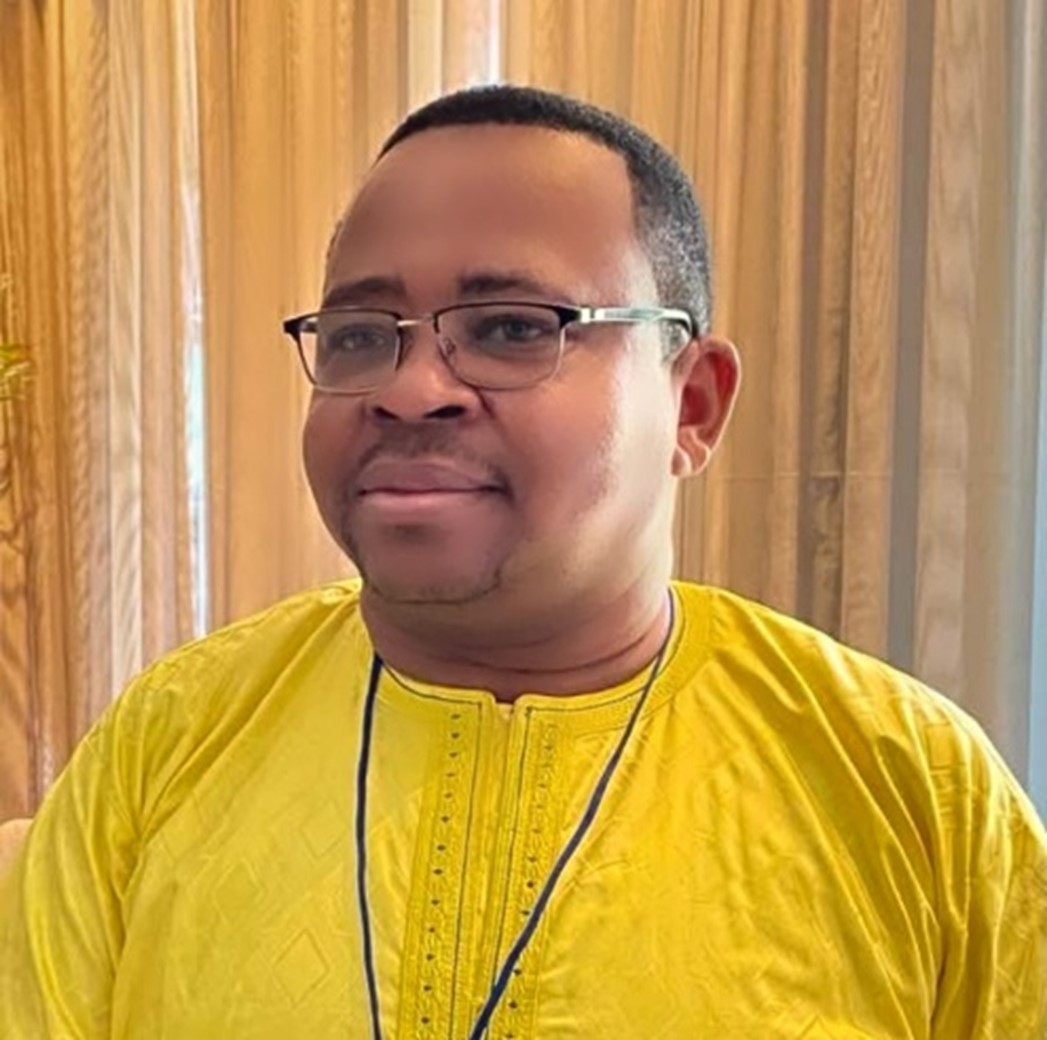 CIVICUS discusses the recentmilitary coup in Niger with Clément Kocou Gbedey, Niger’s National Coordinator of the West Africa Network for Peacebuilding (WANEP).
WANEP is a regional organisation founded in 1998 in response to the civil wars that ravaged West Africa in the 1990s. With over 700 member organisations, it includes national networks in every member state of the Economic Community of West African States (ECOWAS). Taking a collaborative approach to conflict prevention and peacebuilding, it works with civil society, governments, intergovernmental bodies and other partners to establish platforms for dialogue, experience sharing and learning. In 2002, it entered into a partnership with ECOWAS to implement a regional early warning and crisis response system.
What were the causes of the recent military coup, and what’s the state of public opinion?
The coup was triggered by the continuing deterioration in the security situation, poor economic and social governance, and corruption and misgovernment. Thousands of people took to the streets of Niger’s capital, Niamey, in a peaceful demonstration supporting the coup and criticising other West African countries for imposing financial and trade sanctions on Niger.
Why did this happen? Because Nigeriens have the impression that Western countries, especially France, are in the business of exploiting all the country’s riches, such as uranium, oil and gold. And Niger still ranks poorly in terms of human development. The deposed authorities are said to have issued contracts for France to exploit mining and energy resources that are vital fuel for nuclear power. And the benefits of these contracts are only shared at the top, without people ever having any right to anything.
What restrictions have been imposed on civic space in the wake of the coup, and how has civil society reacted?
The coup led to further restrictions on civic space, including the suspension of political party activities and censorship of the international media outlets RFI and France 24, along with the closure of airspace. These measures are designed to prevent any challenge to military power and to guard against any external intervention.
The coup has had major impacts on civil society in Niger. Some civil society groups have expressed their support for General Abdourahamane Tchiani, who arrested President Mohamed Bazoum, and his men, who they see as saviours in the face of the terrorist threat and President Bazoum’s poor governance. But others have denounced the coup as an attack on democracy and the rule of law, and have called for the reinstatement of the elected president.
How long does the junta intend to stay in power?
The junta has set itself a number of long-term objectives and, although it has not yet given any indication of how long it intends to stay in power, it does not appear to be planning to leave in the near future. Its stated objectives are to correct the inconsistencies and inefficiencies of the ousted government’s security management, to review the country’s security approach and protect it against terrorism, to renew relations with neighbouring countries, particularly Burkina Faso and Mali, to improve the education and health situation and to combat the misappropriation of public funds. In doing all this, it claims to be putting Niger’s interests first.
The biggest challenge facing the military regime is the very tough sanctions imposed by ECOWAS, designed to isolate Niger economically, politically and diplomatically.
What have been the results of the foreign military presence in Niger so far?
French presence in Niger has focused on fighting terrorism, training and equipping the Nigerien security forces and promoting stability in the region. France has operated in Niger as part of its Operation Barkhane, aimed at supporting the countries of the Sahel in their fight against armed jihadist groups.
For some time now, however, French presence has been controversial among some parts of civil society, which consider it ineffective, neocolonial and contrary to our national interests. As of late, anti-French sentiment has evolved.
For the time being there is no Russian presence in Niger, but since the coup a pro-Russian sentiment has gained ground in people’s minds The public thinks that ECOWAS and international institutions have remained insensitive to the cries of the civilian population and are ready to turn to another power that might perhaps be able to help them.
Do you think the international community has reacted adequately to the coup?
The international community has condemned the coup, but the deposed president wants more: he has urged the USA and ‘the entire international community’ to help ‘restore constitutional order’.
But how? Sanctions have only aggravated the situation. ECOWAS, which claims to be aligned with people’s aspirations, was quick off the mark in imposing sanctions on Niger. The sanctions should be escalating, but this has not been the case and the situation has become untenable. With borders closed, sanctions are having serious consequences for the people of Niger, who were already suffering from poverty, food insecurity and a health crisis. Power cuts, fuel shortages, rising prices of basic necessities and the paralysis of commercial activities are just some of the difficulties affecting the daily lives of the people of Niger.
Intervention by ECOWAS would further complicate the situation in Niger and other neighbouring countries and could even lead to a subregional conflagration. We believe that what the international response needs to do is continue to emphasise dialogue and negotiation, because threats don’t solve problems.
What international support is Niger’s civil society receiving, and what support does it need?
Right now we’re not receiving any support, because everything is shut down by the unjust sanctions imposed on Niger. However, Niger’s civil society would need additional support to ensure its protection, sustainability and independence in the face of the threats and pressure it is facing as a result of the sanctions imposed by ECOWAS and international institutions. It would also need support to strengthen dialogue with public authorities and international actors and among CSOs, in order to build a common and concerted vision of Niger’s development.
Civic space in Niger is rated ‘repressed’ by theCIVICUS Monitor.
Get in touch with WANEP through itswebsite orFacebook page, and follow@WANEP_Regional on Twitter.
The opinions expressed in this interview are those of the interviewee and do not necessarily reflect the views of CIVICUS.
-
NORTH KOREA: ‘It is time for the international community to adopt a ‘human rights up front’ approach’

 CIVICUS speaksabout the activism of North Korean escapees with Greg Scarlatoiu, Executive Director of the Committee for Human Rights in North Korea (HRNK).Founded in 2001 and based in the USA, HRNK is a human rights organisationwith the principal objective of raising international awareness of North Korea's human rights situation.
Is it possible to carry out any form of activism in North Korea?
No form of activism is possible in North Korea. There is no civil society due to an overwhelming and unprecedented level of coercion, control, surveillance and punishment. The markets that emerged following the famine of the 1990s and the newly created domestic mobile phone network allow North Koreans to engage in limited forms of market activity, but even this is subject to state surveillance and control. Every North Korean, regardless of whether they are a member of the ruling party or a government official, belongs to a party-controlled organisation, such as the Youth League or the Women’s Union. Anecdotal information from sources inside the country suggests that there is sporadic opposition and resistance to state agents at the local level, but the regime has gone to extreme lengths to prevent the emergence of any organised opposition.
Have there been any recent changes in how the North Korean regime responds to dissent?
Under the pretext of COVID-19 prevention, the North Korean regime has intensified its crackdown on those attempting to smuggle in information from the outside world or attempting to access such information. In December 2020 the Supreme People’s Assembly, North Korea’s highest legislative body, passed the ‘Anti-Reactionary Ideology and Culture Law’. This law imposes severe criminal penalties on those who access or disseminate foreign content, including movies, dramas, music and books. The penalties are especially severe, up to a life sentence of hard labour, for those who smuggle in or disseminate South Korean media.
How do people manage to escape North Korea?
Leaving the country without official authorisation is regarded as treason in North Korea. To escape, North Koreans need the assistance of religious networks, international civil society organisations (CSOs) and brokers who operate in the China-North Korea border region. The author and journalist Melanie Kirkpatrick has called this escape route ‘Asia’s underground railroad’. In some cases, family members or relatives who have already escaped pay brokers to arrange the escape. The most common route is through China and Southeast Asia. Upon arrival in Thailand, the escapees either choose to go to South Korea or apply for asylum in other countries.
However, since Kim Jong-un came to power in late 2011, the North Korean regime has intensified border security. The Chinese government has also taken steps that make it more difficult for the escapees to move inside China. In addition, the Chinese government has a longstanding policy of forced returns, whereby it repatriates any North Korean refugees arrested in its territory. This violates China’s obligations as a party to the 1951 Refugee Convention, since North Korean refugees face a credible fear of persecution upon return.
This, combined with the COVID-19 border lockdown, means the number of escapees reaching South Korea has plummeted. The highest annual recorded number of arrivals to South Korea was 2,914 in 2009, but this fell to only 67 in 2022. The easing of COVID-related measures is likely to result in a greater number of attempts to flee.
What kind of help do escapees receive?
Most escapees choose to go to South Korea, as they are granted citizenship upon arrival under South Korea’s constitution. The South Korean government provides various forms of economic, educational and job training assistance to North Korean refugees. International and local CSOs also help them adjust to life in South Korea.
The situation is still difficult for many escapees, given how different the two societies have become in over seven decades of division. According to the latest available data from South Korea’s Ministry of Unification, a total of 34,000 escapees have resettled in South Korea to date. Refugees who choose to go to other countries, including the UK and the USA, primarily receive help from CSOs and other escapees who have already relocated there.
How do escapees work to document and denounce human rights violations in North Korea?
North Korean escapees play a critical role, given their first-hand experience of life under the regime. Many refugees, including those who are survivors of North Korea’s detention facilities, provide vital testimony to CSOs that seek to document and raise awareness of human rights violations in North Korea. Escapee testimony has also played a critical role in the work of the United Nations (UN) Commission of Inquiry on Human Rights in North Korea, whose 2014 report concluded that the North Korean regime has committed crimes against humanity pursuant to policies determined at the highest levels of the state. Both the UN Special Rapporteur on the situation of human rights in North Korea and the Seoul office of the UN High Commissioner for Human Rights continue to work closely with North Korean escapees.
Some refugees operate their own organisations. In addition to documenting and raising global awareness of the human rights situation in North Korea, they are often involved in sending outside information to North Korean people. Methods they use include radio broadcasts, leaflet balloons flown across the Korean demilitarised zone and rice and micro-SD cards in plastic bottles that are floated across the maritime border between the two Koreas. It is also common for individual escapees to send money to family members in North Korea with the help of brokers.
How does HRNK support escapees?
HRNK works closely with North Korean escapees to document and raise awareness of the human rights situation in North Korea. Given the lack of on-the-ground access inside North Korea, we employ a methodology that combines satellite imagery analysis, witness testimony and open-source investigation.
Testimonies are often given by escapees who have already resettled in South Korea, although HRNK has sometimes obtained information through refugees with contacts inside North Korea. HRNK has held consultative status with the UN Economic and Social Council since April 2018 and reports to various UN bodies and hosts side events in Geneva and New York. We have facilitated the participation of North Korean escapees at these events to amplify their voices on the international stage.
What further international support do diaspora activists need?
North Korean activists need support from both private and public sources of funding. In general, North Korean human rights activists are overworked and underfunded. ‘Like-minded’ governments such as those of Japan, South Korea, the USA and others display interest in the issue but have often sidelined human rights concerns to focus solely on negotiating military, political and security matters. It is time for the international community to adopt a ‘human rights up front’ approach to North Korea, ensuring that human rights concerns are integrated into every aspect of its interactions with North Korea. Escapee activists will play a critical role in this effort.
Civic space in North Korea is rated ‘closed’ by theCIVICUS Monitor.
Get in touch with HRNK through itswebsite or itsFacebook page, and follow@committeehrnk onTwitter.
-
NORTH KOREA: ‘Since Kim Jong-un came to power, the surveillance and security system has increased dramatically’

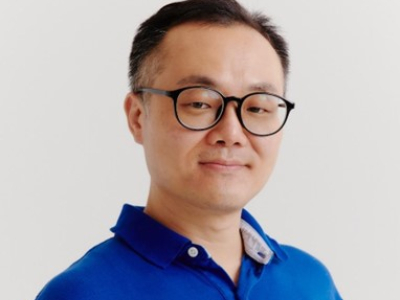 CIVICUS speaks about activism in the closed civic space of North Korea with Bada Nam, Secretary General of People for Successful Corean Reunification (PSCORE).
Founded in 2006 and based in South Korea, PSCORE is a human rights civil society organisation (CSO) that works to improve human rights in North Korea, assist North Korean escapees settling in South Korea and address barriers to reunification of the two Koreas.
Is there anything resembling civil society in North Korea?
North Korea values organisational activities, requiring every citizen to participate simultaneously in several groups such as the General Federation of Trade Unions of Korea, North Korea’s Socialist Women’s Union and the Socialist Patriotic Youth League. All of them are government-organised and exert control over people rather than encourage critical thinking. Mentioning civic organisations from the outside world is strictly forbidden.
Congregating and engaging in activism in any way critical to the regime is a serious criminal offence, with punishments that can extend to the death penalty. As a result, any such activity must be covert, and it’s difficult to obtain accurate information on the existence of an underground civil society.
North Korea is a surveillance state, where people are always cautious about what they say, even to close friends and family members. It’s impossible to gather colleagues and engage in civic activities because everyone is made to monitor each other and failure to report treasonous crimes to the authorities would also result in severe punishment. Public criticism sessions and public executions are also examples of how the regime strikes fear into the population.
People are deterred from opposing the government not only because of the extreme punishment they would face but also due to North Korea’s policy of guilt by association, which puts their close relatives at risk. The ‘Songbun’ class system classifies people according to their political loyalties, as ‘loyal’, ‘wavering’ or ‘hostile’, and family members may be demoted in this classification system, affecting their life opportunities, including career options and access to food rations. In serious cases, entire families may be sent to political camps and die from forced labour or starvation. Therefore, North Koreans don’t dare imagine opposing the government.
Have there been any recent changes in the ways the North Korean regime responds to dissent?
The North Korean government has always responded to dissent in an extreme manner. However, since Kim Jong-un came to power in 2011, the surveillance and security system has increased dramatically, making it nearly impossible to escape from North Korea. Extra security measures are in place along the borders and a shoot-to-kill policy is enforced against those trying to escape. The situation was exacerbated further during the COVID-19 pandemic when the China-North Korea border was closed, both halting trade and also impeding the flow of defectors.
Information poses the greatest threat to the North Korean regime, especially due to the influence of the recent ‘Korean wave’ that has made South Korean popular culture increasingly prevalent. Most people in North Korea have been exposed to South Korean dramas and music, leading some to adopt South Korean manner of speech and fashion style. In response, the government has intensified monitoring, enacted strict laws and imposed severe punishments for consuming or distributing foreign media. The Pyongyang Cultural Language Protection Act, enacted in January 2023, explicitly prohibits the use of foreign languages and specifically bans South Korean terms such as ‘oppa’, which translates as ‘older brother’ and is used as a form of endearment for a boyfriend.
How do people manage to escape North Korea?
Most North Koreans escape across the border with China, often with the help of a broker. Brokers reach out to wealthy families in North Korea or help those who have escaped to China get to South Korea. Defectors in South Korea sometimes contact a broker to help other family members flee.
China has a policy of forced repatriation for North Korean refugees, and its advanced surveillance system makes it extremely difficult to travel in China undetected. If apprehended and returned to North Korea, defectors and their families face severe punishment.
Most North Korean refugees must travel through several countries before reaching safety. From China, they might flee to Mongolia and Southeast Asian countries such as Laos, Thailand and Vietnam. Many North Koreans end up seeking asylum in Thailand, where the government assists them and helps organise their journey to South Korea.
What help do escapees receive?
The assistance available to North Korean refugees depends on the laws and diplomatic relations of countries with North and South Korea. Civil society, including PSCORE, helps North Korean defectors settle in South Korea by teaching essential life skills. Thanks to our volunteer teachers, we focus on providing educational support, including English lessons and vocational workshops. In the past, we also assisted escapees in reaching South Korea but, unfortunately, this became impossible due to China’s growing securitisation and the impact of COVID-19.
Once in South Korea, North Koreans must undergo a 12-week training programme at the Hanawon rehabilitation centre, where they learn various skills to adapt to the South Korean lifestyle and have access to medical treatment and mental health services. While the South Korean government has implemented programmes to assist refugees, the process of fully integrating into South Korean society is still difficult for people who have previously lived under the totalitarian regime. Psychological trauma from refugees’ journey to freedom may have lasting effects on their lives.
How do escapees work to raise awareness and advocate for change in North Korea?
There are many CSOs, mainly based in South Korea, that support North Koreans inside the country and abroad. Some organisations send messages, information, K-dramas and K-pop to North Korea using USB sticks. South Korean news outlets, such as Daily NK and NK News, have sources in North Korea that provide insights into the current situation. PSCORE and other North Korean human rights groups conduct interviews with defectors and publish reports based on their testimonies.
Our primary activities involve organising public awareness campaigns through seminars and events. We also share short catchy videos on various North Korea-related topics via our social media channels. Our large international team of interns plays a crucial role in advocacy by translating our social media content into various languages. This makes our mission and content visible to the rest of the world.
PSCORE was granted special consultative status with the United Nations (UN) Economic and Social Council (ECOSOC) in 2012, facilitating our engagement with the international community. We hold an annual side event at the UN Human Rights Council to share the latest information on North Korea’s human rights situation. We leverage international pressure to try to bring about change.
What further international support do diaspora activists need?
The topic of North Korean human rights is seen as a very political issue in South Korea. This means that CSOs are affected by each change of government, as policies toward North Korea shift with every administration. While PSCORE’s objective is centred on achieving peace and improving human rights in North Korea, we receive limited support compared to other CSOs due to the interpretation of our activities as politically charged, even though PSCORE is a non-partisan and non-religious CSO. Increased media exposure could help us secure more funding.
Insufficient funding is a common challenge for North Korean human rights organisations. It hinders the potential to raise awareness and support refugees in South Korea. North Korean activists need more platforms to amplify their voices and continue advocating for change. Still, we hope that more donations will come as the international community becomes more interested in the cause of human rights in North Korea.
Civic space in North Korea is rated ‘closed’ by theCIVICUS Monitor.
Get in touch with PSCORE through itswebsite or itsFacebook andInstagram pages, and follow@PSCORE911 on Twitter.
-
NORTHERN CYPRUS: ‘Civil society is not involved in decision-making and is considered a nuisance’

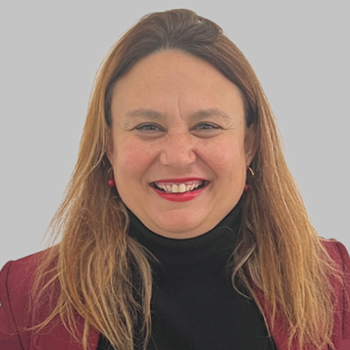 CIVICUS speaks with DeryaBeyatlı, Director of the Human Rights Platform,about the space for civil society in Northern Cyprus and the prospects for reunification in the context of the 2023 Cyprus and Turkish presidential elections.
Established in 2021, theHuman Rights Platform isa Turkish-Cypriot civil society umbrella organisation bringing together seven human rights organisations guided by the vision of an egalitarian, democratic and inclusive society where human rights and fundamental freedoms are protected and accessible for everyone.
What do you make of the results of the Cyprus presidential election?
In the latest presidential election, held in February 2023, we saw a rise of nationalist and racist rhetoric. In response to losing ground, the left-wing Progressive Party of Working People (AKEL) supported a candidate who was more nationalistic than the party itself, but was still defeated in the runoff by Nicos Christodoulides, who was backed by centrists and right-wing parties.
It is clear to me that over the past few years Cyprus has been affected by the same shift towards radical right-wing politics that we’ve seen elsewhere in Europe.
What does the Human Rights Platform work on?
One of the main objectives of the Human Rights Platform is to document human rights violations committed by the government of Northern Cyprus, which is largely controlled by the Turkish authorities. I have observed that both society and the local authorities are becoming more racist, largely in reaction to the inflow of Black students who are lured with the promise of a job in Europe and trafficked into the northern part of Cyprus. Only in 2020 was human trafficking recognised as a crime in Northern Cyprus, and yet more than two years later, there has been only one court verdict in a case involving this crime. The authorities are unwilling to deal with human trafficking crimes and other human rights violations and keep blaming the victims instead.
What is the current state of reunification talks?
Ever since 1974, Cyprus has been split along ethnic lines, with Greek and Turkish Cypriots living on either side of the Green Line, a buffer zone under United Nations (UN) control. Christodoulides assumed that reunification talks might resume due to Turkey’s rapprochement with the west in search of relief to address damage caused by recent earthquakes and right after being elected said that the reunification of Cyprus is his priority. However, I think neither him nor Ersin Tatar, the current president of Northern Cyprus, who has strongly advocated for a two-state solution for many years, nor the Turkish and Greek guarantors are actually interested in the reunification of Cyprus.
The two-state formula currently advocated by Tatar was put on the table back in 2002 by Rauf Denktash, the founding president of Northern Cyprus, and was widely rejected by UN member states, with the exception of Turkey. Turkish President Recep Tayyip Erdoğan has repeatedly expressed his support for the two-state solution, so I don´t think his re-election changes anything.
Reunification talks are currently on hold and I’m afraid we’re headed towards permanent division. Neither Turkey nor the Republic of Cyprus (RoC) are eager to give up the power they exercise and share it with Turkish Cypriots. We are in a sandwich position, where Turkey interferes with the local matters of Northern Cyprus and the RoC discriminates against Turkish-speaking citizens of the island.
One of the numerous human rights implications of the division of Cyprus is that there are around 30,000 children of mixed marriages who cannot get RoC citizenship and hence become European Union (EU) citizens. Despite Turkish language being an official language of the RoC, official documents and legislation are all in the Greek language, leaving Turkish Cypriots out. Turkish Cypriots cannot open a bank account or establish an association unless they live in government-controlled areas. And the list goes on.
What obstacles does civil society face in Northern Cyprus?
The division of the island creates challenging civic space conditions in Northern Cyprus, where the Human Rights Platform is registered. We face many obstacles due to the fact that we work in areas not under the effective control of the government of RoC. It’s very difficult to make our voices heard and get access to funding available to EU member states because we are not legally registered in a member state. Yet we cannot do so, since we do not reside in the government-controlled areas. Our only funding opportunity is the Financial Aid instrument of the European Commission (EC), which is highly competitive and offers limited funds to civil society.
The local authorities of Northern Cyprus prefer directing EU funds towards infrastructure and economic development, and regard supporting civil society as unnecessary and therefore a complete waste of funds. Turkish Cypriot civil society organisations (CSOs) aren’t involved in decision-making mechanisms and are considered a nuisance. Meanwhile, local public funds are only available to government-sponsored non-governmental organisations, also known as GONGOs, that are under the effective control of the Turkish Embassy and the Turkish Cypriot political leadership.
Perceived by local authorities as a threat, Turkish Cypriot civil society is silenced and sometimes attacked on mainstream media. Public TV, radio and news agencies are almost inaccessible for us. CSOs working to protect human rights and safeguard democracy in Northern Cyprus are systematically marginalised. Since we maintain relationships with the EC, EU member states and the USA, we are often regarded as ‘foreign agents’ and threatened and blackmailed, sometimes openly but mostly discreetly. A widely used tactic is the use of fake social media accounts promoting extremely nationalistic content and blaming Turkish Cypriot civil society activists for trading the country to the Greeks or to imperialistic powers.
What international support do Turkish Cypriot human rights CSOs need?
Most international intergovernmental organisations and their agencies prefer to ignore our presence. Since we are in a place the existence of which they don’t recognise, they refuse to even meet with us, let alone hear us out. We need both political and financial support in order to get stronger and become more effective in our struggle to uphold democracy and human rights in Northern Cyprus.
Civic space in Cyprus is rated ‘narrowed’ by theCIVICUS Monitor.
Get in touch with the Human Rights Platform through itswebsite or itsFacebook page, and follow@ihp_hrp and@DBeyatli on Twitter.
-
PAKISTAN: ‘It doesn’t matter who casts the vote as much as who counts the vote’

 CIVICUS speaks about Pakistan’s upcoming election with Muhammad Mudassar, Chief Executive Officer at the Society for Human Rights and Prisoners’ Aid (SHARP-Pakistan).
Founded in 1999, SHARP is a human rights civil society organisation working for the rights and wellbeing of vulnerable groups, including refugees and internally displaced people, and working on issues related to people trafficking and smuggling of migrants, including through advocacy at the national and international levels, capacity development, community services and emergency response.
What’s the political climate in Pakistan ahead of the election?
Post-COVID-19, like many global south countries Pakistan grapples with security concerns, political instability and economic challenges that affect both its citizens and government. This means that uncertainty loomed over the upcoming election, but the situation is much clearer now and the country is all set to vote for the new parliament. It would be unconstitutional to extend the mandate of the existing caretaker government. The Chief Justice of Pakistan has confirmed that it is set in stone that the general election should be held on time.
To what extent are conditions conducive to a free and fair election?
As had always been the case, there’s controversy around the election, which many observers feel lacks conditions for fair competition. While some political parties are free to conduct their activities, others claim to face restrictions in submitting nomination papers and campaigning, and their members are subjected to arrests.
Over the past 75 years, no prime minister of Pakistan has completed a full five-year term, and they have often ended up in jail. This trend started with Zulficar Ali Bhutto, deposed during martial law in 1977, followed by his daughter Benazir Bhutto, who was dismissed twice. A similar fate befell recent former prime ministers Nawaz Sharif and Imran Khan.
Nawaz Sharif’s Pakistan Muslim League (PML-N) has had ample space for campaigning, even though Sharif, a three-time former prime minister, was ousted for alleged corruption in 2017 and sentenced to 10 years in prison. In October 2023, he returned to Pakistan from exile in the UK, where he had travelled on bail for medical treatment in 2018. Sharif’s corruption conviction and his lifetime ban from politics were overturned by the Supreme Court in early January. Now most political commentators are predicting that the PML-N will win the election.
In comparison, Imran Khan’s Pakistan Tehreek-e-Insaf (PTI) party is complaining that it has been all but barred from participating in the election. The Electoral Commission of Pakistan disqualified Khan due to one conviction out of around 200 cases against him and barred the party from using its famous cricket bat symbol on ballot papers. Khan has also recently received 10 and 14-year sentences on charges of leaking state secrets and corruption. Nomination papers of most national and provincial PTI leaders were rejected by District Returning Officers but appellate tribunals of higher judiciary subsequently accepted most and allowed them to context elections.
Further, there’s no democracy within political parties due to nepotism and dynastic leadership. Most political parties function as family dynasties, which drives independent leaders away. It has rarely been about people’s choices. It doesn’t matter who casts the vote as much as who counts the vote.
How have civic space conditions changed over the past years?
The media and civil society are divided and, human rights activists comment, there is an atmosphere of discontent that somewhat hinders the freedom of speech. Further, unemployment and other pressing issues continue to prompt many people to leave Pakistan.
Still, at SHARP-Pakistan we remain hopeful and keep analysing problems to try to offer solutions. As part of Pakistani civil society, we aspire to forge connections, work alongside and learn from international partners to be able to better promote human rights and democracy at home. We need free and fair elections so that results truly reflect the will of the people.
How are you and other civil society groups engaging with the election?
The role of civil society in the election takes the form of support for the institutional processes of a democratic vote well as the more substantive development of a democratic electorate. Civil society is also playing its due role in reducing election-related conflict dynamics and promoting a peaceful electoral environment.
Civic space in Pakistan is rated ‘repressed’ by theCIVICUS Monitor.
-
PAKISTAN: ‘The government must hold accountable those responsible for excessive force against protesters’
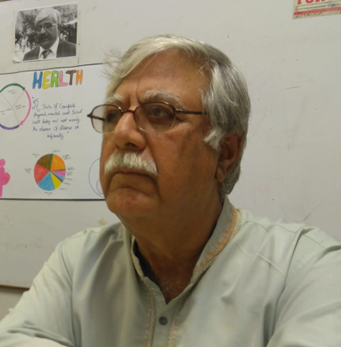
 CIVICUS discusses recent protests in Pakistan with Asad Iqbal Butt, chairperson of the Human Rights Commission of Pakistan, a civil society organisation that works for the realisation of the full range of human rights for all of Pakistan’s citizens and residents.
Protests erupted in response to the rising cost of food, fuel and utilities in Pakistan-controlled Kashmir. The situation quickly escalated into violence. Several protesters and a police officer were killed and many protesters were injured and arrested. As tensions flared, traders closed their shops, exacerbating economic disruption. The Kashmiri prime ministeracknowledged the protesters’ grievances but stressed the need to maintain peace and stability, while Pakistan’s president called a high-level meeting to devise a response. Having narrowly avoided defaulting on its foreign debt last year, Pakistan is now seeking a new bailout package from the International Monetary Fund.
What triggered the protests, and how did the government respond?
Since March 2023, Azad Jammu and Kashmir (AJK) has witnessed several large-scale protests, with people taking to the streets to demand subsidised electricity and flour. Led by the Jammu Kashmir Joint Awami Action Committee (JAAC), a civil society group, these protests have also called for the removal of unnecessary perks and privileges enjoyed by politicians and bureaucrats.
The movement gained momentum in May 2024. On 11 May, thousands of people responded to the JAAC’s call and began marching towards the capital, Muzaffarabad. The entire region came to a standstill as reports of violent clashes and casualties emerged, first on social media and then in mainstream media.
Shortly after the first verified reports of violence, the Human Rights Commission of Pakistan launched a fact-finding mission, on 16 and 17 May. We found that ahead of the protests, the AJK government had sent a request to the Pakistani government for paramilitary and civilian forces. This signalled its intention to use force against protesters. Deployment of additional forces began on 3 May, almost a week before the call for protests and the long march. But it was the involvement of the Pakistan Rangers, a federal paramilitary force, that marked a significant escalation. Their entry into Muzaffarabad and alleged unauthorised use of force contributed to the violence.
Key incidents during the protests included a police raid on 10 May on the residence of Shaukat Nawaz Mir, an elected traders’ leader, which resulted in arrests and clashes. On 8 May, an assistant commissioner reportedly assaulted an older person in Dodyal, Mirpur. A crackdown on the JAAC leadership in Kotli, Mirpur and Muzaffarabad further inflamed public anger, leading to retaliatory attacks on government officials and property.
On 10 May, a crippling shutdown and wheel-jam strike took place, followed by violent clashes between police and protesters. Police arrested scores of activists and clashes resulted in injuries on both sides. The long march from Mirpur to Muzaffarabad on 11 May was marred by violent clashes. A police sub-inspector was killed and many police officers and protesters were injured.
The entry of the Rangers, their lack of coordination with local authorities and the perception they were being deployed to violently suppress the protests fuelled violence. Clashes in Muzaffarabad left three protesters dead and many others injured. The situation escalated when the Rangers resorted to teargas shelling and firing.
Who organised and led the protests?
These protests were unprecedented because they were leaderless, not driven by a political agenda or led by a political party. A cross-section of civil society took part in or documented the protests, including journalists, lawyers, students, traders and young people.
There were other demands apart from those put forward by JAAC. Civil society lawyers emphasised that the people of AJK are highly sensitive about their identity, particularly following India’s revocation of the special constitutional status of Indian-occupied Kashmir. This explained their concern about any perceived attempts to undermine AJK’s special status or deny recognition of Kashmiris’ rights over their natural resources.
Although not directly involved in the protests, many women from civil society expressed their solidarity with the movement. One woman said that even though she knew the government would use violence against protesters, she hadn’t stopped her young son going to the march because the protest was necessary to make people’s voices heard.
What are civil society’s demands to the government?
Civil society groups, including the HRCP, have primarily called on the AJK government to listen to people’s legitimate demands for economic rights and better governance, and to show restraint and engage with protesters through peaceful dialogue and negotiation.
The government must also hold those responsible for excessive force against protesters accountable, following an independent investigation, including to help prevent future abuses. The use of paramilitary forces against AJK citizens is also cause for serious concern and should not recur.
The AJK government must respect human rights, including the rights to freedom of peaceful assembly and expression and the right to life. It must also implement sustainable economic relief measures, including subsidies and price controls, to address immediate public needs.
Additionally, the Pakistani federal government should ensure that legislative powers in AJK lie with the elected AJK Assembly. Finally, AJK should be given control over its natural resources, while Pakistan’s earnings from its use of AJK’s water and electricity must be shared more equitably.
How can the international community help?
The international community should monitor potential human rights abuses in AJK and, where possible, press the Pakistani government to ensure they do not recur. It is important to exert moral pressure on the government to respect, protect and fulfil the democratic and fundamental freedoms of the people of AJK.
Civic space in Pakistan is rated ‘repressed’ by theCIVICUS Monitor.
Get in touch with the Human Rights Commission of Pakistan through itswebsite and follow@HRCP87 on Twitter.
-
Pakistan:‘International support to civil society must come with understanding of our political & societal context’

CIVICUS speaks about the political situation in Pakistan since the removal of its Prime Minister Imran Khan with journalist and researcher Rabia Mehmood.
Rabia Mehmoodis the co-founder of a bi-lingual multimedia news outlet Naya Daur TV and a web-show host covering human rights and social justice stories. She is the former South Asia Researcher for Amnesty International. Her work focuses on state repression, impunity and persecution of religious minorities.
What led to the ousting of Imran Khan as prime minister through a no-confidence vote?
Khan was ousted from power in April through a constitutional vote of no confidence brought about by the Pakistan Democratic Movement (PDM), a parliamentary coalition of multiple parties. The coalition secured 174 votes in the 342-member house in support of the no-confidence motion.
That was the tipping point after weeks of political upheaval. Khan’s administration was criticised by the opposition for failures in governance, soaring inflation and for plunging the country into a diplomatic crisis as his foreign policy distanced Pakistan from the USA.
To try to block the vote, Khan dissolved the lower house of parliament, but the Supreme Court declared the dissolution unconstitutional. Following the parliamentary vote, Shehbaz Sharif, former Chief Minister of Punjab from the Pakistan Muslim League-Nawaz (PMLN) and brother of former Prime Minister Nawaz Sharif, was appointed the new Prime Minister. Sharif is a long-time rival of Khan.
Since the July 2018 election, the opposition claimed that Khan’s ascent to power was enabled by political engineering by the country’s military establishment. His administration was termed a ‘hybrid regime’, in which Khan was the civilian face of the generals. The key reason behind Khan’s removal is believed to be his falling out with powerful forces within the military, often referred to as the ‘deep state’.
Regarding the involvement of the military in Pakistan’s political unrest, it is important to note that the Chief of Army Staff (COAS) is considered by many to be the most powerful position in Pakistan. The current COAS, Qamar Bajwa, appointed by Nawaz Sharif in 2016, is finally due to retire in November after six years.
Sharif was disqualified in 2017 and put behind bars following a corruption scandal. But after Khan won the election in 2018, he granted Bajwa an extension in August 2019. Bajwa was at the time known to be a great believer in the Khan project, along with the former Inter-Services Intelligence (ISI) chief General Faiz Hameed, now Commander of Peshawar Corps. But Bajwa, it appears, has now withdrawn support from Khan.
Hameed is known to have a different relationship with Khan, and Khan was reliant on him. He was deeply involved in the Khan administration’s repression, in addition to engineering unrest on the streets by an alt-right Islamist group in 2017, which led to further disruption of Sharif’s party.
It remains to be seen whether Bajwa is seeking yet another extension in November or a safe and comfortable exit, which would pave the way for a new COAS. Analysts estimate that Khan had to be got rid of due to these possible changes in November, and it was an easy task for the military to replace Khan because of his administration’s unsatisfactory governance and economic performance.
The military has repeatedly claimed to be a ‘neutral umpire’ during this political fiasco. In the run-up to Khan’s ousting and afterwards, Khan’s tactics, of slamming the armed forces and the current ISI chief, show his dissatisfaction with the military institution’s neutrality.
How has Khan responded?
In response to the vote of no confidence, Khan also accused the US government of orchestrating regime change in Pakistan. This allegation is based on a diplomatic cable that he claimed was ‘evidence’. When Khan dissolved the assembly ahead of the vote, he had resolved to present the diplomatic cable as evidence of foreign intervention.
It was later reported that the military explained to parliament’s National Security Committee in March that it had found no evidence of US involvement in regime change, something the White House concurred with.
In April, as soon as Khan was ousted, he and his party leaders began using terms like ‘American conspiracy’ and ‘international conspiracy’, online and offline. Khan called his opponents ‘thieves’ and ‘traitors’, and one of his close aides called in a public rally for the execution of the ‘traitor opposition’. During his public and press addresses, Khan has called for mutiny, incited his party supporters to commit civil disobedience and encouraged them to retaliate physically.
Since then Khan has held multiple public rallies across Pakistan and in July his party, Pakistan Tehreek-e-Insaf (PTI), swept by-elections in Punjab, the country’s most populous province, and traditionally a PMLN stronghold. Now the already weak incumbent central government in the centre is facing further hostility from Punjab.
Khan has been calling for general elections. His narrative has a strong following in the country, and his support base appears to be in resurgence.
What is the current political and economic situation?
Pakistan is stuck in limbo due to a worsening political, legal and economic crisis. The leadership is divided between the Sharif-led coalition government and federal ministries led by the Pakistan People's Party (PPP), such as the ministry of foreign affairs. Provinces are also split between different parties, with Khan’s PTI leading in the two provinces.
The coalition government is weak and uncertainty over its immediate future looms large. Analysts assume that the ‘deep state’ will not allow for a strong civilian central government, and that a divided parliament is what it seeks to achieve.
The new government has taken over a fragile economy. Pakistan entered the International Monetary Fund programme in 2019, and the most recent funding was due in February, but fuel and power tariff caps imposed by the Khan administration halted the next cycle. The new government has now managed to negotiate and get clearance for another payment, but this has come at the price of tough economic decisions, with the burden impacting on the working masses and the salaried class.
Fuel prices have increased exponentially, which are causing a rise in commodity prices and exacerbating food inflation. Meanwhile, political and economic uncertainty is also causing the currency to depreciate quickly. In the budget for the current fiscal year, the government increased tax and hiked fuel prices. Pakistan’s foreign debt is US$6.4 billion, but at least the immediate risk of bankruptcy has reduced for now.
Access to basic services, free healthcare and education and adequate housing is increasingly out of reach of most of Pakistan’s 220 million people. Pakistan is essentially a poor country with some very rich families and an army with a massive budget. Instability is having severe repercussions for citizens in terms of their rights and the rule of law.
Civilian and military rulers have been too reliant on seeking bailout packages instead of focusing on long-term solutions such as taxing the rich and the corporate sector, or developing agriculture and increasing industrial exports. Economic stagnation, however, is not the fault of just one government.
Has the removal of Khan had a positive influence on Pakistan’s repressed civic space?
Pakistan’s track record on the freedoms of association, peaceful assembly and expression has been murky for decades. Civil society groups and activists have long been labelled as foreign agents, funded by anti-Pakistan forces. It is one of the most dangerous countries in the world to be a journalist in. Religious minorities are persecuted and discriminated against through institutions, draconian laws and violence. Ethnic minorities are brutalised for demanding basic rights and protections from the state. The military establishment and security agencies operate with impunity.
In that context, the battle to defend civic space and media freedom is not new. But since the run-up to the July 2018 election, Pakistanis have been subjected to one of the most repressive eras of the country’s history. Press censorship has been widespread, curtailing any media attempts to question or report on significant issues such as Sharif’s disqualification, the role of the judiciary and military and reports of election rigging.
Khan established his place as a populist leader, and was called a press predator by Reporters Without Borders. During the Khan administration, journalists, human rights defenders (HRDs) and dissenting citizens were targeted with trumped-up charges of sedition, cyber terrorism and defamation of national institutions, along with arbitrary arrests, raids, disappearances, surveillance and beatings. Journalists were arbitrarily arrested for questioning and reporting on the alleged involvement in corruption of Khan’s wife, Bushara Bibi. Mainstream cable news networks were only allowed to attack opposition parties and their leaders, and portray Khan as the supreme leader. Civil rights movements, such as the Pashtun Tahaffuz Mahaz, were subjected to a discriminatory crackdown. Their rights to freedoms of movement, peaceful assembly and expression, online and offline, have been continuously violated.
To a degree, Khan’s ousting has given slight breathing space to Pakistan’s repressed HRDs, civil society and journalists. The difference could be that reprisals can be documented in the press, by domestic rights monitors and be televised, with less fear. But this is only relative, as red lines for both the media and civil society still exist.
The threats and discrimination against ethnic, religious and sexual minorities continue. There are incidents of the use of force against peaceful protesting families of disappeared members of Baloch people, enforced disappearances and discriminatory harassment of Baloch students. A former journalist was arbitrarily detained over online criticism of the army chief. While peacefully protesting, civil society collectives, HRDs and families of the disappeared were shelled in the city of Quetta on 21 July.
Severely partisan journalists who acted as agents of disinformation and supported the Khan administration by actively targeting minorities, critical media, HRDs and the opposition are now on the receiving end of hostility from security agencies, as they are questioning the military over its alleged role in Khan’s ousting and lack of support for him.
What is the future of Pakistan’s democracy?
It appears to be bleak. Pakistan’s democratic process has been undermined severely by decades of dictatorships, the military establishment’s concealed intervention in civilian rule, the dubious role of the judiciary and a short-sighted, craven approach by civilian political parties.
Since its inception, Pakistan has been ruled by military dictators directly for 33 years, and they have controlled who gets to rule and how from behind the scenes. No civilian prime minister has ever completed their full five-year term. Real power lies in the hands of the generals, who set up hybrid regimes in collaboration with civilian leaders.
General Zia-ul-Haq overthrew the government of PPP’s charismatic Zulfiqar Ali Bhutto in a coup d’état in 1977. In 1979, Bhutto was executed by a severely partisan Supreme Court, while Zia became president. Over the decades, the capitulation of the civilian ruling elite and the role of the judiciary in sanctioning coups have also contributed to the derailing of the country’s ever-fragile democracy.
For example, former Prime Minister Sharif’s disqualification was widely believed to have been a consequence of a ‘judicial coup’. The National Accountability Bureau chaired by a former Supreme Court judge was severely partisan and flawed, and used to victimise leaders of the PMLN and PPP.
Decades of conflict in the north-western region, the military’s reliance on militant groups as its proxies and the current resurgence of militant outfits at the border all pose a threat to Pakistan’s stability and consequently its democracy. Sectarian outfits are enduring. Nationalist ethnicities in Sindh and elsewhere are treated with extreme suspicion, which causes the growth of their young people’s resentment towards the state.
For example, the armed insurgency in Balochistan province has its roots in a lack of trust in the military and the state’s discriminatory policies. The people of the mineral-rich province are poor and have been subjected to human rights abuses and violence for years. Meanwhile, barely any efforts to build trust among Baloch people have been made by state institutions. The militarisation of multiple regions and violence perpetrated on citizens are contrary to democratic norms.
Unless the constitution and parliament are held supreme in the true sense of the word, and intervention by the powers-that-be isn’t kept in check, Pakistan’s democracy will not be able to address its many challenges and will remain at risk.
How has civil society engaged with political developments? What kind of international support does Pakistani civil society need?
Civil society and collectives of HRDs have responded to the political developments with caution but courage. Civil society and HRDs understand where the centre of power lies in Pakistan. Yet it has not stopped them from asking the right questions and leading human rights campaigns. Overall, from larger civil society organisations to smaller but critical collectives, civil society has stood in support of the primacy of parliament, the constitution and democratic processes.
Years of demonisation of civil society and labelling of HRDs and journalists as anti-state and servers of foreign, western agendas have made it easy for propagandists and authoritarian sections of the state to put targets on the backs of people. International solidarity is essential for Pakistani civil society. But now with disinformation and propaganda smear campaigns on the rise, the support must come with an understanding of the political and societal context of Pakistan.
Religious, ethnic, sexual and gender minorities, journalists, civil society workers and HRDs remain at risk, not only due to state reprisals but also the threat of violence from extremist groups.
Relief and protection of at-risk communities are not possible without the support and alliance of regional and like-minded international civil society networks. Exchange among civil society networks across regions must also continue to come up with new ways of fighting systems of oppression.
Civic space in Pakistan is rated ‘repressed’ by the CIVICUS Monitor.
Get in touch with Rabia Mehmood through her Twitter account@Rabail26.
-
PANAMA: ‘We’ll have to stay vigilant and resist any attempt to curtail rights and freedoms’


CIVICUS discusses the results of Panama’srecent presidential election with Olga de Obaldía, executive director of the Foundation for the Development of Civic Freedom.
The Foundation for the Development of Civic Freedom is a civil society organisation working to defend fundamental freedoms, empower citizens for democratic participation and strengthen democracy by promoting transparency and the struggle against corruption.
Who is José Raúl Mulino, and why did he win the election?
Mulino won the election in large part due to the popularity and charisma of former President Ricardo Martinelli, and also in part due to the peculiarities of the Panamanian electoral system.
Martinelli campaigned despite being disqualified from running for or holding public office after being convicted of money laundering in a major corruption scheme involving overpriced road construction. He initially tried to register his wife as his running mate, presumably in order to give her his place if his legal troubles made it impossible for him to run. But he abandoned the plan because the constitution forbids the president appointing close relatives.
Instead of his wife, he appointed Mulino, his security minister between 2009 and 2014. Martinelli’s conviction became final in February: he was sentenced to more than 10 years in prison and, in order to avoid prison, he sought asylum in the Nicaraguan embassy. The Electoral Court allowed Mulino to take Martinelli’s place. This decision was appealed on the grounds of unconstitutionality, but two days before the election the Supreme Court upheld the Electoral Court’s decision.
Convicted or not, Martinelli maintained his enormous popularity and, from his embassy confinement, launched a media campaign based on the slogan ‘Mulino is me’, an attempt to transfer his core electoral support, estimated at between 30 and 35 per cent, to Mulino.
Since Panama elects its president by a simple majority of votes, without a runoff, and there were eight candidates, Mulino won with 34 per cent of the vote.
This electoral system should be revised to ensure the popular will is respected. However, it’s worth noting that Panamanians were civic-minded and accepted the result peacefully even though most had voted against the president-elect.
What were Mulino’s campaign promises?
Among other things, Mulino promised to ‘put money in people’s pockets’ and build infrastructure, notably a train linking the city of David, in the far east of the country, with Panama City. This was justified on the grounds that it would improve transport between the interior and capital and stimulate economic development in remote and neglected regions.
Another recurring theme in Mulino’s campaign was the need to put an end to what was characterised as ‘judicial persecution’. Martinelli’s party contains many people indicted for corruption during his administration. Several of them have been elected to the Central American Parliament, which grants them immunity from prosecution under a treaty that equates their privileges with those of national deputies.
During the election campaign, the possibility of ‘closing’ the Darién Gap, the border with Colombia, was also mentioned as a way of stemming the flow of migrants through the jungle. However, the feasibility and impact of this measure are unclear. Previous bans aimed at stopping migration have only encouraged clandestine approaches and exacerbated humanitarian problems. The situation in the Darién is complex and need far-reaching solutions.
These promises were clearly popular with some parts of the public, but their feasibility and potential consequences should be carefully considered.
Finally, another promise was to ‘help’ former President Martinelli. It is not yet clear what form this help will take. The president-elect has said his government will follow the rule of law, and his first major test will be to resolve the ex-president’s impasse in the Nicaraguan embassy, from where he continues to try to influence national politics.
What should the new government do to address the country’s key social and economic challenges?
The new government will have to make critical decisions in a context of deep economic crisis. One of them is to save the social security system.
Panama is one of the most unequal countries in the world. Informal labour has reached 55 per cent, with 20,000 jobs not recovered since the pandemic. The social security system is on the verge of bankruptcy: it covers 80 per cent of people, but only 30 per cent pay contributions. The pension system now lacks the funds to meet its future obligations and could collapse.
Economic problems are compounded by falling investment. Public debt has risen to US$49 billion, with no clear investment in infrastructure or job creation. The state is due to make its first major debt payment in three months, but does not appear to have sufficient funds to meet it.
The president-elect has announced he will seek to form a government of national unity. It is unclear what form this will take, but it’s clear that given the scale of the problems, a coalition government or some form of cross-sectoral cooperation is the only way forward. According to the president-elect’s statements, business would be his natural ally in finding solutions.
Under what conditions does civil society operate in Panama, and can changes be expected under the new government?
As elections approached, our small civil society faced a recurring phenomenon: an exodus towards partisan political activity. While some civil society organisations like ours are professionalised – with a board, administrative staff, a budget and defined structures – most rely on volunteers. Traditionally, a reverse exodus from non-winning political parties towards civil society organisations happens after elections.
In addition, few organisations focus their work on advocacy for civil and political rights and freedoms and democratic governance. Most focus on poverty alleviation or the provision of social services such as health and education. In these roles, they tend to be partners with the state in the implementation of official programmes. In recent years, however, we have witnessed an increase in activism and the formation of new identity-based groups demanding equal rights, while new youth groups have arisen at the national level as a political and social force largely responsible for the success of national mobilisations against open-pit mining in October and November 2023.
In the 2024 electoral campaign, while civil society participation remained limited, since there are few organisations dedicated to promoting civic values or fundamental freedoms, we saw several non-partisan initiatives to enable informed voting, and several organisations, including us, joined together in this effort.
We don’t know what will happen under the new government, but we are concerned about the Martinelli administration’s record of restricting civic space through intimidation of critical organisations and the judicial harassment of activists and journalists. It is unclear what trajectory the Mulino government will follow, but we’ll have to stay vigilant and resist any attempt to curtail fundamental rights and freedoms or restrict civic space.
Civic space in Panama is rated ‘narrowed’ by theCIVICUS Monitor.
Get in touch with the Foundation for the Development of Civic Freedom through itswebsite orFacebook page, and follow @libertciudadana onInstagram andTwitter.
-
PARAGUAY: ‘Very tough years are ahead for civil society that promotes human rights’

 CIVICUS discusses Paraguay’s recent general election with Marta Ferrara, executive director of Seeds for Democracy (Semillas para la Democracia).
Founded in 2006, Seeds for Democracy is a civil society organisation (CSO) whose main objective is to contribute to the improvement of the quality of democracy in Paraguay by promoting citizen participation, social equity and accountable governance.
What are Paraguay’s main challenges, and to what extent could the results of the recent election contribute to solving them?
Paraguay’s main problems are fundamentally economic, stemming from deep inequality. In recent years, Paraguay has had very good macroeconomic indicators, with high growth, but has remained very unequal, with high unemployment, large numbers of people in informal work and lack of access to health, education and opportunities. It is a country run by immensely wealthy cattle-ranching and agro-exporting elites who rule for their own benefit and to the detriment of a terribly unequal society. I believe this is the central characteristic of Paraguayan society and economy. It is a deep, structural problem, and this election has done nothing to solve it. The same people as always have won: the same sectors that have kept the country in this situation for more than 70 years.
At stake in this election was the possibility of alternation in power. However, that would not necessarily have meant radical change, because the presidential candidate of Concertación, the opposition coalition, was also a conservative, albeit from the Liberal Party. His running mate was a woman, but he still represented a conservative sector of society. These were not disruptive candidacies representing a real change in the way politics is conducted, in the way power is exercised, in terms of public policies or representing different social sectors.
How do you explain the comfortable win for the Colorado Party, despite the incumbent president’s very low approval rating?
The results can be explained to a large extent by the effects, which we already anticipated, of the system of unblocked lists with preferential voting in the context of a divided opposition.
A couple of years ago there was an electoral reform that replaced the closed and blocked party lists with unblocked lists with preferential voting. In these, the voter can select a candidate within the list of their choice, in order to vote for both a party and a candidate; then, according to the number of votes obtained by each candidate and their list, seats are distributed by the D’Hont system.
This system was introduced in the last municipal elections and we already knew that it would have some negative effects. A big problem with unblocked lists is that generally the candidate with the most money is the one who gets ahead. They also cause strong competition of all against all within parties.
In addition, the old system was replaced by electronic ballot boxes without sufficient training, meaning that people were not well prepared to use the new system. This allowed the spread of so-called ‘assisted voting’, which is illegal, and which basically consists of having people at polling stations interfering with voting with the excuse of helping voters use the electronic system.
All this benefited the Colorado Party, which has been at the helm of the state for a long time and is therefore the one with the most resources, and which has sufficient internal diversity to be able to provide replacement options for those who are dissatisfied with their government they lead.
There were, however, some small improvements in women’s representation. For the first time two women have been elected governors and there are more women than before in both houses of Congress.
But with the opposition divided, the Colorado Party won by the widest margin in Paraguay’s democratic history. In addition to winning the presidency, it won control of both houses of Congress and 15 of 17 governorships.
The other defining feature of this election was the emergence of a third opposition political grouping with a populist-authoritarian and messianic style. Led by Paraguayo Cubas, it represents so-called ‘angry voters’, those dissatisfied with traditional parties and the way politics has been conducted for decades. This candidacy did not take votes away from the government but from the opposition, and unexpectedly came in a close third place, with more than 20 per cent.
What is the basis for the allegations of fraud voiced by protesters?
The followers of Paraguayo Cubas, joined by people from practically all sectors of the opposition, many of them young people disaffected with politics, have taken to the streets en masse across the country to denounce fraud, despite the fact that their candidate got a very good vote, which they did not expect. The fact that an anti-establishment group is mobilising protests on a scale not seen in a long time represents a major challenge for the future of democracy in Paraguay.
This was a relatively peaceful election in which there was virtually no violence. What there was plenty of was disinformation, hate speech and social media attacks throughout the campaign. These aggressions strongly affected CSOs, including our own, Seeds for Democracy, and came mostly from the ruling party and the party and supporters of Paraguayo Cubas, although Concertación also launched similar attacks against its political opponents.
What role did civil society play during the election?
Civil society played a relatively important role, despite the restrictions it has faced. The Electoral Court initially did not authorise civil society election observation and instead issued a rather restrictive regulation. It finally accepted that the Sakã Consortium, a civil society coalition, would carry out observation and a parallel count, but with very many restrictions.
Seeds for Democracy has been actively involved in denouncing the problems of political financing, an issue we have succeeded in placing on the agenda. The other major problem in Paraguay, along with enormous inequality, is corruption. Lack of control over money in politics has brought groups linked to organised crime to power, both in Congress and in governors’ offices.
We will soon be working on political finance control. In Paraguay, campaign spending is controlled after elections. A month later, when the parties submit their statements, we begin to monitor them through the Electoral Court’s Citizen Observatory of Political Financing, cross-checking data on public contracts with the sworn statements published on public agencies’ websites. Paraguay’s freedom of information legislation is quite good and enables us to do this work.
How do you see the future of democracy in Paraguay?
In the medium to long term I see a very difficult situation. There are many things to be resolved in order to improve the quality of democracy. The emerging political group is violent, anti-rights, fundamentalist and messianic. Its inspiration is the popular authoritarian president of El Salvador, Nayib Bukele, and his way of ruling, so I think we are in for some very tough years ahead.
The section of the Colorado Party that won the election is one whose leaders attack civil society. They are anti-rights: they define themselves as ‘pro-life’, they are against equal marriage and sexual and reproductive rights and they attack all issues related to gender rights. That’s why I think civil society is in for a very tough few years. The various segments of civil society, especially those working on rights issues, are going to have to make big efforts to join together and undertake collective action.
At the moment, some organisations have some funding from international cooperation sources, and we hope that this support will increase and strengthen so that we can work together to face all these challenges. It will be a constant struggle, all the more difficult because we have already seen attacks against freedom of expression and press freedom.
I do not expect much in the coming months. For the time being, we must stay vigilant to understand which way things are going. But what is certain is that very tough years are ahead for CSOs that promote human rights.
Civic space in Paraguay is rated ‘obstructed’ by theCIVICUS Monitor.
Get in touch with Seeds for Democracy through theirwebsite orFacebook page, and follow@semillaspy on Twitter.
-
PERU: ‘Constitutional debate has taken on new relevance as a result of the protests’
 CIVICUS speaks about recent protests in Peru with Rafael Barrio de Mendoza, a researcher on processes of territorial transformation from Grupo Propuesta Ciudadana, a consortium of 10 civil society organisations with a presence in 16 regions of Peru. Propuesta Ciudadana seeks to contribute to the formulation of policy proposals for an inclusive state and the adequate management of public resources. It promotes a vision of territorial governance that starts with the identification of and respect for diversity and in which democratic development is a key component.
What triggered the protests that broke out in Peru in November 2020?
The immediate cause was the decision by a parliamentary majority to force out President Martín Vizcarra, using a mechanism that had been scarcely used in the past and whose content and process involve a wide margin of discretion. The publication of accusations against Vizcarra was carried out in a sequence that proved to be planned, and a feeling prevailed that they were instrumentalised by the so-called ‘vacating coalition’. Although there is some controversy regarding the quality of the evidence brought forward about the crimes Vizcarra is accused of, allegedly committed during his term as governor of the Moquegua region five years ago, a consensus formed in public opinion that these accusations could have been credibly pursued after the end of his presidential term, given that general elections had already been called for April 2021.
But from a more structural point of view, the political crisis was the expression of the maturing of a crisis of political representation, which made it apparent that there were few organic links between politicians and citizens’ sensibilities and that we have a precarious and cartelised system of political representation, in which a myriad of illegal, informal and oligopolistic interests have resisted successive generations of reforms – educational, judicial, fiscal and political, among others – aimed at regulating them. Revelations of corruption involving much of the political establishment, including the Lava Jato/Odebrecht case and the White Collars case, which uncovered a widespread network of corruption within the judicial system, resulted in a consensus that the management of public affairs had irremediably deteriorated. At the same time, the relative effectiveness of the fiscal measures taken against the political leaders involved in these cases fuelled the prospect of a cleansing of the political class and the possibility of cultivating a transition to a better system of representation. To a certain extent, the populist link that Vizcarra established with this sensitivity – sealed with the constitutional dissolution of the previous Congress, in which former President Alberto Fujimori’s party had a majority – was the factor that sustained his government, which lacked parliamentary, business, media, or trade union support. Vizcarra’s removal was experienced as the comeback of a constellation of interests that had experienced a setback as a consequence of prosecutors’ work and recent education, political and judicial reforms.
How would you describe the institutional conflict that resulted in the removal and replacement of the president?
Institutional conflict arose due to the precarious character of a political system that included a new Congress with multiple caucuses but none of them of the president’s party and a president who enjoyed popular support but lacked institutional backing, and whose legitimacy was therefore sustained on his versatile management of public debate through a combination of political gestures, the recruitment of competent technicians in key positions and a calculated exercise of antagonism with Congress on key issues such as education, political and judicial reforms.
The majority coalition in Congress broadly took up the agenda and represented the interests of the former so-called ‘Fujiaprist’ majority – described in reference to the tacit alliance between the Aprista party and the political movement founded by former President Fujimori – on top of which it added new populist demands that put at risk the budgetary and macroeconomic management that enjoyed technocratic consensus. In this context, certain people who had survived the dissolution of the previous Congress managed to reposition themselves in the new one and conduct, alongside some media outlets, a campaign seeking to undermine Vizcarra’s popularity by levelling accusations of corruption in unclear cases. These were the dynamics that fed the institutional conflict.
For its part, civil society provided a unified response to the president’s removal and the new regime that resulted from it. Their response ranged from expressing concern and demanding accountability to openly condemning the establishment of the new administration. The mass protests and repression they faced fuelled this shift in most of civil society. Many civil society organisations played an active role in framing the conflict, producing a narrative for international audiences and putting pressure on the state actors with whom they interact.
Who mobilised, and what did they demand?
At first, demonstrators protested against the removal of President Vizcarra and against the inauguration of the president of Congress, Manuel Merino, as the new president. A subsequent survey by Ipsos showed that just over three quarters of the population agreed with the protest against President Vizcarra’s removal and that at least two million people mobilised in one way or another or took an active part in the protests.
The demonstrations were led mostly by young people, between 16 and 30 years old, who did most of the organising and produced the protest’s repertoires and tactics. The generalised mood of weariness was embodied by the so-called ‘bicentennial generation’, born after the end of the Fujimori regime, who are digital natives and, for the most part, disaffected with conventional politics. This is also a mesocratic generation – both in the traditional segments of the middle class and in the popular sectors – that is embedded in virtual communities mediated by digital platforms. This partly explains the speed with which organisational forms emerged that were efficient enough to produce repertoires, coordinate actions, document protests and shift public opinion. The mediation of social media and the use of micro money transfer applications led to a decentralised organisation of the protests, with multiple demonstrations taking place in different locations, a variety of converging calls and a diversity of repertoires and channels for the rapid transfer of resources.
The youth-led mobilisation was fed by a middle class willing to assume the cost of demonstrating. Around this nucleus coalesced, both sociologically and territorially, other segments of the population, more or less used to conventional protest strategies or simply distant from all public participation.
The protests began on 9 November, followed by daily demonstrations, and reached their peak on 14 November, when the Second National March took place. The so-called 14N mass mobilisation was fuelled by the sudden awakening of a fed-up feeling that ran through society and was particularly intense among young people. Hence its exceptional character in terms of its scope, magnitude, level of organisation and the rapid adoption of a non-partisan citizen identity, which could only be partly explained by the existing support for Vizcarra, as it far exceeded it.
14N culminated with the death of two young protesters who were hit by lead bullets. Merino had taken over on 10 November and formed a radically conservative government. The nature of his cabinet quickly revealed itself through the authorisation of severe repression of the protest, particularly in the capital, Lima. After the first days of police violence, the president of the Council of Ministers congratulated and guaranteed protection to the police squads involved. The deaths that took place on 14N resulted in overwhelming citizen pressure, triggering a cascade of disaffection among the few political supporters sustaining the regime. As a result, by midday on 15 November Merino had resigned.
The space generated by the mobilisation was populated by a number of heterogeneous demands, ranging from the reinstatement of Vizcarra to the demand for constitutional change to pave the way out of neoliberalism, including citizen-based proposals focused on the defence of democracy, the continuity of reforms, the injustice of the repression, and the insensitivity of the political class regarding the pandemic health emergency. Ferment for these demands continues to exist and it remains to be seen how they end up taking shape in the electoral scenario of 2021.
How did these protests differ from others in the past? Were there any changes related to the context of the pandemic?
In previous urban mobilisations, the coordination mechanisms provided by social media had already been tested, but these demonstrations had been led by conventional groups, such as social movements, political parties and trade unions. On this occasion, new activist groups were formed, including to deactivate teargas projectiles and to provide medical relief, which are similar to mobilisation techniques tested in other scenarios, such as the Hong Kong protests and the Black Lives Matter protests in the USA. This speaks of the emergence of global protest learning spaces.
In part, it was the health emergency that conditioned the composition of the protests, which were mostly made up of young people, while also encouraging the dissemination of new repertoires, such as ‘cacerolazos’ (pot banging), ‘bocinazos’ (horn blowing) and digital activism among those more reluctant to take to the streets. At the same time, the massive character of the protests can be explained by the fact that health indicators at the time suggested the end of the first wave of COVID-19 infections, and by the fact that the Black Lives Matter marches had not been linked to any relevant outbreaks, which encouraged a sense of safety among protesters.
Why did protesters demand constitutional reform, and what kind of constitutional reform do they want?
Proposals of constitutional change were among the demands of the mobilisation, but they were not its main demands. They did however gain new impetus in public debate. The history of these demands can be traced in two ways. Constitutional change through a constituent assembly has been one of the key demands of the left since the end of the Fujimori regime, which ruled from 1990 to 2001. Right after its fall, a congress was convened with a constituent mandate, but it was unable to produce a new constitution; since then this aspiration has come to live in the progressive camp, while it has lost popularity among more moderate and right-wing groups. The left often presents the mythical 1979 Constitution as an alternative, proposes new texts inspired by the Bolivian and Ecuadorian processes, and points to the illegitimate character of the current constitution, born after a coup d’état. The sustained economic growth of the post-Fujimori decades and a number of reforms of some constitutional mechanisms conferred legitimacy on the constitution, but many of the institutions and principles it enshrines have been rendered obsolete by the sociological and economic changes they helped bring about.
The second source of the demand for constitutional change is more organic and follows the realisation of the limits of the market model, apparent above all in the persistent lack of social protection, precarious and informal work and abuses by oligopoly interests in service provision, as well as in the crisis of the system of political representation. Vizcarra inaugurated a reformist stance in judicial and political matters, as well in the legal frameworks governing extractive industries and the pension system. He also continued with education reform. His reformist spirit – viewed by moderate groups as a path to a ‘responsible’ transition – was attacked by the political forces representing the sectors that had been affected by the reforms, creating a space in which reform aspirations can be promoted in the language of constitutional change.
Even so, this debate has taken on new relevance as a result of the 14N protests. However, the terms of the conversation and the content of the most significant changes are not yet clear, and neither is the existence of mature political actors capable of interpreting and implementing them. Danger lies in the possibility that, in a context of high uncertainty, the process may end up being defined by those whose motivations are foreign to the spirit of change.
Civic space in Peru is rated as ‘obstructed’ by theCIVICUS Monitor.
Get in touch with Propuesta Ciudadana through itswebsite orFacebook page, and follow@prop_ciudadana and@BarrioZevallos on Twitter. -
PERU: ‘It is necessary to restore trust in elections’

CIVICUS speaks with Iván Lanegra, secretary general of Transparency Civil Association (Asociación Civil Transparencia), about Peru’s recent presidential elections and the state of its democracy. Transparency is an independent civil society organisation that works to improve the quality of democracy and political representation by facilitating dialogue between political, governmental and civil society actors, implementing education and capacity-building programmes for citizen and political leadership, developing public policy proposals and observing electoral processes.
What was different and what was at stake in this election?
The recent general election was embedded in several political and social processes. First, it took place at the end of a very politically unstable five-year period, in which we had four presidents – Pedro Kuczynski, Martín Vizcarra, Manuel Merino and Francisco Sagasti – and Congress was constitutionally dissolved. At the same time, the economy was no longer growing as much, and social discontent began to increase. In this context, corruption scandals undermined the credibility of political parties. This was compounded by the socio-economic impact of the pandemic, which fuelled greater demands for redistribution.
As a result of all these processes, there was an atomisation of citizens’ preferences. The effects of this situation translated into high fragmentation of the vote in the parliamentary elections of January 2020 and, again, in the first round of the presidential election, held in April 2021, in which the two candidates who came out on top, and therefore went on to the second round, jointly received barely 33 per cent of the vote. There are 10 different political parties represented in our 130-seat Congress.
In the second electoral round, the victory of Pedro Castillo, of the left-wing Perú Libre (Free Peru) party over Keiko Fujimori, of the right-wing Fuerza Popular (Popular Force), showed the importance of the demands for change and rejection of conventional politics that grew in recent years.
However, the announcement of the official results was severely delayed, which created a climate of great uncertainty. In a context of high polarisation, there was an exponential increase in the number of appeals against the election results: normally, fewer than a dozen are filed, but on this occasion there were more than a thousand, none of which were considered well-founded. These appeals were used instrumentally: unfounded allegations of fraud were used to prolong the process as much as possible and to try to prevent the announcement of the results. While this attempt was unsuccessful, it delayed the transfer of power and increased distrust of politics and electoral institutions.
Why did many people not vote?
The rate of absenteeism in the first electoral round was almost 30 per cent, somewhat higher than in the 2020 legislative elections, when it reached 26 per cent; however, it dropped to less than 24 per cent in the runoff election. It is important to bear in mind that the first round of election took place when the COVID-19 pandemic was at its highest point in Peru. In other countries, such as Chile, it was not even possible to hold a vote due to the health emergency, but the elections took place normally in Peru. In fact, what is remarkable is that absenteeism wasn’t any higher.
What role did Transparency play in relation to the electoral process?
In the run-up to the election, as part of the #DecideBien (#ChooseWell) campaign, Transparency disseminated systematic information about the parties, their candidates and their proposals, so that citizens could assess their options. We broke down the parties’ policy programmes so that each person could learn about and compare the proposals of each candidate on the issues that interested them, and vote on the basis on that knowledge.
In addition, we invited citizens to register with the National Transparency Volunteer Network to become election observers. From our perspective, election observation consists of monitoring, providing guidance and bearing witness to the events that take place during election day, as well as educating citizens about electoral conduct and rules.
With this network of volunteers, Transparency observed the election process and from the outset we noted that the electoral process had been conducted normally, with only the kind of minor incidents that tend to occur in all elections, but which do not affect the results.
In view of the unfounded allegations that were made in an attempt to discredit the process, we also worked to counter electoral disinformation. The phenomenon of disinformation on social media, particularly after the runoff election, was much stronger than in previous elections, and the electoral authorities themselves had to set up teams dedicated almost exclusively to debunking ‘fake news’. The climate of polarisation surely contributed to increasing the impact of disinformation.
What political challenges lie ahead in the aftermath of the election?
The main challenges are how to reduce distrust in the state, how to address dissatisfaction with democracy and how to improve political representation. Although compared to these challenges, political polarisation, which was exacerbated in the electoral context, is less of a concern, it must also be considered. While the most radicalised sectors continue to fuel polarisation, they are in the minority. They managed to polarise the election because they were able to get through to the second round despite having received a low percentage of the vote, but after the election, the majority of citizens are far from the extremes. However, it is important to bear in mind that distrust, dissatisfaction and the feeling of lack of representation are elements that those who seek to exploit polarisation can use to their advantage.
It is necessary to restore trust in elections. To this end, we must continue to educate and inform citizens about the rules of elections, politics and democracy. We must also improve the mechanisms available to us for combatting disinformation. It is also necessary to move electoral reforms forward, in order to create incentives for the strengthening of political parties, as well as to improve the quality of political representation.
Civic space in Peru is rated ‘obstructed’ by theCIVICUS Monitor.
Get in touch with Transparency Civil Association through itswebsite or itsFacebook,Instagram andTik Tok pages, and follow@actransparencia and@ilanegra on Twitter. -
PERU: ‘Political and social instability has already cost dozens of lives’

 CIVICUS speaks about the political crisis in Peru with Nadia Ramos, CEO of the Women’s Leadership Centre of the Americas and official spokesperson for the Hemispheric Network Somos Lideresas, two organisations that promote women’s leadership and empowerment in Peru and Latin America.
 -
PHILIPPINES: ‘Historical memory of martial law under Marcos Senior gives us strength to persevere’

 CIVICUS speaks withCristina Palabay, Secretary General of Karapatan, about the human rights situation in the Philippines since the start ofFerdinand Marcos Junior’s government.
Founded in 1995, Karapatan isan alliance of civil society activists and organisations working for the promotion and protection of human rights in the Philippines. Its founders and members have been at the forefront of the human rights struggle in the Philippines since the time of Ferdinand Marcos Senior’s martial law regime.
What have the government’s policy priorities been in its first year?
Ferdinand Marcos Junior, known as Bongbong Marcos, the son of former dictator Ferdinand Marcos, was inaugurated for a six-year presidential term on 30 June 2022, succeeding Rodrigo Duterte, whose rule was marked by closing civic space and attacks against civil society activists.
While the new government tries to make it look like its policy priorities are aimed at addressing the economic crisis and its impacts on the debt-ridden domestic economy, this is not the case. Inflation and unemployment rates continue to rise while disproportionate shares of the budget are allocated to militarist policies rather than social services. These are insufficient palliatives and the government continues to invoke the crisis situation to justify the continuing violations of economic, social and cultural rights.
No substantial efforts have been made to curb corruption. But one after another, graft allegations against members of the Marcos family are being dismissed by the courts, which enables them to keep the money siphoned from the nation’s coffers.
The new administration tries to present itself as more humane than its predecessor in relation to the so-called ‘war on drugs’, but reports from the ground prove that extrajudicial killings and abuses of power by the police are ongoing. Moreover, Marcos Junior stands firmly behind Duterte in rejecting the International Criminal Court’s independent investigations into the thousands of killings committed under Duterte’s watch.
While mainstream surveys say that Marcos Junior maintains the trust of the population, people on the ground are increasingly questioning his rule because they see that his campaign promises to lower the prices of basic commodities and costs of services aren’t being fulfilled.
Have conditions for civil society worsened under Marcos Junior’s rule?
There seems to be no essential or substantial change in the relationship between the government and Filipino civil society, which continues to be hostile. If there is any change at all, it seems to be rather negative, considering the cumulative effect of the continuing human rights violations, attacks on civic and democratic space, dire lack of justice and accountability, and the prevalent culture of impunity.
The conditions for civil society have worsened due to the accumulation of restrictions that the state has continued to impose on civic space. These include red-tagging – the practice of labelling people and groups as associated with or sympathetic to the communist movement or progressive movements, judicial harassment and illegal or arbitrary arrests and detention of human rights defenders (HRDs). We have witnessed an increased use of counter-terrorism laws against HRDs, political dissenters, journalists and workers in churches and faith-based institutions. Violations of freedoms of association, expression and peaceful assembly have clearly continued.
The recently adopted National Security Policy bodes ill for those working towards the achievement of just and lasting peace and upholding and defending human rights, because it affirms all the policies of the Duterte administration, including the institutionalisation of a government task force that has been notorious for committing red-tagging and other forms of human rights violations. Additionally, Marcos Junior hasn’t issued a clear policy statement concerning human rights.
What challenges does Karapatan face as a human rights organisation?
Filipino civil society organisations remain steadfast in our collective work to uphold and defend human rights in the Philippines. Our historical memory of martial law under Marcos Senior gives us the strength to persevere in our human rights advocacy despite all the restrictions and challenges.
Karapatan specifically continues to face numerous challenges. One of our staff members, Alexander Philip Abinguna, remains in jail on trumped-up charges. Our national officers continue to face judicial harassment, threats and red-tagging. We are in constant fear of physical attacks and the use of draconian laws against us. However, at our recent National Council meeting, we expressed an even stronger determination to continue doing our human rights work, demanding justice for all victims of violations of human rights and international humanitarian law, resisting all forms of authoritarianism, fighting for a truly democratic country and building a human rights culture.
What international support does Filipino civil society receive, and what further support do you need?
We appreciate the tenacious political, moral and material support that the international community provides to Filipino civil society to defend and uphold human rights. Karapatan calls on its international friends and allies to further strengthen this spirit of international solidarity by amplifying our calls to your communities and peoples, to your parliaments and governments and to international mechanisms such as the United Nations Human Rights Council. We likewise appreciate any political and material support for victims of human rights violations, including HRDs at risk and their families and communities.
Civic space in the Philippines is rated ‘repressed’ by theCIVICUS Monitor.
Get in touch with Karapatan through itswebsite or itsFacebook page, and follow@karapatan and@TinayPalabay onTwitter.
-
PHILIPPINES: ‘The government is headed by a former dictator’s son who reached power in a suspicious manner’
 CIVICUS speaks with Nymia Pimentel-Simbulanabout the human rights situation in the Philippines since the start ofFerdinand Marcos Junior’s government.Nymia ischairperson of the Philippine Alliance of Human Rights Advocates (PAHRA) and Executive Director of thePhilippine Human Rights Information Center (PhilRights).
Established in 1991, PhilRights serves as PAHRA’s research and information centre. Its vision is that of a society where each person can fully realise their potential, participate effectively in economic, political and cultural life and benefit from economic progress.
Has the relationship between government and civil society changed under the new government?
The relationship between state and civil society hasn’t changed under the new government – it hasn’t worsened, but it hasn’t improved either. However, since the government is now headed by the son of a former dictator who came to power in a suspicious manner, civil society organisations (CSOs) approach it with caution, scepticism and a lukewarm attitude.
Overall, conditions for civil society work have not improved, as numerous policies and programmes that restrict the activities and functioning of CSOs, particularly human rights organisations, remain in effect. For instance, the Anti-Terrorism Act of 2020 (Republic Act 11,497), which has the National Task Force to End Local Communist Armed Conflict (NTF-ELCAC) as its primary implementing entity, persists in its campaign to discredit human rights advocates through red-tagging – labelling people and groups as associated with communism. Threats, harassment and killings of human rights defenders (HRDs) – including civil society activists, environmentalists, human rights lawyers, trade unionists and Indigenous leaders – have continued. Journalists such as 2021 Nobel Peace Prize winner Maria Ressa have not been exempt from attacks either. Multiple trumped-up charges have been filed against her as part of the government’s sustained efforts to stifle dissent.
Has the government shifted its focus from the ‘war on drugs’ to other policy issues?
We have not seen any significant differences in priorities or approaches to economic, foreign relations, environmental and human rights issues between current president Ferdinando Marcos Junior and former president Rodrigo Duterte.
However, while the focus on the drug problem remains, there has been a discursive shift from Duterte’s punitive and violent approach to an anti-drug campaign emphasising prevention and rehabilitation. But this hasn’t translated into an end to extrajudicial killings, which continue unabated in impoverished urban areas that are known to be havens for drug-related activities. Dahas, a research group from the University of the Philippines, reported 342 instances of drug-related killings carried out by state and non-state groups and people during the first year of the new government. The targets of the anti-drug campaign continue to be minor drug users and low-level peddlers. As happened under the previous administration, prominent drug lords remain untouched.
Meanwhile, people’s quality of life continues to decline and food insecurity has worsened due to the impact of continuous increases in oil and fuel prices, pushing up the cost of essential commodities and services. Staples such as rice, sugar, onions and flour have become scarce in many Filipino households. The president has failed to take decisive action on the pressing food problem, even though he also serves as Secretary of Agriculture.
What support does the president enjoy?
According to a recent survey, the president enjoys substantial approval and trust ratings, standing at around 80 per cent. These scores are consistent across regions and socioeconomic groups.
I believe this phenomenon reflects how the government’s information and communication machinery has effectively crafted, packaged and disseminated Marcos Junior’s and his administration’s endeavours, policies and priorities, primarily featuring messages of unity and concern for the poor. Social media platforms such as Facebook, TikTok and YouTube have served as the main channels for conveying these messages, enabling the government to reach out to the majority of the population, who predominantly rely on social media as news sources.
How is Filipino civil society working to protect and promote human rights?
Filipino CSOs, including PhilRights, are actively involved in human rights education, research, documentation of rights violations and community mobilisation through grassroots organisations, schools, universities, factories and churches.
Civil society pursues five primary goals. We advocate for the adoption of the Human Rights Defenders Protection Bill and combat the vilification campaign against HRDs, including the red-tagging of civil society activists. We seek justice for victims of extrajudicial killings in the context of the ‘war on drugs’ through lobbying at the United Nations Human Rights Council (UNHRC) and International Criminal Court. We work to address economic concerns, including food insecurity, by trying to achieve reductions in the costs of basic goods and services, promoting decent employment opportunities and fair wages and providing adequate housing for urban poor residents. We engage in environmental protection efforts, which involve advocating for an end to large-scale mining activities like open-pit mining, particularly in Indigenous peoples’ communities.
How is the international community supporting this work?
Filipino civil society benefits from international solidarity coming from various government missions, human rights organisations and religious groups that support our lobbying efforts at the UNHRC. They release press statements, position papers and reports addressing human rights issues and concerns in the Philippines. They provide essential funding and material assistance to Filipino CSOs for our diverse human rights and development initiatives. Moreover, as leaders of civil society and HRDs, we are frequently invited to speak about the human rights situation in the Philippines to organisations and groups abroad, keeping them informed and keeping solidarity alive.
Civic space in the Philippines is rated ‘repressed’ by theCIVICUS Monitor.
Get in touch withPhilRights through itswebsite or itsFacebook page, and follow@PhilRights onTwitter.
-
PHILIPPINES: ‘We fear the democracy those before us fought so hard for will be erased’
CIVICUS speaks about the recent presidential election in the Philippines with Marinel Ubaldo, a young climate activist, co-founder of the Youth Leaders for Environmental Action Federation and Advocacy Officer for Ecological Justice and Youth Engagement of Living Laudato Si’ Philippines (LLS).
Founded by Catholic lay people, LLS began in 2018 as an interfaith movement calling on Filipino financial institutions to divest from coal-related operations and other environmentally harmful activities. It aims to empower people to adopt lifestyles and attitudes that match the urgent need to care for the planet. It promotes sustainable development and seeks to tackle the climate crisis through collective action.
From your perspective, what was at stake in the 9 May presidential election?
The 2022 election fell within the crucial window for climate justice. As stated in the latest report by the Intergovernmental Panel on Climate Change, we need to keep global warming below 1.5 degrees Celsius or we will suffer terrible consequences, such as a rise in sea levels that will submerge much of the currently populated land, including the Philippines. Upcoming leaders will serve for the next six years –and possibly beyond. They have the immense responsibility of putting a climate change mitigation system in place for our country and urging more countries to do the same.
As shown by Super Typhoon Rai that hit the Philippines in December 2021, climate change affects all of us. Whole communities lost their loved ones and their homes. Young people will reap the fruits, or pay the consequences, for whatever our incoming leaders do in response to this crisis. This is why climate anxiety is so prevalent among young people.
How did young people mobilise around this election?
Young people campaigned house to house. We also went to grassroots communities to educate voters on how to vote wisely. Alongside other organisations that form the Green Thumb Coalition, our organisation produced a Green Scorecard and we used our social media platforms to promote the ‘green’ candidate.
One of the biggest youth initiatives around the elections was ‘LOVE, 52’, a campaign aimed at empowering young people and helping them engage with candidates and make their voices heard in demand of a green, just, and loveable future through better governance. We wanted to shift the focus from candidates’ personality and patronage politics to a debate on fundamental issues, and to help young people move traditional powerholders towards a people-centred style of policymaking.
We called this initiative ‘LOVE, 52’ in reference to the fact that young people – people under 40 – comprise 52 per cent of the Philippines’ voting population. We sought to appeal to younger voters’ emotions, and our central theme was love because a frequent response to the question ‘why vote?’ is to protect what we love: our families, our country, and our environment. The main element of this campaign was a ‘love letter’ drafted by several youth organisations and addressed to the country. It contained young people’s calls to incoming leaders, including those of prioritising environmental and social issues, coming up with a coherent plan to address the climate crisis, and supporting a vibrant democracy that will enable climate and environmental justice. We gathered all the love letters people wrote, put them in one envelope, and delivered them physically to the presidential candidates’ headquarters.
What are the implications of the election results for civil society and civic freedoms?
The results of these elections will have a lot of implications for the Filipino people. They will have a direct impact on civil society and our freedoms of association, expression and peaceful assembly.
The winning candidate, senator Ferdinand ‘Bongbong’ Marcos Jr., the son and namesake of a former dictator, has said that he will include his family in his administration. Just today, I saw the new president’s spokesperson on the news saying Marcos will make his own appointments, bringing in the people he trusts. I think he will really try to control the government with people who follow him unconditionally. He will put such people in all the positions available, so everyone will tell him what he wants to hear and no one will disagree with him. I think this is the scariest part of it all.
I fear in a few months or years we will be living under a dictatorship. Marcos may even be able to stay in power for as long as he wants. After trying to reach power for so long, he has finally won, and he won’t let go of power easily.
It’s very scary because the human rights violations that happened during his father’s dictatorship are not even settled yet. More human rights violations are likely to happen. It’s a fact that the Filipino people won’t be allowed to raise their voices; if they do so, they may risk being killed. This is what happened under martial law during Ferdinand Marcos’s dictatorship.
This will definitely affect civil society. It will be very difficult for humanitarian workers to respond to any crisis since Marcos will likely aspire to micro-manage everything. We fear the democracy those before us fought so hard for will be erased.
Regarding the specifics of policymaking, we don’t really know what the plan is. Marcos campaigned on vague promises of national unity and implied that all problems would be solved if people unite behind his leadership. Needless to say, he never mentioned any policy to tackle climate change and the environmental crisis.
Against all signals, I keep hoping the new administration will be receptive to people’s demands. I really hope our new president listens to the cries of the people. Our leaders must reach out to communities and listen to our issues. I doubt Bongbong Marcos is capable of doing that, but one can only hope.
What support does Filipino civil society need from international civil society and the international community?
We need to ensure the international community sends out a consistent message and stands by our side when oppression starts. We also need them to be ready to rescue Filipinos if their safety is at risk. We activists fear for our lives. We have doubts about how receptive and accepting the new administration will be toward civil society.
Today is a gloomy day in the Philippines. We did our best to campaign for truth, facts, and hope for the Philippines. Vice President Leni Robredo campaigned for public sector transparency and vowed to lead a government that cares for the people and bolsters the medical system. If she had won the elections, she would have been the third woman to lead the Philippines after Cory Aquino and Macapagal Arroyo.
Leni’s loss is the loss of the Philippines, not just hers. There are still too many people in the Philippines who believe Marcos’s lies. I don’t blame the masses for believing his lies; they are victims of decades of disinformation. Our system sadly enables disinformation. This is something that needs to be urgently tackled, but the next administration will likely benefit from it so it will hardly do what’s needed.
We now fear every day for our lives and for the future of our country.
Civic space inthe Philippinesis rated ‘repressed’ by theCIVICUS Monitor.
Get in touch with Living Laudato Si’ Philippines through itswebsite or itsFacebook page, and follow@LaudatoSiPH on Twitter and@laudatosiph on Instagram.