


North Korea
-
CM Feed Test 2

North Korea north korea north korea north korea north korea north korea north korea north korea north korea north korea north korea north korea north korea north korea north korea north korea north korea north korea north korea north korea north korea north korea north korea north korea north korea north korea north korea north korea north korea north korea north korea north korea.
-
NORTH KOREA: ‘It is time for the international community to adopt a ‘human rights up front’ approach’

 CIVICUS speaksabout the activism of North Korean escapees with Greg Scarlatoiu, Executive Director of the Committee for Human Rights in North Korea (HRNK).Founded in 2001 and based in the USA, HRNK is a human rights organisationwith the principal objective of raising international awareness of North Korea's human rights situation.
Is it possible to carry out any form of activism in North Korea?
No form of activism is possible in North Korea. There is no civil society due to an overwhelming and unprecedented level of coercion, control, surveillance and punishment. The markets that emerged following the famine of the 1990s and the newly created domestic mobile phone network allow North Koreans to engage in limited forms of market activity, but even this is subject to state surveillance and control. Every North Korean, regardless of whether they are a member of the ruling party or a government official, belongs to a party-controlled organisation, such as the Youth League or the Women’s Union. Anecdotal information from sources inside the country suggests that there is sporadic opposition and resistance to state agents at the local level, but the regime has gone to extreme lengths to prevent the emergence of any organised opposition.
Have there been any recent changes in how the North Korean regime responds to dissent?
Under the pretext of COVID-19 prevention, the North Korean regime has intensified its crackdown on those attempting to smuggle in information from the outside world or attempting to access such information. In December 2020 the Supreme People’s Assembly, North Korea’s highest legislative body, passed the ‘Anti-Reactionary Ideology and Culture Law’. This law imposes severe criminal penalties on those who access or disseminate foreign content, including movies, dramas, music and books. The penalties are especially severe, up to a life sentence of hard labour, for those who smuggle in or disseminate South Korean media.
How do people manage to escape North Korea?
Leaving the country without official authorisation is regarded as treason in North Korea. To escape, North Koreans need the assistance of religious networks, international civil society organisations (CSOs) and brokers who operate in the China-North Korea border region. The author and journalist Melanie Kirkpatrick has called this escape route ‘Asia’s underground railroad’. In some cases, family members or relatives who have already escaped pay brokers to arrange the escape. The most common route is through China and Southeast Asia. Upon arrival in Thailand, the escapees either choose to go to South Korea or apply for asylum in other countries.
However, since Kim Jong-un came to power in late 2011, the North Korean regime has intensified border security. The Chinese government has also taken steps that make it more difficult for the escapees to move inside China. In addition, the Chinese government has a longstanding policy of forced returns, whereby it repatriates any North Korean refugees arrested in its territory. This violates China’s obligations as a party to the 1951 Refugee Convention, since North Korean refugees face a credible fear of persecution upon return.
This, combined with the COVID-19 border lockdown, means the number of escapees reaching South Korea has plummeted. The highest annual recorded number of arrivals to South Korea was 2,914 in 2009, but this fell to only 67 in 2022. The easing of COVID-related measures is likely to result in a greater number of attempts to flee.
What kind of help do escapees receive?
Most escapees choose to go to South Korea, as they are granted citizenship upon arrival under South Korea’s constitution. The South Korean government provides various forms of economic, educational and job training assistance to North Korean refugees. International and local CSOs also help them adjust to life in South Korea.
The situation is still difficult for many escapees, given how different the two societies have become in over seven decades of division. According to the latest available data from South Korea’s Ministry of Unification, a total of 34,000 escapees have resettled in South Korea to date. Refugees who choose to go to other countries, including the UK and the USA, primarily receive help from CSOs and other escapees who have already relocated there.
How do escapees work to document and denounce human rights violations in North Korea?
North Korean escapees play a critical role, given their first-hand experience of life under the regime. Many refugees, including those who are survivors of North Korea’s detention facilities, provide vital testimony to CSOs that seek to document and raise awareness of human rights violations in North Korea. Escapee testimony has also played a critical role in the work of the United Nations (UN) Commission of Inquiry on Human Rights in North Korea, whose 2014 report concluded that the North Korean regime has committed crimes against humanity pursuant to policies determined at the highest levels of the state. Both the UN Special Rapporteur on the situation of human rights in North Korea and the Seoul office of the UN High Commissioner for Human Rights continue to work closely with North Korean escapees.
Some refugees operate their own organisations. In addition to documenting and raising global awareness of the human rights situation in North Korea, they are often involved in sending outside information to North Korean people. Methods they use include radio broadcasts, leaflet balloons flown across the Korean demilitarised zone and rice and micro-SD cards in plastic bottles that are floated across the maritime border between the two Koreas. It is also common for individual escapees to send money to family members in North Korea with the help of brokers.
How does HRNK support escapees?
HRNK works closely with North Korean escapees to document and raise awareness of the human rights situation in North Korea. Given the lack of on-the-ground access inside North Korea, we employ a methodology that combines satellite imagery analysis, witness testimony and open-source investigation.
Testimonies are often given by escapees who have already resettled in South Korea, although HRNK has sometimes obtained information through refugees with contacts inside North Korea. HRNK has held consultative status with the UN Economic and Social Council since April 2018 and reports to various UN bodies and hosts side events in Geneva and New York. We have facilitated the participation of North Korean escapees at these events to amplify their voices on the international stage.
What further international support do diaspora activists need?
North Korean activists need support from both private and public sources of funding. In general, North Korean human rights activists are overworked and underfunded. ‘Like-minded’ governments such as those of Japan, South Korea, the USA and others display interest in the issue but have often sidelined human rights concerns to focus solely on negotiating military, political and security matters. It is time for the international community to adopt a ‘human rights up front’ approach to North Korea, ensuring that human rights concerns are integrated into every aspect of its interactions with North Korea. Escapee activists will play a critical role in this effort.
Civic space in North Korea is rated ‘closed’ by theCIVICUS Monitor.
Get in touch with HRNK through itswebsite or itsFacebook page, and follow@committeehrnk onTwitter.
-
NORTH KOREA: ‘Many women escape to experience the freedoms they are denied’
 CIVICUS speaks with Kyeong Min Shin, researcher with Korea Future, about the situation in North Korea and the challenges faced by North Korean women in exile in South Korea.Korea Future is a civil society organisation that investigates human rights violations in North Korea and works with governments, national commissions, parliamentary bodies, civil society, diaspora groups and legal experts and organisations across the world to hold those most responsible accountable for their crimes.
What proportion of North Korean exiles are women, and what specific challenges do they face due to their gender?
Of the 33,834 North Koreans who have escaped the Democratic People’s Republic of Korea (North Korea), most of whom have found refuge in the Republic of Korea (South Korea), 72 per cent are women and girls, and around 60 per cent are women in their 20s and 30s.
South Korea is a liberal democracy. However, women continue to experience structural, direct and indirect discrimination across the political, economic and social spheres. For North Korean women exiled in South Korea, these challenges are magnified. Our research has found that 43 per cent of exiled North Korean women had experienced identity-based discrimination, grounded in historical prejudices, in addition to gender-based and indirect forms of discrimination. This has led to the social, economic and political marginalisation of exiled North Korean women in the diaspora and wider South Korean society.
What kind of conditions are these women escaping from, and how do they manage to escape?
In North Korea, the ruling Workers’ Party of Korea implements policies and oversees practices that are openly hostile to women. Legislation designed to protect women is inadequate and unenforced. Acts of sexual and gender-based violence are perpetrated against women of every class, age and status. The persistence of economic violence targeted at women forces many to adopt perilous activities, which in turn leads to further and more severe human rights violations, including human trafficking, forced marriage, forced abortions and other forms of sexual and gender-based violence.
While individual motives to escape North Korea differ, I would highlight two distinct patterns. First, many women have told me they escaped to experience the freedoms they were denied in North Korea, to reunite with family members in South Korea who had previously escaped their homeland, and to be able to earn a living and feed their families. Second, we found that many women are forced to enter China through economic necessity. There, many fall victim to human trafficking and are sold into either prostitution or forced marriages in rural areas. While escape is difficult owing to China’s policy of returning refugees, some are successful and travel through China and southeast Asia before finding sanctuary in South Korea.
How are they received in South Korea, and what challenges do they face?
Upon their entry into South Korea, North Korean exiles often receive South Korean citizenship and are not considered refugees. However, exiled North Koreans who have settled in South Korea face unique forms of identity-based discrimination, grounded in historical prejudices about North Korea as dangerous and communist and North Korean exiles as disloyal, idle, unthankful or ill-mannered. According to our survey, 43 per cent of respondents have experienced at least one form of identity-based discrimination since arriving in South Korea. Across the diaspora, 18 per cent of North Korean women and men experienced discrimination in South Korea in 2020.
North Korea maintains clandestine agents in many countries, including South Korea. If the presence of exiles in South Korea is established by these agents, remaining family members in North Korea can be subject to extortion and punishment under the principle of ‘guilt by association’. There have also been cases where exiles in South Korea have been coerced by North Korean state agents to return to North Korea, although this is less common.
How is your organisation working to respond?
Korea Future is a non-profit, non-governmental organisation investigating human rights violations in North Korea in support of justice and accountability. We were founded in London in 2017 and expanded from a long-running civil society and diaspora collective that had documented human rights violations and provided assistance to North Korean refugees who were exiled in Europe. Today, we are a diverse team of professionals with over 30 years of combined experience working on North Korea with offices in Seoul, London and The Hague.
We primarily undertake detailed in-person interviews with North Korean survivors, perpetrators and witnesses of human rights violations and advocate for justice and accountability. We also source internal documents and photographic and video evidence from inside North Korea as part of our ongoing investigations. More recently, we used digital modelling to recreate the internal architecture of a North Korean detention centre. This was the first time anyone had been able to see inside a North Korean penal facility.
Much of our information is stored in the North Korean Prison Database, a growing and comprehensive archive of international human rights law violations and atrocities that have transpired in the North Korean penal system. The database is freely available to legal practitioners, policymakers, researchers, civil society organisations, journalists and more.
We also engage in capacity strengthening of exiled North Korean women to increase their involvement in and leadership of human rights investigations, documentation and organisations. I recently completed a two-year project with exiled women, exploring how the human rights movement, particularly grant-makers, can deploy their resources to better support the active participation and leadership of exiled women and exiled women-led organisations.
How should the South Korean government engage with North Korea? And what should the international community do?
We encourage and support all states and the wider international community to work toward justice and accountability solutions for North Korea. It is well established that crimes against humanity are ongoing in North Korea, and this should inform how states approach the situation. Human rights cannot be divorced from other diplomatic initiatives or approaches to North Korea’s nuclear proliferation. The reality today is that there are no international mechanisms to investigate North Korea, nor are there any ongoing international or domestic court cases. It is too easy to assume that a problem like North Korea is too difficult to solve. A solution has to start somewhere, and failing a referral of North Korea to the International Criminal Court or the formation of an international tribunal, we encourage the examination of other approaches, such as investigation under the principle of universal jurisdiction and targeted human rights sanctions. While North Korea is probably the largest crime base in modern history, it should be seen as remarkable that it remains the least documented and understood as well.
Civic space in North Korea is rated ‘closed’ by theCIVICUS Monitor.
Get in touch with Korea Future through itswebsite and follow@KFuturexhr on Twitter.
-
NORTH KOREA: ‘Since Kim Jong-un came to power, the surveillance and security system has increased dramatically’

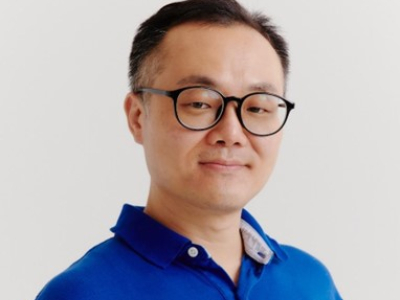 CIVICUS speaks about activism in the closed civic space of North Korea with Bada Nam, Secretary General of People for Successful Corean Reunification (PSCORE).
Founded in 2006 and based in South Korea, PSCORE is a human rights civil society organisation (CSO) that works to improve human rights in North Korea, assist North Korean escapees settling in South Korea and address barriers to reunification of the two Koreas.
Is there anything resembling civil society in North Korea?
North Korea values organisational activities, requiring every citizen to participate simultaneously in several groups such as the General Federation of Trade Unions of Korea, North Korea’s Socialist Women’s Union and the Socialist Patriotic Youth League. All of them are government-organised and exert control over people rather than encourage critical thinking. Mentioning civic organisations from the outside world is strictly forbidden.
Congregating and engaging in activism in any way critical to the regime is a serious criminal offence, with punishments that can extend to the death penalty. As a result, any such activity must be covert, and it’s difficult to obtain accurate information on the existence of an underground civil society.
North Korea is a surveillance state, where people are always cautious about what they say, even to close friends and family members. It’s impossible to gather colleagues and engage in civic activities because everyone is made to monitor each other and failure to report treasonous crimes to the authorities would also result in severe punishment. Public criticism sessions and public executions are also examples of how the regime strikes fear into the population.
People are deterred from opposing the government not only because of the extreme punishment they would face but also due to North Korea’s policy of guilt by association, which puts their close relatives at risk. The ‘Songbun’ class system classifies people according to their political loyalties, as ‘loyal’, ‘wavering’ or ‘hostile’, and family members may be demoted in this classification system, affecting their life opportunities, including career options and access to food rations. In serious cases, entire families may be sent to political camps and die from forced labour or starvation. Therefore, North Koreans don’t dare imagine opposing the government.
Have there been any recent changes in the ways the North Korean regime responds to dissent?
The North Korean government has always responded to dissent in an extreme manner. However, since Kim Jong-un came to power in 2011, the surveillance and security system has increased dramatically, making it nearly impossible to escape from North Korea. Extra security measures are in place along the borders and a shoot-to-kill policy is enforced against those trying to escape. The situation was exacerbated further during the COVID-19 pandemic when the China-North Korea border was closed, both halting trade and also impeding the flow of defectors.
Information poses the greatest threat to the North Korean regime, especially due to the influence of the recent ‘Korean wave’ that has made South Korean popular culture increasingly prevalent. Most people in North Korea have been exposed to South Korean dramas and music, leading some to adopt South Korean manner of speech and fashion style. In response, the government has intensified monitoring, enacted strict laws and imposed severe punishments for consuming or distributing foreign media. The Pyongyang Cultural Language Protection Act, enacted in January 2023, explicitly prohibits the use of foreign languages and specifically bans South Korean terms such as ‘oppa’, which translates as ‘older brother’ and is used as a form of endearment for a boyfriend.
How do people manage to escape North Korea?
Most North Koreans escape across the border with China, often with the help of a broker. Brokers reach out to wealthy families in North Korea or help those who have escaped to China get to South Korea. Defectors in South Korea sometimes contact a broker to help other family members flee.
China has a policy of forced repatriation for North Korean refugees, and its advanced surveillance system makes it extremely difficult to travel in China undetected. If apprehended and returned to North Korea, defectors and their families face severe punishment.
Most North Korean refugees must travel through several countries before reaching safety. From China, they might flee to Mongolia and Southeast Asian countries such as Laos, Thailand and Vietnam. Many North Koreans end up seeking asylum in Thailand, where the government assists them and helps organise their journey to South Korea.
What help do escapees receive?
The assistance available to North Korean refugees depends on the laws and diplomatic relations of countries with North and South Korea. Civil society, including PSCORE, helps North Korean defectors settle in South Korea by teaching essential life skills. Thanks to our volunteer teachers, we focus on providing educational support, including English lessons and vocational workshops. In the past, we also assisted escapees in reaching South Korea but, unfortunately, this became impossible due to China’s growing securitisation and the impact of COVID-19.
Once in South Korea, North Koreans must undergo a 12-week training programme at the Hanawon rehabilitation centre, where they learn various skills to adapt to the South Korean lifestyle and have access to medical treatment and mental health services. While the South Korean government has implemented programmes to assist refugees, the process of fully integrating into South Korean society is still difficult for people who have previously lived under the totalitarian regime. Psychological trauma from refugees’ journey to freedom may have lasting effects on their lives.
How do escapees work to raise awareness and advocate for change in North Korea?
There are many CSOs, mainly based in South Korea, that support North Koreans inside the country and abroad. Some organisations send messages, information, K-dramas and K-pop to North Korea using USB sticks. South Korean news outlets, such as Daily NK and NK News, have sources in North Korea that provide insights into the current situation. PSCORE and other North Korean human rights groups conduct interviews with defectors and publish reports based on their testimonies.
Our primary activities involve organising public awareness campaigns through seminars and events. We also share short catchy videos on various North Korea-related topics via our social media channels. Our large international team of interns plays a crucial role in advocacy by translating our social media content into various languages. This makes our mission and content visible to the rest of the world.
PSCORE was granted special consultative status with the United Nations (UN) Economic and Social Council (ECOSOC) in 2012, facilitating our engagement with the international community. We hold an annual side event at the UN Human Rights Council to share the latest information on North Korea’s human rights situation. We leverage international pressure to try to bring about change.
What further international support do diaspora activists need?
The topic of North Korean human rights is seen as a very political issue in South Korea. This means that CSOs are affected by each change of government, as policies toward North Korea shift with every administration. While PSCORE’s objective is centred on achieving peace and improving human rights in North Korea, we receive limited support compared to other CSOs due to the interpretation of our activities as politically charged, even though PSCORE is a non-partisan and non-religious CSO. Increased media exposure could help us secure more funding.
Insufficient funding is a common challenge for North Korean human rights organisations. It hinders the potential to raise awareness and support refugees in South Korea. North Korean activists need more platforms to amplify their voices and continue advocating for change. Still, we hope that more donations will come as the international community becomes more interested in the cause of human rights in North Korea.
Civic space in North Korea is rated ‘closed’ by theCIVICUS Monitor.
Get in touch with PSCORE through itswebsite or itsFacebook andInstagram pages, and follow@PSCORE911 on Twitter.
-
SOUTH KOREA: ‘North Korean defectors and activists face increasing pressure to stay silent’
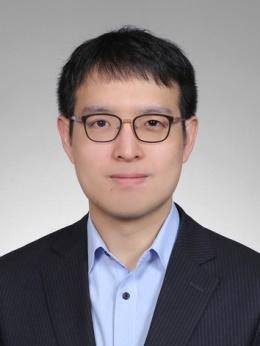 CIVICUS speaks with Ethan Hee-Seok Shin, a legal analyst with the Transitional Justice Working Group (TJWG), a Seoul-based civil society organisation (CSO) founded by human rights advocates and researchers from five countries. Founded in 2014, it is the first Korea-based CSO focused on transitional justice mechanisms in the world’s most repressive regimes, including North Korea. TJWG aims to develop practical methods for addressing massive human rights violations and advocating justice for victims in pre and post-transition societies. Ethan works on TJWG’s Central Repository project, which uses a secure platform to document and publicise cases of enforced disappearances in North Korea. He uses legislative and legal action to raise awareness about North Korean human rights issues.
Can you tell us about the work being done by South Korean civil society groups about the human rights situation in North Korea?
There is a rather broad range of CSOs working on North Korean human rights issues. TJWG has been working to prepare the ground for transitional justice in North Korea, in line with its core mission of human rights documentation.
TJWG’s flagship project has resulted in a series of reports mapping public executions in North Korea, based on interviews with escapees living in South Korea. We record the geospatial information of killing sites, burial sites and record storage places, including courts and security service facilities, by asking our interviewees to spot the locations on Google Earth. The report’s first edition was released in July 2017 and was based on 375 interviews, and its second edition was launched in June 2019 after conducting 610 interviews.
We are also currently in the process of creating an online database of abductions and enforced disappearances in and by North Korea, called FOOTPRINTS. This uses Uwazi, a free, open-source solution for organising, analysing and publishing documents, developed by HURIDOCS, a CSO. When launched to the public, FOOTPRINTS will provide an easily accessible and searchable platform to track individuals taken and lost in North Korea.
Other than documentation and reporting work, we have been active in international and domestic advocacy. Jointly with other human rights CSOs, TJWG drafted and submitted an open letter urging the European Union to strengthen the language and recommendations in the annual human rights resolutions adopted by the United Nations’ (UN) General Assembly and Human Rights Council on North Korea. We have also made case submissions to the UN Working Group on Arbitrary Detention, the UN Working Group on Enforced or Involuntary Disappearances and other UN human rights experts.
In July 2020, the South Korean government revoked the registration of two CSOs and issued a notice of administrative review and inspections of ‘defector-run’ groups working on human rights in North Korea. Why are these groups being targeted?
The direct catalyst was the June 2020 provocations by North Korea. On 4 June, Kim Yo-Jong, sister of supreme leader Kim Jong-Un and the first vice department director of the Workers’ Party of Korea’s Central Committee, criticised the ‘anti-DPRK [Democratic People's Republic of Korea] leaflets’ flown to North Korea by ‘North Korean escapees’ and threatened the cessation of Mount Kumgang tourism, the complete demolition of the Kaesong industrial region, the closure of the inter-Korean liaison office, or the termination of the 9/19 military agreement (the 2018 agreement to create demilitarised buffer zones) unless the South Korean authorities took ‘due measures’.
Just four hours after Kim Yo-Jong’s early morning bombshell, the South Korean Ministry of Unification (MOU) announced that it would prepare legislation banning the distribution of leaflets to North Korea. This was a complete reversal of the government’s longstanding position, which consistently avoided such legislation for fear of infringing upon the freedom of expression.
On 10 June 2020, the MOU announced that it would file criminal charges against Park Sang-Hak and Park Jung-Oh, two defectors from North Korea, for violating article 13 of the Inter-Korean Exchange and Cooperation Act, which requires prior approval of any inter-Korean exchange of goods, and would revoke the incorporation of their organisations, Fighters For Free North Korea (FFNK) and KuenSaem, for sending leaflets in air balloons and rice-filled PET bottles on sea currents to North Korea, as they did on 31 May 2020.
While the North Korean government eventually toned down its rhetoric, the South Korean government began to take actions against North Korean human rights and escapee groups, viewed as a hindrance to inter-Korean peace.
On 29 June 2020 the MOU held a hearing and on 17 July it announced the revocation of the legal incorporation of FFNK and KuenSaem for contravening incorporation conditions by grossly impeding the government’s reunification policy, dispersing leaflets and items to North Korea beyond the stated goals of their incorporation and fomenting tension in the Korean peninsula under article 38 of the Civil Code, a relic from the authoritarian era.
The MOU also launched ‘business inspections’ of other North Korean human rights and escapee settlement support groups among the over 400 associations incorporated by MOU’s permission, possibly with a view to revoking their incorporation. On 15 July 2020, the Association of North Korean Defectors received a notice from the MOU that it would be inspected for the first time since its incorporation in 2010. The following day, MOU authorities informed journalists that they would first conduct business inspections on 25 incorporated North Korean human rights and escapee settlement support groups, 13 of them headed by North Korean defectors, with more to be inspected in the future. While acknowledging that the leaflet issue triggered the inspections, the MOU added that the business inspections would not be limited to those involved in the leaflet campaign.
How many groups have been reviewed or inspected after the announcements were made?
Because of the international and domestic uproar caused by the obviously discriminatory nature of the inspections targeting North Korean human rights and escapee groups, the MOU has somewhat toned down its approach, and has belatedly begun to argue that it is focusing on all CSOs registered under the MOU.
On 6 October 2020, the MOU told reporters that it had decided to inspect 109 out of 433 CSOs for failing to submit annual reports or for submitting insufficient documentation. According to the information provided, 13 of the 109 groups to be inspected are headed by North Korean escapees; 22 (16 working on North Korean human rights and escapee settlement, five working in the social and cultural fields and one working in the field of unification policy) have already been inspected and none has revealed any serious grounds for revocation of registration; and the MOU intends to complete the inspection for the remaining 87 CSOs by the end of 2020.
In any case, the government appears to have already succeeded in its goal of sending a clear signal to North Korea that it is ready to accommodate its demands in return for closer ties, even if it means sacrificing some fundamental principles of liberal democracy. The government has also sent a clear signal to North Korean human rights and escapee groups with the intended chilling effect.
How has civil society responded to these moves by the government?
Civil society in South Korea is unfortunately as polarised as the country’s politics. The ruling progressives view the conservatives as illegitimate heirs to the collaborators of Japanese colonial rule between 1910 and 1945, and post-independence authoritarian rule up to 1987. The previous progressive president, Roh Moo-Hyun, who served from 2003 to 2008, killed himself in 2009 during a corruption probe, widely seen as politically motivated, under his conservative successor. The incumbent Moon Jae-In was elected president in 2017, riding a wave of public disgust at his right-wing predecessor’s impeachment for corruption and abuse of power.
Most CSOs are dominated by progressives who are politically aligned with the current Moon government. The progressives are relatively supportive of the human rights agenda but are generally silent when it comes to North Korean human rights because of their attachment to inter-Korean rapprochement. The same people who talk loudly about Japanese ‘comfort women’ – women forced into sexual slavery by Imperial Japan before and during the Second World War – or authoritarian-era outrages readily gloss over present North Korean atrocities in the name of national reconciliation.
Most North Korean human rights groups are formed around North Korean escapees and the Christian churches of the political right that passionately characterise leftists as North Korean stooges. Many are also generally hostile to contemporary human rights issues such as LGBTQI+ rights, which is rather ironic as Australian judge Michael Kirby, the principal author of the 2014 UN report that authoritatively condemned the grave human rights violations in North Korea as crimes against humanity, is gay.
The largely progressive mainstream CSOs have not been on the receiving end of persecution by the government led by President Moon; on the contrary, prominent civil society figures have even been appointed or elected to various offices or given generous grants. Some do privately express their dismay and concern at the government’s illiberal tendencies, but few are ready to publicly raise the issue because of the deep political polarisation.
Is the space for civil society – structured by the freedoms of association, peaceful assembly and expression – becoming more restrictive in South Korea under the current administration?
The Moon government has displayed worryingly illiberal tendencies in its handling of groups that it views as standing in its way, such as North Korean human rights and escapee groups, who have faced increasing pressure to stay silent and cease their advocacy.
President Moon has reopened a dialogue with the North Korean government to establish peaceful relations, neutralise the North’s nuclear threat and pave the way for family reunification, along with other estimable goals.
However, along with US President Donald Trump, President Moon has employed a diplomatic strategy that downplays human rights concerns. Notably, neither the 2018 Panmunjom Declaration between North and South Korea nor the Joint Statement issued after the 2018 Trump-Kim summit in Singapore make any mention of the North’s egregious human rights abuses.
In the weeks before President Moon met North Korean leader Kim in Panmunjom, there were reports that North Korean defector-activists were being prevented from carrying out their activism. In October 2018, South Korea acquiesced to North Korea’s demand to exclude a defector journalist from covering a meeting in North Korea. On 7 July 2019, there was an extraordinary rendition of two defectors, fishers who were allegedly fugitive murderers, to North Korea five days after their arrival without any semblance of due process.
The Moon government has resorted to illiberal tactics on other perceived opponents as well. A man who put up a poster mocking President Moon as ‘Xi Jinping’s loyal dog’ (referring to the Chinese president) at the campus of Dankook University on 24 November 2019 was prosecuted and fined by court on 23 June 2020 for ‘intruding in a building’ under article 319 (1) of the Penal Code, even though the university authorities made clear that they did not wish to press charges against him for exercising his freedom of expression. Many criticised the criminal prosecution and conviction as a throwback to the old military days.
The government has also moved to exercise ever more control over state prosecutors. The Minister of Justice, Choo Mi-ae, has attacked prosecutors who dared to investigate charges of corruption and abuse of power against the government, claiming a conspiracy to undermine President Moon.
Another worrying trend is the populist tactic by ruling party politicians, notably lawmaker Lee Jae-jung, of using the internet to whip up supporters to engage in cyberbullying against reporters.
What can the international community do to support the groups being targeted?
In April 2020 the ruling party won the parliamentary elections by a landslide, taking 180 of 300 seats, thanks to its relative success in containing the COVID-19 pandemic. The opposition is in disarray. All this has emboldened rather than humbled the government, and its illiberal tendencies are likely to continue. Due to the severe political polarisation, ruling party politicians and their supporters are not likely to pay much heed to domestic criticism.
The voice of the international community will therefore be crucial. It is much more difficult for the government to counter concerns raised by international CSOs as politically motivated attacks. A joint statement or an open letter spearheaded by CIVICUS would be helpful in forcefully delivering the message that human rights in North Korea are of genuine concern for the international community.
Furthermore, South Korea will soon be submitting its fifth periodic report to the UN Human Rights Committee in accordance with the list of issues prior to reporting (LOIPR). Because North Korea-related issues and concerns are not included in the LOIPR, it would be extremely helpful if international CSOs joined forces to include them in the oral discussion with the members of the Human Rights Committee and in their concluding observations.
In the shorter run, country visits to South Korea by the UN Special Rapporteur on the Promotion and Protection of the Right to Freedom of Opinion and Expression, the UN Special Rapporteur on the Rights to Freedom of Peaceful Assembly and of Association, and the UN Special Rapporteur on the Situation of Human Rights Defenders would be excellent opportunities to internationalise the issue and put pressure on our government.
Even progressives may support a reform of the outdated law on CSO registration, for instance, as a matter of self-interest, if not of principle, in case of change of government.
Civic space inSouth Korea is rated ‘narrowed’by the CIVICUS Monitor.
Get in touch with the Transitional Justice Working Group through itswebsite orFacebook page, and follow@TJWGSeoul on Twitter.