militia
-
BURKINA FASO: ‘For a major segment of civil society security is a more urgent concern than democracy’
 CIVICUS speaks about therecent military coup in Burkina Faso with Kop'ep Dabugat, Network Coordinator of the West Africa Democracy Solidarity Network (WADEMOS).
WADEMOS is a coalition of West African civil society organisations (CSOs) that mobilises civil society around the defence of democracy and the promotion of democratic norms in the region.
What led to the recent coup in Burkina Faso, and what needs to be done for democracy to be restored?
The current head of Burkina Faso’s ruling junta, Captain Ibrahim Traoré, cited persistent insecurity as a reason for the military takeover – as did his predecessor, Lieutenant-Colonel Paul-Henri Sandaogo Damiba. Attacks by armed groups are said to have greatly increased in the months following the first coup led by Damiba, in January 2022. According to analysts, Burkina Faso is the new epicentre of conflict in the Sahel. Since 2015, jihadist violence by insurgents with links to al-Qaeda and Islamic State has resulted in the death of thousands of people and displaced a further two million.
The coup also revealed the presence of a schism in the Damiba-led junta. It was orchestrated by military officers who were part of the coup that installed Damiba as head of state, but who now claimed that Damiba did not focus on reorganising the army to better face security threats, as they had expected. Instead, he stuck with the military structure that led to the fall of the government under President Roch Marc Christian Kaboré, and began to display political ambitions.
The security question remains the first challenge that needs to be addressed to make Burkina Faso a democratic state. The foremost role of a state, and more so of a democratic one, is to guarantee the safety of its citizens. A united Burkina Faso army will be necessary to achieve this.
The other thing that must be done is to see through the existing transition programme for the country to return to civilian rule by July 2024, to which the new junta has agreed.
Beyond the transition, the need to build a strong state and political institutions cannot be overemphasised. The challenges of corruption and economic marginalisation should be tackled in earnest. The need for stronger institutions is not peculiar to Burkina Faso: it is familiar to all the region, and particularly to those countries that have recently come under military rule, notably Guinea and Mali.
What was civil society’s reaction to the recent military coup?
In line with the disunity that characterises civil society in Burkina Faso, the civil society response to the coup has been mixed. But a notable section of civil society seemed to welcome the most recent coup because they saw the Damiba-led junta not only as authoritarian but also as aligned with politicians from the regime of President Blaise Compaoré, in power from 1987 to 2014. They saw the real possibility that those politicians could regain power and shut all doors on victims of the Compaoré regime ever seeing justice.
As a result, the view of the recent coup as a significant setback for the democratic transition agenda is not unanimously held among civil society. Additionally, for a major segment of civil society security appears to be a more urgent and priority concern than democracy, so the element that prevailed was the seeming incapacity of the Damiba-led junta to address the security situation.
The effort of the traditional and religious groups that negotiated a seven-point agreement between the Damiba and Traoré factions of the military, ending violence and forestalling further bloodshed, however, deserves commendation. That effort seems to have established a baseline of engagement between the Traoré-led junta and civil society. Such constructive engagement with the new government seems to have continued, with the notable participation of civil society in the 14 October 2022 National Conference that approved a new Transitional Charter for Burkina Faso and officially appointed Traoré as transitional president.
What is the situation of human right CSOs?
Burkinabe CSOs in the human and civil rights space have grown increasingly concerned about the victimisation of politicians and members of the public perceived to be pro-France as well as by the marked upsurge of pro-Russian groups demanding that France and all its interests be kicked out of the country.
On top of their concern about the raging jihadist insurgency, human and civil rights CSOs are also concerned about the stigmatisation and victimisation of citizens of Fulani ethnicity. This victimisation stems from the fact that many terrorist cells recruit Burkinabe people of Fulani extraction. There have been reports of arbitrary arrests and extrajudicial killings of Fulani people due to their alleged complicity in terrorist violence. Besides these two, no other notable cases of human rights abuses threatening civilians have been identified besides the ones already mentioned. Hence, even though it is still early in the Traoré-led government, it may be safe to rule out any consistent pattern of heightened human rights abuses under its watch.
How has the Economic Community of West African States (ECOWAS) responded to the military coup?
In accordance with the letter of its 2001 Supplementary Protocol on Democracy and Good Governance, the initial response of ECOWAS was to condemn the coup strongly and unequivocally, calling it an unfortunate and retrogressive development, especially in light of the progress made with the Damiba-led junta in preparing the ground for elections and democracy. ECOWAS also called for the junta to guarantee human rights and ensure stability.
Despite the ongoing sanctions against the country, following his meeting with Traoré, Mahamadou Issoufou, the former president of Niger and mediator sent to Burkina Faso by ECOWAS, said he was satisfied and that ECOWAS would remain by the side of the people of Burkina Faso. In what is the ECOWAS way to respond to military governments, ECOWAS will work closely with the junta to restore democratic order. The timeline stands and the deadline remains July 2024.
How have other international institutions reacted, and what should they do to support civil society in Burkina Faso?
Other international institutions have reacted similarly to ECOWAS. The African Union condemned the coup and said it was unfortunate in light of the progress already made towards the restoration of democracy. The coup was similarly condemned by the United Nations and the European Parliament.
If the international community wants to assist CSOs in Burkina Faso, what it first and foremost needs to do is support the junta’s efforts to stamp out the jihadist insurgency that continues to hold the country hostage. It should also assist the authorities in tackling not only the current refugee crisis but also the challenge of climate change, which is a contributing factor not just to the refugee crisis but also to the spread of terrorist violence.
The international community must also continue to mount pressure on the junta to deliver on its promise to adhere to the agreements the former junta reached with ECOWAS, to put an end to the victimisation of people on account of their political affiliations and ethnicity, and to set free anyone who has been imprisoned for political reasons.
Civic space inBurkina Faso is rated ‘obstructed’ by theCIVICUS Monitor.
Get in touch withWADEMOS through itswebsite or its Facebook page, and follow @WADEMOSnetwork on Twitter.
-
SUDAN: ‘The only way out of this mess is through civilian rule’
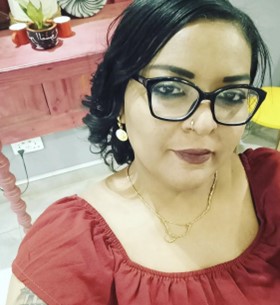
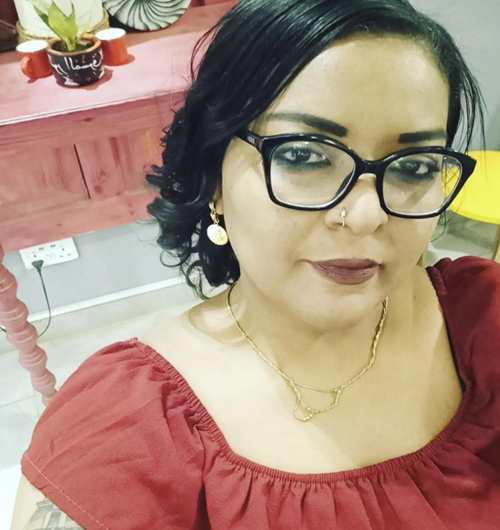 CIVICUS speaks about thewar in Sudan and its repercussions for women and civil society with Reem Abbas, a Sudanese feminist activist, writer and fellow at the Tahrir Institute for Middle East Policy (TIMEP).
Founded in 2013, TIMEP is a civil society organisation that works to centre advocates and experts from and in the Middle East and North Africa in policy discourse to foster more fair and democratic societies.
What’s the current humanitarian situation in Sudan?
Active conflict persists in around 60 per cent of Sudan’s territory. The continuous fighting entails targeting of civilians and mass displacement. In some states, much of the civilian infrastructure, including hospitals, markets, schools and universities, has been damaged. In Khartoum and West Darfur states, about 70 per cent of hospitals have been damaged or partially destroyed.
Civilians and civil society activists are unsafe. The situation greatly restricts people’s freedom of movement, their ability to sustain a livelihood and their capacity to express their opinions freely. There are pockets of relative security in Eastern and Northern Sudan, but even in areas deemed secure displacement persists and schools remain closed because internally displaced people are living in them and other public buildings.
Many livelihoods have totally collapsed, leaving people increasingly dependent on aid. We are already witnessing cases of famine, particularly affecting children, resulting in deaths.
How has the conflict impacted on women and girls?
Women have always been targeted in conflicts in Sudan. Political violence, rife in Sudan given its volatile political history, has also often taken aim at women. There’s rarely any accountability for sexual and gender-based violence. The Rapid Support Forces (RSF) – the militias that are fighting against the army – are abducting women and selling them as sexual slaves in markets or holding them captive for extended periods. Families are left in distress, unsure of the whereabouts of their daughters, and are sometimes embezzled for money.
This is a war on women. Part of it stems from structural factors that place women in subordinate positions, but there’s also a punitive element directed at women for their pivotal role in the 2019 revolution that overthrew dictator Omar al-Bashir. During the revolution, women were out there, highly visible on the frontlines, and now it feels like they’re being punished for it.
The targeting of women is tearing the social fabric apart. As public spaces become unsafe for women, fewer women are participating in public life, including in economic activities and activism. This will have long-term consequences.
What roles is civil society playing in this context, and what challenges does it face?
It’s important to recognise that civil society in Sudan isn’t a monolithic entity, but rather a complex mix of different layers. Some were heavily involved during the transitional period that followed the revolution, getting deeply integrated with government structures at the time. Then there are women’s groups, each with their own focus and agenda. Alongside them, there are more formal organisations such as non-governmental organisations and trade unions. And let’s not overlook the revolutionary elements, such as the resistance committees and emergency responserooms, decentralised and horizontal structures working to shelter displaced people, support hospitals and secure food and water supplies.
The more formal parts of civil society are currently heavily involved in politics, while its revolutionary segments are deeply engaged in grassroots humanitarian efforts. They’re essentially functioning as local governments in areas where official governance structures are absent.
Despite its crucial role, civil society faces numerous challenges. The organic growth of grassroots movements is stunted by conflict and dictatorship. The polarising effects of war have led to divisions along political, ethnic and regional lines, further fragmenting civil society. Activists are increasingly targeted by the RSF or the army, threatening their ability to operate.
In an environment where conformity to mainstream opinions is increasingly enforced, it becomes increasingly difficult to maintain dissenting voices. This situation underscores the urgent need to safeguard the diversity and autonomy of civil society in Sudan.
However, attention and funding often gravitate towards already well-funded organisations, leaving grassroots initiatives to rely solely on community support. While funding alone doesn’t create a functional organisation, it’s important for organisations and groups to grow in an organic way and be able to garner support from the community.
How is civil society advocating for peace and democracy?
Right now, the conversation is all about security and getting things back to normal. People are doubting whether we can even think about democracy after all this chaos. The situation’s tough, with militarisation and conflict everywhere. But the only way out of this mess is through civilian rule. We need to figure out how to link the peace process to a long-term political solution that puts us back on track for democracy.
Unfortunately, the focus of the political elite appears to be more on preserving its positions rather than addressing urgent issues. There are concerns that the largest political coalition has developed close ties with the militia, causing unease among those involved in the revolution. Without a bigger political group that really listens to people and leads responsibly, we’re going to be stuck with military rule for ages. Right now, it should be all about finding common ground and putting the focus on the people who’ve suffered most from this war – not about politicians trying to claw back power or siding with the military.
There’s a lot of talk about how the transitional government messed up and led to the coup and the war. People are sceptical about civilian rule and whether it can fix things. It’s easier to sell the idea of a military-run government when people are feeling scared and vulnerable. Even though it’s militarisation that got us into this mess in the first place, it’s understandable because people just want to feel safe again.
What should the international community do to address Sudan’s dire security and humanitarian situation?
It’s time for the international community to stop sticking to one side of the story and start listening to everyone involved. They’re pumping all their funds into one camp and ignoring a whole bunch of other perspectives. We need more humanitarian aid, particularly considering the famine situation. Millions of people are at risk, with nowhere to turn and nothing to support themselves with.
Investment in basic infrastructure like hospitals and water plants is crucial too. People need services, and they need them now. Some areas haven’t had clean water for months because water plants are getting caught in the crossfire.
The international community must also demonstrate political determination. People’s lives are on the line. We need clear plans and urgent action to stop this war.
I want to emphasise the significance of civil society solidarity. This is crucial when our governments show ambivalence towards our concerns. In such situations, we must become each other’s voices and amplify our collective message. We must seek ways to connect, demonstrate solidarity and collaborate effectively.
It’s important to learn from one another and work together towards shared objectives. Collaboration with civil society groups and networks across the world is greatly appreciated. It’s through such partnerships that we can make a meaningful impact and bring about positive change.
Civic space in Sudan is rated ‘repressed’ by theCIVICUS Monitor.
Get in touch with TIMEP through itswebsite or itsFacebook andLinkedIn pages, and follow@TimepDC and@ReemWrites on Twitter.