civil society responses
-
ASIA: ‘Under the pandemic, racism against Indigenous peoples has intensified’
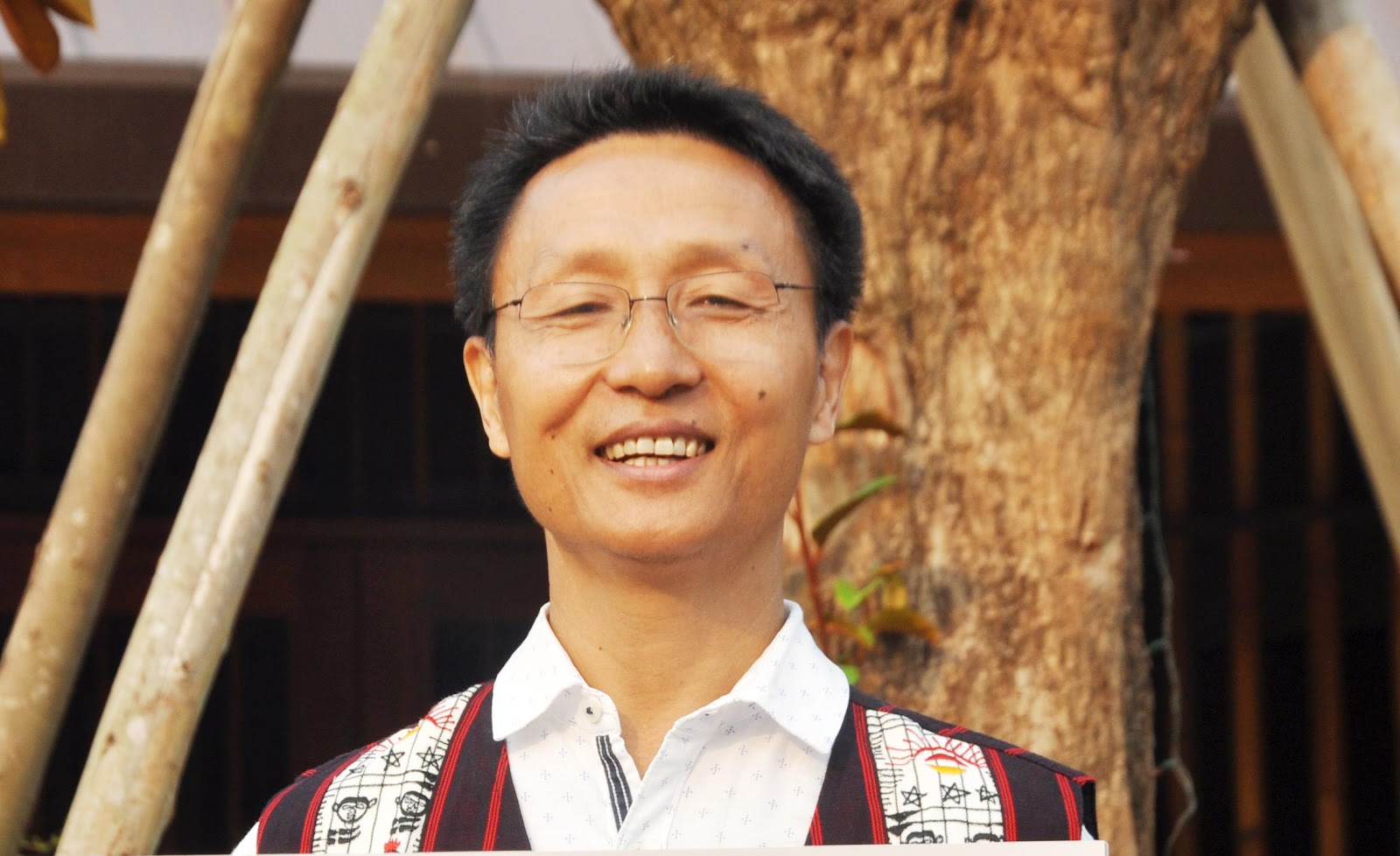
CIVICUS speaks to Gam Shimray, Secretary General of the Asian Indigenous Peoples Pact (AIPP), about the situation of Indigenous groups in Asia amid the COVID-19 pandemic. AIPP is a regional federation of Indigenous peoples’ movements in Asia that works to promote and defend Indigenous peoples’ human rights, including land rights and cultural rights. Because of their subordination and distinctiveness from mainstream culture and politics,Indigenous peoples are subjected to gross human rights violations, systematic racism, discrimination and dispossession. As a result of the denial of their rights to land, territory and resources, many Indigenous peoples are among the most disadvantaged and vulnerable groups.
Can you tell us about the work of AIPP?
The work of AIPP is guided by our belief in universal human rights and the inherent right to self-determination of all peoples, including Indigenous peoples. The rights to self-determination and self-government are a social necessity for the continuity of Indigenous social processes and self-development.
While our advocacy work is primarily focused on the regional and global levels, linkages with country-level processes are built through our members and networks. AIPP consolidates a common position of Indigenous organisations for regional and global advocacy. For this, we focus on building capacity in communities, consolidating Indigenous movements and setting a common agenda for collective campaigning and advocacy at the country level.
AIPP also focuses on building leadership and promoting distributive leadership across Asia, including among women, young people and persons with disabilities.
What was the situation of Indigenous peoples in Asia prior to the COVID-19 pandemic?
Prior to the COVID-19 pandemic, the political situation in Asia had been deteriorating, particularly in the past few years. We have seen an increasing clampdown on civil society and the restriction of democratic space for public debate and opinion formation in several Asian countries. Some public intellectuals attribute this trend to the retreat of political leadership from democracy and human rights.
The transitions to democracy from authoritarian governments in recent decades, such as the Philippines in the 1980s, Indonesia in the late 1990s and Nepal in the 2000s, have remained incomplete. Other countries, such as China, Laos and Vietnam, have de jure one-party systems, and Cambodia has a de facto one. In Myanmar, the military still holds a grip on the government, while Thailand’s tradition of high tolerance is yet to produce a stable democratic modern state. Further, rising populism is posing a serious threat to democracies. In India, the world’s largest democracy and arguably one of Asia’s strongest, we are seeing a continuous assault on autonomous institutions, from the judiciary to the central bank and the free press, under Prime Minister Narendra Modi’s populist government.
The result is that in the last few years, most of the human rights defenders killed have been Indigenous peoples. They lost their lives defending their rights, homes, lands, territories and resources.
These problems are also evidence of deeper and underlying issues that relate to the inadequacy of political and institutional capacity to address effectively the challenges of democracy and human rights in Asian countries. We are faced with moral and political questions that call for serious examination of the erosion of human rights standards and practices and the weakening of political and institutional capacity to respond to present social and political issues. The suffering experienced by poor people during the COVID-19 pandemic is evidence of this.
What challenges have Indigenous groups and activists faced under the pandemic?
Issues and challenges vary across countries as the situation differs. One of the main challenges relates to the fact that most governments in Asia initiated countrywide lockdowns without much preparation, leading to chaos. The situation was simply overwhelming, and we could not respond to the needs of activists, communities, or migrant labourers.
Migrant workers, refugees and stateless persons suffered the most, and those without ID cards struggled to prove their citizenship, which they needed to receive government aid. Most migrants and refugees lack proper documentation and errors in registration abound. Those left out from national registries are denied national ID cards.
Under the pandemic, racism against Indigenous peoples has intensified. The situation has been worst in India, where people from the north-eastern part of the country have been thrown out of their hotels and rented houses. They have been denied the ability to buy food from grocery shops and board public transport. They have been spat on and taken into custody without an explanation. Many people, including women, have been beaten up for no reason, and many in cities across India are living in fear.
In some countries, governments are using the situation as a cover for conducting military campaigns, grabbing land, granting permission for large-scale development projects, rolling back protective rights and weakening environmental laws and safeguards. Several activists and community members have been killed or jailed under trumped-up charges in countries such as Bangladesh, India, Myanmar and the Philippines. Community leaders have also been stopped by police and security forces from carrying out relief work and helping starving communities.
These incidents are grave in nature and there is extraordinarily little that we can do about them, as people cannot go out and protest or campaign, and can hardly access the courts. In India, e-petitions are allowed, and urgent matters are still heard by courts through video conferencing, but most communities are not familiar with such complicated processes and many do not even have proper internet access.
How have AIPP and other Indigenous rights organisations responded to the situation?
The first thing we did was reach out to our members and networks to gather information from the ground. We also responded to those reaching out to us for support. Our first action was to provide or mobilise relief, and particularly food for those in critical need, in different areas through our members and networks. Our outreach also focused on sharing information concerning Indigenous communities. This was necessary because misinformation has been overwhelming, leading to panic-driven reactions from communities. We shared appeals to communities calling for humane responses and disseminating good practices that communities could implement.
The situation is complicated because it is not just about responding to the pandemic. Indigenous peoples face multiple underlying issues. The least we could do was register our protest and conduct our campaigns through digital channels.
The COVID-19 pandemic has unfolded many hidden issues and poses new challenges. So we are assessing and making efforts to take the next steps to cope with the longer-term impact of the pandemic. In this regard, we have also formed a regional network for COVID-19 response, which is in the process of expansion. We will be coming up with a preliminary regional assessment report soon, which will help us plan better. We can already see that capacity building will be crucial as we adapt to what is called the ‘new normal’.
What further support do Indigenous groups need at this time?
The support that Indigenous communities need is enormous as the impact is going to be long term. But few things that must be stressed are the following.
First, we need to set up COVID-19 response cells with designated funds at the local level, with a team of designated nodal officers to coordinate with state or provincial authorities and civil society organisations to monitor Indigenous issues and provide the necessary support. The response team should also coordinate with the appropriate authorities to cater to the special needs of women, children, older people and persons with disabilities in Indigenous areas.
Second, we need to ensure that appropriate guidelines and instructions are issued to provincial and local authorities on measures to be taken for Indigenous peoples to deal with COVID-19 and lockdown, including on ensuring compliance.
Third, it is critical to raise awareness and ensure access to healthcare. It is important to prepare community-friendly information materials that clearly explain the nature of the disease, quarantine and containment measures and testing, helping dispel myths. Coordination between health department workers and traditional healers is needed to ensure that Indigenous knowledge systems are part of these response mechanisms. Localised and separate quarantine strategies encouraging natural environment and community participation should be promoted. COVID-19 care centres can be set up at the community level, managed by community healers and nurses.
In remote areas, mobile health units should be deployed involving community healers and health workers. Special attention should be given to areas with migrant workers who have returned home. Testing and quarantine facilities should be immediately provided to them. Access to health services in case of emergencies, including transportation, should also be provided. Access to safe water for cleaning and drinking is another critical need that should be ensured.
Ensuring food security and incomes and protecting livelihoods is also crucial given the known evidence of undernourishment in many Indigenous areas. Over at least the next six months it will be necessary to distribute free rations of nutritional food to everybody, irrespective of people’s migratory status or whether they have an ID card.
Lastly, it is urgent to strengthen non-timber forest produce (NTFP)-based livelihoods by urgently devising effective institutional mechanisms for collection, storage, procurement and sale. Dependence on NTFP is high across Asia. Financial and logistical support should be provided directly to the communities to help generate sustainable livelihoods. Communities living in protected areas must be allowed to have access to forests for livelihood purposes.
What lessons you have learned so far about the situation of Indigenous people under the pandemic?
Under the pandemic, the situation has been overwhelming, and the measures imposed by governments have led to acts of brutality from police and security forces. We saw hundreds of poor people die of starvation and those venturing out in desperation brutalised by the police.
The potential impact was looking grim, and had we not put our trust in the people and the communities, the efforts we made would have been far less successful. Relief work had to be efficient and putting our trust in community volunteers to do the job was the key to success, for instance in Malaysia and Thailand. Whatever resources were generated were transferred to them and they reported back on the actions carried out through phone or other means available to them.
Further, in our observation, several communities responded very well to the situation by initiating village lockdowns, regulating visits, quarantining returnees, or self-isolating themselves despite having little information or no appropriate resources and equipment. There were fears too but communities were quick in overcoming them and improved their responses. Communities have not just received relief from us or others, but some of them also contributed food for other communities in need. Most of those communities had worked with us and had successfully managed their food production systems and natural resources. They were not worried about food shortages; rather, their leaders used the opportunity to create awareness about the importance of improving local production and sustainable resource management. Personally, this has been inspiring.
We have also been inspired by communities organising themselves and using local healing practices and medicine to improve immunity and resistance to the disease, or establishing food exchange systems with little or no help from the state, at a time when state-run programmes were not functional or did not arrive in time. Most importantly, this showed that devolution and community empowerment can be more effective in dealing with the crisis if resources and support are provided to such self-governing local institutions.
Spontaneous community responses came almost naturally because these are historically self-governing communities. Looking forward, trusting people and empowering communities will enable the state to deal more efficiently with public health crises and their long-term impacts.
Get in touch with the Asian Indigenous Peoples Pact through itswebsite andFacebook page, and follow@aippneton Twitter.
-
JAPAN: ‘The vulnerability of the homeless is the result of contemporary society’s built-in social exclusion’

CIVICUS speaks to Tsubasa Yuki ofMoyai Support Centre for Independent Living about the situation of homeless people amid the COVID-19 pandemic in Japan. Founded in 2001, the Moyai Support Centre supports homeless people by creating a community space and providing advice and rent guarantees for those seeking housing.
In Japan it is illegal to beg on the streets and there is little sympathy for homeless people, who are commonly stereotyped as running away from gambling debts. Tokyo’s preparations for the Olympic Games, originally planned for 2020 and now postponed to 2021, prompted the removal of homeless tents around railway stations and parks. In the context of the COVID-19 pandemic, the Moyai Support Centre started an online petition to request permission from the Tokyo Olympic organisers and the city government to use the Olympic Village as a homeless shelter.
Can you tell us about the work of the Moyai Support Centre for Independent Living?
Our programmes for supporting homeless people are threefold, and most of them are not exclusive for people in homelessness. Firstly, we have a consultation service, Seikatsu-Soudan. Every Tuesday, around 20 people visit our office asking for immediate help. In most cases, they are seriously impoverished and need public assistance. In those cases, we provide them with accurate information about social welfare services and support their application processes.
Secondly, we provide rent guarantees for homeless people seeking secure housing. After applying for public assistance, people are usually allocated to shelters and then start searching for apartments, and this is where we come in. We have provided rent guarantees for more than 2,000 people in total. However, insurance issued by private companies has recently become more common. So we advise our visitors to use those private companies if they can, and often our representative provides his phone number as an emergency contact when they apply for private insurance.
Thirdly, we have a community space. It is often the case that even after getting secure housing, formerly homeless people do not have any place to be when they go out. So we have a café, Salon de Café Komorebi, which opens every Saturday. This café is managed by our staff alongside many volunteers, including formerly homeless people. Unfortunately, the café is currently closed due to the COVID-19 pandemic.
What was the situation of homeless people in Japan before the pandemic?
Some general trends can be identified. In Tokyo, and probably in other Japanese cities, there are at least 1,000 rough sleepers, most of whom are male and relatively old, with an average age around the mid-50s. They usually combine multiple strategies for survival: they are day labourers, seek other informal jobs, scavenge and eat at soup kitchens. In the case of Tokyo, the Tokyo Metropolitan Government (TMG) has a public employment programme through which rough sleepers can gain a monthly cash income of around 20,000 yen (approx. US$190). Rough sleepers are mostly single males, but many of them form some kind of community in which they share useful information and, less frequently, jobs.
In addition to rough sleepers, at least 4,000 people use cyber cafés and other facilities to spend the night in. Most of them are employed in the most insecure part of the labour market – they are cleaning staff, security officers, construction workers, or have transportation jobs. While they may seem to have relatively more secure housing than rough sleepers, the truth is that cyber cafés are segregated into compartments and as a result, these people usually don’t have any communities they belong to.
What specific challenges have homeless people faced during the pandemic?
The most striking point is that many community-based and faith-based organisations and other groups suspended soup kitchens due to fear of spreading the virus. This has made it really hard for rough sleepers to get enough food and vital information about the virus and the public services available to them.
In addition, public employment services stopped in April 2020 and as a result, rough sleepers have lost their major source of cash income. Cash incomes from the informal economy, including scavenging, also declined because of the lockdown and stay-at-home policies.
In April, the TMG requested that many enterprises in the service economy suspend their business. Cyber cafés and similar facilities were also requested to stop operating. Although this was not mandated by law, many enterprises followed the policy. As a result, people living in cyber cafés lost their places to sleep. Many of them also lost their jobs and incomes due to economic decline prompted by the lockdown policy.
How have the Moyai Support Centre and other civil society organisations (CSOs) responded to the situation?
Many CSOs have had to stop their activities as well. We closed our café in April 2020. But at the same time, we extended our consultation services. Currently, in addition to the Tuesday consultation service, we have set up a soup kitchen and provide consultation services in front of the TMG office, together with another civil society group, Shinjuku Gohan Plus. In April alone, we distributed more than 600 packages of food and provided consultation services to more than 150 people.
As well as providing direct services to people in need, we have started a petition so we can use the Olympic Village set up for the 2021 Tokyo Olympics as a shelter during the COVID-19 pandemic. So far, the petition has collected more than 50,000 signatures.
Under the pandemic, the TMG made 2,000 hotel rooms available as shelter for those expelled from cyber cafés, and more than 800 people have been using them. But it is not clear whether this policy will be extended after the state of emergency ends. The Olympic Village can be the next place to accommodate them.
In July and August 2020, we will have elections for the TMG. We are trying to tackle the shortage of decent shelters for people facing homelessness by making the issue one of the major topics in the coming election for Tokyo’s governor. As it is connected both to issues of the Olympics and COVID-19, it is now attracting a great deal of attention from people inside and outside Tokyo. So we are now planning to submit a petition and deliver an open questionnaire letter to candidates in the election. They will be obliged to express their stance and opinions on the issue of homelessness in Tokyo.
But we understand these are only temporary solutions. Be it at hotels or the Olympic Village, these are only temporary shelters at best. The next step for us is to support homeless people to find secure housing, that is, get their own apartment. This is challenging even for people who have successfully applied for and received public assistance. We are trying to reach them in shelters and support them in finding apartments.
But this cannot be done solely by CSOs like us. This mass transition from shelters to apartments can only be successfully accomplished with the help of willing and conscientious owners and landlords. The next goal for both CSOs and public entities should be to gain their support.
What lessons have you learned so far around the COVID-19 pandemic and its impacts on homeless people?
The current situation reveals that soup kitchens and other voluntary activities played a vital role as an information centre for homeless people, and especially for rough sleepers. People in that situation have scarce access to important information about COVID-19 and related policies and services. Some of them gain information from radio and newspapers but these media are not available to all rough sleepers. Thus, for many of them, voluntary activities are almost the only source of accurate information.
Further, while it might be common knowledge that homeless people are particularly vulnerable to disasters, it is worth noting that homeless people and those working in insecure jobs have been the first to be affected by the pandemic, and the hardest hit. Stay-at-home policies might be one of the most effective strategies against the pandemic, but they presuppose that people have secure housing and a certain amount of savings. For those people with no secure housing, employment status and savings, it is almost impossible to follow the policy. In addition, homeless people are not eligible for any of the compensation or temporary income support that is available to other people. The vulnerability of the homeless is the result of contemporary Japanese society’s built-in social exclusion.
Civic space inJapan is rated as ‘narrowed’ by theCIVICUS Monitor.
Get in touch with the Moyai Support Centre for Independent Living through itswebsite. -
MALAYSIA: ‘Migrants are amongst the first to be victimised and discriminated during the pandemic’
 CIVICUS speaks to Adrian Pereira, the Executive Director ofNorth South Initiative (NSI), about the situation of migrant workers in Malaysia amid the COVID-19 pandemic.
NSI helps build advocacy and leadership capacities among migrants, refugees and stateless persons, both documented and undocumented, so they can claim their rights. It also monitors labour and immigration-related abuses by authorities, employers and local workers and ensures that migrant organisations are connected to a strong solidarity network and are able to cooperate with other civil society organisations (CSOs) and trade unions.
There are estimated to be somewhere between three and six millionmigrant workers in Malaysia. Migrant workers are set up for exploitation by a combination of unscrupulous recruitment agents and employers, harsh immigration policies, unmonitored supply chains and a lack of enforcement of labour protections. They are subjected to passport confiscation, low pay in violation of minimum wage laws, poor living conditions, punishment by fines, high recruitment fees and debts to recruitment agencies and employers, forced labour, human trafficking and salary deductions. Areport on the ability of migrants and refugees to access civic freedoms, produced by CIVICUS and Solidarity Center in collaboration with NSI, showed that the rights to the freedoms of association, peaceful assembly and expression in Malaysia are severely restricted for these vulnerable minorities.
What was the situation of migrant workers’ access to healthcare prior to the pandemic?
Malaysia removed subsidies for migrant workers to access public healthcare in 2016. Given that migrants rely mostly on public medical services, this measure resulted in declining quality and access to healthcare by migrants, both documented and undocumented, as the high cost of private alternatives usually deters them from getting any healthcare. Despite migrants and their employers and agents paying billions of Malaysian Ringgit per year in levies, taxes and other payments, they are not getting their money’s worth in healthcare.
Those who are undocumented are only able to access private healthcare, because if they try to access public healthcare, immigration authorities will be informed, and they will come to arrest them. Over the years, brutal enforcement by police, immigration and customs forces and the People’s Volunteer Corps towards undocumented migrants has made them even more fearful of seeking medical treatment.
There are also cultural competency gaps between medical practitioners and migrants, which make it difficult for them to get proper healthcare. Domestic workers who don’t have days off and are locked indoors have an even more difficult time in accessing healthcare.
One positive step in 2019 was the inclusion of documented migrants into the national social security system, ensuring much higher compensation and better healthcare in the event of work-related accidents and illnesses. But for non-work-related accidents and injuries, private insurance offers minimal coverage.
What additional challenges have migrant workers faced since the beginning of the COVID-19 pandemic?
Many migrant workers, and especially undocumented and informal ones, have lost their source of income. As a result, they can’t pay for food, rent and medicines, unless they have tested positive for COVID-19, in which case their quarantine and care is covered by the government. Only migrants who provide government-sanctioned ‘essential services’ are able to work. But their safety really depends on whether the companies permitted to operate comply with rules set by the government. The rules are meant to ensure workers are safe from the risk of COVID-19 infection and can continue to work. But there is almost no one to monitor this consistently.
The government has announced an economic stimulus package that sadly has marginalised migrant workers. There is a worker’s salary subsidy to ensure companies don’t have to retrench workers, but this does not apply to migrant workers. Previously, migrant workers were also excluded from the Workers Insurance Scheme under the national social security body, which would ensure a safety net for workers who were retrenched. The Movement Control Orders (MCOs) imposed by the government to restrict travel that came into force on 18 March have made it difficult for migrants to travel to access basic services, food, banking and other essentials. In Enhanced MCO areas, service providers can’t even enter. Informal sectors are sacking and abandoning the migrants who worked for them, particularly undocumented migrants and refugees.
Employers are forcing migrant employees to resign or take unpaid leave. Employers are taking advantage of the MCOs to not pay their workers. NSI received reports of at least two cases of unpaid salaries way before the MCOs were imposed. One had been unpaid since December 2019 and another since February 2020.
There is also fearmongering going on, with fake messages and misinformation online putting migrants at risk of backlash from Malaysians. The government pledged not to arrest and detain migrants who come forward for COVID-19 testing. But there is still a lot of fear among migrants and hence many are not coming forward. Some sectors that are very economically aggressive are forcing the government to allow them to reopen so workers can go back to work. We have seen this in the Sabah state palm oil sector.
The European Union (EU) is also putting both migrant and Malaysian workers at risk of forced labour by asking Malaysian personal protective equipment (PPE) manufacturers to ensure production continues during the pandemic. The EU has offered tax incentives to Malaysian companies to supply PPE. Further, small and medium enterprises that have been hiring undocumented workers for many years have abandoned their workers, claiming they are short on cash.
How have you and other CSOs responded to the situation?
We are coaching migrant leaders to ensure their communities have access to networks that provide services and can provide accurate information about needs to those who are providing services. Some public networks, such as the ‘Care Mongering Malaysia’ group, are proving a platform for Malaysians to reach out to help migrants and refugees in need. This is an online platform that links those who need help with those who can afford to provide the service. Also, Sikh temples are providing groceries and packed lunches.
Other CSOs working hard on the ground to provide groceries include BERSIH2.0, Beyond Borders, Dapur Jalanan, Engage, Geutanyoe Foundation, HOPE, Liga Rakyat Demokratik, Malaysian Trades Union Congress, Our Journey, The Patani, Refuge for the Refugees, Tenaganita and also migrant and refugee community organisations. Migrant workers can call them when they need assistance with food.
We are forming a network to ensure services can be delivered in the long term, as we foresee the problems continuing for many months to come. Many migrant workers will remain and will need aid, so we are developing a supply chain to support them.
We are ensuring migrants receive accurate information from global bodies such as the International Organization for Migration, United Nations (UN) Development Programme and UN Refugee Agency and also from the various government agencies related to health, labour, security and welfare. This includes providing information via infographics on counselling services and on health issues in different languages.
We are also fighting misinformation related to migrant workers and refugees. There has been a lot of fearmongering blaming them for the spread of the virus.
We are also encouraging migrants to seek medical treatment if they are sick and monitoring employers who are taking advantage of the current situation and committing labour offences, particularly as the MCOs have partly restricted lawyers from providing legal representation and legal aid.
Other CSOs are providing counselling, delivering groceries, doing fundraising, monitoring human trafficking, providing gender-sensitive and maternity-related services and catering to women’s needs.
What further support does Malaysian civil society need at this time?
We need cash to support migrants’ needs, including to pay for groceries, bills, rentals and safe repatriation home after the MCOs. We are also seeking funding opportunities because as long as the MCOs apply, we are unable to conduct physical meetings, and most fundraising is based on this. We also need legal aid services for those who are being retrenched unfairly and detained unjustly.
What lessons have you learned so far from the pandemic?
We have seen that the government has barely consulted CSOs before implementing policies and this is not in line with good governance principles. Also, there is overkill in punishing those who violate MCOs, including people who are forced to breach the MCOs due to livelihood issues. Further, the over-securitisation of migration over the years has now caused a backlash against migrants, who have been neglected.
Migrants are amongst the first to be victimised and discriminated against during the pandemic as they are neglected and don’t have strong safety nets. A capitalist system that operates on the basis of mega global supply chains and mega businesses does not have a proper risk-management plan that ensures accountability and transparency. Malaysia also has a problem with statistics, as it has been doctoring the numbers of those in poverty and has failed to address the problems resulting from the huge number of undocumented workers due to the meddling of the deep state.
The civic rights of migrants have been suspended under the MCOs and Enhanced MCOs, and this in turn has weakened their bargaining power to gain their rights. There has also not been enough cooperation between migrants’ countries of origin and Malaysia to ensure the safe repatriation of those who want to return home, which poses a high risk of infection for everyone. We have received reports that under the MCOs, migrants are forced to use irregular passages to travel home. Embassies have turned to Malaysians for assistance for their citizens.
CSOs are also not as united as I had assumed in building consensus in dealing with the problems, as they have struggled to cope with this. At the same time, some Malaysians who may have been biased against migrants have, in this time of need, showed compassion and responded in solidarity to migrants’ struggles. As has become clear, in the long term, the economic contributions of migrants ended up benefitting everyone except migrants themselves.
Civic space inMalaysia is rated as ‘obstructed’ by theCIVICUS Monitor.
Get in touch with the North South Initiative through itswebsite and Facebook page, and follow@nsinitiative11 on Twitter.