arbitrary arrest
-
ASEAN: ‘There is a lack of a consistent approach and political will to address the Myanmar crisis’
 CIVICUS speaks with Mary Aileen Diez-Bacalso, a globally recognised human rights advocate and the new Executive Director of the Asian Forum for Human Rights and Development (FORUM-ASIA), on the state of civic space in the member countries of the Association of Southeast Asian Nations (ASEAN) and the regional body’s response to the human rights situation in Myanmar.
In March 2023, Myanmar’s civic space was downgraded by theCIVICUS Monitor to the worst category, closed, in response to developments including the detention of thousands of activists and protesters, many of them convicted by secret military tribunals in unfair trials and given harsh sentences including thedeath penalty. Some have been tortured or killed. The ruling military junta has also systematically targeted journalists andforced civil society organisations (CSOs) to shut down and their leaders to go into hiding or flee the country. The junta has committed war crimes and possible crimes against humanity, including unlawful attacks, killing and injuring civilians through the use of extrajudicial executions, artillery shelling and banned landmines and cluster munitions.
What is the state of civic freedoms in ASEAN member states?
In recent years, there has been a discernible trend in ASEAN toward democratic regression and shrinking civic space.
In Cambodia, as an election draws near, there is an ongoing assault on civic space and an increasingly violent campaign of repression and harassment against union activists, environmental campaigners, opposition politicians and media workers.
In Myanmar, the path toward democracy, which began in 2011, was dismantled and civic space has closed. The junta’s nationwide crackdown has spread beyond cities into rural and ethnic minority areas, where resistance has grown. There is a climate of fear and insecurity, characterised by extrajudicial killings, arbitrary arrests, torture, enforced disappearances, sexual violence and other atrocities amounting to crimes against humanity. But ASEAN leaders have been unable to respond uniformly, and the Five-Point Consensus (5PC) they reached in April 2021 has miserably failed to address Myanmar’s crisis.
In Singapore, civil liberties are curbed through the prosecution of journalists, protesters and harassment of activists. Civil space has been further limited by repressive laws such as the 2019 Protection from Online Falsehoods and Manipulation Act and the 2021 Foreign Interference (Countermeasures) Act, which include vague provisions that allow for executive discretion in interpretation and implementation.
Overall, civic space in ASEAN countries has deteriorated. But in the midst of this darkness, the results of recent elections have cast a ray of hope that could have an impact at the regional level. Election results in Malaysia in November 2022 and Thailand in May 2023 have brought hope and a breath of fresh air after years of regression of fundamental freedoms. ASEAN’s youngest member state, Timor-Leste, is unique in that it has committed to consolidating democracy and held a free, fair and transparent election on 21 May 2023, allowing voters to cast their ballots peacefully, thus making their voices heard.
As the current ASEAN chair, has Indonesia made any efforts to engage with civil society and protect human rights?
Indonesia became ASEAN chair amid a lot of expectations regarding its potentials to address the Myanmar crisis, following the lack of progress under its two predecessors, Brunei Darussalam and Cambodia – and possibly on the assumption that no further progress will happen under its successor, Laos.
Led by Indonesia, ASEAN managed to adopt several Leaders’ Declarations related to human rights, including one on combating trafficking in persons caused by the abuse of technology and one on the protection of migrant workers and family members in crisis situations, adopted at the 42nd ASEAN Summit in May 2023. These represented a crucial step toward protecting rights. However, questions of implementation and domestication have long plagued the ASEAN region.
Progress made at the regional level is not necessarily reflected by domestic developments. For example, ahead of the 2023 ASEAN summit, held in Labuhan Bajo, the Indonesian police summoned two residents, Viktor Frumentius and Dominikus Safio, over a planned protest regarding compensation for houses and land clearing for a road project. The criminalisation attempt happened a few days after the police issued a warning letter for local people not to conduct actions that could ‘create incitement’ during the summit. This incident came on top of ongoing attacks on civil liberties in Indonesia.
Regarding engagement with civil society, unfortunately the Indonesian government failed to respond to civil society’s request to conduct an interface meeting during the summit. Taken together, this and the attempted criminalisation of protesters reveal the government’s exclusionary approach to critical voices.
Did the summit’s outcomes include any commitment on human rights?
The summit’s outcome document highlighted the commitment to strengthen efforts to combat human trafficking and protect migrant workers. Human trafficking is indeed a serious and systemic violation of human rights in Southeast Asia, with the pandemic exacerbating the already precarious situation of marginalised people who might end up in hands of human traffickers.
Regarding Myanmar, however, disappointment continues. On 11 May, despite expressing concerns over the continuing violence in Myanmar, specifically in light of the recent attack against a convoy carrying ASEAN diplomats in Myanmar on the eve of the summit, Indonesia released a statement that said that ‘the 5PC remains our main reference’. It basically ignored the calls from civil society groups and the wider international community to move beyond the 5PC.
Unfortunately the issue of shrinking civic space was not discussed at the summit, which reveals continued neglect by ASEAN member states and a lack of consensus about the importance of the fact that civic space is deteriorating across the region.
Has there been progress in strengthening the role of the ASEAN Intergovernmental Commission on Human Rights (AICHR)?
Since its inception, the AICHR has been criticised as nothing more than a front for ASEAN member states to comply with their duty to put human rights on the regional agenda. It is not surprising that ASEAN finds it difficult to promote human rights at the regional level, given that its membership includes several authoritarian regimes and illiberal democracies.
Civil society groups have done what we could to strengthen the AICHR, leading to incremental progress in its institutional strength and its relations with civil society. In 2019, FORUM-ASIA and its partners called for a review of the AICHR’s Terms of Reference to make it more independent and give it a protection mandate, among other things. ASEAN foreign ministers agreed to this, but the process hasn’t kicked off. Still, other positive changes happened, such as the inclusion of civil society in various AICHR activities and growing opportunities for the AICHR to meet with civil society in a variety of settings.
For example, recently and for the first time ever, FORUM-ASIA and other CSOs with AICHR consultative status were invited to meet with AICHR representatives at the 37th AICHR Meeting. The question remains whether this practice can be sustained and institutionalised. The AICHR has also recently demonstrated increased engagement with national human rights institutions, its natural national partners. This also needs to be maintained and strengthened.
Additionally, the current AICHR mechanism for handling human rights complaints needs to be assessed for it to become more transparent and responsive to rapidly deteriorating civic space conditions. But because the issue of shrinking civic space has not been met with consensus among AICHR member states, progress has been minimal. However, FORUM-ASIA keeps engaging with the AICHR in the knowledge that it will take years of effort to build a mechanism that lives up to our aspiration of holding states accountable for human rights violations. We are willing to engage in discussions with the AICHR about how to strengthen its complaint mechanism to contribute to enforcing states’ human rights obligations at the national level.
Why hasn’t there been any progress in implementing the 5PC to address the situation in Myanmar?
The 5PC has failed due to the fact that ASEAN has engaged with the military junta – the perpetrator of grave human rights violations with no commitment whatsoever to human rights – rather than with the legitimate representatives of Myanmar’s people, the civilian National Unity Government (NUG).
As of today, the junta has not only failed to implement any of the plan’s provisions but has also increased its brutality against the civilian population. The deadly airstrike conducted in April was a glaring manifestation of the junta’s refusal to engage in meaningful dialogue and cooperation.
Another issue is ASEAN members’ lack of a consistent approach and political will to address the Myanmar crisis. Only a few ASEAN countries openly condemned the junta’s human rights violations, while others, such as Cambodia, the ASEAN chair in 2022, even met with the junta chief and allowed the international community to interpret this approach to the crisis as recognition of the military regime.
Finally, ASEAN’s principle of non-interference has been a major obstacle to effectively addressing the Myanmar crisis. ASEAN has moved away from this principle by becoming more assertive in certain cases, such as on economic and humanitarian cooperation, but this has not been mainstreamed.
How has civil society responded to ASEAN’s failure to address the situation in Myanmar?
Despite numerous challenges, civil society has remained active. It is working to ensure that Myanmar does not fall off the radar or is forgotten as a result of conflicts and emergencies erupting in other parts of the world.
Along with reputable Myanmar CSOs and other regional and international organisations, FORUM-ASIA recently released a position paper calling for a review and reframing of the 5PC. This paper provides five counterpoints of action that ASEAN leaders must immediately take to prove the bloc’s commitment and capability to resolve the Myanmar crisis effectively.
The first point calls for the immediate adoption of an action plan for civilian protection and cessation of violence. The second emphasises the need to convene inclusive and meaningful consultations with legitimate Myanmar stakeholders, including the NUG, its advisory body the National Unity Consultative Council, the Committee Representing Pyidaungsu Hluttaw – a group of ousted parliamentarians – and ethnic resistance organisations. The third stresses the need to amend the mandate of the ASEAN Special Envoy’s term to three years with authority, independence and resources to take effective action. The fourth calls for the provision of direct support to frontline humanitarian responders in Myanmar and along ethnic borderlands, including Myanmar’s western borders. And the fifth point calls on the Special Envoy to immediately open formal communications and engage with civil society and other key stakeholders from Myanmar’s Spring Revolution.
What should the international community do to push ASEAN to protect human rights and address the situation in Myanmar?
International civil society and the international community must push ASEAN to immediately move away from the 5PC and embrace more robust and tangible actions to stop the military junta’s violence and atrocity crimes. They must refrain from legitimising the junta and must recognise the NUG as the democratically elected government and enter into dialogue with all relevant stakeholders, cut bilateral ties, including economic ties, and impose a full arms embargo on the Myanmar armed forces, and call for suspension of the export and transport of aviation fuel to Myanmar.
They should also work closely with the United Nations, particularly the Security Council and Secretary-General, to resolve the crisis in Myanmar. They should set up a clear mandate for the Special Envoy, grounded in human rights principles, justice and accountability. The role must be full-time, lasting more than a year, and the appointed Special Envoy must engage with all relevant stakeholders, not just the military junta.
Civic space inMyanmaris rated ‘closed’ by theCIVICUS Monitor.
Get in touch with FORUM-ASIA through itswebpage or itsFacebook page, and follow@forum_asia on Twitter.
-
BAHRAIN: ‘Had there been civic freedoms, the authorities would have known of the deep suffering at Jau Prison’
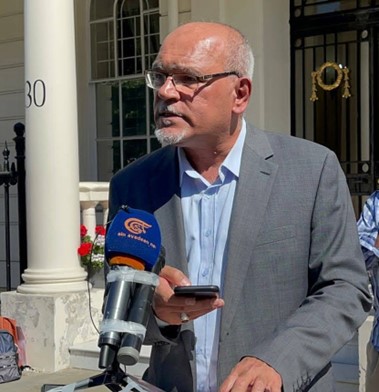 CIVICUS speaks about the situation of political prisoners on hunger strike in Bahrain withJawad Fairooz, founder and director of Salam for Democracy and Human Rights (Salam DHR).
Founded in 2012, Salam DHR is a human rights civil society organisation (CSO) registered in France, Switzerland and the UK. It undertakes research and advocacy for the advancement of democracy and human rights, mainly in relation to Bahrain, but also in the wider Gulf and Middle East and North Africa regions.
Maryam al-Khawaja, daughter of imprisoned human rights defender Abdulhadi al-Khawaja, intends to return to Bahrain imminently to ensure her father gets medical treatment and press for his immediate and unconditional release. Yet she, too, faces possible arrest. What’s your assessment of the situation?
Abdulhadi al-Khawaja, 62, a dual Danish-Bahraini citizen, is the co-founder of the Bahrain Center for Human Rights and has a long history of activism. He was arrested by the government of Bahrain in 2004, 2007 and again amid mass unrest in April 2011. After this he faced a grossly unfair trial before a military court, including on charges of ‘seeking to overthrow the government’. He was tortured in pretrial custody and since his arbitrary imprisonment he has been repeatedly denied access to adequate healthcare.
On 9 August he joined some 800 other hunger strikers. They called for an end to lockdown policies that require them to spend up to 23 hours of the day in their cells, the suspension of solitary confinement, the opportunity for collective or congregational prayer in Jau Prison’s mosque, face-to-face meeting rights with family members without a glass screen and access to healthcare commensurate with that available to the public, among other improvements in prison conditions.
On 13 September the mass hunger strike ended with the authorities reportedly meeting many of these demands. This came as Bahrain’s Crown Prince visited Washington, DC, where he met with senior members of the Biden administration: the problem had to go away.
Maryam nevertheless intends to travel and she has our full support. We continue to call for Abdulhadi’s immediate and unconditional release. The Danish and European Union (EU) authorities must do more.
What is at the core of this problem is the absence of civic space in Bahrain. If there was space for independent civil society, then CSOs would have effectively alerted the authorities to prison conditions and they could have addressed the situation. An independent civic space makes it possible to find a balance in government conduct.
What does this mean for Maryam al-Khawaja and our courageous colleagues travelling with her? It means they should be allowed to enter Bahrain and make their demands. The government should engage with them in a spirit of transparency. The absolute worst that could happen is for dissent to be tolerated just a little bit more. While this seems unlikely to happen, it is what the government should do. We wish them all Godspeed.
How is it possible to conduct human rights activism in such a closed environment? How does Salam DHR do it?
Bahrain has closed civic space. Government officials decide which CSOs can be registered and who can stand for their boards. They prevent people from engaging in public life who have no criminal records or public complaints but rather perhaps a past association with a political movement or party that was unfairly banned years ago.
The Bahraini constitution provides for freedoms and safeguards similar to many other states, but the reality is that the government continues to carry out arbitrary arrests and stage unfair trials for acts that are not internationally recognised as crimes. The authorities torture detainees and use the death penalty, despite domestic opposition and international condemnation. They have stripped hundreds, including myself, of citizenship, depriving us of even the right to have rights in our homeland. They use the digital space to monitor and punish dissent and to foment religious and sectarian strife.
Activists linked with Salam DHR cannot, in effect, exercise their right to peaceful assembly, let alone openly campaign for freedoms of association and expression, the release of prisoners unfairly tried and imprisoned or a moratorium on the death penalty. They would risk arrest if they did that.
Yet engaging in civic activism is not totally impossible, only very challenging. Alongside CIVICUS and other partners, Salam DHR engages with allies and like-minded activists as well as the few CSOs that openly but cautiously raise human rights concerns so that the wider Bahraini society hears our message. We echo and amplify their appeals.
We are a catalyst: we help Bahraini activists access platforms to reach domestic and international audiences and provide training and development opportunities such as internships. Alone and in partnership with others, we research, document and publicise developments, grounding our message in article 25 of the International Covenant on Civil and Political Rights, which states that every citizen shall have the right and the opportunity to take part in the conduct of public affairs.
How useful for advocacy purposes was theglobal event held by the Inter-Parliamentary Union (IPU) in Bahrain’s capital, Manama, in March 2023?
It was mixed: Danish parliamentarians and those from other countries addressed human rights issues and the absence of an independent civic space. The IPU’s human rights team raised concerns about freedom of expression and violations against Bahraini parliamentarians. But despite the IPU’s affiliated status with the United Nations (UN), the government still denied access to independent observers and human rights organisations, denying them either visas or access and turning at least one around at the airport. This was the authorities once again restricting civic space.
A few days before the IPU meeting officially began, Bahraini lawyer and activist Ebrahim Al-Mannai called for parliamentary reforms on social media. He and three others who shared his post were arrested for publishing material that could ‘disturb public order’.
At the event itself, the government appeared uninterested in seriously engaging with visiting parliamentarians on human rights issues, despite attempts from the Danish delegation and representatives from Finland, Iceland and Ireland. Our message is clear: open up civic space, free up CSOs and political parties and liberate discourse, otherwise the cycle of political unrest will continue.
Reports indicate that the mass hunger strike in Jau Prison has ended. What’s your assessment of this episode?
The painful August 2023 mass hunger strike was wholly avoidable. It happened mainly due to the government’s stubborn and short-sighted refusal to allow civic space to exist even to a minimum degree. Had there been freedoms of expression and peaceful assembly, they would have known of the deep suffering at Jau Prison. If you don’t let people say what they think, then public life can only lurch from crisis to crisis.
The hunger strike was the expression of the accumulation of a number of factors that have been present in Bahraini prisons for years and it was based on grievances that have been repeatedly expressed: prison conditions and ill treatment of prisoners amounting to torture. The abuses worsened and conditions deteriorated during the COVID-19 pandemic. In 2021, medical neglect resulted in the deaths of two prisoners, Hussein Barakat and Abbas Mallalah.
We appeal once more to the authorities to allow for the opening of civic space and provide a social vent to end the cycle of human rights crises we face.
Is the international community doing all it can to support the struggle for democracy and human rights in Bahrain?
International human rights organisations, UN treaty bodies and Special Procedures and partner states, for instance in the context of the UN Human Rights Council Universal Periodic Review process of Bahrain, have all joined us in calling on the government of Bahrain to abide by its international human rights obligations, starting with the basic step of letting people have a voice in public life.
Today, 15 September, is International Day of Democracy, and we are joining the UN in calling on the government of Bahrain to empower the next generation by ensuring that their voices are included in the decisions that will have a profound impact on their world. In his address, UN Secretary-General António Guterres has warned that ‘walls are closing in on civic spaces’. Those walls are also the walls of Jau Prison, where it took 800 detainees’ unjust suffering for the government to even take notice.
But the UN has also let neighbouring United Arab Emirates, which is as closed as Bahrain, host the forthcoming COP28 climate change summit. Lack of civic space means there can be no activism for climate justice in Bahrain – for instance, no public demands for accountability can be expressed over costly and environmentally damaging land reclamation in Bahrain’s northeast, which has already eroded the livelihood of fishing communities. We need to be able to address these challenges openly, with a rights-based approach, to avoid a future calamity.
And powerful states that could be putting some pressure for change are avoiding the issue. Right now, Bahrain’s Crown Prince is wrapping up meetings with senior Biden administration officials, none of whom appear to have raised civic space concerns or addressed the needless suffering of 800 Bahraini prisoners. The UK has removed Bahrain from its list of ‘countries of concern’ at the same time as it trumpeted a billion-dollar Bahraini investment in the UK. In October the EU will recommence its cycle of so-called human rights dialogues.
The international community’s inexplicable complacency over the festering human rights quagmire in Bahrain will further embolden the government in crushing civic space. Many leaders miss the point when it comes to Bahrain and its Gulf neighbours: they appear to accept the facade of what is presented as pragmatic autocracy and appear to accept regional rulers’ colonial-mindset contention that democracy will destabilise the region.
Democracies have in fact produced the most stable, enduring and dynamic systems in the world. Human rights and democracy are essential for Bahrain and its neighbours because their deficits continue to be the primary cause of resentment and unrest. A security-based approach does not remedy these problems. Bahrain’s history has shown these methods to be a failure, as it has endured continuous waves of mass unrest followed by violent crackdowns.
Authoritarianism and the forms of violence it fosters are the real destabilising forces, a cycle that can only be broken through the recognition and enactment of democratic rights. The first step towards this goal is simply letting civic space exist.
Civic space in Bahrain is rated ‘closed’ by theCIVICUS Monitor.
Get in touch with Salam for Democracy and Human Rights through itswebsite and follow @SALAM_DHR and@JawadFairooz on Twitter.
-
DRC: ‘Civil society action is needed more than ever, but the space in which it can undertake it is getting smaller’

 CIVICUS speaks with Bahati Rubango, country coordinator at the Women’s International Peace Centre (WIPC), about conflict in the eastern part of the Democratic Republic of the Congo (DRC).
WIPC is a feminist organisation seeking to catalyse women’s leadership, amplify their voices and deepen their role in peacebuilding. It started out in 1974 as Isis-Women’s International Cross-Cultural Exchange, and in 1994 it moved from Geneva to Uganda and deepened its focus on the women, peace and security agenda.
What’s the security situation in the DRC, and how is civil society working to address it?
In the DRC, and particularly in Kivu and other parts of eastern DRC, including Beni, Bunagana, Masisi and Rutshuru territories and Ituri and South Kivu provinces, the situation is dire due to ongoing conflict. The prominence of the M23 rebel group exacerbates the crisis. The DRC’s government has accused Rwanda of supporting M23, with these claims substantiated by United Nations (UN) reports. The region is also plagued by the presence of over 120 other armed factions, foreign and local, some of which receive backing from Uganda, further complicating the situation.
This has precipitated a humanitarian catastrophe, characterised by widespread displacement, killings, rape, plundering of natural resources, instances of sexual violence and severe limitations on access to education and healthcare, worsening the suffering and vulnerability of millions of civilians.
Despite the deployment of various regional and international peacekeeping missions, the violence persists. The peacekeeping efforts of MONUSCO, the UN Stabilization Mission in the DRC, have fallen short. The conflict has regional and global dimensions beyond the DRC’s borders, impacting on peace and security across multiple countries.
There is a complex interplay of local and international dynamics, including economic interests that perpetuate the conflict. The conflict’s economic dimension has been illustrated by the fact that rebel groups are mainly located where there are strategic natural resources.
Efforts to quell the insurgency by national militia groups such as the Wazalendo movement find obstacles in the challenging terrain and the firm grip of rebel groups on strategic areas. As a result, access to Goma and other conflict-affected regions is primarily limited to air travel and boats across Lake Kivu, which impedes humanitarian aid and peacekeeping efforts.
Civil society organisations play a crucial role in peacebuilding, monitoring human rights violations and advocating for justice and security sector reforms. Civil society highlights the need for justice for victims and the involvement of women and young people in peace processes. Despite challenges, including threats to human rights defenders, civil society strives to raise awareness, combat hate speech and protect vulnerable populations.
How much space is there for civil society action in the DRC?
The situation has been tumultuous since May 2021, with the declaration of a state of siege in conflict areas that has subsequently been renewed. Under the ongoing state of siege, the military displaced civilian authorities and assumed control. This shift resulted in a significant curtailment of civic freedoms, particularly for public demonstrations and speech. Military justice has taken precedence over civilian law, raising ethical concerns and contributing to lack of accountability.
Problems have been compounded by the questionable level of training and education in the army. There have been reports of inadequately trained people being integrated, including former rebel fighters with no regard for human rights principles, approaches or values. This has led to a rise in criminal activities and violations committed by security forces, further restricting civic space.
Human rights defenders and journalists critical of the government have faced persecution. Arrests and criminalisation under baseless charges have become commonplace. Despite legislative efforts to protect activists, implementation has been lacking, exacerbating the erosion of civic space. An example is Lucha (Lutte pour le changement – Fight for Change), an organisation of young activists, several of whom spent four days under arrest simply for signing a declaration urging the state to stop war.
Advocacy at national, regional and global levels is needed to address the challenges of conflict. However, entrenched power dynamics in the DRC, including the dominance of the ruling party, pose significant obstacles to meaningful reform. Urgent action is needed to reverse the trend of declining civic space, because civil society action is needed more than ever, but the space in which it can undertake it is getting smaller.
What’s the likelihood of tensions between the DRC and Rwanda escalating into a regional conflict?
Rwanda’s involvement in destabilising the DRC is concerning, especially considering its history of aggression in the region, but it won’t necessarily lead to a regional conflict. Despite Rwanda’s attempts to exert influence, the DRC has demonstrated significant military strength in defending its territory against its aggression in the past.
Rwanda’s diplomatic prowess and hidden support from foreign countries – often driven by economic interests around mineral resources – contribute to its ability to manipulate regional dynamics. Rebel groups such as the M23 and the Allied Democratic Forces exploit the porous borders between Rwanda and the DRC, seeking refuge in and support from Rwanda to evade accountability for their actions. This exacerbates tensions between the two countries.
But the likelihood of the conflict escalating into a full-blown regional war is mitigated by mutual interests and dependencies. Both countries rely on resources derived from the DRC, which acts as a deterrent to all-out warfare. Regional initiatives like the Nairobi Process, brokered by the East African Community in November 2022, seek to address underlying tensions and promote peacebuilding efforts. However, the effectiveness of such initiatives is undermined by external influences dictating the terms of engagement and providing support to conflicting parties.
Civil society plays a crucial role in advocating for peace and stability, but its efforts are hindered by external interference and power dynamics that dictate the trajectory of the conflict. While regional organisations, notably the African Union, are theoretically focused on addressing conflict in the continent, external influences and interests often compromise their effectiveness.
Ultimately, it will require a concerted effort from regional and global players committed to peace and stability in the Great Lakes region to prevent the escalation of the conflict and resolve it for good.
How can the international community support peacebuilding efforts in the DRC?
There is a pressing need for support from the international community to assist internally displaced people in desperate need of essentials such as food and shelter. Efforts are also needed to document atrocities to ensure accountability further along the road. This includes highlighting the responsibilities of perpetrators and using this information to ensure justice is served, even if it takes years. Support for civil society groups involved in peacebuilding processes is crucial, particularly since the state lacks adequate resources.
Although it may not generate enthusiasm in all quarters of the international community, security sector reform requires attention. Fortunately, there are promising initiatives funded by international donors.
Another critical need is justice reform, which should include mechanisms for transitional justice. This will be vital to address the immediate effects of conflict and the long-standing grievances and cycles of violence that have plagued the region for decades. Access to justice for victims is paramount to break the cycle of impunity and prevent further atrocities. There’s a need for collective and individual reparations for victims, as well as guarantees that such violence will not be repeated. This includes addressing psychological trauma and providing survivors the support they need to rebuild their lives.
Both local and international engagement will be needed to ensure that peacebuilding agreements are fully respected and implemented, including by holding all parties responsible and accountable. Civil society activists, academics and journalists will have a crucial role in monitoring and advocating for these agreements to be fulfilled.
Finally, it’s essential to recognise that the conflict in the DRC is not isolated but has regional and global implications. Efforts to address the crisis must consider its broader context and involve stakeholders at all levels, from local communities to international organisations. Only through a holistic and inclusive approach can lasting peace and stability be achieved in the region.
Civic space in the DRC is rated ‘repressed’ by theCIVICUS Monitor.
Get in touch with the Women’s International Peace Centre through itswebsite and follow @TheWIPCentre and@BRubango on Twitter.
-
MYANMAR: ‘The ruling military junta uses fear as a domination tool’
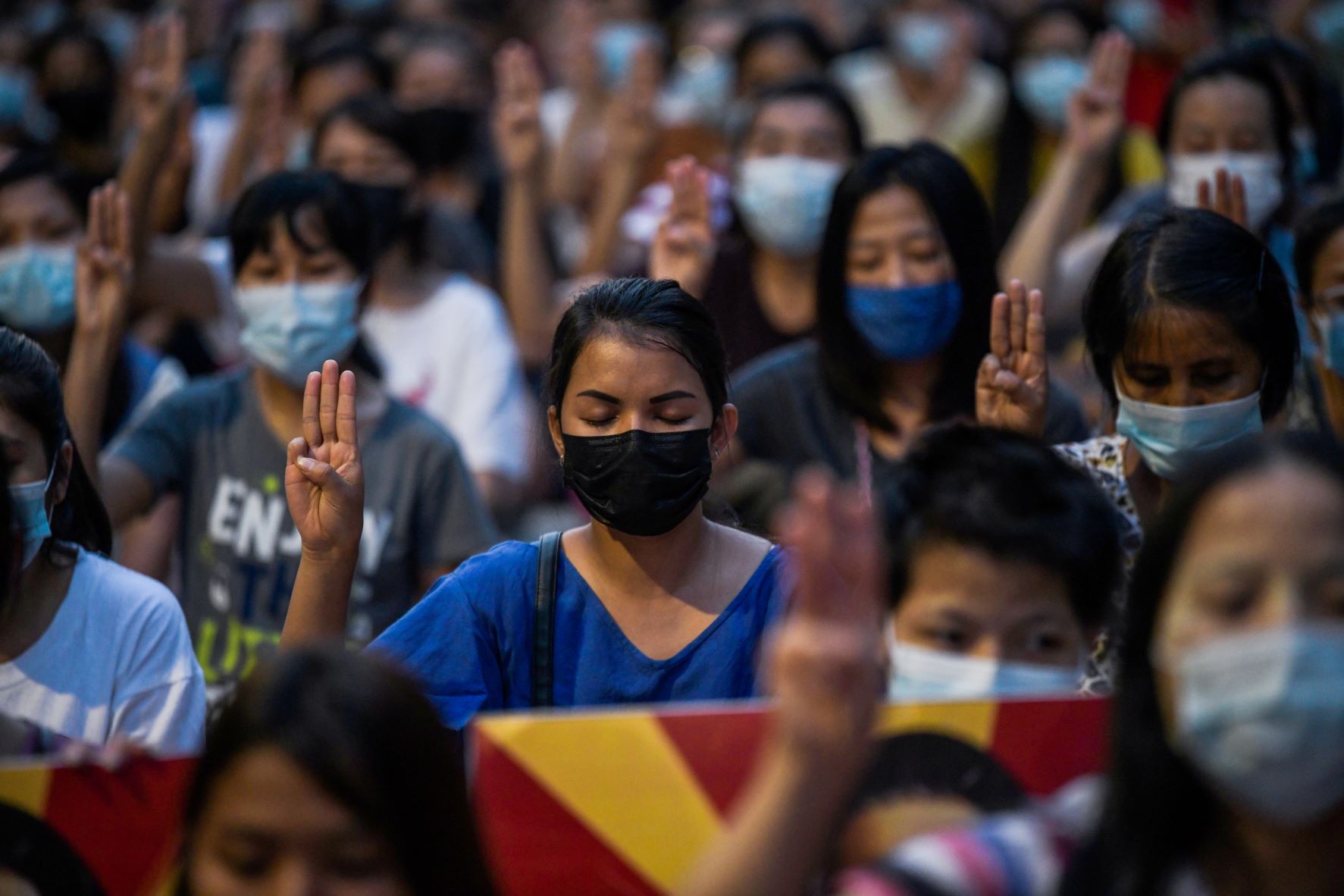
CIVICUS speaks about the human rights situation and prospects for democracy in Myanmar with a civil society activist based in Myanmar, who asked to remain anonymous for security reasons.
What is the current situation in Myanmar, a year and a half on from the military coup?
Myanmar has been in turmoil since February 2021. The coup halted the fragile democratisation process. All branches of government – legislative, executive and judiciary – were concentrated in the hands of the junta and fundamental rights were suspended.
The rule of law has been significantly degraded at every level. In the business sector, the junta’s inconsistent regulations make it impossible for investors to make decisions. Foreign investors are increasingly withdrawing from Myanmar, and the telecom sector fell into the hands of the junta’s cronies. The junta has questionable capacity to manage the economy, and inflation has pushed up the prices of essential commodities.
The degradation of the rule of law puts people’s everyday life and livelihood at risk. Repression and fundamental rights violations make everyone feel unsafe and spread fear. The junta uses fear as a domination tool. Even once-peaceful villages in central Myanmar have become conflict zones where the junta’s troops have destroyed tens of thousands of people’s humble homes.
What effects has the coup had on civil society?
The post-coup setting is very challenging. The coup set back civil society, which had been slowly growing since the late 2000s, when young democracy and human rights activists who had survived the military dictatorship started getting together and organising to pursue common objectives.
Our organisation came into existence in the early days of Myanmar’s political transition. There were limited freedoms and rights and limited space for civil society organisations. Our objective was to create a gathering space and provide support for political and civic activists. Within a decade, we adopted the broader objective of promoting civic space in Myanmar. We use technology to reach the right audiences and promote civic awareness, participation and engagement.
Right now our work is severely restricted. A few organisations have relocated their offices to border areas or neighbouring countries, but we continue operating inside Myanmar. Since speaking out entails security risks, along with many other activists and organisations we have changed our approach, keeping a low profile. We are also conducting research as a tactical response to understand the challenges and find possible ways out.
For some of Myanmar’s local civil society activists, life under a repressive regime is not a new experience: they operated under similar conditions before the 2010s. They continue to take numerous risks to serve their communities. Some organisations have also managed to channel international humanitarian assistance to conflict areas and vulnerable populations.
What kind of work are pro-democracy groups doing and what backlash do they face?
Restoring democracy is hard work. Pro-democracy groups are working to force a return of power to an elected government. They discuss things such as interim arrangements, political pacts for federalism and a transitional constitution. On the ground, they promote rights and freedoms and defend people from the junta’s repression.
Having expressed their wish for democracy in the 2020 general election, the public supports pro-democracy groups in various ways, such as by taking part in peaceful demonstrations and campaigns for the suspension of tax payment, boycotting the junta’s products and brands, and joining in so-called ‘social punishment’, a form of protest that consists of doxing members of the junta and their family members – revealing information about their businesses and family connections. Many people inside Myanmar and in the diaspora also contribute financially to support the security of people in conflict areas and provide emergency humanitarian supplies.
The vital goal of pro-democracy protests is to sustain awareness of fundamental rights and freedoms, provide encouragement and show determination to take action rather than be the junta’s victims. In the earlier days, the protests were joined by people from all walks of life, including young people, students, members of civil society and political parties, government staff and celebrities. Even as the junta used lethal force and arbitrary arrests and committed atrocities, they continued to demonstrate daily in some rural regions and hold occasional flash mobs in urban areas.
The junta keeps trying to clear out pro-democracy groups and to get the endorsement of the international community. As it finds the latter quite hard, it increasingly focuses on the former. They apply the so-called ‘four cuts’: they try to cut off financial support, rations, information and recruitment by pro-democracy groups. They arrest high-profile businesspeople suspected of supporting them and strictly regulate financial transactions. They deploy police and troops at every crossroads, equip their supporters with weapons and train informants. They have banned numerous news agencies and publications that could counter their propaganda and torched villages that were believed to host pro-democracy groups.
What will be the consequences of the recent executions of pro-democracy activists?
In late July the military executed four pro-democracy activists. It was the first time the death penalty was imposed in Myanmar in decades.
For the junta, this means there is no turning back. They meant it as a message to shock and paralyse people and comfort their hard-line supporters. But it backfired: it fuelled robust determination among pro-democracy groups.
Internationally, the executions showed that the junta will not play by the rules to gain international recognition. In fact, it has continued to show muscle, using hostage diplomacy. A former British ambassador, recently jailed, became one of the victims of this.
When they lose power, they will have to face justice. Any transition will have to contemplate transitional justice arrangements to hold everyone who committed crimes against humanity and war crimes accountable in domestic and international courts. They shall not enjoy impunity anymore.
How can the international community help Myanmar’s civil society?
Myanmar needs attention and practical coordination. The international community must listen to our people’s voices and reflect on their agendas by following up with quick and responsive actions. Paying attention to local concerns and voices and developing effective international assistance will make people feel more hopeful and maintain their resilience.
Meanwhile, the junta is trying to boost its legitimacy by holding a controversial election. Elections under its iron fist will never be free and fair. The international community must be clever enough not to recognise such elections, which are a rotten trick the military have used for decades. Endorsing the junta as a legitimate ruler will only prolong the crisis.
So we ask the international community: please listen to and amplify Myanmar people’s voices!
Civic space inMyanmar is rated ‘repressed’by theCIVICUS Monitor.