


human rights council
-
Outcomes from the UN Human Rights Council: Progress & Shortcomings
Joint statement from the end of the United Nations' 45th Session of the UN Human Rights Council
14 organisations share reflections on the key outcomes of the 45th session of the UN Human Rights Council, as well as the missed opportunities to address key issues and situations including on deadly migration routes at EU and US borders, and the human rights situations in Algeria, Bolivia, China, Egypt, and India. A shortened version was delivered at the Council, which can be watched in the following video:
Full written version below, which also highlights countries in question with the country's civic space rating according to the CIVICUS Monitor: open narrowed obstructed repressed closed-see footnotes for full description
Thematic issues and resolutions
We welcome the adoption of the resolution on the protection, promotion and respect of women’s and girls’ rights in humanitarian situations, and particularly command the core group for this new initiative that seeks to bridge accountability gaps faced by women and girls in humanitarian situations. Adoption by consensus of this resolution emphasizes the timeliness and importance of this new initiative and paves the way for greater accountability for women and girls in these settings and for approaches that centers their agency and meaningful participation.
We welcome the resolution on the safety of journalists. With impunity for attacks and reprisals against journalists as high as 90% worldwide, this resolution is more important than ever. In particular, we welcome new paragraphs addressing extraterritorial threats, strategic lawsuits against public participation, access to information, and overbroad and vague laws criminalising journalism, as well as strengthened language on gender throughout the resolution. We now urge all States to implement these commitments at the national level – commitments on paper are not enough.
We welcome that several States called for accountability for individual victims of reprisalsin Egypt, Burundi, Laos, Venezuela and China. We urge all States to stand up for the critical voices of human rights defenders and seize the opportunity to take up specific cases in the report during future interactive dialogues.
We welcome the adoption of the resolution on the contribution of the Council to prevention of human rights violations, which contributes to strengthening the Council’s prevention mandate, mainstreaming prevention throughout the work of the Council, and bringing Geneva and New York, and the three pillars of the UN closer. We urge all States to implement the thematic elements contained in the resolution by applying them to country-specific contexts. In this regard, they should rely on objective criteria, including restrictions on civic space and attacks on HRDs, which often constitute early warning signs of human rights crises.
We welcome the High Commissioner’s update on police violence against people of African Descent. We also welcome that the High Commissioner will center the voices of victims of people of African descent, their families and communities in the preparation of the report on systemic racism and police violence against Africans and People of African Descent, and government responses to antiracism protests. We urge the Council to continue its scrutiny so that racial justice is achieved in the United States and around the world.
We welcome the adoption of a resolution on the 20th anniversary of the Durban Declaration and Programme of Action (DDPA) and urge all States to heed to the calls made by the Working Group on People of African Descent to implement the Durban Declaration and Programme of Action, embrace the International Decade of People of African Descent and operationalise the Permanent Forum on People of African Descent.
We welcome the leadership of GRULAC and the EU to ensure that the resolution on the rights of the child maintained its intended focus to ensure that children’s rights are protected from environmental harm, urging States to consider recognising a right to a healthy environment and to create inclusive and meaningful spaces for children to contribute to decision-making. However, we are concerned by the amendments put forward to weaken the text on child participation, setting a bad precedent. Furthermore, the Council lost an opportunity to reinforce States’ heightened obligations as reflected in the Framework Principles; promote gender inclusive language; strengthen follow-up to the resolution; and go beyond Council’s resolution 40/11 in recognising the role of child human rights defenders.
We welcome the statement made by Costa Rica on behalf of the Core Group on Human Rights and the Environment acknowledging that a safe, clean, healthy and sustainable environment is “integral to the full enjoyment of a wide range of human rights, including the rights to life, health, food, water and sanitation”. The Covid-19 pandemic and the climate crisis evidence the urgent need for global recognition of the right to a healthy environment. In the joint appeal “The Time is Now”, more than 950 organizations representing civil society and indigenous peoples from across the world call for the Council to recognize the right to a healthy environment without further delay. We therefore urge all States to rise to the existential challenge that climate change and environmental degradation pose to present and future generations and join us in voicing support for global recognition of the right to a safe, clean, healthy and sustainable environment.
We welcome High Commissioner’s report on the impact of arms transfers and the resolution adopted on human rights impact of civilian acquisition, possession and use of firearms which, moving forward, need to ensure enhanced focus on preventative and inclusive approaches, and highlight the application of the business and human rights framework to the arms industry to not only address the impact of diverted firearms but also the impact of irresponsible legal transfers or acquisitions.
Human rights situations on the Council’s agenda
We welcome the urgent debate on Belarus and the resolution mandating the High Commissioner to monitor and report on the situation in the near future. We condemn the authorities’ continued crackdown on peaceful protesters and regret their rejection of any dialogue with opposition leaders and civil society actors. We reiterate our call on Belarus to put an end to all human rights violations and abuses against dissenting voices.
Recognized as a crime against humanity, apartheid gives rise to individual criminal responsibility and State responsibility to bring the illegal situation to an end. We urge the Council to take action to uphold the inalienable rights of the Palestinian people, including self-determination and return, by adopting effective measures to overcome *Israeli apartheid over the*Palestinian people as a whole.
We welcome that the Council has renewed and strengthened the mandate of the fact-finding mission on Venezuela (with an increased majority on the 2019 resolution) to allow for its enquiries to further bolster efforts to hold perpetrators to account.
We welcome the renewal and strengthening of the mandate of the Group of Eminent Experts on Yemen, including to collect, consolidate and analyse information related to, and clarify responsibility for, the most serious crimes under international law and tasking the GEE to explore and report on recommended approaches and practical steps to help ensure justice and redress for Yemen. We look forward to States building on this important progress as part of a holistic strategy towards achieving accountability and redress for victims in Yemen.
We are gravely concerned over the dramatic deterioration of the human rights situation in Cambodia over the past five years. Civic space has continued to shrink due to the adoption of restrictive legislations on Associations and NGOs, on Trade Unions, on the State of Emergency, and surely to be adopted draft Law on Public Order. Lack of independence of the judiciary and executive interference in legal and judicial bodies further enable rampant abuse of laws to target and harass individuals. Since the main opposition party was dissolved, its members have been mass criminalised and harassed. Independent media has been decimated, and HRDs are systematically targeted, even at the UN during the Interactive Dialogue on Cambodia. We urge States to take meaningful action at the Council to address the escalating violations and ongoing abuses of human rights in Cambodia.
Thousands of victims of killings and other violations and their families continue to be deprived of justice in the Philippines. The adopted resolution is a collective failure by the States at this Council to ensure the needed international investigation. It fails to reflect the gravity of the situation and the findings in the OHCHR report mandated by this Council. At the same time, the resolution keeps the Philippines on the agenda of the Council for the next two years. The Council can and should live up to its responsibility to ensure an international investigation if the killings and the crackdown on civil society does not immediately end and prosecution of perpetrators are not pursued.
In the absence of concrete progress in Burundi and given the government’s refusal to engage, a further extension of the mandate of the Commission of Inquiry is the most sensible way forward. The Burundian government should now change course by resuming its cooperation with the UN human rights system, including with the Office of the High Commissioner with a view to re-opening the country office, as a first step towards broader engagement with UN and African mechanisms.
The resolution on Sudan is a welcome step as it ensures that the country’s human rights situation will continue to be publicly discussed while the Transitional Government attempts to strengthen gains of the Revolution and prevent setbacks. Sudan’s political transition remains fragile, and we urge the Council to maintain a high level of support to, and scrutiny of, the country until at least the end of the transition, in 2022-2023.
We welcome the renewal of the mandate of the Independent Expert on Somalia, as continued attention to, and monitoring of, the country’s human rights situation is direly needed ahead of the elections planned for 2021.
We welcome the joint statement delivered by Denmark on behalf of 33 States raising their concerns over the human rights situation in Saudi Arabia, including calling for the immediate release of Saudi women human rights defenders. We urge the Council to continue its scrutiny and to establish a monitoring and reporting mechanism over the situation.
We also welcome the joint statement delivered by Germany on behalf of 48 States on Iran calling for the release of all political prisoners and those arbitrarily detained, and for perpetrators to be held accountable.
Human rights situations which should be on the Council’s agenda
Lethal disregard for the human rights of migrants and refugees continues unabated. This session opened with the High Commissioner calling for independent monitoring of pushbacks and collective expulsions at the land and sea borders of EU States. This session closes with this call unanswered. Silence from the Council tells migrants and refugees that their lives are disposable. Last week, a caravan of more than 2000 migrants left Honduras to the United States. Mexico and Guatemala expressly threatened them by implementing policies that discriminate, criminalise, fail to assess protection needs and put at risk the lives of the migrants. Silence from the Council tells States that the rights of migrants and refugees can be violated with impunity. The Council must act on the High Commissioner’s call and demonstrate that it can respond to human rights violations wherever they take place by establishing a monitoring mechanism for this and other deadly migration routes.
This session, hundreds of NGOs from more than 60 countries, from Azerbaijan to Zambia, joined the call by 50 UN Special Procedures and dozens of States for international monitoring and reporting of China's sweeping rights violations. The High Commissioner for Human Rights should fulfil her independent mandate to publicly report on China’s mass violations, and the Council should act urgently to create a monitoring mechanism. No State should be above the law.
The Council should urge Algeria to "halt the arrest and detention of political activists, lawyers, journalists, and human rights defenders, as well as any person who expresses dissent or criticism of the government" and cease their arbitrary prosecution as highlighted by a joint statement fromUN special procedures.
The Council should also urge Egypt to immediately release all those detained for exercising their rights, affirming the repeated calls made by Special Procedures and States over the past several years.
Weeks before the elections, no attention was paid to the increasingly violent situation in Bolivia, governed since November 2019 by an unelected government that has persecuted protesters, indigenous and union leaders and more than 150 members of the MAS party.
We regret the Council’s continued silence on the human rights crisis in Kashmir. More than a year after India revoked the constitutional autonomy of Indian-administered Kashmir, fundamental freedoms remain severely curtailed with ongoing reports of violence by police and security forces including the continued use of pellet guns against protestors, torture and custodial deaths. Human rights violations also continue to take place in *Pakistan-administered Kashmir. We reiterate our calls on India and Pakistan to grant unfettered access to OHCHR and other independent observers to Kashmir, and on the Council to establish an independent international investigation mechanism into past and ongoing violations and abuses in Kashmir.
We regret the Council’s silence on the arbitrary arrests of peaceful protesters, intimidation and use of excessive force by the police in India. The government’s use of overbroad “national security”, “sedition”, and counter terrorism laws to intimidate, detain, torture and silence human rights defenders is a continuation of the erosion of democratic freedoms. The enactment of the Foreign Contribution (Regulation) Amendment Act, 2020 in September 2020 seeks to further restrict human rights advocacy and collaborative work among civil society and diminishes space for dissent.
Signatories:
- Article 19
- Asian Forum for Human Rights and Development (FORUM-ASIA)
- Association for Progressive Communications
- Cairo Institute for Human Rights Studies
- Center for Reproductive Rights
- 6.Centro de Estudios Legales y Sociales
- Child Rights Connect
- CIVICUS: World Alliance for Citizen Participation
- DefendDefenders (East and Horn of Africa Human Rights Defenders Project)
- Franciscans International
- International Federation for Human Rights (FIDH)
- International Movement Against All Forms of Discrimination and Racism (IMADR)
- International Service for Human Rights
- World Organisation Against Torture (OMCT)
The CIVICUS Monitor is a research tool that provides quantitative and qualitative data on the state of civil society and civic freedoms in 196 countries. The data provides the basis for civic space ratings, which are based on up-to-date information and indicators on the state of freedom of association, peaceful assembly and expression. Countries can be rated as: open narrowed obstructed repressed closed
-
Outcomes from the UN Human Rights Council...to be continued
In response to the COVID-19 pandemic, the United Nations Human Rights Council’s 43rd Session, which was scheduled to run from 24 Feb – 20 March, was suspended after three weeks on 13 March until further notice.
CIVICUS fully supports the suspension of the Session on public health grounds, and the precautionary measures taken before the suspension. However, we remain concerned that public participation in the Council risks being disproportionately affected, especially in light of the decision to cut General Debates from the 44th Session (June), which removes a key platform for civil society to engage with governments. The UN depends on information from the ground in order to make evidence-based decisions, and we call on states to take steps to ensure that the participation of civil society is not compromised.In Nicaragua, a human rights crisis has seen hundreds of thousands flee the country and an ongoing crackdown against human rights organisations, community leaders, and journalists. The situation is compounded by a lack of political will from the government to engage with regional or international mechanisms, or to ensure accountability. CIVICUS welcomes that the draft resolution on Nicaragua tabled during the Session would provide a mandate for enhanced monitoring and reporting by the Office of the High Commissioner on Human Rights (OHCHR) on the situation at this critical time, and we urge all states to support this resolution when the Session resumes.
We also call on states to support the renewal of the Special Rapporteur on Myanmar. The 43rd session marked the final one for the current Special Rapporteur on Myanmar, Yanghee Lee, and we thank her for her outstanding work during her mandate. Myanmar has undergone significant developments in its human rights framework since the Special Rapporteur began her term – from elections in 2015 which saw a groundswell of hope for positive change, to the dawning realisation of crimes against humanity against the Rohingya in Rakhine state. But the curtailment of fundamental freedoms and total crackdown on any criticism of authorities has remained grimly consistent. Those on the ground, the human rights defenders and activists who are trying to achieve change, need international support from the Human Rights Council.
In late 2019, Iran erupted into a series of protests against the lack of political and democratic freedoms and the deteriorating economic situation. Protesters were met with violent repression through mass arrests and lethal force. When the Session resumes, the Human Rights Council will vote on extending the mandate of the Special Rapporteur on Iran. We welcome support shown by states so far for the renewal of the mandate, and we urge adoption of this resolution when the Session continues.
What is a Special Rapporteur?
Special Rapporteur is a title given to an independent expert who works on behalf of the United Nations who has a specific country or thematic mandate from the Human Rights Council. Special Rapporteurs often conduct fact-finding missions to countries to investigate allegations of human rights violations. They can only officially visit countries that have agreed to invite them. Aside from fact-finding missions, Rapporteurs regularly assess and verify complaints from alleged victims of human rights violations.The mandates for Special Rapporteurs on freedom of expression and opinion, and on human rights defenders, are set to be renewed when the Session resumes. We encourage all member and observer states to show their full support for these mandates by co-sponsorsing the resolutions.
Just prior to the suspension of the Session, Mary Lawlor was appointed as new Special Rapporteur on human rights defenders. We look forward to working with her as she protects those on the frontline of defending human rights around the world, and we thank Michel Forst, the outgoing mandate holder, for his tireless work.
Towards the beginning of the Session, the High Commissioner’s update on Sri Lanka highlighted ongoing impunity for past grave human rights abuses in the country. The new Sri Lankan government, which came into power in 2019, has said that it intends to renege on Human Rights Council resolution 30/1 which provided commitments to accountability, truth and reconciliation. The human rights space in Sri Lanka has deteriorated sharply under the new administration, and the undermining of this resolution – currently the only route to ensuring transitional justice in Sri Lanka – would not only be fatal to victims and their families, but also a significant setback to the UN itself. We urge states to strongly encourage Sri Lanka to uphold its commitments and reiterate calls for an international accountability mechanism to ensure that accountability remains a possibility.
Although India was not on the official agenda of this Session, the ongoing crackdown on Kashmir, a discriminatory citizenship law and violent suppression of protests proved an ongoing issue throughout the Session.
CIVICUS, FORUM-ASIA, ISHR, FIDH, OMCT and ICJ organized a side event to discuss the current situation and ways in which the international community, including the Council, could contribute to constrictive progress. With key partners, CIVICUS also joined important statements on the situation in Jammu and Kashmir as well as on India’s recent discriminatory citizenship law, and we were encouraged to see several states raise their own concerns about India during debates.
Civic space ratings by CIVICUS Monitor Open Narrowed Obstructed Repressed Closed Our joint and stand alone country statements at the 43rd Session of the Human Rights Council Angola Burundi El Salvador Eritrea Fiji India Iraq Iran Jammu & Kashmir Madagascar Myanmar Nicaragua Sri Lanka See all statements -
Outcomes from the UN Human Rights Council's 48th session: Progress & Shortcomings

Joint statement from the end of the United Nations' 48th Session of the UN Human Rights Council1
13 organisations share reflections on the key outcomes of the 48th session of the UN Human Rights Council, as well as the missed opportunities to address key issues and situations.
Thematic issues and resolutions
To commemorate theInternational Safe Abortion Day, 372 organisations demanded free, safe and accessible abortion for everyone.
We welcome the adoption of the resolution on the establishment of the UN Special Rapporteur on human rights and climate change, who will focus on the interdependence between human rights, a healthy environment, and combating climate change and we welcome the Council’s historic recognition of the human right to a clean, healthy and sustainable environment. These are vital steps towards addressing the climate crisis and achieving environmental justice.
Ensuring a safe and enabling environment for civil society participation at the national and international levels is essential.
We welcome the adoption by consensus of the resolution on cooperation with the UN in the field of human rights, in particular the invitation to the Secretary-General to submit his annual reprisals report to the General Assembly, which will ensure greater attention to the issue and contribute to a more coherent system-wide response across the UN.
We express concern over the reclassification of NGO written statements submitted to the 48th session of the HRC from Agenda Item 4 to Agenda Item 3 without informing or consulting with the submitting organizations, and without transparency for the reasons or scope of this reclassification.
We welcome that the resolution on equal participation in political and public affairs puts an important focus on the context of elections and on the impact of COVID-19, underscoring the importance of protecting civil society participation at every level as part of an effective response to the pandemic, in post-pandemic recovery and as a vital component of democratic electoral processes. We regret that, in this and other resolutions, there has been systematic pushbacks against the inclusion of references to children’s right to participate in public affairs, in particular girls, in contravention of international human rights standards.
We also welcome the resolution on privacy in the digital age. Among other issues, the resolution responds to recent Pegasus revelations and includes new commitments on the use of privately-developed surveillance tools against journalists and human rights defenders. It is now essential that the Council goes further and champions the call made by various UN human rights experts to implement a global moratorium on the sale, export, transfer, and use of private surveillance technology without proper human rights safeguards. We also welcome new language in the text on privacy violations and abuses arising from new and emerging technologies, including biometric identification and recognition technologies. In future iterations of the text, we encourage the core group to go further in calling for a ban on technologies that cannot be operated in compliance with international human rights obligations.
With the withdrawal of the resolution on the realisation of a ‘better life’, we are glad to see that the Council’s mandate and resources will not be diverted to efforts that would distract from its core work or dilute human rights standards.
We regret that it was not possible to schedule the briefing by the Peacebuilding Commission (PBC) as per resolution 45/31 – and look forward to future opportunities for exchanges between the HRC and the PBC to learn from one another in efforts to address common contemporary challenges.
Human rights situations on the Council’s agenda
We deplore the abandonment of the Yemeni people by the HRC member States who did not support the renewal of the Group of Eminent Experts on Yemen. This failure of the HRC gives the green light to all parties to the conflict to continue their campaign of death and destruction in Yemen. We demand an international criminal investigative mechanism. Anything less is unacceptable.
We regret that the HRC has not responded to the calls of civil society and the evidence of widespread violations in countries including China, Egypt and Saudi Arabia where the situations manifestly warrant the establishment of international investigation and accountability mechanisms.
The establishment of a Special Rapporteur on the situation of human rights in Afghanistan supported by additional and dedicated expertise in OHCHR should bring much needed scrutiny. While we are disappointed that the Council did not establish the full-fledged investigative and monitoring mechanism that the situation warrants, we hope this decision represents a first step towards a stronger response to ensure accountability for human rights violations and crimes under international law in Afghanistan.
While the extension of international scrutiny in Burundi, including through ongoing documentation of violations, is welcome, we regret the absence of a clear strategy post-Commission of Inquiry. As the Burundian government continues to reject cooperation with the Council and its mechanisms and to deny violations, and given that the newly-created Special Rapporteur will not have access to the country for the foreseeable future, it is vital for the Council to rely on benchmarks to design the next steps of its action on, and engagement with, Burundi. We thank the COI for its important work since 2016. It has set the bar high for investigative mechanisms.
We welcome the extension of the mandate of the Special Rapporteur on the situation of human rights in Cambodia with a mandate to provide an additional oral update to the Council. However, the resolution falls short of the minimum action required to credibly address the increasing regression in democratic space and civil and political rights and to put in place necessary measures to create an environment conducive for free, fair and inclusive elections in 2022 and 2023, including mandating enhanced monitoring and reporting by the High Commissioner.
More than four years after the beginning of the conflict in the North-West and South-West regions in Cameroon, we deeply regret States’ failure, once again, to collectively address the country’s human rights crisis. As other international and regional bodies remain silent, the Council has a responsibility to act, including through the creation of an investigative and accountability mechanism.
We welcome the renewal of the mandate of the Fact-Finding Mission (FFM) on Libya but regret that the mandate has only been extended for a 9-month period. The severity of ongoing and past violations and abuses in Libya, including war crimes, requires an FFM with a sustained and properly resourced mandate.
We welcome a second joint statement on Nicaragua, and urge concerned States to step up collective action in light of increasing repression ahead of the November 7 elections. Should the Government not revert course, it is fundamental that the Council takes stock and provides an adequate, strong response, including the establishment of an international mechanism at its 49th session.
We welcome the High Commissioner's oral updates on the Philippines. While the UN Joint Program on Human Rights (UNJP) might provide a framework for improvements, we remain concerned that the UN Joint Programme on Human Rights is instrumentalized by the Government only to please the international community. The national accountability mechanism fails to show meaningful progress. We continue to urge the Council to consider establishing a Commission of Inquiry on the Philippines, to eventually start the long-overdue independent and transparent investigation into the human rights violation in the country.
We welcome the robust resolution that extends the mandate of the Independent Expert on Somalia for a further year.
While human rights advancements since 2019 in Sudan should be recognized, Sudan still faces significant human rights challenges including threats of the militarization of the State which is also the most challenging peril for women’s rights and WHRDs in Sudan. The transition is not complete, and political uncertainty remains. Against this backdrop, the Council’s decision to discontinue its formal monitoring of and reporting on Sudan is premature as the military establishment continues to pose a threat to democracy and stability in Sudan. We urge the Sudanese authorities to fully cooperate with the UN human rights system to address ongoing violations including sexual and gender based violence and the legacy of 30 years of dictatorship, including impunity for crimes under international law.
1 Signatories :
- International Service for Human Rights (ISHR)
- Cairo Institute for Human Rights Studies
- DefendDefenders (East and Horn of Africa Human Rights Defenders Project)
- Commonwealth Human Rights Initiative (CHRI)
- FIDH
- ARTICLE 19
- International Commission of Jurists
- FORUM ASIA
- International Bar Association
- Franciscans International
- CIVICUS: World Alliance for Citizen Participation
- Association of Progressive Communications - APC
- Child rights connect
-
Pakistan: Alarm over attacks on human rights defenders and journalists
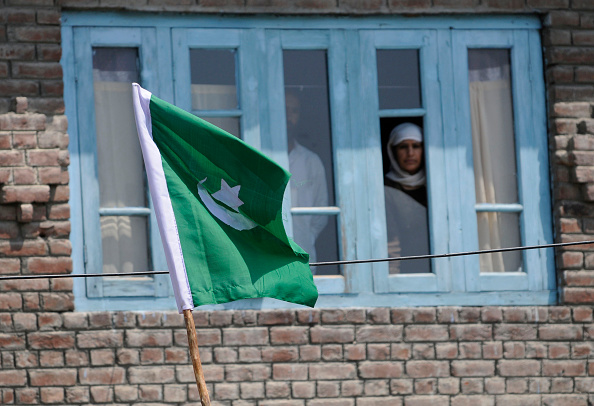
Statement at the 53rd Session of the UN Human Rights Council
Adoption of the UPR report of Pakistan
Delivered by Gulalai Ismail
Thank you, Mr President.
Mr President, the Asia Legal Resource Centre, Aware Girls and CIVICUS welcome the government of Pakistan's engagement with the UPR process.
Since its last review, Pakistan has only partially implemented three of the fourteen recommendations relating to civic space. We welcome that Pakistan accepted twenty of the twenty-two recommendations on civic space it received during this cycle including to guarantee a safe and enabling environment for the work of journalists and human rights defenders; review the law for Electronic Crimes and ensure that it does not affect freedom of expression and end the extra-legal use of force as well as use of enforced disappearances.
Despite these commitments, space for civil society has continued to come under attack in recent years. We have documented barriers for CSOs to register and operate, the criminalisation of human rights defenders and journalists on fabricated charges. We are further alarmed by efforts to intimidate and censor journalists and media outlets, the criminalisation of online expression and restrictions and attacks on peaceful protests, especially by ethnic Pashtun minorities and women’s rights activists.
Mr President, our organisations call on the Government of Pakistan to take concrete steps to address these concerns, including by halting the use of anti-terrorism legislation to arrest, detain and prosecute activists, to drop all charges against human rights defenders Muhammad Ismail and release Idris Khattak and amend the 1960 Maintenance of Public Order law, to guarantee fully the right to the freedom of peaceful assembly.
We thank you.
Civic space in Pakistan is rated as "Repressed" by the CIVICUS Monitor.
-
Paraguay - Recomendaciones sobre el espacio cívico para el Examen Periódico Universal de los Derechos Humanos

CIVICUS presenta propuestas conjuntas para el Examen Periódico Universal de la ONU sobre el espacio de la sociedad civil en Paraguay
El Examen Periódico Universal del Consejo de Derechos Humanos de las Naciones Unidas es un proceso único que implica una revisión de los registros de derechos humanos de los 193 Estados Miembros de las Naciones Unidas una vez cada cuatro años y medio.
CIVICUS y Semillas para la Democracia abordan sus preocupaciones relativas a las crecientes hostilidad, estigmatización y criminalización que enfrentan las personas defensoras de derechos humanos, y en particular las que integran los movimientos campesino, indígena, sindical y estudiantil, así como los periodistas que reportan acerca de protestas, crimen organizado, corrupción y violaciones de derechos humanos. Además de las restricciones de la libertad de expresión derivadas de la aplicación de estatutos de difamación penal y de presiones económicas de actores tanto privados como públicos, el documento examina las múltiples formas en que el disenso es ahogado en las calles, en la medida en que las protestas son impedidas mediante la aplicación de legislación que impone restricciones indebidas de tiempo y lugar y requisitos de autorización, los manifestantes son criminalizados bajo el Código Penal, y las manifestaciones son violentamente suprimidas por las fuerzas de seguridad.
Lea las recomendaciones completas:
https://www.civicus.org/documents/Paraguay.JointUPRSubmission.ES.pdf -
Paraguay - Recomendaciones sobre el espacio cívico para el Examen Periódico Universal de los Derechos Humanos (2)
CIVICUS presenta propuestas conjuntas para el Examen Periódico Universal de la ONU sobre el espacio de la sociedad civil en Paraguay
El Examen Periódico Universal del Consejo de Derechos Humanos de las Naciones Unidas es un proceso único que implica una revisión de los registros de derechos humanos de los 193 Estados Miembros de las Naciones Unidas una vez cada cuatro años y medio.
CIVICUS y Semillas para la Democracia abordan sus preocupaciones relativas a las crecientes hostilidad, estigmatización y criminalización que enfrentan las personas defensoras de derechos humanos, y en particular las que integran los movimientos campesino, indígena, sindical y estudiantil, así como los periodistas que reportan acerca de protestas, crimen organizado, corrupción y violaciones de derechos humanos. Además de las restricciones de la libertad de expresión derivadas de la aplicación de estatutos de difamación penal y de presiones económicas de actores tanto privados como públicos, el documento examina las múltiples formas en que el disenso es ahogado en las calles, en la medida en que las protestas son impedidas mediante la aplicación de legislación que impone restricciones indebidas de tiempo y lugar y requisitos de autorización, los manifestantes son criminalizados bajo el Código Penal, y las manifestaciones son violentamente suprimidas por las fuerzas de seguridad.
Lea las recomendaciones completas:
https://www.civicus.org/documents/Paraguay.JointUPRSubmission.ES.pdf -
Paraguay: Recomendaciones sobre el espacio cívico para el Examen Periódico Universal de los Derechos Humanos
CIVICUS presenta propuestas conjuntas para el Examen Periódico Universal de la ONU sobre el espacio de la sociedad civil en Paraguay
El Examen Periódico Universal del Consejo de Derechos Humanos de las Naciones Unidas es un proceso único que implica una revisión de los registros de derechos humanos de los 193 Estados Miembros de las Naciones Unidas una vez cada cuatro años y medio.
CIVICUS y Semillas para la Democracia abordan sus preocupaciones relativas a las crecientes hostilidad, estigmatización y criminalización que enfrentan las personas defensoras de derechos humanos, y en particular las que integran los movimientos campesino, indígena, sindical y estudiantil, así como los periodistas que reportan acerca de protestas, crimen organizado, corrupción y violaciones de derechos humanos. Además de las restricciones de la libertad de expresión derivadas de la aplicación de estatutos de difamación penal y de presiones económicas de actores tanto privados como públicos, el documento examina las múltiples formas en que el disenso es ahogado en las calles, en la medida en que las protestas son impedidas mediante la aplicación de legislación que impone restricciones indebidas de tiempo y lugar y requisitos de autorización, los manifestantes son criminalizados bajo el Código Penal, y las manifestaciones son violentamente suprimidas por las fuerzas de seguridad.
Lea las recomendaciones completas:
https://www.civicus.org/documents/Paraguay.JointUPRSubmission.ES.pdf -
Paraguay's Adoption of the Universal Periodic Review on Human Rights

Universal Periodic Review on Human Rights -- Outcome Adoption for Paraguay
Delivered by Inés M. Pousadela
Thank you, Madame President.
Semillas para la Democracia and CIVICUS welcome the government of Paraguay’s acceptance of UPR recommendations pertaining the space for civil society. However, our joint UPR submission documents that Paraguay did not implement 13 of the 19 such recommendations it received during its previous review, and only partially implemented six.
As detailed in our submission, both state and non-state actors frequently attack, intimidate and judicially harass human rights defenders and journalists, particularly when reporting on protests, organised crime, corruption and human rights abuses; the hostile environment for journalists is fuelled from the highest political levels. Defenders of Indigenous and peasant communities and land rights activists are targeted in attacks often linked to agribusiness corporations; women’s and LGBTQI+ rights defenders face attacks perpetrated mostly by fundamentalist anti-rights groups. Examples abound of land rights defenders who suffered attempts on their lives, and some have been killed. Most aggressions remain unpunished.
Workers face strong legal obstacles to exercise their freedom of association, as well as de facto obstacles and direct attacks from non-state actors, notably private companies that threaten to fire them if they try to organise. The law does not adequately protect this freedom.
Our submission also shows that the freedom of expression is threatened by the systematic use of criminal defamation statutes by public figures to intimidate and silence critical journalists, especially when they investigate allegations of corruption. The deficient implementation of the Access to Information Law has restricted access to information that should be public, and instances of censorship as well as self-censorship have been recorded.
The exercise of freedom of peaceful assembly remains obstructed. Peaceful demonstrations, particularly by the peasant and Indigenous movement and communities mobilising for land rights, are frequently broken up with excessive force, typically leading to people being arrested or injured, and occasionally resulting in fatalities.
We call on the Government of Paraguay to take proactive measures to address these concerns and implement recommendations to create and maintain, in law and in practice, an enabling environment for civil society.
We thank you.
Civic space in Paraguay is rated as obstructed by the CIVICUS Monitor.
-
Philippines under scrutiny at the UN Human Rights Council

Joint statement at the 44th Session of the UN Human Rights Council
Madame President; High Commissioner.
CIVICUS and Karapatan welcome the strong report of the OHCHR, which highlights that the Philippines’ once-vibrant and open tradition of civil society activism is under serious threat.
Yesterday, the Philippines was added to CIVICUS Monitor's Watchlist, reflecting its sharp decline in civic freedoms. President Duterte’s government has responded to the COVID-19 pandemic by passing an emergency law which is being used to curtail freedom of speech and silence the media. Journalists and social media users have already been targeted by the law.
CIVICUS member Karapatan, national alliance of human rights organizations and individuals, is one of the many organisations threatened and smeared for their work – including for their reports to the UN. Reprisals are never acceptable but are even more egregious when perpetrated by a member of this Council.
The report shows that violations of human rights, including extrajudicial killings and arbitrary detention under Duterte’s ‘war on drugs’, is pervasive. That vilification of dissent is being increasingly institutionalized and normalized in ways that will be very difficult to reverse. The new anti-terror bill will further erode the rule of law. Rampant impunity means that accountability for attacks against activists and journalists is virtually non-existent. Domestic mechanisms will not provide justice for the thousands killed at the hands of State authorities; for those unjustly imprisoned; for those silenced.
We welcome the strong statements made during this enhanced Interactive Dialogue. We call on the members of this Council to follow up with action and deliver a strong resolution which delivers the accountability measures that are so urgently needed, and demonstrates that Council members are committed to upholding respect for and protection of human rights. No country is above scrutiny, nor should they be above accountability.
We ask the High Commissioner what measures would she consider necessary for the Human Rights Council to take in order to ensure justice for those affected?
Civic space in the Philippines is currently rated as Obstructed by the CIVICUS Monitor.
-
Philippines: the persecution and criminalisation of defenders, journalists and dissenters continues

Statement at the 52nd Session of the UN Human Rights Council
Adoption of the Universal Periodic Review (UPR) report of the Philippines
Delivered by Cristina Palabay, Karapatan
Thank you, Mr. President.
CIVICUS and Karapatan note the Philippine government’s engagement with the UPR process and the UN Joint Programme. While it has accepted recommendations during the review, we regret that there has been no substantial improvement on the state of civic and democratic space in country.
Government policies on the counterinsurgency and drug war have not been rescinded, resulting in continuing extrajudicial killings, including those of human rights defenders. Task forces or panels created to look into these have failed to investigate and successfully prosecute the perpetrators and senior officials who ordered the killings have not been held to account. The Joint Programme lacks the necessary accountability tools that can deliver justice.
Meanwhile, the persecution and criminalisation of defenders, journalists and dissenters continue, including the incitement of violence against them through red-tagging, villification and the use of the laws on terrorism and libel. A community doctor was recently designated arbitrarily as a “terrorist individual”, without evidence, and jeep drivers who went on strike have been red-tagged. The number of political prisoners have risen with many facing trumped up charges. Members of community organizations face intimidation and threats of arrests and abduction.
We call on the Philippine government to stop the persecution of defenders, journalists and dissenters, and to enact the Human Rights Defenders Protection Bill. We also reiterate our view that the laws on terrorism and libel violate the right to due process, free expression, press freedom and freedom of association, among other constitutional rights. We renew our call to the Council for an independent investigation into the cases of extrajudicial killings and other grave rights violations in the Philippines.
Thank you.
Civic space in the Philippines is rated as "Repressed" by the CIVICUS Monitor.
-
Philippines: An international investigation is needed as government continues to deny grave violations

Joint statement at the 45th Session of the UN Human Rights Council -- delivered by the World Organisation Against Torture
On behalf of 14 organisations, including colleagues in the Philippines, we are deeply disappointed that the draft Item 10 resolution on the Philippines fails to reflect the gravity of the situation, including as documented in the OHCHR report.
Colleagues from the Philippines have tirelessly advocated for an international investigation, at great personal risk. The thousands of victims of killings and other violations and their families continue to be deprived of justice.
This is a collective failure by the States at this Council. We are shocked by the lack of support for a more robust response.
We acknowledge the rationale presented for constructive engagement with the Government of the Philippines. However, an approach based purely on technical cooperation and capacity-building has no realistic prospect of meaningful impact with a government that denies the true scale and severity of the human rights violations, has publicly endorsed the policy of killings, avoids independent investigations, and continues to crack down on civil society.
Despite the shortcomings of the resolution, it at least keeps the situation on the agenda for the next two years and allows for robust reporting by the OHCHR on the situation – including the implementation, or lack thereof, of OHCHR report recommendations. The Council must follow developments closely and be ready to launch an independent investigation if the killings and the crackdown on civil society do not immediately end and prosecution of perpetrators is not pursued.
Alyansa Tigil Mina (ATM)
Amnesty International
Asian Forum for Human Rights and Development (FORUM-ASIA)
CIVICUS: World Alliance for Citizen Participation
Ecumenical Voice for Human Rights and Peace in the Philippines (EcuVoice)
Franciscan International
Harm Reduction International
Human Rights Watch
iDefend
International Commission of Jurists (ICJ)
International Federation for Human Rights (FIDH)
International Service for Human Rights (ISHR)
KARAPATAN
Philippine Alliance of Human Rights Advocate (PAHRA)
World Organisation Against Torture (OMCT)
Civic space in the Philippines rated as Obstructed by the CIVICUS Monitor
-
Philippines: Civil society Calls for the Renewal of UN's Joint Human Rights Programme

CIVICUS joins national and international non-governmental and civil society organisations in urging the Council's attention to the ongoing UN Joint Programme on Human Rights (UNJP) in the Philippines, concluding in 2024. We advocate for the renewal and reconfiguration of its mandate to enhance human rights accountability mechanisms. The UNJP aims to develop the Philippine government's capacities to improve the human rights situation, especially by engaging with civil society.
READ THE JOINT LETTER
-
Philippines: International community must support independent investigative mechanism to end attacks on civil society

New research on the state of civic freedoms in the Philippines
CIVICUS, the global civil society alliance, continues to call on the UN Human Rights Council to establish an independent investigative mechanism to address human rights violations and abuses in the Philippines to further accountability and justice. A new brief published today, shows that one year on from the adoption of a profoundly weak resolution at the Council, serious civic freedoms violations continue to occur, creating a chilling effect within civil society.
The CIVICUS Monitor has documented the arbitrary arrest and detention of human rights defenders and activists on fabricated charges. In a number of instances, the activists have been vilified and red-tagged – labelled as communists or terrorists – in relation to their work prior to their arrest. There have also been reports of evidence planted by the police and military forces to justify arrests or violence against activists.
Activists have been killed over the last year, both by the security forces and by unknown individuals. In many instances, activists were killed after being red-tagged. In virtually none of the cases has anyone been held accountable for the killings. In one incident, nine community-based activists were killed in coordinated raids, known as the ‘Bloody Sunday’ killings, which took place across four provinces in the Calabarzon region on 7 March 2021 by members of the Philippine security forces. The killing of journalists as well as judicial harassment against them has also persisted.

In July 2021, the Philippine government and the UN formalised a human rights programme which includes strengthening domestic investigation and accountability mechanisms; improved data gathering on alleged police violations; civic space and engagement with civil society and the Commission on Human Rights (CHR) to be implemented.
“The current actions by the UN Human Rights Council have failed to deter the criminalisation and attacks against activists and journalists, which has continued over the year, with impunity. The new joint programme seems to be just more window dressing by the Duterte regime to evade accountability. It is time for the international community to listen to civil society voices and establish an independent investigation to hold the perpetrators to account”, said Lisa Majumdar, CIVICUS UN advocacy officer.
Human rights groups have also documented an assault on the judiciary. An investigative report by the Free Legal Assistance Group (FLAG) found that at least 61 lawyers, judges and prosecutors have been killed under the Duterte administration since 2016. There have been no convictions so far in any of the deadly attacks recorded.
The new brief outlines other tactics used to silence civil society that have ranged from freezing their accounts to launching smear campaigns against them. In June 2021, the Anti-Money Laundering Council (AMLC) froze the bank accounts of Amihan, an organisation of peasant women, which the authorities alleged were linked to communist rebels. Bank accounts of eight other nongovernmental organisations and civil society groups based in Mindanao were also covered by the order.
Human rights alliance Karapatan has been subject to a spate of cyberattacks since July 2021 against its website, amid an online solidarity campaign #StopTheKillingsPH, which calls on the government to stop attacks against human rights defenders. Earlier attacks against Karapatan and alternative media outlets were traced by Qurium - Sweden-based media foundation - to the Office of the Assistant Chief of Staff for Intelligence of the Philippine Army as well as the Department of Science and Technology.
“Civil society groups have been at the forefront of monitoring violations perpetrated by authorities around the deadly war on drugs, and their assaults on activists. Despite the threats and litany of attacks against them, they have refused to be silenced. The international community owes them support and protection,” said Majumdar.
Following tireless research and advocacy efforts by civil society, in June 2021, the International Criminal Court (ICC) Prosecutor Fatou Bensouda requested judicial authorisation to proceed with an investigation into crimes committed in the Philippines from 1 November 2011 - the date the Philippines became an ICC member - until 16 March 2019. On 15 September 2021, Pre-Trial Chamber I of the International Criminal Court granted the Prosecutor’s request to commence the investigation in a landmark development.
In December 2020, the CIVICUS Monitor, a global research collaboration that rates and tracks respect for fundamental freedoms in 196 countries, downgraded the Philippines from ‘obstructed’ to ‘repressed’ in its People Power Under Attack report 2020.
More information
Download the Philippines research brief here.
Interviews
To arrange interviews, please contact Josef Benedict, CIVICUS Asia-Pacific Civic Space Researcher and
-
Philippines: Lack of action by the UN Human Rights Council risks abandoning victims of human rights abuses

Without a resolution at the upcoming 51st session of the UN Human Rights Council (HRC), the Office of the High Commissioner for Human Rights’ (OHCHR) mandate to report on the Philippines will expire.
In this joint letter, CIVICUS and other non-governmental organisations call for members and observer states at the HRC to adopt a resolution on the Philippines that continues and strengthens its reporting mandate. In the absence of secure and effective spaces for deliberations at the domestic level, OHCHR’s reporting and the debate that follows it at the HRC are key for victims who continue to seek justice and accountability for human rights violations, including those committed in the context of the so-called “war on drugs.”
-
Philippines: Nearly 300,000 drug suspects have been jailed in 'war on drugs'

Statement at the 47th Session of the UN Human Rights Council
Interactive dialogue ID with Working Group on arbitrary detention on its study on drug policies
CIVICUS, Karapatan and FORUM-ASIA welcome the study of the Working Group on Arbitrary Detention on human rights violations related to drug policies.
This study resonates with our experience in the Philippines, where cases of torture, cruel and degrading treatment of those facing drug charges have been reported and where proposed amendments to drug control legislation provide for the revival of the death penalty and the presumption of guilt of suspects. Inhumane conditions in detention centers, wherein nearly 300,000 drug suspects have been jailed in the course of the government’s drug war, persist. Meanwhile, defenders and lawyers who provide assistance to victims of such violations face attacks, threats and harassment.
We welcome the Working Group’s recommendations which are important guides for States, especially the Philippines where the drug war has claimed lives and affected liberties. We urge the Philippine government to heed these important recommendations. We urge the Council, in the light of the International Criminal Court Prosecutor’s request for a full investigation in the Philippines, to conduct an independent investigation on violations in the context of the “war on drugs,” including extrajudicial killings, and possible arbitrary arrests and detention in the country.
-
Philippines: UN accountability mechanism needed to end cycle of violence and impunity
Statement at the 46 Session of the UN Human Rights Council
Item 10: General Debate on technical cooperation and capacity building
Oral statement delivered by Cecile Gaa, Forum Asia
Madam President,
Nearly six months since its adoption, Human Rights Council resolution 45/33 offering technical assistance to the Philippines has proven to be utterly insufficient to address the systematic human rights violations and persistent impunity documented in the High Commissioner’s report. The Philippine Government’s policies and actions since the Resolution’s adoption have been completely at odds with the commitments outlined in it.
Extrajudicial killings in the so-called ‘war on drugs’ have continued. To date, the Government has made no tangible progress towards accountability against those most responsible for such killings. In December 2020, the Office of the Prosecutor of the ICC found that there is “reasonable basis to believe that the crimes against humanity” of murder, torture, the infliction of serious physical injury and mental harm, and other inhumane acts were committed between at least 1 July 2016 and 16 March 2019.
Human rights defenders pursuing legitimate work, especially those who advocate for international accountability, including lawyers, continue to be attacked and accused of belonging to terrorist groups. Rights defenders continue to be arrested and jailed. The draconian Anti-terrorism Act, passed last year, exacerbates risks to defenders. The killing of nine human rights defenders and activists on 7 March, two days after President Duterte ordered the police and military to “finish off” and “kill” those purported to be “communist rebels”, illustrates clearly the persistent killings and attacks faced by activists and defenders. It is very clear that no amount of technical assistance or capacity building will end the killings as the President and top government officials continue to incite murder and violence as official policy.
In this context, it is imperative that the Council set up an international accountability mechanism to end the cycle of violence and impunity in the Philippines.
Thank you.
Endorsed by:
- Amnesty International
- Asian Forum for Human Rights and Development (FORUM-ASIA)
- CIVICUS: World Alliance for Citizen Participation
- Human Rigths Watch
- International Commission of Jurists (ICJ)
- International Federation for Human Rights (FIDH)
- Philippines Alliance of Human Rights Advocates (PAHRA)
- World Organisation Against Torture (OMCT)
Civic space in the Philippines is rated as Repressed by the CIVICUS Monitor
-
Poland: complete failure in implementing civic space recommendations

Statement at the 52nd Session of the UN Human Rights Council
UPR outcome adoption - Poland
Delivered byKinga Lozinska
Thank you, Mr President.
The Committee for the Defence of Democracy (KOD) and CIVICUS welcome the government of Poland's engagement with the UPR process.
Since its last review, however, Poland has not implemented any of the recommendations relating to civic space and we are deeply troubled to see that Poland rejected 7 recommendations and only accepted 1 of the 11 recommendations it received during this cycle.
We are concerned by the ruling Law and Justice (PiS) party’s dismantling of judicial independence and the rule of law, which has been used as a tool to violate civic freedoms in Poland. Women human rights defenders (WHRDs) advocating for reproductive justice are facing judicial harassment and intimidation. Recently, abortion rights activist, Justyna Wydrzyńska was found guilty of aiding an abortion and sentenced to 8 months community service. We are further alarmed by the repeated attempts to diminish media independence through restrictive legislation, government allies acquiring ownership of major media outlets and the filing of Strategic Lawsuits Against Public Participation (SLAPPs) against independent media.
As a result of these developments, civic space in Poland is currently classified as ‘obstructed’ by the CIVICUS Monitor, indicating the existence of significant civic space restrictions.
Mr President, the Committee for the Defence of Democracy (KOD) and CIVICUS call on the Government of Poland to take concrete steps to address these concerns, including by:
- Immediately and unconditionally drop charges against all human rights defenders and ensure that government officials and non-state actors perpetrating intimidation and harassment against WHRDs and LGBTQI+ defenders are effectively investigated.
- Refrain from further persecuting independent judges who uphold the rule of law and drop all criminal charges against them.
- Drop all SLAPPs against journalists and media outlets and refrain from further legal harassment against independent media
We thank you.
Civic space in Poland is rated as "Obstructed" by the CIVICUS Monitor.
-
Priorités de plaidoyer à la 43ème session du Conseil des droits de l'homme des Nations Unies
Le Conseil des droits de l'homme se réunira pendant quatre semaines, du 24 février au 20 mars, et un certain nombre de résolutions critiques sur les droits de l'homme seront débattues et présentées aux 47 membres du Conseil. CIVICUS conduira et présentera des témoignages sur une variété de questions thématiques et de pays. Vous trouverez un aperçu complet ci-dessous ou vous pouvez directement consulter notre programme d'événements.
Situations spécifiques à certains pays
Nicaragua (Notation de l’espace civique : Réprimé)
Nos membres sur le terrain ont documenté de graves violations des droits humains, notamment des attaques contre les libertés fondamentales et contre les défenseurs des droits humains et les journalistes. Un rapport publié l'année dernière par le HCDH, mandaté par une résolution adoptée en 2019, a reflété cette situation et a recommandé un renforcement de la surveillance et de la communication de l'information par les Nations Unies. Étant donné le manque de volonté politique dans le pays pour coopérer avec les mécanismes régionaux et internationaux, et la situation préoccupante sur le terrain, CIVICUS appelle les États à soutenir une résolution sur le Nicaragua qui demande au moins un tel renforcement des activités de suivi.
Sri Lanka (Notation de l’espace civique : Réprimé)
C'est un moment critique pour le Sri Lanka, qui craint que la nouvelle administration, arrivée au pouvoir l'année dernière, ne revienne sur ses engagements en matière de droits humains et de responsabilités, mandatés par le Conseil. La résolution adoptée lors de la 30ème session du Conseil des droits de l'homme reste le seul processus en place qui pourrait garantir la justice pour les victimes de violations des droits humains. L'espace civique se referme à un rythme alarmant - depuis l'arrivée au pouvoir de la nouvelle administration, les membres de la société civile sur le terrain ont été menacés et intimidés, leurs dossiers ont été détruits, et des défenseurs des droits humains et des journalistes ont été attaqués. CIVICUS appelle les États à encourager la coopération entre le gouvernement du Sri Lanka et les mécanismes internationaux des droits de l'homme, et les membres du Conseil à réaffirmer leur engagement envers la résolution 40/1, qui met en place des engagements assortis de délais pour mettre en œuvre les mécanismes de responsabilisation de la résolution 30/1.
Iran (Notation de l'espace public :Fermé)
En 2019, l'Iran s'est livré à une série de protestations contre le manque de libertés politiques et démocratiques et la détérioration de la situation économique. Les manifestants ont été confrontés à une violente répression par des arrestations massives et une force meurtrière. Les développements géopolitiques actuels ont renforcé le régime et exacerbé l'insécurité interne. Cette session du Conseil des droits de l'homme discutera du renouvellement du mandat du rapporteur spécial sur l'Iran. CIVICUS soutient le renouvellement du mandat du Rapporteur spécial et encourage les États à faire part de leurs préoccupations quant à l'utilisation de la force meurtrière dans les manifestations.
Inde (Notation de l’espace civique : Réprimé)
Le dernier rapport de CIVICUS a dégradé la notation de l'Inde en matière d'espace civique. Une loi sur la citoyenneté controversée et discriminatoire a donné lieu à des manifestations de masse dans tout le pays, qui ont fait l'objet de violentes répressions, faisant de nombreux blessés et au moins 25 morts. Le Jammu-et-Cachemire reste soumis à une répression sévère, notamment par la fermeture prolongée d'Internet qui en est à son sixième mois. Internet a été partiellement rétabli en janvier, mais des restrictions subsistent, ce qui fait de cette fermeture la plus longue jamais enregistrée dans une démocratie. Les fermetures d'Internet sont également utilisées dans tout le pays afin d'entraver la liberté de réunion pacifique. CIVICUS encourage les États à faire part de leurs préoccupations concernant l'Inde et à demander une enquête sur la répression violente des manifestations pacifiques, ainsi qu'à abroger les dispositions discriminatoires de la loi sur la citoyenneté.
Mandats thématiques
Le Rapporteur spécial sur les défenseurs des droits de l'homme
Le mandat du Rapporteur spécial sur les défenseurs des droits de l'homme sera renouvelé lors de cette session. Il s'agit d'un mandat crucial qui a un impact sur tous les domaines d'intervention de CIVICUS, et nous encourageons les États à co-parrainer la résolution à un stade précoce. Le Rapporteur spécial présentera son rapport annuel sur les défenseurs des droits de l'homme dans les situations de conflit et d'après-conflit, et rendra compte de ses visites en Colombie et en Mongolie. CIVICUS encourage les États à affirmer leur co-parrainage de la résolution dès le début de la session.
Liberté d'expression
Le mandat du Rapporteur spécial sur la liberté d'expression doit être renouvelé lors de cette session, à un moment où les coupures d'Internet sont de plus en plus utilisées comme une tactique pour limiter la liberté d'expression, l'accès à l'information et la liberté de réunion pacifique. Nous encourageons les États à co-parrainer le renouvellement de cet important mandat à un stade précoce.
Liberté de religion et de croyance (FoRB)
Le Rapporteur spécial sur la liberté de religion et de croyance présentera son rapport annuel, qui cette année se concentre sur l'intersection de la religion et de la croyance, du genre et des droits OSIG, et rendra compte des visites de pays au Sri Lanka et aux Pays-Bas. CIVICUS s'intéressera au Sri Lanka et à l'Inde, qui ont tous deux connu des évolutions en matière de liberté de culte.
Prévention
Le président-rapporteur de deux séminaires intersessionnels sur la contribution que le Conseil peut apporter à la prévention des violations des droits de l'homme présentera le rapport de ces séminaires.
CIVICUS soulignera le lien entre l'espace civique et la prévention - le fait que les fermetures dans l'espace civique sont souvent des précurseurs de crises plus larges des droits humains, et qu'en intervenant au niveau de l'espace civique, le Conseil a un rôle à jouer pour assurer la prévention de ces violations des droits humains.
CIVICUS et les événements des membres lors de la 43ème session du Conseil des droits de l'homme des Nations unies (les événements seront retransmis en direct sur lapage Facebook de CIVICUS):
5 mars (13:00 UTC+1, Salle VII),CIVICUS co-parraine un événement mené par ICNL et les partenaires du consortium Civic Space Initiative sur la lutte contre le financement du terrorisme tout en préservant l'espace civique.
Le 12 mars (12h30 UTC+1, Salle XXI), CIVICUS co-parraine un événement parallèle sur l'utilisation de la force meurtrière dans les manifestations en Iran et en Irak, et les réponses de la communauté internationale.
Membres actuels du Conseil :
Afghanistan; Afrique du Sud; Angola; Arabie Saoudite; Argentine; Australie; Autriche; Bahamas; Bahreïn; Bangladesh; Brésil; Bulgarie; Burkina Faso; Cameroun; Chili; Chine; Croatie; Cuba; Danemark; Égypte; Érythrée; Espagne; Fidji; Hongrie; Inde; Irak; Islande; Italie; Japon; Mexique; Népal; Nigeria; Pakistan; Pérou; Philippines; Qatar; République démocratique du Congo; République tchèque; Royaume-Uni et Irlande du Nord; Rwanda; Sénégal; Slovaquie; Somalie; Togo; Tunisie; Ukraine; Uruguay.
-
Progress and shortcomings from 44th Session of the Human Rights Council
Joint Statement for the end of the 44th Session of the UN Human Rights Council
The 44th session of the UN Human Rights Council began with China's imposition of legislation severely undermining rights and freedoms in Hong Kong. Within days, there were reports of hundreds of arrests, some for crimes that didn’t even exist previously. We welcome efforts this session by a growing number of States to collectively address China’s sweeping rights abuses, but more is needed. An unprecedented 50 Special Procedures recently expressed concerns at China’s mass violations in Xinjiang, Hong Kong and Tibet, suppression of information in the context of Covid-19, and targeting of human rights defenders across the country. The Council should heed the call of these UN experts to hold a Special Session and create a mechanism to monitor and document rights violations in the country. No state is beyond international scrutiny. China’s turn has come.
The 44th session also marked an important opportunity to enable those affected directly by human rights violations to speak to the Council through NGO video statements.
Amnesty's Laith Abu Zeyad addressed the Council remotely from the occupied West Bank where he has been trapped by a punitive travel ban imposed by Israel since October 2019. We call on the Israeli authorities to end all punitive or arbitrary travel bans.
During the interactive dialogue with the Commission of Inquiry on Syria, victims’ associations and families of victims highlighted the human rights violations occurring in detention centers in Syria. We welcome the efforts by some States to underline their demands and welcome the adoption of the Syria resolution on detainees and urge the Syrian government to take all feasible measures to release detainees and provide truth to the families, noting the important pressure needed by Member States to further call for accountability measures for crimes committed in Syria.
Collette Flanagan, Founder of Mothers against Police Brutality, also delivered a powerful video statement at the Council explaining the reality of racist policing in the United States of America. We fully support victims’ families’ appeals to the Council for accountability.
We hope that the High Commissioner's reporton systemic racism, police violence and government responses to antiracism peaceful protests will be the first step in a series of meaningful international accountability measures to fully and independently investigate police killings, to protect and facilitate Black Lives Matter and other protests, and to provide effective remedy and compensation to victims and their families in the United States of America and around the world.
We appreciate the efforts made by the Council Presidency and OHCHR to overcome the challenges of resuming the Council’s work while taking seriously health risks associated with COVID-19, including by increasing remote and online participation. We recommend that remote civil society participation continue and be strengthened for all future sessions of the Council.
Despite these efforts, delays in finalising the session dates and modalities, and subsequent changes in the programme of work, reduced the time CSOs had to prepare and engage meaningfully. This has a disproportionate impact on CSOs not based in Geneva, those based in different time zones and those with less capacity to monitor the live proceedings. Other barriers to civil society participation this session included difficulties to meet the strict technical requirements for uploading video statements, to access resolution drafts and follow informal negotiations remotely, especially from other time zones, as well as a decrease in the overall number of speaking slots available for NGO statements due to the cancellation of general debates this session as an ‘efficiency measure.’
We welcome the joint statement led by the core group on civil society space and endorsed by cross regional States and civil society, which calls on the High Commissioner to ensure that the essential role of civil society, and States’ efforts to protect and promote civil society space, are reflected in the report on impact of the COVID-19 pandemic presented to the 46th Session of the HRC. We urge all States at this Council to recognise and protect the key role that those who defend human rights play.
These last two years have seen unlawful use of force perpetrated by law enforcement against peaceful protesters, protest monitors, journalists worldwide, from the United States of America to Hong Kong, to Chile to France, Kenya to Iraq to Algeria, to India to Lebanon with impunity.
We therefore welcome that the resolution “the promotion and protection of human rights in the context of peaceful protests” was adopted by consensus, and that the Council stood strongly against some proposed amendments which would have weakened it. We also welcome the inclusion in the resolution of a panel during the 48th session to discuss such events and how States can strengthen protections. We urge States to ensure full accountability for such human rights violations as an essential element of the protection of human rights in the context of protests. The current context has accelerated the urgency of protecting online assembly, and we welcome that the resolution reaffirms that peaceful assembly rights guaranteed offline are also guaranteed online. In particular, we also commend the resolution for calling on States to refrain from internet shutdowns and website blocking during protests, while incorporating language on the effects of new and emerging technologies, particularly tools such as facial recognition, international mobile subscriber identity-catchers (“stingrays”) and closed-circuit television.
We welcome that the resolution on “freedom of opinion and expression” contains positive language including on obligations surrounding the right to information, emphasising the importance of measures for encryption and anonymity, and strongly condemning the use of internet shutdowns. Following the High Commissioner’s statement raising alarm at the abuse of ‘false news’ laws to crackdown on free expression during the COVID-19 pandemic, we also welcome that the resolution stresses that responses to the spread of disinformation and misinformation must be grounded in international human rights law, including the principles of lawfulness, legitimacy, necessity and proportionality. At the same time, we are concerned by the last minute addition of language which focuses on restrictions to freedom of expression, detracting from the purpose of the resolution to promote and protect the right. As we look to the future, it is important that the core group builds on commitments contained in the resolution and elaborate on pressing freedom of expression concerns of the day, particularly for the digital age, such as the issue of surveillance or internet intermediary liability, while refocusing elements of the text.
The current context has not only accelerated the urgency of protecting assembly and access to information, but also the global recognition of the right to a safe, clean, healthy and sustainable environment. We welcome the timely discussions on ”realizing children’s right to a healthy environment” and the concrete suggestions for action from panelists, States, and civil society. The COVID-19 crisis, brought about by animal-to-human viral transmission, has clarified the interlinkages between the health of the planet and the health of all people. We therefore support the UN Secretary General’s call to action on human rights, as well as the High Commissioner’s statement advocating for the global recognition of the human right to a safe, clean, healthy and sustainable environment – already widely reflected at national and regional levels - and ask that the Council adopts a resolution in that sense. We also support the calls made by the Marshall Islands, Climate Vulnerable Forum, and other States of the Pacific particularly affected and threatened by climate change. We now urge the Council to strengthen its role in tackling the climate crisis and its adverse impacts on the realization of human rights by establishing a Special Rapporteur on Human Rights and Climate Change, which will help address the urgency of the situation and amplify the voices of affected communities.
The COVID crisis has also exacerbated discrimination against women and girls. We welcome the adoption by the Council of a strong resolution on multiple and intersecting forms of discrimination against women and girls, which are exacerbated in times of a global pandemic. The text, inter alia, reaffirms the rights to sexual and reproductive health and to bodily autonomy, and emphasizes legal obligations of States to review their legislative frameworks through an intersectional approach. We regret that such a timely topic has been questioned by certain States and that several amendments were put forward on previously agreed language.
The Council discussed several country-specific situations, and renewed the mandates in some situations.
We welcome the renewal of the Special Rapporteur’s mandate and ongoing scrutiny on Belarus. The unprecedented crackdown on human rights defenders, journalists, bloggers and members of the political opposition in recent weeks ahead of the Presidential election in August provide a clear justification for the continued focus, and the need to ensure accountability for Belarus’ actions. With concerns that the violations may increase further over the next few weeks, it is essential that the Council members and observers maintain scrutiny and pressure even after the session has finished.
We welcome the extension of the mandate of the Special Rapporteur on Eritrea. We urge the government to engage, in line with its Council membership obligations, as the Special Rapporteur’s ‘benchmarks for progress’ form a road map for human rights reform in the country. We welcome the High Commissioner report on the human rights situation in the Philippines which concluded, among other things, that the ongoing killings appear to be widespread and systematic and that “the practical obstacles to accessing justice in the country are almost insurmountable.” We regret that even during this Council session, President Duterte signed an Anti Terrorism Law with broad and vague definition of terrorism and terrorists and other problematic provisions for human rights and rule of law, which we fear will be used to stifle and curtail the rights to freedom of opinion and expression, to freedom of peaceful assembly and of association. Also during this session, in a further attack on press freedom, Philippine Congress rejected the franchise renewal of independent media network ABS-CBN, while prominent journalist Maria Ressa and her news website Rappler continue to face court proceedings and attacks from President Duterte after Ressa’s cyber libel conviction in mid-June. We support the call from a group of Special Procedures to the Council to establish an independent, impartial investigation into human rights violations in the Philippines and urge the Council to establish it at the next session.
The two reports presented to the Council on Venezuela this session further document how lack of judicial independence and other factors perpetuate impunity and prevent access to justice for a wide range of violations of civil, cultural, economic, political, and social rights in the country. We also urge the Council to stand ready to extend, enhance and expand the mandate of the Independent International Fact-Finding Mission when it reports in September. We also welcome the report of the Special rapporteur on the human rights situation in the Palestinian Territory occupied since 1967 and reiterate his call for States to ensure Israel puts an end to all forms of collective punishment. We also reiterate his call to ensure that the UN database of businesses involved with Israeli settlements becomes a living tool, through sufficient resourcing and annual updating.
We regret, however, that several States have escaped collective scrutiny this session.
We reiterate the UN Special Rapporteur Agnes Callamard’s call to pressure Saudi Arabia to release prisoners of conscience and women human rights defenders and call on all States to sustain the Council’s scrutiny over the situation at the September session.
Despite calls by the High Commissioner for prisoners’ release, Egypt has arrested defenders, journalists, doctors and medical workers for criticizing the government’s COVID-19 response. We recall that all of the defenders that the Special Procedures and the High Commissioner called for their release since September 2019 are still in pre-trial detention. The Supreme State Security Prosecution and 'Terrorism Circuit courts' in Egypt, are enabling pre-trial detention as a form of punishment including against human rights defenders and journalists and political opponents, such as Ibrahim Metwally, Mohamed El-Baqer and Esraa Abdel Fattah, Ramy Kamel, Alaa Abdel-Fattah, Patrick Zaky, Ramy Shaat, Eman Al-Helw, Solafa Magdy and Hossam El-Sayed. Once the terrorism circuit courts resumed after they were suspended due to COVID-19, they renewed their detention retroactively without their presence in court. It’s high time the Council holds Egypt accountable.
As highlighted in a joint statement of Special Procedures, we call on the Indian authorities to immediately release HRDs, who include students, activists and protest leaders, arrested for protesting against changes to India’s citizenship laws. Also eleven prominent HRDs continue to be imprisoned under false charges in the Bhima Koregaon case. These activists face unfounded terror charges under draconian laws such as sedition and under the Unlawful Activities (Prevention) Act. While we welcome that Safoora Zargar was granted bail on humanitarian grounds, the others remain at high risk during a COVID-19 pandemic in prisons with not only inadequate sanitary conditions but also limited to no access to legal counsel and family members. A number of activists have tested positive in prison, including Akhil Gogoi and 80-year-old activist Varavara Rao amid a larger wave of infections that have affected many more prisoners across the country. Such charges against protestors, who were exercising their rights to freedom of peaceful assembly must be dropped. We call on this Council to strengthen their demands to the government of India for accountability over the excessive use of force by the police and other State authorities against the demonstrators.
In Algeria, between 30 March and 16 April 2020, the Special rapporteur on freedom of opinion and expression, freedom of peaceful assembly and of association, human rights defenders, issued three urgent appeals in relation to cases involving arbitrary and violent arrests, unfair trials and reprisals against human rights defenders and peaceful activists Olaya Saadi, Karim Tabbou and Slimane Hamitouche. Yet, the Council has been silent with no mention of the crackdown on Algerian civil society, including journalists.
To conclude on a positive note, we welcome the progress in the establishment of the OHCHR country office in Sudan, and call on the international community to continue to provide support where needed to the transitional authorities. While also welcoming their latest reform announcements, we urge the transitional authorities to speed up the transitional process, including reforms within the judiciary and security sectors, in order to answer the renewed calls from protesters for the enjoyment of "freedom, peace and justice" of all in Sudan. We call on the Council to ensure continued monitoring and reporting on Sudan.
ENDORSEMENTS
International Service for Human Rights
DefendDefenders (East and Horn of Africa Human Rights Defenders Project)
Center for Reproductive Rights
Franciscans International
The Syrian Legal Development Programme
Egyptian Front for Human Rights (EFHR)
CIVICUS: World Alliance for Citizen Participation
International Movement Against All Forms of Discrimination and Racism (IMADR)
International Lesbian and Gay Association (ILGA World)
Centro de Estudios Legales y Sociales (CELS)
Asian Forum for Human Rights and Development (FORUM-ASIA)
Commonwealth Human Rights Initiative (CHRI)
ARTICLE 19
International Federation for Human Rights (FIDH)
Cairo Institute for Human Rights Studies (CIHRS)
IFEX
Association for Progressive Communications
International Commission of Jurists (ICJ)
Amnesty International
Current council members:
Afghanistan, Angola, Argentina, Armenia, Australia, Austria, Bahamas, Bahrain, Bangladesh, Bulgaria, Burkina Faso, Brazil, Cameroon, Chile, Czech Republic, Democratic Republic of the Congo, Denmark, Eritrea, Fiji, Germany, India, Indonesia, Italy, Japan, Libya, Marshall Islands, Mauritania, Mexico, Namibia, Nepal, Netherlands, Nigeria, Poland, Pakistan, Peru, Philippines, Qatar, Republic of Korea, Senegal, Slovakia, Somalia, Sudan, Spain, Togo, Ukraine, Uruguay, Venezuela
Civic space ratings from the CIVICUS Monitor
OPEN NARROWED OBSTRUCTED REPRESSED CLOSED -
RDC : la presse et le droit de manifester ne sont toujours pas protégés

Déclaration au Conseil des droits de l'homme des Nations Unies
Merci, Madame la Présidente, et merci, Madame la Haut-Commissaire, pour votre mise à jour. Nous partageons vos préoccupations concernant la détérioration de la situation des droits humains en République démocratique du Congo, notamment les restrictions continues aux libertés civiques.
Malgré quelques avancées et des mesures prises en 2019, les violations des droits humains se sont multipliées en 2020. Les journalistes et les défenseurs des droits humains continuent de faire l’objet de menaces, de harcèlement, d’intimidation et d’arrestations arbitraires, tandis que plusieurs manifestations ont été réprimées par les forces de sécurité.
L’année dernière, plusieurs journalistes ont été détenus ou convoqués ̶ souvent sur des accusations d’outrage aux fonctionnaires, d’insulte aux autorités ou de diffamation. Le journaliste Christophe Yoka Nkumu, de la station de radio communautaire Radio Liberté Bikoro, a été arrêté le 22 février 2021 après avoir signalé qu’un représentant parlementaire avait utilisé un véhicule destiné aux agents de santé publique luttant contre Ebola.
Les manifestations sont trop souvent réprimées de manière disproportionnée par les forces de sécurité, tandis que des militants ont été arrêtés arbitrairement pour avoir participé à des manifestations pacifiques. En décembre 2020 et janvier 2021, dix militants du mouvement Lutte pour le changement (Lucha) ont été arrêtés lors de manifestations à Beni. Huit militants, arrêtés au cours d’une manifestation qui remettait en question la capacité d’une des missions de maintien de la paix de l’ONU, la MONUSCO, à protéger les civils dans l’est de la RDC, ont été traduits devant un tribunal militaire pour « sabotage et violence contre des agents de sécurité de l’État » ̶ ils risquaient 10 ans de prison ̶ avant d’être acquittés. Le 12 janvier 2021, des policiers ont battu et agressé plusieurs journalistes alors qu’ils couvraient une manifestation étudiante à Bukavu.
Nous demandons à l’administration Tshisekedi de veiller au respect des libertés fondamentales, notamment en révisant toutes les législations restrictives, en dépénalisant de toute urgence les délits de presse et en assurant la protection des défenseurs des droits humains et des journalistes.
Pour garantir des améliorations durables, la fin de l’impunité pour les violations des droits (y compris celles commises contre la société civile) doit être une priorité, et nous demandons au gouvernement de veiller à ce que les responsables de ces violations soient tenus de rendre des comptes. Nous demandons à la Haut-Commissaire comment les membres et les observateurs de ce Conseil peuvent soutenir au mieux les personnes sur le terrain afin d’éviter tout nouveau recul des droits humains, et quelles mesures le Conseil devrait prendre si la situation continue à se dégrader.
L'espace civique en RDC est considéré comme réprimé par le Monitor CIVICUS.